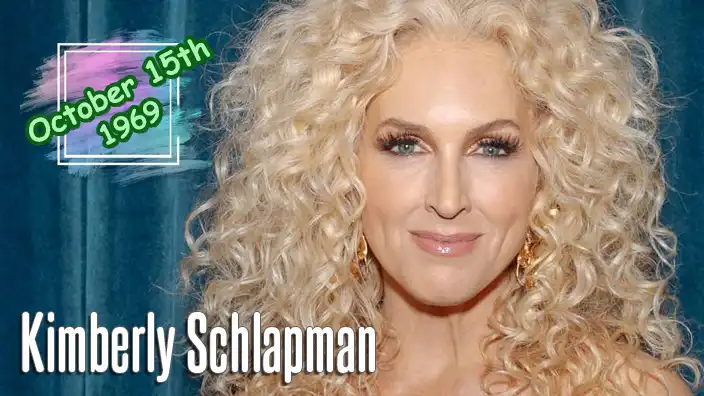
October 15, 1969, in Toccoa, Georgia

Kimberly Schlapman is an American country music singer, songwriter, television personality, and cookbook author best known as a founding member of the Grammy Award-winning vocal group Little Big Town. Born Kimberly Bramlett on October 15, 1969, in Toccoa, Georgia, and raised in nearby Cornelia, she developed a lifelong passion for music that eventually carried her from small-town church performances to some of country music's most prestigious stages. Alongside Karen Fairchild, Phillip Sweet, and Jimi Westbrook, Schlapman helped create a distinctive four-part harmony sound that has become Little Big Town's musical signature. With successful recordings including "Boondocks," "Pontoon," "Girl Crush," and "Better Man," the group established itself as one of contemporary country music's most accomplished vocal ensembles. Schlapman's warm personality, unmistakable blonde curls, and enthusiasm for Southern cooking have also made her a familiar face beyond the recording studio.
Growing up in the foothills of northern Georgia, Kimberly Schlapman was surrounded by music, family traditions, and the close-knit community life that would later influence her professional identity. Her father, Tolbert Bramlett, enjoyed bluegrass music and played stringed instruments, while her mother, Barbara, was a schoolteacher and church musician. Kimberly developed an early appreciation for gospel music and traditional country sounds, singing in church and learning to play the piano. She began piano lessons during childhood and eventually became a church pianist, gaining valuable experience performing before an audience. These early musical activities helped establish her understanding of harmony, rhythm, and the importance of listening carefully to other performers.
Her childhood in Cornelia also introduced her to another passion that would eventually become an important part of her public career: Southern cooking. Kimberly spent time in the kitchen with her mother and grandmothers, learning traditional recipes and discovering how food could bring people together. Family gatherings, church meals, and home-cooked dishes became treasured experiences that she would later share through television programs and cookbooks. Long before she was singing before thousands of country music fans, she was learning that a well-prepared meal could produce an enthusiastic audience of its own. The principal difference, of course, was that the kitchen audience generally expected seconds.
During her school years, Schlapman participated enthusiastically in musical and extracurricular activities at Habersham Central High School. Her vocal abilities earned her a place in Georgia's Governor's Honors Program, providing an opportunity to develop her musical interests alongside other talented students. She also received a music scholarship to Samford University in Birmingham, Alabama, an achievement that brought her into contact with someone who would become one of the most important people in her professional life. During her first week at Samford, she met fellow Georgia native Karen Fairchild while traveling to a choir camp. The two young singers quickly discovered a shared enthusiasm for music and developed a friendship that would eventually become the foundation of Little Big Town.
Schlapman and Fairchild continued singing together while pursuing their education and individual musical ambitions. Although their paths temporarily separated, their friendship remained strong, and they maintained contact through musical activities and shared performances. Kimberly later attended the University of Tennessee, studying family and human development, while Fairchild pursued opportunities in Nashville. Their mutual interest in vocal harmony and country music eventually encouraged them to consider forming a professional group. What began as a college friendship gradually developed into a musical partnership that would influence the direction of contemporary country music.
In 1998, Kimberly Schlapman and Karen Fairchild joined forces with singers Phillip Sweet and Jimi Westbrook to form Little Big Town. The quartet developed an unusual approach within mainstream country music by emphasizing four-part vocal harmony rather than relying upon a single permanent lead singer. All four members contributed to the group's sound, sharing lead vocal responsibilities and creating arrangements that highlighted their individual strengths. Their musical influences included country, gospel, folk, pop, and classic vocal harmony groups, producing a style that was familiar enough to appeal to traditional country audiences while remaining distinctive within the contemporary recording industry.
The group's early years were far from easy. Although Little Big Town secured a recording contract with Mercury Nashville, changes within the label disrupted their initial plans, and the quartet struggled to establish a commercial foothold. They subsequently signed with Monument Records and released their self-titled debut album in 2002. The recording included singles such as "Don't Waste My Time" and "Everything Changes," which introduced their vocal style to country radio. However, the album achieved only modest commercial success, leaving the group facing the familiar difficulties of aspiring musicians attempting to establish themselves in Nashville. Their harmonies were impressive, but record sales had not yet caught up with their ambitions.
Despite these setbacks, Little Big Town continued performing and developing its musical identity. The members remained committed to their collaborative approach, recognizing that their greatest strength came from combining four distinctive voices into a unified sound. Their persistence was especially significant because the recording industry often favored performers with easily identifiable individual personalities. Little Big Town instead presented itself as a genuine ensemble, with each member contributing to the group's character. Their willingness to share attention became one of their defining professional qualities and eventually helped distinguish them from other country acts.
A major turning point arrived in 2005 with the release of The Road to Here, the group's second studio album. Issued through Equity Music Group, the recording became their commercial breakthrough and eventually earned platinum certification in the United States. Its lead single, "Boondocks," celebrated rural roots, small-town traditions, and pride in the places that shape personal identity. The song reached the top ten of Billboard's Hot Country Songs chart and became one of Little Big Town's signature recordings. Its energetic arrangement and powerful harmonies connected with audiences who recognized the experiences and values described in the lyrics.
For Kimberly Schlapman, "Boondocks" reflected aspects of the Georgia upbringing that had influenced her musical development. The song's celebration of rural life, community, and personal identity resonated with listeners who appreciated country music's traditional storytelling. Its success also demonstrated that Little Big Town could combine contemporary production with themes familiar to longtime country audiences. The recording introduced the group's harmonies to a substantially larger audience and provided the commercial momentum that had been missing during their early years.
Other successful singles from The Road to Here included "Bring It On Home," "Good as Gone," and "A Little More You." "Bring It On Home" became the group's first top-five country hit, while the album's continued success helped establish Little Big Town as an important emerging act. Their performances attracted increasing attention from country music organizations, and the group received award nominations that reflected its growing popularity. After years of uncertainty, the quartet had finally achieved the recognition necessary to sustain a major recording career.
The period surrounding this professional breakthrough was also marked by profound personal tragedy for Kimberly Schlapman. In April 2005, her first husband, Steven Roads, died unexpectedly from a heart attack. The loss occurred while Little Big Town was working to establish itself nationally, creating an extraordinarily difficult period in her personal life. Schlapman later spoke about the importance of friendship, faith, and family support in helping her navigate grief. Her bandmates provided emotional support during this period, reinforcing the close relationships that existed beyond their professional collaboration. The experience became an important part of her personal story and influenced her appreciation for family, resilience, and meaningful connections.
Schlapman eventually found happiness again and married Stephen Schlapman in November 2006. The couple welcomed their daughter, Daisy Pearl, in 2007, bringing another important dimension to her life. Balancing motherhood with recording sessions, concert tours, and promotional appearances required considerable organization, but Kimberly frequently expressed enthusiasm for the opportunities and responsibilities of family life. Her experiences also strengthened her appreciation for the relationships that had supported her through difficult circumstances. Although her professional career involved performing before enormous audiences, she consistently emphasized the importance of home and family.
Little Big Town continued building upon its success with the 2007 album A Place to Land, which included the singles "I'm with the Band" and "Fine Line." The recording demonstrated the group's continuing musical development while preserving its commitment to collaborative vocal arrangements. After initially appearing through Equity Music Group, the album was subsequently reissued by Capitol Nashville, reflecting the group's evolving recording relationships. The transition helped provide additional industry support and introduced their music to a broader audience.
In 2010, the quartet released The Reason Why, an album that produced another important hit with "Little White Church." The song combined energetic country production with a playful message about romantic commitment, becoming one of the group's most recognizable recordings. Its confident attitude and memorable harmonies demonstrated the band's ability to approach familiar relationship themes with humor and personality. The album reached number one on Billboard's Top Country Albums chart, confirming Little Big Town's growing commercial strength.
An even greater breakthrough arrived in 2012 with the release of Tornado, featuring the enormously popular single "Pontoon." The song celebrated summertime relaxation, boating, and the pleasures of spending a warm afternoon on the water. Its laid-back rhythm and playful lyrics made it an immediate favorite among country music audiences, particularly during the summer months. "Pontoon" became Little Big Town's first number-one single on Billboard's Hot Country Songs chart and earned the group its first Grammy Award for Best Country Duo/Group Performance in 2013.
The success of "Pontoon" transformed Little Big Town's commercial standing and introduced the group to listeners who had not previously followed its recordings. Its popularity also demonstrated the value of a distinctive musical arrangement, with the quartet's harmonies creating a relaxed atmosphere perfectly suited to the song's subject. Kimberly Schlapman's recognizable voice contributed to the ensemble's sound, reinforcing the importance of each member's participation. The song became a lasting summer favorite, although its popularity probably encouraged more than a few listeners to consider purchasing a boat without first investigating the cost of maintaining one.
The Tornado album also included the title track and other compositions that demonstrated the group's increasing musical confidence. Produced by Jay Joyce, the recording combined country traditions with contemporary arrangements and helped establish Little Big Town among the genre's leading vocal groups. The quartet's willingness to experiment with different musical styles became an increasingly important feature of its success, allowing the members to explore new sounds without abandoning the harmonies that defined their identity.
In 2014, Little Big Town released Pain Killer, an album that included "Day Drinking" and the critically acclaimed ballad "Girl Crush." The latter became one of the group's most significant recordings, exploring jealousy, longing, and the emotional complications of romantic attraction. Despite misunderstandings surrounding its title and subject, the song attracted considerable attention and ultimately became a major commercial success. Its restrained arrangement allowed the group's vocal performances to carry the emotional intensity of the lyrics, demonstrating the power of effective harmony singing.
"Girl Crush" earned Little Big Town the Grammy Award for Best Country Duo/Group Performance in 2016 and became one of the defining country recordings of the decade. The song also received recognition from the Country Music Association and the Academy of Country Music, contributing to the group's growing collection of industry honors. Its success demonstrated that country audiences remained receptive to emotionally complex songs delivered through carefully crafted vocal performances. For Kimberly Schlapman and her bandmates, the recording represented another major achievement in a career built upon persistence, collaboration, and musical experimentation.
In October 2014, Little Big Town was inducted into the Grand Ole Opry, one of country music's most prestigious institutions. The induction recognized the group's contribution to the genre and established its place within a tradition extending across generations of performers. For Schlapman, whose musical roots included church singing, bluegrass, and traditional country influences, becoming a member of the Grand Ole Opry represented an especially meaningful professional milestone. The institution has long celebrated the connection between country music's history and its contemporary performers, making the recognition an important achievement for the quartet.
The group continued exploring different musical directions with Wanderlust, released in 2016 and produced by Pharrell Williams. The project incorporated pop, funk, and other contemporary influences, demonstrating the members' willingness to experiment beyond conventional country arrangements. Although the album differed from their previous recordings, it reflected their belief that strong vocal harmony could work across a variety of musical styles. Their collaboration with Pharrell introduced another creative dimension to the group and demonstrated that country musicians need not remain confined to familiar production techniques.
In 2017, Little Big Town released The Breaker, featuring the hit single "Better Man." Written by Taylor Swift, the song explores the disappointment of loving someone whose behavior prevents a relationship from succeeding. Its emotionally expressive arrangement became another major success, reaching number one on Billboard's Country Airplay chart. The recording earned Little Big Town its third Grammy Award for Best Country Duo/Group Performance in 2018. Its success also illustrated the group's ability to interpret compositions by other songwriters while maintaining its distinctive vocal identity.
The quartet's subsequent albums included Nightfall in 2020 and Mr. Sun in 2022, continuing its exploration of relationships, personal reflection, and contemporary country sounds. Nightfall included songs such as "The Daughters," "Over Drinking," and "Sugar Coat," while Mr. Sun featured "Hell Yeah" and "All Summer." These recordings demonstrated the group's continuing creative activity and commitment to developing new material rather than relying exclusively upon its established hits. The members' ability to maintain a longstanding professional partnership remained an important part of their identity within an industry where group lineups frequently change.
In 2024, Little Big Town celebrated its 25th anniversary with Greatest Hits, a collection revisiting some of its most successful recordings. The project offered listeners an opportunity to appreciate the development of the group's sound across multiple albums and musical periods. From the rural enthusiasm of "Boondocks" to the summertime pleasures of "Pontoon" and the emotional intensity of "Girl Crush," the collection reflected the quartet's remarkable versatility. Their anniversary celebrations also reinforced the importance of the friendships and shared musical ambitions that had sustained the group since its formation.
Although Little Big Town remains central to Kimberly Schlapman's professional identity, she has also developed a successful career as a television cooking personality and author. Her enthusiasm for Southern food, family traditions, and hospitality eventually led to Kimberly's Simply Southern, a cooking and lifestyle program that premiered on Great American Country in 2012. The series followed Schlapman as she explored regional ingredients, visited food producers, and prepared dishes inspired by her Georgia upbringing. Her friendly presentation style and enthusiasm for traditional recipes helped establish her as a recognizable personality within food television.
The program reflected Schlapman's belief that cooking involves considerably more than combining ingredients. For her, meals provide opportunities to strengthen relationships, preserve family traditions, and create lasting memories. Her approach emphasized approachable recipes, seasonal ingredients, and the pleasures of sharing food with friends and relatives. Rather than presenting elaborate dishes requiring professional equipment and advanced culinary training, she focused upon meals that ordinary home cooks could prepare and enjoy. Her enthusiasm for cooking also offered fans a different perspective on a performer they primarily associated with country music concerts.
In 2015, Kimberly Schlapman published Oh Gussie! Cooking and Visiting in Kimberly's Southern Kitchen, a cookbook combining traditional Southern recipes with personal stories about family, music, and life on the road. The title reflected one of her favorite expressions, a versatile Southern exclamation suitable for surprise, excitement, confusion, or the discovery that something has gone spectacularly wrong in the kitchen. The book celebrated the food traditions of northern Georgia while offering readers a glimpse into Schlapman's experiences as a singer, wife, and mother. Its mixture of recipes and storytelling demonstrated that her interests in cooking and music shared a common foundation: bringing people together.
Her culinary activities also included appearances on television programs such as Today, The View, Beat Bobby Flay, and Chopped Junior. She developed kitchenware and home products through collaborations with retailers including HSN and Cracker Barrel, extending her interest in Southern hospitality into consumer products. These projects allowed her to explore creative opportunities beyond music while maintaining the approachable personality that had become familiar to her fans. Whether discussing a favorite family recipe or preparing for a concert, Schlapman consistently emphasized enthusiasm, preparation, and the enjoyment of shared experiences.
Family life continued to play an important role in Kimberly Schlapman's public story when she and her husband adopted their second daughter, Dolly Grace, in 2017. The experience strengthened her interest in adoption awareness and the importance of providing loving homes for children. In 2020, she published the children's book A Dolly for Christmas, inspired by her family's adoption journey. The story offered a heartfelt celebration of family, hope, and the different ways children become part of loving households. The project also demonstrated Schlapman's willingness to use her public platform to discuss subjects that held personal meaning beyond her musical career.
Throughout her professional life, Kimberly Schlapman has remained closely associated with the values and traditions of her Georgia upbringing. Her appreciation for gospel music, family gatherings, home cooking, and community relationships has influenced both her musical identity and her activities beyond the stage. These connections have helped create a public personality that feels approachable despite her considerable professional achievements. Her distinctive appearance and cheerful manner have made her immediately recognizable, but her lasting contribution to country music rests upon the vocal skill and collaborative discipline she brings to Little Big Town.
Little Big Town's achievements include three Grammy Awards, numerous Country Music Association and Academy of Country Music honors, platinum-certified recordings, and membership in the Grand Ole Opry. The group's longevity is particularly notable because its four founding members have remained together throughout its professional career. Their commitment to shared musical responsibility has allowed them to develop a recognizable sound while exploring different genres and creative approaches. Schlapman's contribution to that partnership reflects years of musical training, professional dedication, and an understanding that successful harmony requires listening as carefully as singing.
As fans celebrate Kimberly Schlapman's birthday on October 15, her career offers an inspiring example of persistence, friendship, and creative versatility. From singing in a small Georgia church to performing on some of country music's most prestigious stages, she has remained connected to the musical traditions and family experiences that shaped her childhood. Her accomplishments with Little Big Town, combined with her success as a television personality, cookbook author, and children's writer, demonstrate that a creative career can develop in several rewarding directions. And whether she's singing a beautiful four-part harmony or serving a generous helping of Southern comfort food, Kimberly Schlapman has spent much of her life proving that the best experiences are often the ones we share with others.