April 4, 1960, in Ibadan, Nigeria
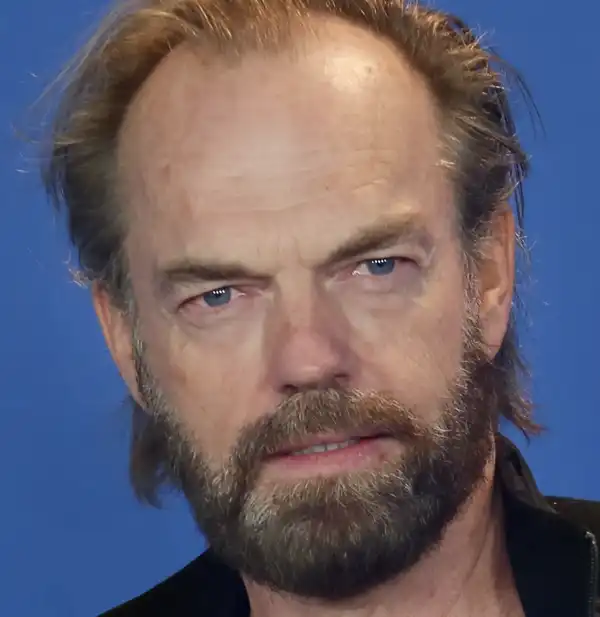
Hugo Weaving is one of those actors whose face—and voice—instantly command attention. Whether he’s playing a wise elf lord, a relentless computer program, or a masked revolutionary, Weaving has the rare ability to make every character feel distinct and memorable. Over the course of several decades, he has become one of the most respected performers in international cinema, known for his commanding presence, deep voice, and thoughtful approach to acting.
Hugo Wallace Weaving was born on April 4, 1960, in Ibadan, Nigeria. His father worked as a geologist for an international oil company, which meant the family moved frequently during his childhood. As a result, Weaving spent parts of his early life living in several countries before eventually settling in Sydney, Australia.
Growing up in different places exposed him to a wide range of cultures and perspectives. He later attended the prestigious National Institute of Dramatic Art (NIDA) in Sydney, one of Australia’s leading acting schools. Many successful actors have come through NIDA, and Weaving quickly proved he belonged among them.
After graduating in the early 1980s, Weaving began working in Australian theater, television, and film. Early roles helped him develop the stage presence and discipline that would later define his career. Australian audiences became familiar with him through television appearances and films such as The Interview and Proof.
His international breakthrough arrived in 1999 with the science fiction film The Matrix. In the movie, Weaving portrayed Agent Smith, a cold and relentless program tasked with eliminating rebels inside a simulated world. The character’s precise speech, intimidating calm, and philosophical dialogue made him one of the most memorable villains in modern science fiction.
Weaving reprised the role in the sequels The Matrix Reloaded and The Matrix Revolutions, further cementing Agent Smith as one of cinema’s most recognizable antagonists.
Just two years later, Weaving appeared in another legendary film series. In The Lord of the Rings: The Fellowship of the Ring (2001), directed by Peter Jackson, he portrayed the noble elf lord Elrond. The role continued through the trilogy, including The Lord of the Rings: The Two Towers and The Lord of the Rings: The Return of the King.
Elrond was a very different character from Agent Smith—wise, calm, and dignified rather than cold and mechanical. Weaving’s ability to shift completely between such different personalities demonstrated his range as an actor.
In 2005, he delivered another iconic performance in V for Vendetta. In the film, Weaving played the mysterious revolutionary known simply as “V.” Interestingly, audiences rarely see his face because the character wears a mask throughout the movie. Yet Weaving’s powerful voice and expressive delivery gave the character remarkable depth and emotion.
The mask worn by V, based on the historical figure Guy Fawkes, later became a widely recognized symbol used in protests and political demonstrations around the world.
Weaving’s career has never been limited to big-budget films. He has continued working extensively in theater and independent cinema, particularly in Australia. Many critics and fellow actors consider his stage work to be among his finest achievements.
In addition to dramatic roles, Weaving has also appeared in major action and science fiction franchises. He portrayed the Red Skull in Captain America: The First Avenger (2011), bringing a menacing presence to the Marvel superhero film.
Despite his success in blockbuster movies, Weaving has often spoken about his love for theater and smaller artistic projects. He frequently returns to the stage, believing it allows actors to explore characters in a more immediate and intimate way.
Colleagues often describe Weaving as thoughtful, intelligent, and deeply committed to storytelling. He tends to approach roles with careful preparation and a focus on character psychology, which helps explain why even his villains often feel complex and believable.
Over the years, Hugo Weaving has built a career defined by versatility. From science fiction villains to noble fantasy leaders and mysterious revolutionaries, he has repeatedly proven that strong performances can bring extraordinary depth to any story.
For audiences around the world, his voice alone is enough to signal that something interesting is about to happen on screen.