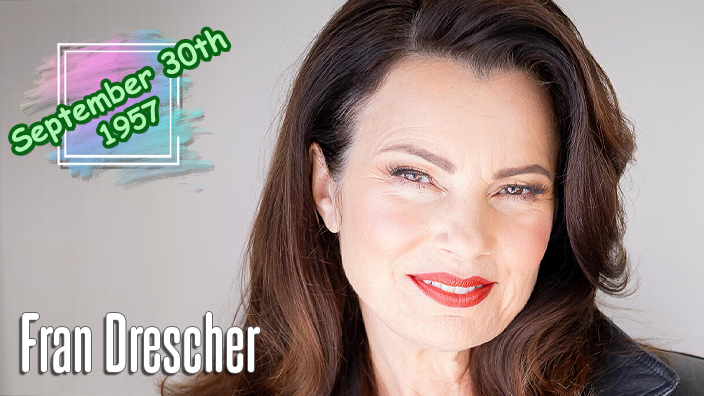
September 30, 1957, in Queens, New York
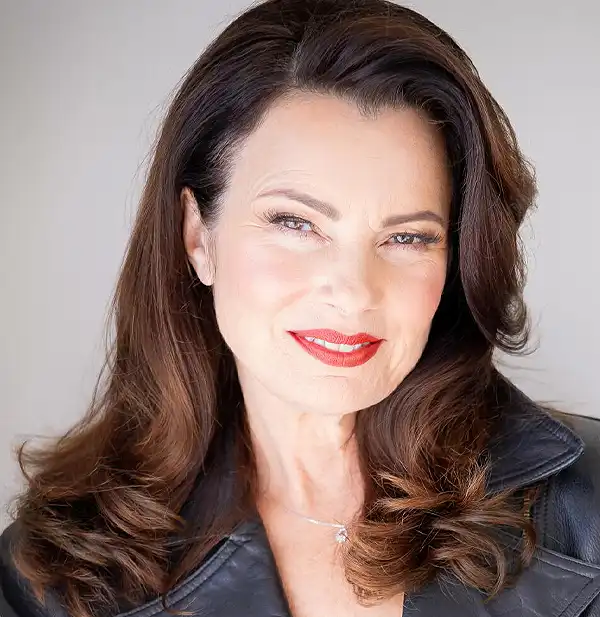
Fran Drescher became one of the most recognizable television performers of the 1990s as Fran Fine on The Nanny, a sitcom she not only starred in but also co-created with her then-husband, Peter Marc Jacobson. With her unmistakable voice, enormous laugh, flamboyant wardrobe and rapid-fire comic delivery, Drescher created a character who could hardly have been mistaken for anyone else on television. Yet her career extends considerably beyond the front door of the Sheffield mansion. She has worked as an actress, writer, producer, author, health advocate and labor leader, repeatedly turning experiences from her own life into material for both comedy and public advocacy.
Francine Joy Drescher was born on September 30, 1957, in Queens, New York, and grew up in the borough's Flushing neighborhood. Her father, Morty, worked as a naval systems analyst, while her mother, Sylvia, became one of the personalities Drescher would later draw upon when developing characters and comedy. Drescher attended Hillcrest High School in Jamaica, Queens, where one of her classmates was Peter Marc Jacobson. The two became a couple, married in 1978 and eventually moved to Los Angeles to pursue careers in entertainment.
Drescher's unmistakable speaking voice would eventually become one of her greatest professional assets, although it was hardly the conventional sound Hollywood once expected from a leading television actress. Rather than attempting to erase her Queens identity, she ultimately built an entire sitcom around it. That confidence took time to develop, however, and her early career followed the familiar route of auditions, small parts and supporting appearances while she tried to establish herself in film and television.
Her movie debut came in the 1977 blockbuster Saturday Night Fever. Drescher had a small but memorable role as Connie, who encounters John Travolta's Tony Manero at the disco and delivers the memorable observation, “Are you as good in bed as you are on that dance floor?” It was hardly a large part, but appearing in one of the defining films of the disco era was not a bad way to begin a screen résumé.
More film work followed. Drescher appeared in American Hot Wax, the Wes Craven television film Stranger in Our House and the comedy Gorp. She had a memorable supporting role in the 1984 mockumentary This Is Spinal Tap, playing publicist Bobbi Flekman. Surrounded by the magnificently incompetent members of the fictional heavy-metal band Spinal Tap, Drescher fit comfortably into the film's improvised comic style. She later appeared in movies including UHF, Jack, The Beautician and the Beast and Picking Up the Pieces.
Television appearances also accumulated during the 1980s and early 1990s, including roles on programs such as Who's the Boss?, Night Court and ALF. Drescher was steadily working, but the role that would define her career did not arrive through a conventional casting process. Instead, she and Jacobson created it themselves.
The inspiration for The Nanny famously developed after Drescher encountered CBS executive Jeff Sagansky during a flight to France. She pitched the idea that eventually became the series, drawing heavily upon her own personality and family background. Drescher and Jacobson created Fran Fine as a working-class Jewish woman from Queens who unexpectedly enters the wealthy Manhattan household of British Broadway producer Maxwell Sheffield. The contrast between Fran's world and Maxwell's provided the basic comic engine, but Drescher understood that the character would work best if she remained unapologetically herself.
The Nanny premiered on CBS in November 1993. Fran Fine begins the series after losing both her job at a bridal shop and her boyfriend, then arrives at the Sheffield residence while selling cosmetics door-to-door. Through a misunderstanding, she is hired to care for Maxwell's three children, Maggie, Brighton and Grace. Charles Shaughnessy played Maxwell, Daniel Davis portrayed the magnificently dry butler Niles, and Lauren Lane played Maxwell's business associate C.C. Babcock, whose ongoing verbal warfare with Niles became one of the show's most reliable pleasures.
Drescher's Fran Fine was deliberately larger than life. Her wardrobe was colorful and extravagant, her voice unmistakable, and her relatives seemed capable of arriving whenever the Sheffield household had enjoyed several dangerously peaceful minutes. Yet Fran was never merely the joke. She was affectionate, emotionally perceptive and genuinely good with Maxwell's children, frequently understanding their problems more quickly than the sophisticated adults around them.
Much of the show's humor came from the collision between Fran's Queens upbringing and Maxwell's reserved British manner. Their gradual romantic relationship became one of the central storylines, while the supporting cast created several memorable comic partnerships. Niles relentlessly tormented C.C., Fran's mother Sylvia regarded food as both recreation and emergency equipment, and Grandma Yetta—played by Ann Morgan Guilbert—could reliably enter a scene and move reality several degrees further away from normal.
Drescher's own family and experiences supplied abundant material. The fictional Fran Fine shared elements of Drescher's personality and background, and several characters were inspired by people she knew. That authenticity helped The Nanny distinguish itself from sitcoms populated by generically polished television families. Fran Fine was unmistakably Jewish, unmistakably from Queens and entirely uninterested in pretending otherwise.
The series ran for six seasons and 146 episodes, ending in 1999. Drescher received two Primetime Emmy Award nominations and two Golden Globe nominations for her performance. The Nanny also developed a substantial international following and was adapted into locally produced versions in several countries. Decades after its original run, the series continued finding audiences through reruns and streaming, while Fran Fine's elaborate fashion became a source of renewed attention online.
After The Nanny, Drescher continued acting while also writing about her life. She published the memoir Enter Whining while the series was still running, using the title to acknowledge the voice that had become inseparable from her public identity. Her second book, Cancer Schmancer, addressed a far more serious chapter.
Drescher was diagnosed with uterine cancer in 2000 after experiencing symptoms and spending considerable time seeking an accurate diagnosis. She underwent a hysterectomy and was successfully treated. The experience profoundly influenced her subsequent public work, particularly her concern that patients understand their bodies, recognize persistent symptoms and advocate for appropriate medical attention.
She founded the nonprofit Cancer Schmancer Movement, which focuses heavily on prevention, early detection and encouraging people to become active participants in their healthcare. Drescher has used her celebrity to promote awareness and has participated in public-policy efforts concerning cancer and women's health. Her advocacy transformed one of the most difficult periods of her life into a sustained effort to help other people avoid delayed diagnoses.
Drescher also returned repeatedly to television comedy. She starred in Living with Fran, playing a divorced mother in a relationship with a younger man, and later created Happily Divorced with Peter Marc Jacobson. That series drew inspiration from their own unusual relationship: after divorcing, Jacobson came out as gay, yet he and Drescher remained close friends and creative collaborators. Rather than treating their history as something to conceal, they did what comedy writers have traditionally done with life's complications—they turned it into a television show.
Her voice also found a natural home in animation. Drescher voiced Eunice, the wife of Frankenstein's monster, in the Hotel Transylvania film series. The character's loud, affectionate personality made Drescher's distinctive delivery immediately recognizable even without her appearing on screen. She also continued performing on stage and television, including a Broadway run as Madame in Rodgers and Hammerstein's Cinderella.
Another major chapter began when Drescher became increasingly involved with SAG-AFTRA, the union representing actors and other media professionals. She was elected president of SAG-AFTRA in 2021 and reelected in 2023. Her tenure placed her at the center of major negotiations concerning compensation, streaming residuals, working conditions and the rapidly expanding use of artificial intelligence within entertainment.
In 2023, SAG-AFTRA went on strike against major film and television studios after contract negotiations failed to produce an agreement. The strike coincided for several months with a Writers Guild of America strike, bringing much of American film and scripted television production to a halt. Drescher became one of the union's most visible representatives during the dispute, delivering public statements about the changing economics of the entertainment industry and the need for contractual protections as streaming and artificial intelligence altered established business models.
The strike ended after SAG-AFTRA and the studios reached a tentative agreement that included changes involving compensation, streaming bonuses and protections related to artificial intelligence. Whatever audiences expected when they first encountered Fran Fine arriving at the Sheffield mansion with a cosmetics case, few would have predicted that the actress playing her would one day be addressing some of the largest entertainment companies in the world on behalf of tens of thousands of performers.
That unexpected progression is part of what makes Drescher's career so interesting. She never discarded the characteristics that initially made her unusual by Hollywood standards. The Queens accent remained. The Jewish identity remained. The broad laugh remained. Instead of becoming more generic as she became more successful, she made those qualities central to her work.
Fran Fine was therefore not simply a sitcom character Drescher happened to play. She represented an approach to comedy in which specificity became the source of universal appeal. Viewers did not need to grow up in Queens, have a mother resembling Sylvia or accidentally become the nanny for a wealthy British Broadway producer to recognize the family relationships, romantic frustrations and class differences underneath the jokes.
Fran Drescher ultimately built a career by refusing to sound or behave like everyone else. The Nanny made her famous, but writing, producing, health advocacy and union leadership demonstrated that the woman behind Fran Fine had considerably more to say. She went from asking John Travolta about his abilities off the dance floor to creating one of the defining sitcom characters of the 1990s and eventually representing performers during a historic Hollywood labor dispute.
And through all of it, nobody ever had to ask whether Fran Drescher had entered the room. They could hear her coming.