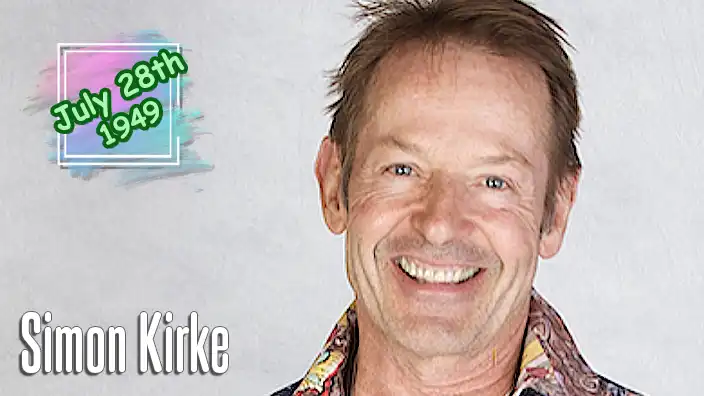
July 28, 1949, in Lambeth, England

Simon Kirke occupies a unique place in the history of classic rock. While many drummers have built careers around spectacular solos or flamboyant stage performances, Kirke became famous through something far more difficult to master—playing exactly what the music required. His drumming has always served the song rather than his own ego, creating grooves that feel effortless while providing the solid foundation upon which legendary bands built their sound. As a founding member of both Free and Bad Company, Kirke helped shape two of Britain's most influential rock groups, contributing to albums and performances that continue to inspire musicians decades after they were first recorded. His steady, tasteful style has earned him the admiration of fellow drummers and rock fans alike, proving that sometimes the greatest compliment a rhythm section can receive is making difficult work sound completely natural.
Born Simon Frederick St. George Kirke in Lambeth, London, England, Kirke grew up during a remarkable period for British popular music. The post-war years saw an explosion of creativity that would eventually produce the British Invasion and transform rock music around the world. As a teenager, Kirke found himself captivated by rhythm and blues, jazz, and the emerging sounds of rock. Like many young musicians of the era, he was inspired by American artists whose records crossed the Atlantic and found eager audiences in Britain. Rather than attempting to become the flashiest drummer on the local scene, Kirke focused on developing impeccable timing, musical sensitivity, and the ability to lock seamlessly with a bass player. Those qualities would become the defining features of his career and distinguish him from countless technically gifted but less musical contemporaries.
Kirke's professional breakthrough came in 1968 when he joined the newly formed rock band Free, alongside guitarist Paul Kossoff, bassist Andy Fraser, and vocalist Paul Rodgers. Although all four members were remarkably young, the chemistry between them was immediately apparent. Free possessed a maturity that seemed far beyond their years, producing music rooted in blues while embracing the heavier sounds that were beginning to define hard rock. Kirke's drumming became an essential ingredient in the band's identity. He resisted the temptation to overplay, allowing space within the songs while delivering grooves that felt both powerful and relaxed. His partnership with Fraser's inventive bass playing created one of the strongest rhythm sections in British rock, giving Rodgers' soulful vocals and Kossoff's expressive guitar work the perfect platform on which to flourish.
The band's defining moment arrived in 1970 with the release of "All Right Now." Originally written to lift audiences after an underwhelming concert, the song quickly became one of rock music's most recognizable anthems. Its unforgettable guitar riff, infectious chorus, and irresistible rhythm propelled Free to international fame. Although listeners often focus on Rodgers' vocals or Kossoff's guitar, Kirke's contribution is impossible to overlook. His driving yet restrained drumming provides the song with its irresistible momentum, demonstrating how a drummer can shape the character of an entire recording without dominating it. More than fifty years later, "All Right Now" remains a staple of classic rock radio, sporting events, and concert playlists, introducing new generations to the musicians who created it.
Despite their success, Free experienced internal tensions and periods of instability that eventually led to the band's dissolution. The pressures of constant touring, creative differences, and personal struggles took their toll, particularly as guitarist Paul Kossoff battled serious health issues. Through these challenges, Kirke remained a steady and dependable presence. His professionalism and commitment to the music earned the respect of his bandmates and industry colleagues alike. Although Free's original run was relatively brief, its influence proved immense. The band's combination of blues, rock, and emotional honesty helped lay the groundwork for countless groups that followed, while Kirke's understated drumming became a model for musicians who valued feel over flash.
Following the breakup of Free, Kirke and vocalist Paul Rodgers wasted little time in embarking upon a new chapter. Alongside former Mott the Hoople guitarist Mick Ralphs and bassist Boz Burrell, they formed Bad Company in 1973. The band's arrival coincided with the launch of Led Zeppelin's Swan Song Records, making Bad Company the label's first signing. Expectations were understandably high, but the group exceeded them almost immediately. Their self-titled debut album produced enduring classics including "Can't Get Enough," "Movin' On," and "Bad Company," all of which showcased the band's gift for combining hard rock energy with memorable melodies. Once again, Kirke's drumming proved indispensable. His grooves were powerful without becoming overwhelming, giving the songs an infectious drive that helped propel the band to worldwide success.
Throughout the 1970s, Bad Company became one of the biggest rock acts in the world. Albums such as Straight Shooter, Run with the Pack, and Burnin' Sky established the band as arena favorites, while relentless touring cemented their reputation for delivering consistently outstanding live performances. Kirke's style remained remarkably consistent from night to night, providing a dependable rhythmic backbone that allowed his bandmates the freedom to explore dynamics and improvisation. Fellow drummers often cite his remarkable sense of timing and restraint as examples of true musicianship. Rather than competing for attention, Kirke understood that the drummer's greatest responsibility is to elevate everyone else on stage, a philosophy that has stood the test of time.
Beyond his work with Free and Bad Company, Kirke has remained active through solo projects, collaborations, and occasional reunions. He has released his own music, appeared with numerous artists, and continued performing well into the twenty-first century. Away from the drum kit, he has also supported charitable organizations and devoted time to causes close to his heart. Fans who have met him frequently describe him as approachable, warm, and appreciative of the support he has received throughout his career. Despite being associated with some of rock's biggest albums, Kirke has never cultivated the oversized ego sometimes associated with legendary musicians. Instead, he has maintained the quiet professionalism that first earned him respect more than five decades ago.
Musically, Simon Kirke's influence extends far beyond the songs he helped record. His approach reminds aspiring drummers that technical ability alone is never enough. Precision, taste, consistency, and an understanding of how every instrument contributes to the whole are equally important. His performances demonstrate that the simplest drum part is often the most effective if it serves the song. It is a lesson embraced by generations of musicians who have studied his work, recognizing that true mastery often lies in knowing what not to play.
As Simon Kirke celebrates another birthday, his legacy continues to resonate wherever classic rock is enjoyed. The recordings of Free and Bad Company remain essential listening, not simply because of their memorable songs but because of the exceptional musicianship that brought them to life. Kirke's steady hands helped create rhythms that have endured for decades, proving that a drummer need not dominate the spotlight to become unforgettable. His career reflects dedication, humility, and an instinctive understanding of music that few performers ever achieve. Long after the amplifiers have been switched off and the final encore has faded into memory, Simon Kirke's rhythms continue to keep perfect time in the history of rock and roll.