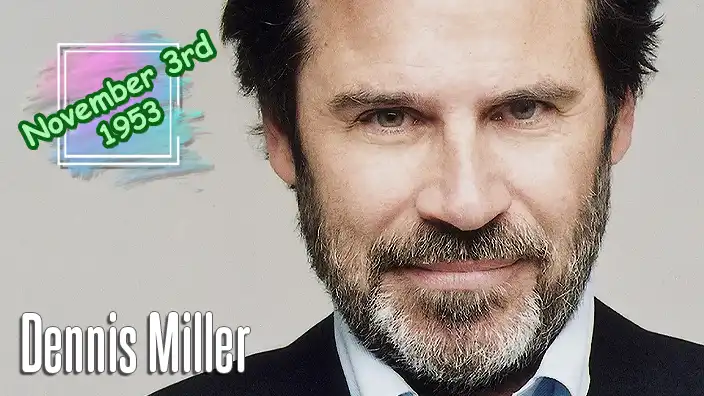
November 3, 1953, in Pittsburgh, Pennsylvania

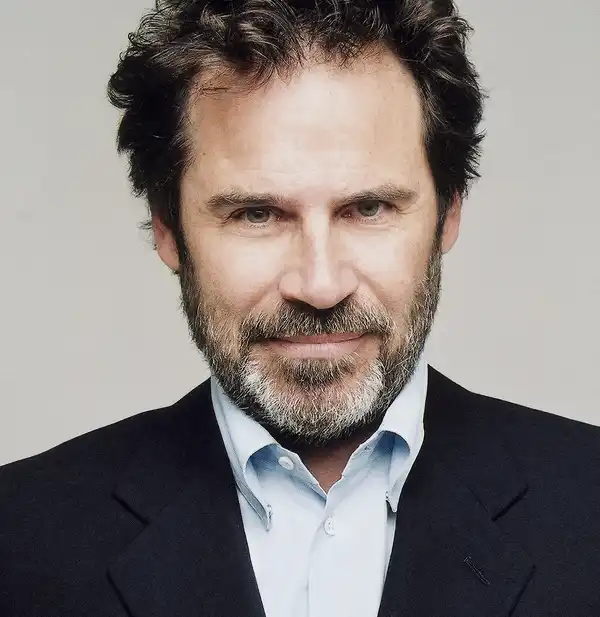
Dennis Michael Miller, born November 3, 1953, in Pittsburgh, Pennsylvania, is an American stand-up comedian, political commentator, television host, actor, author, and former sports broadcaster. Best known for his six seasons anchoring the Weekend Update segment on NBC's Saturday Night Live, Miller developed a distinctive comedic style combining sarcastic observations, political satire, sophisticated vocabulary, and references to literature, history, philosophy, and popular culture. His career subsequently expanded into award-winning HBO television programs, syndicated radio, motion pictures, and political commentary. Recognized for his quick wit and deliberately complicated comparisons, Miller became one of America's most distinctive comedy personalities, building a reputation for delivering jokes that occasionally required audiences to remember something they had learned in high school.
Miller grew up in the Castle Shannon suburb of Pittsburgh, where his mother, Norma Miller, raised him and his siblings. His parents separated during his childhood, and the family experienced the financial and personal challenges familiar to many single-parent households. Growing up in western Pennsylvania helped shape his appreciation for working-class humor, professional sports, and the direct conversational style associated with the region. He developed an early interest in comedy through television performers such as Johnny Carson and comedians whose routines combined clever observations with sharp social commentary. Miller also became an enthusiastic fan of the Pittsburgh Steelers, Pirates, and Penguins, a loyalty that would remain an important part of his personality and occasionally provide material for his jokes.
As a student at Saint Anne School and Keystone Oaks High School, Miller developed an interest in performing and entertaining classmates. He enjoyed making people laugh but initially lacked the confidence to pursue stand-up comedy professionally. His academic interests included journalism, politics, and current events, subjects that would later become central to his comedic identity. Following high school, he attended Point Park College, now Point Park University, in Pittsburgh, where he studied journalism. His education helped strengthen his interest in writing and public affairs while providing the background necessary for the news-oriented satire that would eventually make him famous. Unlike comedians who concentrated entirely on personal experiences, Miller developed a fascination with the wider world and the absurdities of public life.
After completing his college studies, Miller worked several ordinary jobs while attempting to establish himself as a comedian. His employment included delivering supplies, working in a dairy, selling storm windows, and performing janitorial duties. These experiences provided a practical education in the realities of earning a living, although none offered particularly promising opportunities to become a television celebrity. Miller began performing at comedy clubs and open-microphone events during the late 1970s, gradually developing his confidence before live audiences. His early routines featured observations about everyday life, entertainment, and politics, but his distinctive delivery and increasingly elaborate cultural references soon separated him from more conventional stand-up performers.
Miller's determination eventually took him to New York City, where he performed at influential comedy venues including Catch a Rising Star and the Comic Strip. These clubs provided opportunities to work alongside aspiring comedians and observe established performers refining their material. The competitive environment demanded originality, precise timing, and the ability to recover quickly when a joke failed. Miller gradually developed a confident stage personality characterized by dry sarcasm, rapid intellectual associations, and a conversational delivery that made even elaborate jokes sound spontaneous. His comedy frequently moved from ordinary observations into unexpected comparisons involving historical figures, political controversies, and obscure entertainment references.
One of his early professional achievements came in 1979 when he received recognition from Playboy magazine for a joke submitted to its humor competition. Although the award did not immediately transform his career, it provided encouragement that his writing could attract attention beyond local comedy audiences. Miller continued performing while searching for opportunities in television, where his interest in journalism and comedy could be combined. His early struggles reflected the unpredictable nature of stand-up entertainment, where talented performers frequently spend years working in small clubs before receiving national recognition. For Miller, the road to Hollywood involved considerably more rejection than applause, but persistence eventually produced results.
Returning to Pittsburgh, Miller found opportunities at KDKA-TV, where he contributed humorous material to local programming and hosted Punchline, a television newsmagazine aimed at teenage viewers. The experience allowed him to develop his on-camera personality while combining comedy with topical subjects. Working in local television also taught him the practical demands of broadcasting, including script preparation, timing, and delivering material directly to a camera. These skills would prove invaluable when he eventually joined one of America's most famous comedy programs. His experience at KDKA demonstrated that he could entertain viewers without relying exclusively upon the energy of a live comedy-club audience.
Miller's breakthrough arrived in 1985 when Saturday Night Live creator and producer Lorne Michaels returned to the program and began assembling a new cast. Michaels saw Miller performing at the Comedy Store in Los Angeles and recognized his potential for the show's satirical news segment. Miller joined Saturday Night Live for its eleventh season, becoming the anchor of Weekend Update, the long-running feature that parodied television news broadcasts. The assignment provided a national platform perfectly suited to his interests in politics, current events, and sarcastic commentary. It also placed him in a distinguished tradition of performers who had used the fake-news desk to comment on real-world absurdities.
During his six seasons on Saturday Night Live, from 1985 to 1991, Miller transformed Weekend Update into one of the show's most recognizable features. Sitting behind the familiar news desk, he delivered topical jokes with a confident smirk, carefully controlled sarcasm, and an unmistakable sense of amusement at the world's foolishness. His style differed from the more straightforward news parodies associated with earlier anchors, frequently incorporating elaborate references and unexpectedly intellectual punchlines. Miller's trademark hair flip and knowing expressions became recognizable elements of his television personality, while his closing remarks helped establish a distinctive relationship with the audience. He presented himself as an observer who found politics, celebrity behavior, and modern society equally ridiculous.
His Weekend Update material covered the major political and cultural events of the late 1980s and early 1990s, including the presidency of Ronald Reagan, the administration of George H. W. Bush, international conflicts, and changing American social attitudes. Miller's comedy often relied upon viewers recognizing historical or cultural references that were not immediately obvious. A political scandal might be compared to an obscure philosophical argument, while a celebrity controversy could inspire a reference to a forgotten television program. This approach became his signature, attracting audiences who appreciated intelligent wordplay while occasionally frustrating viewers who preferred more direct punchlines. Miller seemed perfectly comfortable with the possibility that some jokes might require additional explanation.
His years on Saturday Night Live also brought opportunities to work alongside performers including Dana Carvey, Phil Hartman, Jan Hooks, Kevin Nealon, and Jon Lovitz. The ensemble helped restore the program's popularity during a period of creative renewal, producing memorable sketches and characters that became part of American comedy history. Although Miller was primarily associated with Weekend Update, his presence contributed to the show's broader satirical identity. His success demonstrated that topical comedy could become a major attraction within a sketch program, particularly when the performer possessed a recognizable personality and a strong command of current events.
While working on Saturday Night Live, Miller continued developing his stand-up career through comedy specials and recorded performances. His 1988 HBO special Mr. Miller Goes to Washington showcased his political humor and established his reputation beyond the Weekend Update desk. The special's title referenced the classic Frank Capra film Mr. Smith Goes to Washington, reflecting Miller's fondness for mixing entertainment history with contemporary political commentary. He subsequently released additional HBO specials and the comedy album The Off-White Album, demonstrating that his material could succeed in formats ranging from brief television segments to extended live performances.
Miller left Saturday Night Live in 1991 to pursue new opportunities, concluding one of the program's most influential Weekend Update tenures. His departure marked the end of an era for viewers who had become accustomed to his distinctive interpretation of the news. Kevin Nealon subsequently assumed the anchor position, continuing the segment's tradition of topical humor. Miller's influence remained evident in later versions of Weekend Update, particularly those that emphasized personality-driven commentary and the anchor's individual perspective. His success helped establish the segment as an important platform for comedians whose talents extended beyond traditional sketch performance.
In 1992, Miller launched The Dennis Miller Show, a syndicated late-night television program featuring celebrity interviews, comedy, and topical discussion. The series attempted to combine elements of traditional talk shows with Miller's intellectual humor and unconventional presentation. Although it attracted attention and featured notable guests, the program struggled to establish a sufficiently large audience and was canceled after a relatively brief run. The experience demonstrated the difficulty of translating a successful supporting television role into a full-length nightly program. Nevertheless, it provided valuable lessons that Miller would apply to his next major television venture.
His greatest success as a television host arrived in 1994 with the premiere of Dennis Miller Live on HBO. The half-hour program featured a minimalist format built around Miller's opening monologue, an interview with a prominent guest, and a concluding commentary known as a rant. Rather than relying upon elaborate sets, musical performances, or large production numbers, the series concentrated on conversation, writing, and Miller's distinctive personality. Guests included political figures, entertainers, authors, and other public personalities, providing opportunities for discussions that ranged from serious policy questions to entertainment industry gossip. The format allowed Miller to explore subjects in greater depth than the brief jokes of Weekend Update.
The concluding rants became one of the show's defining features. Miller would deliver an extended comic monologue examining a particular social or political issue, frequently building increasingly complicated comparisons before reaching an emphatic conclusion. These performances combined stand-up comedy with opinion journalism, reflecting his interest in both entertainment and public affairs. His signature closing line, "Of course, that's just my opinion. I could be wrong," became closely associated with his television persona. The phrase provided a humorous acknowledgment that even the most confidently expressed opinion might not be universally accepted, although Miller rarely sounded particularly uncertain while delivering it.
Dennis Miller Live ran from 1994 to 2002 and earned considerable critical recognition. The program received multiple Primetime Emmy Awards, including honors for outstanding writing and variety programming. According to the Television Academy, Miller has received five Emmy Awards and sixteen nominations associated with his television work. The show's success demonstrated that there was an audience for comedy built around extended commentary, sophisticated references, and serious discussions presented with humor. Its influence could be seen in the development of later political comedy programs that blended entertainment with news analysis and personal opinion.
Television Academy+1
Miller's success also extended into publishing. He released several books based upon his comedic observations and television monologues, including The Rants (1996), Ranting Again (1998), I Rant, Therefore I Am (2000), and The Rant Zone (2001). These publications expanded upon the material that had made him popular on television, offering humorous commentary about politics, relationships, celebrity culture, and modern society. The titles reflected his fondness for wordplay and philosophical references, particularly I Rant, Therefore I Am, which borrowed from René Descartes' famous declaration about thinking and existence. His books reached bestseller lists and introduced his distinctive writing style to readers who preferred encountering complicated jokes without having to rewind the television.
Throughout the 1990s, Miller also developed a substantial acting career, appearing in films that allowed him to explore roles beyond his familiar comedy persona. In the 1994 thriller Disclosure, starring Michael Douglas and Demi Moore, he portrayed Mark Lewyn, a colleague involved in the film's corporate intrigue. The movie explored workplace power, sexual harassment, and the consequences of professional misconduct. Miller's performance demonstrated that his sharp delivery could work effectively within a dramatic narrative, particularly when portraying characters who were intelligent, cynical, or suspicious of the people around them.
He subsequently appeared in the 1995 cyber-thriller The Net, starring Sandra Bullock, portraying psychiatrist Dr. Alan Champion. The film explored computer identity theft, digital surveillance, and the dangers of increasingly interconnected technology. Its themes proved remarkably forward-looking as internet use expanded during the following decades. Miller also appeared in the political thriller Murder at 1600 (1997), starring Wesley Snipes and Diane Lane, portraying Detective Steve Stengel. These roles expanded his screen résumé and demonstrated that he could contribute to serious dramatic productions without relying entirely upon the comedic personality that had made him famous.
His film career also included the 1996 horror-comedy Bordello of Blood, part of the Tales from the Crypt movie franchise. Miller portrayed private investigator Rafe Guttman, a wisecracking detective investigating mysterious disappearances connected to a sinister establishment populated by vampires. The film provided an opportunity for him to combine acting with the sarcastic humor that had become his trademark. Although the movie received mixed reviews, it developed a following among fans of horror comedy and unconventional genre films. Miller's performance demonstrated that his rapid-fire observations could remain entertaining even when the surrounding circumstances involved supernatural creatures and considerable quantities of theatrical blood.
In 2000, Miller accepted one of the most unusual assignments of his career when ABC selected him as a commentator for Monday Night Football. The decision surprised many sports fans because Miller was known primarily as a comedian rather than a professional football analyst. ABC hoped his distinctive humor and celebrity appeal would attract additional viewers to the long-running sports broadcast. He joined veteran play-by-play announcer Al Michaels and former NFL quarterback Dan Fouts in the commentary booth, creating an unconventional broadcasting team. The appointment generated enormous publicity, with audiences curious to discover how a comedian famous for obscure historical references would explain football plays.
Miller's two-season tenure on Monday Night Football became one of the most debated experiments in American sports broadcasting. His commentary featured the same elaborate comparisons and unexpected cultural references that had distinguished his comedy career, occasionally leaving viewers wondering whether they were watching professional football or attending an unusually entertaining university lecture. Supporters appreciated his originality and humor, while critics argued that his jokes sometimes distracted from the action on the field. His partnership with Michaels and Fouts produced memorable broadcasts, but ABC eventually returned to a more conventional commentary format. Miller's experience illustrated the difficulty of combining comedy with sports analysis, particularly when audiences expected immediate explanations of complicated plays.
The unusual experiment received renewed attention in September 2026 with the HBO and NFL Films documentary Miller Night Football. Directed by Jeff Cameron, the film revisited Miller's arrival in the broadcasting booth in 2000 and examined the network's attempt to bring an unconventional personality into one of America's most established sports programs. Featuring interviews with Miller, Al Michaels, Dan Fouts, Dana Carvey, and broadcasting executives, the documentary explored the expectations, challenges, and lasting memories associated with his football commentary. Its release demonstrated that Miller's brief sports broadcasting career remained a fascinating chapter in television history long after his departure from the program.
BroadwayWorld+1
Miller's political commentary became increasingly prominent following the terrorist attacks of September 11, 2001. Although he had previously been associated with liberal political opinions and criticism of Republican politicians, his views shifted toward support for more conservative positions, particularly concerning national security and American foreign policy. He became an outspoken supporter of President George W. Bush's response to terrorism and defended the military campaigns in Afghanistan and Iraq. This political transformation surprised some longtime fans who had associated his earlier comedy with criticism of conservative political figures. Miller explained his changing views through his concerns about terrorism and international security, demonstrating that his political identity was not fixed throughout his career.
His evolving political outlook became a central feature of his public persona during the early 2000s. Miller increasingly appeared on conservative television programs and participated in political discussions that extended beyond conventional comedy. Supporters welcomed his willingness to challenge liberal positions, while critics questioned his changing political allegiances and the relationship between his commentary and earlier satirical work. His career reflected the broader polarization of American political culture, where entertainers increasingly became associated with particular ideological perspectives. Despite these disagreements, Miller continued using humor and elaborate cultural comparisons to express his opinions, maintaining the recognizable delivery that had distinguished his earlier performances.
In 2004, Miller launched Dennis Miller on CNBC, a topical television program combining political interviews, comedy, and commentary. The show featured discussions with public figures, journalists, and entertainers, allowing him to explore political subjects through a format that emphasized conversation and personal opinion. The program also included an unusual recurring feature involving a computer-generated chimpanzee named Ellie, reflecting Miller's willingness to introduce absurd comedy into otherwise serious discussions. Although the series attracted attention, it struggled with ratings and concluded in 2005. The experience reinforced the challenges of maintaining a political entertainment program in an increasingly competitive cable television environment.
Miller remained active in television commentary through appearances on Fox News, particularly as a regular guest on The O'Reilly Factor. His contributions frequently involved humorous observations about political controversies, cultural disputes, and prominent public figures. His political positions became increasingly associated with conservative commentary, although his style continued to reflect the skepticism and sarcasm that had characterized his earlier career. His appearances introduced him to audiences who might not have followed his stand-up comedy or HBO programs, further expanding his reputation as a commentator willing to express strong opinions.
In 2007, Miller returned to one of the most traditional forms of American entertainment when he launched The Dennis Miller Show, a nationally syndicated radio program distributed by Westwood One. The three-hour weekday broadcast combined political commentary, listener telephone calls, celebrity interviews, and discussions about entertainment and current events. Radio provided an especially suitable medium for Miller's conversational style, allowing him to develop lengthy arguments and humorous observations without the restrictions of television production. His experience as a stand-up comedian and talk-show host helped him maintain a distinctive on-air personality while engaging with callers representing different backgrounds and political opinions.
The radio program continued until 2015, providing Miller with another substantial chapter in his broadcasting career. During its run, he interviewed prominent political figures, entertainers, journalists, and authors while responding to contemporary events. His conversations frequently included references to sports, classic films, popular music, and historical personalities, demonstrating the broad interests that had always influenced his comedy. The program attracted listeners who appreciated his humor and political perspective, although his opinions remained controversial among audiences who disagreed with his positions. His successful transition from television to radio illustrated his ability to adapt his talents to different broadcasting formats.
Miller also continued performing stand-up comedy and releasing television specials during this period. His productions included Dennis Miller: The Raw Feed (2003), Dennis Miller: All In (2006), Dennis Miller: The Big Speech (2010), and Dennis Miller: America 180 (2014). These specials addressed contemporary politics, changing social attitudes, popular culture, and the increasingly complicated relationship between entertainment and public life. His routines frequently combined topical observations with unexpected historical comparisons, preserving the distinctive intellectual humor that had become his professional trademark. While his political perspective evolved, his fondness for elaborate metaphors and dry sarcasm remained consistent.
In 2018, Miller released the stand-up special Fake News, Real Jokes, addressing contemporary media, political controversies, and cultural disagreements. The title reflected the growing public debate surrounding misinformation, journalism, and political communication. Miller used the performance to explore familiar subjects through his established combination of humor and commentary. The special demonstrated his continuing interest in the relationship between comedy and public affairs, even as the entertainment industry underwent substantial changes through streaming services and digital distribution.
His acting career continued alongside his broadcasting work, with appearances in films including Joe Dirt (2001), Thank You for Smoking (2005), What Happens in Vegas (2008), and The Campaign (2012). These productions allowed him to contribute to comedies and satires featuring prominent Hollywood performers. He also appeared in television productions including Boston Public and House of Cards, demonstrating that his screen career extended beyond hosting and political commentary. Although acting never replaced stand-up comedy as his primary professional identity, his performances added variety to a career already distinguished by an unusually broad collection of entertainment roles.
Miller's personal life has generally remained more private than his outspoken professional persona might suggest. In 1988, he married Carolyn "Ali" Espley, a former model who appeared in the music video for Kajagoogoo's 1983 hit "Too Shy." The couple have two sons, Holden and Marlon, and have maintained a family home in the Santa Barbara area of California. Miller has frequently expressed appreciation for his family and has generally avoided turning his domestic relationships into the center of his public comedy. His comparatively private family life provides an interesting contrast to his willingness to discuss almost every other subject imaginable before a national audience.
His interests outside entertainment include professional sports, music, film history, and charitable activities. Miller has supported organizations assisting American military personnel and their families, including USA Cares, which provides financial assistance and advocacy for veterans and service members facing difficulties. His interest in military welfare reflects the importance he places upon national service and the responsibilities associated with supporting those who serve. His longstanding enthusiasm for Pittsburgh sports teams also remains an important personal connection to his hometown, providing a subject that occasionally inspires more passionate commentary than national politics.
During the later stages of his career, Miller became increasingly selective about public appearances and broadcasting commitments. In 2020, he launched Dennis Miller + One, an interview program featuring conversations with entertainers and other notable personalities. The series emphasized personal discussions rather than the extended political debates that had characterized some of his earlier broadcasting work. After stepping away from regular political commentary, he made occasional returns to television, including hosting the 2024 Fox Nation documentary series The Infomercials That Sold Us, which explored the personalities, products, and advertising techniques associated with television's famous direct-response commercials.
His decision to reduce his public schedule reflected a changing relationship with the entertainment industry rather than a complete disappearance from popular culture. Miller's career had already encompassed stand-up comedy, late-night television, political commentary, syndicated radio, motion pictures, sports broadcasting, and publishing. Few performers have moved between so many different formats while maintaining such a recognizable personal style. His experience demonstrates both the opportunities and risks associated with building an entertainment career around strong opinions, particularly when those opinions become part of national political debates.
The influence of Miller's comedy can be seen in the development of television satire that combines political commentary with cultural references and an unmistakable personal viewpoint. His work on Weekend Update helped establish the news desk as a platform for distinctive comedic personalities, while Dennis Miller Live demonstrated the possibilities of combining extended monologues with serious interviews. His intellectual references became so closely associated with his public image that they were frequently imitated and parodied by other comedians. Whether audiences found the comparisons brilliant or unnecessarily complicated, they helped establish a comedic identity that was instantly recognizable.
Dennis Miller's career represents an unusual journey from Pittsburgh comedy clubs to some of the most prominent stages in American entertainment. His achievements include an influential tenure on Saturday Night Live, five Primetime Emmy Awards, successful television and radio programs, bestselling books, and memorable appearances in film and sports broadcasting. His changing political views and outspoken commentary have generated disagreement, but his contribution to the development of modern satirical comedy remains significant. By combining intelligence, sarcasm, cultural knowledge, and a willingness to challenge conventional expectations, Miller created a distinctive place for himself in American entertainment. And if there's one thing his career has demonstrated, it's that a comedian can make a living explaining the world's absurdities, even when the explanation occasionally requires a dictionary, an encyclopedia, and a passing familiarity with ancient Greek philosophy.
References & Sources