November 17, 1944, in Neptune Township, New Jersey

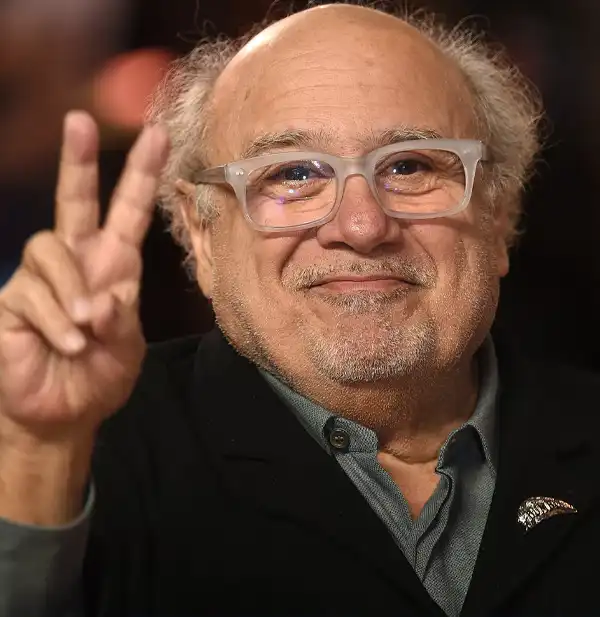
Danny DeVito is one of Hollywood's most recognizable and versatile entertainers, an American actor, comedian, director, and producer whose extraordinary career spans television, film, animation, and theater. Born Daniel Michael DeVito Jr. on November 17, 1944, in Neptune Township, New Jersey, he grew up in a working-class Italian-American family in nearby Asbury Park. With his unmistakable voice, expressive face, remarkable comic timing, and an ability to turn even the most unpleasant characters into audience favorites, DeVito has built a career that many performers would happily trade their entire collection of acting trophies to experience.
Long before Danny DeVito became a household name, his professional ambitions were considerably more practical. He attended Oratory Preparatory School in New Jersey and later trained as a hairdresser at the American Academy of Dramatic Arts in New York City. His interest in acting developed while he was studying there, and he graduated in 1966. What began as a possible career in hairstyling eventually became something considerably more entertaining, although Hollywood arguably lost a man who could have given an excellent haircut while delivering a perfectly timed insult.
DeVito's early acting career included theater productions and independent films, but a significant breakthrough arrived when he portrayed Martini in the stage production of One Flew Over the Cuckoo's Nest. He subsequently reprised the role in the acclaimed 1975 film adaptation starring Jack Nicholson. Directed by Miloš Forman, the film became a major critical and commercial success, winning five Academy Awards, including Best Picture. Although DeVito's supporting role was relatively small, his performance helped introduce him to a wider audience and demonstrated his ability to create memorable characters without needing to dominate every scene.
His career changed dramatically in 1978 when he joined the cast of the television sitcom Taxi as Louie De Palma, the abrasive, sarcastic, and thoroughly unpleasant dispatcher of the Sunshine Cab Company. Louie was the sort of boss who could turn a perfectly ordinary working day into a workplace grievance before the morning coffee had finished brewing. Yet DeVito transformed the character into one of television's most memorable comic personalities, combining outrageous insults, questionable morals, and occasional flashes of humanity. His performance earned him a Primetime Emmy Award and a Golden Globe Award, establishing him as a major television star.
Following the success of Taxi, Danny DeVito moved increasingly into feature films, demonstrating an impressive range that extended well beyond television comedy. He appeared in Terms of Endearment (1983), Romancing the Stone (1984), and The Jewel of the Nile (1985), frequently playing colorful characters who operated somewhere between charming opportunists and outright scoundrels. His collaboration with Michael Douglas and Kathleen Turner in Romancing the Stone proved particularly successful, introducing audiences to a comic partnership that would continue in later productions. DeVito had discovered a reliable Hollywood formula: surround yourself with talented performers, create absolute chaos, and make sure the audience enjoys every minute.
In 1988, DeVito starred alongside Arnold Schwarzenegger in the comedy Twins, released in 1988, portraying Vincent Benedict, the streetwise brother of Schwarzenegger's physically imposing Julius Benedict. The unlikely pairing became one of the decade's most memorable comedy combinations, with the film's humor built around the extraordinary contrast between its two leading actors. Their chemistry proved that successful comedy partnerships depend far more on personality and timing than physical similarities. The two reunited in Junior (1994), another comedy that placed Schwarzenegger in an improbable situation and allowed DeVito to provide the accompanying commentary that everyone else was probably thinking.
DeVito also established himself as a talented filmmaker, making his feature directing debut with Throw Momma from the Train (1987), a dark comedy starring himself and Billy Crystal. He subsequently directed The War of the Roses (1989), a viciously funny examination of a collapsing marriage starring Michael Douglas and Kathleen Turner. The film demonstrated DeVito's particular talent for finding humor in human behavior at its absolute worst. His directing style frequently embraced exaggerated characters, elaborate visual storytelling, and situations in which ordinary disagreements escalated into spectacular disasters. Fortunately for audiences, DeVito understood that watching fictional people behave terribly could be extremely entertaining, provided nobody had to pay the resulting legal bills.
One of Danny DeVito's most beloved achievements arrived with Matilda, the 1996 family fantasy comedy based on Roald Dahl's novel. DeVito directed, produced, narrated, and starred in the film, portraying Harry Wormwood, the dishonest and spectacularly unpleasant father of the brilliant young Matilda. His then-wife, actress Rhea Perlman, played Matilda's equally dreadful mother, Zinnia Wormwood. Despite portraying parents who could make a school detention seem like a relaxing holiday, DeVito and Perlman helped create a film that became a lasting favorite among families. Its themes of intelligence, kindness, courage, and standing up to bullies continue to resonate with audiences.
Throughout the 1990s, DeVito continued to demonstrate his versatility in films including Batman Returns (1992), in which he portrayed the grotesque and sinister Penguin opposite Michael Keaton's Batman. His performance combined elaborate makeup, physical comedy, and genuine menace, producing one of the most distinctive villains in the superhero film genre. He also appeared in Get Shorty (1995), Mars Attacks! (1996), and L.A. Confidential (1997), moving comfortably between comedy, science fiction, and crime drama. Few performers could convincingly portray a criminal mastermind, a Hollywood actor, and a thoroughly ridiculous extraterrestrial-invasion victim without audiences wondering whether someone had accidentally mixed up the casting paperwork.
Danny DeVito's career experienced another remarkable television chapter when he joined the cast of It's Always Sunny in Philadelphia during its second season in 2006. As Frank Reynolds, the wealthy, morally bankrupt, and gloriously unpredictable father figure associated with the show's dysfunctional central characters, DeVito embraced a level of outrageous comedy that would have made Louie De Palma look like a model employee. Frank's bizarre schemes, questionable personal habits, and complete disregard for civilized behavior helped make him one of the show's defining characters. The role introduced DeVito to younger generations and demonstrated that an established Hollywood star could enthusiastically abandon dignity in the pursuit of a good laugh.
Beyond live-action performances, Danny DeVito has contributed his distinctive voice to numerous animated productions. He voiced Phil, the grumpy but lovable satyr who trains the title character in Disney's Hercules, and later portrayed the Lorax in the 2012 animated adaptation of Dr. Seuss's environmental story. His unmistakable vocal delivery made him a natural choice for animated characters who needed personality, attitude, and the ability to sound permanently unimpressed. DeVito also voiced the Lorax in several international-language versions of the film, demonstrating an admirable willingness to tackle dialogue outside his native English. Whether delivering inspirational advice or complaining about somebody's foolishness, his voice remains instantly recognizable.
As a producer, DeVito helped establish Jersey Films with Michael Shamberg and Stacey Sher, contributing to an impressive collection of successful and critically acclaimed productions. The company's credits include Pulp Fiction (1994), Get Shorty (1995), Gattaca (1997), and Erin Brockovich (2000). These projects demonstrated that DeVito's creative interests extended far beyond his own acting appearances. His work behind the camera helped support distinctive storytelling, ambitious filmmakers, and productions that became important parts of modern American cinema. It turns out that the man who spent years portraying questionable businessmen was remarkably capable of making good business decisions himself.
DeVito's personal life has also attracted public interest, particularly his long relationship with actress Rhea Perlman, whom he married in 1982. The couple have three children: Lucy, Grace, and Jacob. Although DeVito and Perlman separated in later years, they have maintained a close relationship and have spoken warmly about their family connection. Their professional collaborations, particularly on Matilda, remain familiar to audiences, while their daughter Lucy DeVito has followed her parents into acting. With that family background, choosing a career in show business must have seemed almost as natural as choosing which side of the dinner table to sit on.
In addition to his television and film achievements, DeVito has continued to perform onstage, including a Broadway appearance in Arthur Miller's The Price in 2017. His performance earned a Tony Award nomination for Best Featured Actor in a Play, reinforcing his reputation as a performer whose talents extend beyond screen comedy. Across his career, he has received numerous honors and nominations, but perhaps his greatest accomplishment is his remarkable ability to remain relevant across generations. Audiences who first encountered him in Taxi now share his work with viewers who know him primarily as Frank Reynolds, the Penguin, or the narrator of Matilda.
Danny DeVito's enduring appeal comes from his willingness to embrace unusual characters, take creative risks, and find humor in situations that other performers might approach cautiously. He has never relied on conventional leading-man looks or a carefully polished public image. Instead, he has built his reputation on talent, determination, versatility, and an unmistakable willingness to make himself look ridiculous when the story demands it. From a New Jersey childhood to international recognition, his career illustrates how originality and comic instinct can carry an entertainer across decades of changing audience tastes. Hollywood has produced plenty of towering personalities, but few have managed to cast quite such a long shadow while having so much fun doing it.