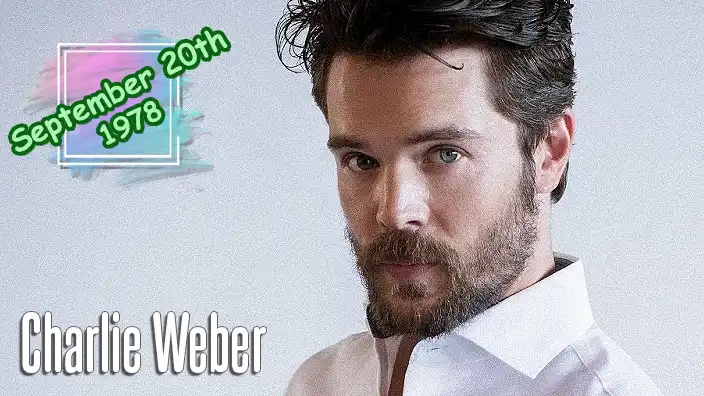
September 20, 1978, in Jefferson City, Missouri
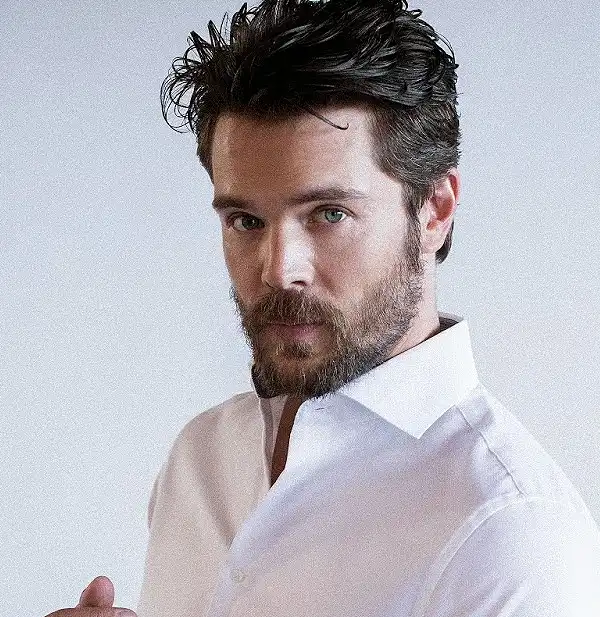
Born Charles Alan Weber Jr. on September 20, 1978, in Jefferson City, Missouri, Charlie Weber did not take the most conventional route toward becoming a successful television actor. After attending college for about a year, he decided that higher education was not where his future lay and headed for New York City. He was 19 and, rather than arriving with a guaranteed acting career conveniently waiting at the station, he studied acting at the Stella Adler Studio of Acting and found modeling work to help support himself. Among those early jobs was an appearance in the 1998 Abercrombie & Fitch Christmas catalog, photographed during the period when photographer Bruce Weber was helping reshape the company's famously image-conscious catalogs. It was not exactly Shakespeare, but it presumably paid considerably better than standing in a New York apartment wondering how to afford dinner.
Modeling provided Weber with an income, but acting remained the objective. He eventually moved to Los Angeles, and his first feature-film appearance came in the 2000 romantic comedy The Broken Hearts Club: A Romantic Comedy. The film featured an ensemble cast that included Timothy Olyphant, Zach Braff and Dean Cain, and although Weber's role was small, it placed him on screen and officially got his acting career underway. His more significant early break arrived almost immediately afterward when he joined one of television's most devotedly followed series, Buffy the Vampire Slayer.
Weber played Ben during the fifth season of Buffy, appearing in a recurring role that was considerably more complicated than the pleasant young medical intern initially appeared to be. Ben was mystically connected to Glory, the season's immensely powerful villain, with the two occupying the same body while remaining separate personalities. This being Buffy the Vampire Slayer, sharing your body with an evil hell goddess was merely one of those unfortunate complications that could happen to a fellow. The role gave Weber considerable exposure and placed him in the middle of one of the show's major storylines rather than simply handing him a monster costume and asking him to lurk behind a tombstone.
After Buffy, Weber built his career the traditional working-actor way: one role after another, steadily becoming one of those performers audiences recognized even when they could not immediately remember where they had seen him. He appeared as Jay in several episodes of Everwood and made guest appearances in an impressive collection of established television programs, including The Drew Carey Show, Charmed, Veronica Mars, House, Bones, Burn Notice and Warehouse 13. He also managed the unusual achievement of appearing in CSI: Crime Scene Investigation, CSI: Miami and CSI: NY, playing different characters. Apparently, once one crime-scene investigation unit had finished with Charlie Weber, another was waiting around the corner.
His résumé continued expanding with recurring parts rather than relying solely upon one-off appearances. Weber played Todd in MTV's Underemployed and Mark Holland in 90210. He also appeared in films including Cruel Intentions 3 and the horror-comedy spoof Vampires Suck. By this stage, Weber had spent well over a decade working steadily in Hollywood, moving comfortably between drama, comedy, crime shows, supernatural television and film. That experience proved particularly useful when he landed the role that would transform him from a recognizable working actor into Frank Delfino.
How to Get Away with Murder premiered on ABC in 2014, with Viola Davis starring as formidable defense attorney and law professor Annalise Keating. Weber played Frank Delfino, Annalise's investigator and fixer, alongside a cast that included Billy Brown, Alfred Enoch, Jack Falahee, Aja Naomi King, Matt McGorry, Karla Souza and Liza Weil. From the beginning, Frank was clearly more than the office handyman. If Annalise needed information found, Frank could find it. If someone needed watching, Frank could watch them. If a situation required something rather less conventional than filing paperwork at the courthouse, Frank was generally the man standing nearby looking suspiciously calm.
Weber gave Frank an effective mixture of menace, confidence and unexpected vulnerability. The character could be charming and protective in one scene and deeply unsettling in another, while the series gradually revealed that his relationship with Annalise, Bonnie Winterbottom and the people surrounding them was far more complicated than viewers initially understood. Frank's history became an important part of the show's increasingly tangled mythology, and Weber had the difficult job of keeping the character believable even as new revelations repeatedly changed the audience's understanding of him.
That was no small task on How to Get Away with Murder, a series in which learning the truth usually meant discovering that the previous truth had neglected to mention three murders, two affairs, a conspiracy and somebody hiding evidence in a cupboard. Frank accumulated secrets at an industrial rate. Weber nevertheless avoided turning him into a simple television tough guy. As the series progressed, guilt, loyalty, anger, affection and a desperate desire to belong became increasingly important elements of Frank's personality.
His relationship with Laurel Castillo, played by Karla Souza, became one of the show's significant personal storylines, while Frank's bond with Bonnie Winterbottom, played by Liza Weil, carried years of complicated emotional history. Frank and Bonnie were among the characters who understood better than most how thoroughly damaged the people surrounding Annalise could become. Weber and Weil were able to play that connection without making it simple or comfortable, which suited a program where simple and comfortable relationships were approximately as common as quiet weeks at the Keating law office.
Weber remained with How to Get Away with Murder throughout its entire six-season run from 2014 to 2020, appearing as Frank in 90 episodes. During those years, the series became a major part of ABC's drama lineup, and Viola Davis made television history when she became the first Black woman to win the Primetime Emmy Award for Outstanding Lead Actress in a Drama Series. Weber's Frank became an integral member of the ensemble, surviving enough revelations, betrayals and catastrophes to make an ordinary workplace performance review seem rather inadequate.
While working on the series, Weber continued appearing elsewhere. He took the lead role of Evan Albright in the 2016 action film Jarhead 3: The Siege, playing a Marine caught in an attack on a U.S. embassy. The role allowed him to move squarely into action territory, making good use of the physical presence that had long been part of his screen persona. He later appeared in projects including Coyote Lake, demonstrating that Frank Delfino might have become his signature character, but it was never intended to become his only one.
After How to Get Away with Murder ended, Weber joined the After film franchise as Christian Vance, appearing in After We Collided in 2020. The romantic drama was considerably removed from the murderous complications of Annalise Keating's world, although anyone accustomed to playing Frank Delfino was probably entitled to regard almost any other workplace as relaxing.
Weber subsequently returned to action-oriented material in films including Panama, appearing alongside Cole Hauser and Mel Gibson, and took the role of Peter in the 2024 thriller The Painter, starring opposite Jon Voight and Madison Bailey. He has also become part of Hallmark's Mystery Island series as Jason Trent, demonstrating another useful aspect of a long acting career: after years spent surrounded by murders on network television, one can apparently move to a picturesque island and investigate them instead.
Away from live-action performances, Weber has also ventured into video games. He supplied the voice of Staff Sergeant Dunn in Battlefield 4, the hugely successful 2013 military shooter. It is one of those credits easily overlooked beside his television work, but it adds another medium to a career that has encompassed modeling, film, network television, cable television and voice acting.
Weber's career is particularly interesting because his best-known role did not arrive overnight. More than a decade of guest appearances, recurring characters, auditions and supporting roles came before Frank Delfino. Hollywood biographies often make success sound wonderfully orderly — arrive in Los Angeles, appear in something, become famous by Thursday — but Weber's path was far more representative of the profession. He worked. Then he worked some more. He appeared in successful programs, disappeared into another role, returned somewhere else and continued building a résumé until the right long-running character came along.
That character turned out to be a loyal, dangerous, emotionally complicated fixer with enough secrets to keep six seasons of television thoroughly occupied. Charlie Weber made Frank Delfino memorable not simply because Frank could be frightening, but because audiences eventually understood the man underneath the intimidation. It was a performance built upon contradictions: toughness and vulnerability, loyalty and betrayal, violence and affection.
From a young man leaving Missouri for New York to a model studying acting, from Buffy the Vampire Slayer to a lengthy procession of television guest roles, and ultimately to one of the central characters in How to Get Away with Murder, Weber built his career the old-fashioned way — by continuing to show up and do the work. Frank Delfino may remain the role most closely associated with his name, but the decades of work surrounding it reveal something equally important: Charlie Weber was hardly an overnight success. He simply made it look as though Frank Delfino had been waiting in the shadows all along.