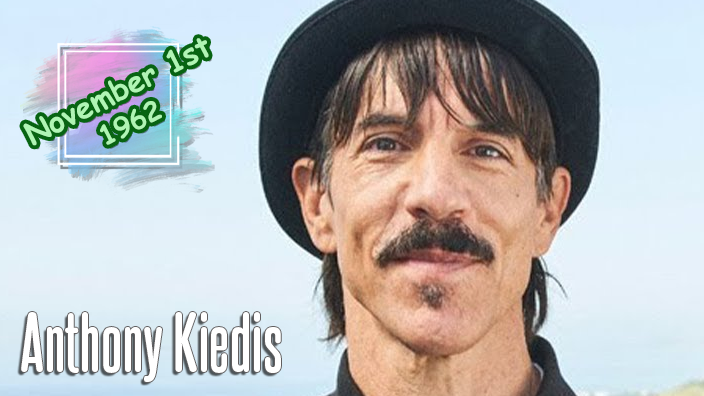
November 1, 1962, in Grand Rapids, Michigan

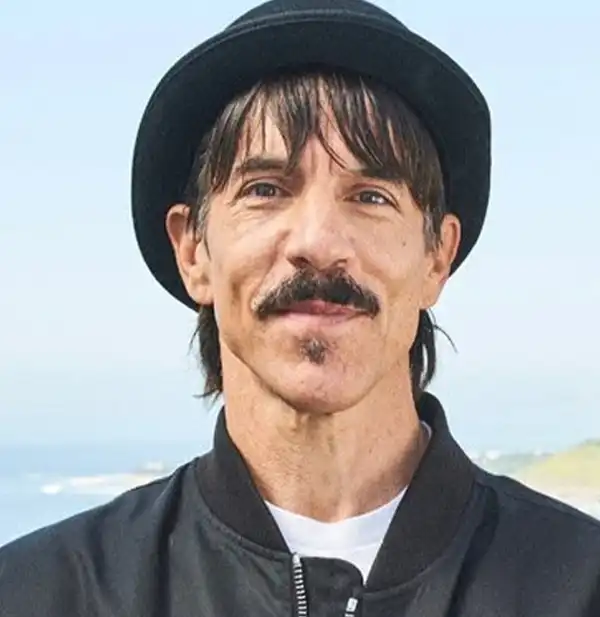
Anthony Kiedis is an American singer, songwriter, and founding member of the legendary rock band Red Hot Chili Peppers. Born on November 1, 1962, in Grand Rapids, Michigan, Kiedis became one of alternative rock's most recognizable frontmen, combining energetic performances, unconventional vocals, and deeply personal songwriting. His career has taken him from the underground music clubs of Los Angeles to some of the world's largest concert stages, where his enthusiasm for performing has rarely shown signs of slowing down.
His childhood was anything but ordinary. His parents, John Kiedis and Margaret Noble, divorced when Anthony was young, and he initially lived with his mother in Michigan. He later moved to Hollywood to live with his father, an actor known professionally as Blackie Dammett. Hollywood in the 1970s offered an unusual environment for a growing boy, particularly one whose father moved among actors, musicians, and entertainment industry personalities. Anthony encountered the excitement and excesses of show business long before he had any idea that he would eventually become one of its biggest musical personalities. His unconventional upbringing also exposed him to substance abuse at an early stage, something that would have serious consequences throughout his life.
While attending Fairfax High School in Los Angeles, Kiedis developed friendships that would eventually change the direction of modern rock music. Among his classmates were Michael Balzary, better known as Flea, guitarist Hillel Slovak, and drummer Jack Irons. Their shared enthusiasm for music, adventure, and occasionally questionable decisions helped establish a friendship that eventually developed into a band. Kiedis and Flea became particularly close, forming a musical partnership that would survive personnel changes, personal difficulties, and decades of performing together.
The Red Hot Chili Peppers began in 1983, originally performing under the wonderfully excessive name Tony Flow and the Miraculously Majestic Masters of Mayhem. Their first performance was intended as a one-time appearance at a Los Angeles club, but the audience's enthusiastic response encouraged the musicians to continue. The group soon adopted the name Red Hot Chili Peppers and began developing an unusual sound that mixed funk bass lines, punk rock energy, rap-style vocals, and an irreverent attitude toward traditional musical rules. It was a combination that occasionally confused critics but certainly gave audiences something to remember.
The band's self-titled debut album appeared in 1984, followed by Freaky Styley in 1985 and The Uplift Mofo Party Plan in 1987. Although commercial success was initially limited, the Red Hot Chili Peppers developed a loyal following through their unpredictable live performances and distinctive musical style. Kiedis became known for his rapid-fire lyrics, energetic movements, and willingness to turn a concert into something resembling an athletic event. His early vocal approach owed more to rhythmic chanting and rapping than traditional rock singing, but it helped establish the band's unmistakable identity.
Tragedy struck in 1988 when guitarist Hillel Slovak died from a heroin overdose. His death devastated the group and forced Kiedis to confront the destructive nature of his own substance abuse. Drummer Jack Irons subsequently left the band, and the future of the Red Hot Chili Peppers became uncertain. Nevertheless, Kiedis and Flea continued, eventually recruiting guitarist John Frusciante and drummer Chad Smith. This lineup would become one of the band's most successful and influential combinations.
The 1989 album Mother's Milk represented an important turning point, introducing the Red Hot Chili Peppers to a wider audience. Their cover of Stevie Wonder's "Higher Ground" attracted considerable attention, while the album demonstrated a more polished approach without abandoning the band's funk-rock foundations. However, their greatest breakthrough arrived with Blood Sugar Sex Magik in 1991. Produced by Rick Rubin, the album included "Give It Away," "Suck My Kiss," and the enormously successful "Under the Bridge," transforming the group from alternative music favorites into international stars.
"Under the Bridge" revealed a more vulnerable side of Anthony Kiedis. Inspired by feelings of loneliness, isolation, and his experiences with addiction, the song departed from the band's usual high-energy approach. Its emotional lyrics and melodic arrangement demonstrated that Kiedis could deliver more than rapid-fire rhymes and outrageous stage performances. The song became one of the band's defining recordings and helped establish him as a songwriter capable of expressing deeply personal experiences through music. It also showed that even the most energetic rock performer occasionally has something serious to say.
Success brought new challenges, including further struggles with addiction and changes within the band. John Frusciante departed in 1992 and was eventually replaced by former Jane's Addiction guitarist Dave Navarro. The resulting album, One Hot Minute, appeared in 1995 and explored a darker, heavier musical direction. Although it produced memorable songs such as "My Friends" and "Aeroplane," the album represented a difficult period for the musicians. Kiedis continued confronting personal problems while attempting to maintain the creative momentum of a band whose popularity had grown enormously.
Frusciante returned to the Red Hot Chili Peppers in 1998, helping usher in another remarkable period of success. The band's 1999 album Californication became one of its most celebrated releases, featuring songs including "Scar Tissue," "Otherside," and the title track. The album combined the group's established funk-rock sound with more melodic arrangements and thoughtful lyrics. Kiedis increasingly explored themes of relationships, personal growth, addiction, and the contradictions of life in California. His songwriting had matured considerably since the band's early days, although nobody was suggesting that the Chili Peppers had suddenly become a quiet acoustic folk group.
The success continued with By the Way in 2002, an album featuring songs such as "Can't Stop," "The Zephyr Song," and "By the Way." Kiedis demonstrated increasing confidence as a melodic vocalist, while the band's musical arrangements became more sophisticated. The double album Stadium Arcadium followed in 2006, producing major hits including "Dani California," "Snow (Hey Oh)," and "Tell Me Baby." The album debuted at number one on the Billboard 200 and earned the group several Grammy Awards, including Best Rock Album. By this stage, the Red Hot Chili Peppers had become one of the most successful alternative rock bands in history.
Kiedis has also explored his experiences outside music. In 2004, he published his autobiography, Scar Tissue, written with Larry Sloman. The book offered an unusually candid account of his childhood, relationships, musical career, and long struggle with drug addiction. Rather than presenting a carefully polished version of celebrity life, Kiedis described both his achievements and his serious personal mistakes. The memoir became a bestseller and provided readers with a revealing look at the complicated individual behind the energetic stage personality.
His acting career began before his musical success. As a youngster, Kiedis appeared in the 1978 film F.I.S.T., starring Sylvester Stallone, using the professional name Cole Dammett. He subsequently appeared in films including Tough Guys in 1986, Point Break in 1991, and The Chase in 1994. His role as Tone in Point Break, the action thriller starring Keanu Reeves and Patrick Swayze, remains one of his more recognizable film appearances. Although acting never replaced music as his primary profession, these roles demonstrated his willingness to explore different areas of entertainment.
Away from the stage, Kiedis became a father in 2007 with the birth of his son, Everly Bear. Fatherhood introduced another important dimension to his life, and he has spoken publicly about the responsibilities and personal changes associated with raising a child. His experiences with addiction, recovery, and family relationships have also influenced his songwriting, giving later Red Hot Chili Peppers recordings a more reflective character than the band's earliest material.
In 2012, Anthony Kiedis and the Red Hot Chili Peppers were inducted into the Rock and Roll Hall of Fame. The recognition celebrated the band's influence on popular music and its remarkable ability to combine different musical traditions into a distinctive sound. Their fusion of funk, punk, rap, and alternative rock helped inspire generations of musicians, while Kiedis's energetic performances established him as one of rock's most recognizable frontmen. The honor also acknowledged a career that had survived considerable adversity, including the deaths of friends, changing musical fashions, and numerous lineup changes.
The band continued releasing music with guitarist Josh Klinghoffer, including I'm with You in 2011 and The Getaway in 2016. John Frusciante returned again in 2019, and the reunited lineup released two albums in 2022, Unlimited Love and Return of the Dream Canteen. Both recordings demonstrated the group's continuing creative enthusiasm and commitment to its distinctive musical identity. Kiedis remained central to the band's sound, combining rhythmic vocal delivery with melodic passages and lyrics that reflected his experiences, observations, and enduring fascination with California life.
The friendship between Kiedis and Flea remains one of the most important relationships in the history of the Red Hot Chili Peppers. Their musical partnership began during their school days and developed through decades of international success, disagreements, tragedies, and reunions. Although their personalities and musical approaches differ, their shared history has helped sustain the band's identity. Flea's distinctive bass playing and Kiedis's unmistakable vocals continue to provide the foundation for a sound that audiences recognize almost immediately.
Anthony Kiedis's influence extends beyond record sales and awards. His distinctive combination of rapping, singing, and highly physical stage performances helped expand the possibilities of alternative rock. His lyrics evolved from playful accounts of Los Angeles nightlife into thoughtful explorations of loneliness, friendship, addiction, recovery, and personal relationships. That development allowed the Red Hot Chili Peppers to grow musically while retaining the rebellious spirit that originally attracted their fans.
Today, Anthony Kiedis remains closely associated with the Red Hot Chili Peppers and their extraordinary musical legacy. His career illustrates the unpredictable journey from youthful rebellion to international recognition, shaped by friendship, creativity, personal hardship, and an enduring passion for music. Few performers have spent so many years racing across concert stages while helping produce songs that have become familiar to several generations of listeners. And if there is one thing audiences have learned about Anthony Kiedis, it is that a microphone, a good bass line, and a little room to move are usually all he needs to get a party started.
References & Sources