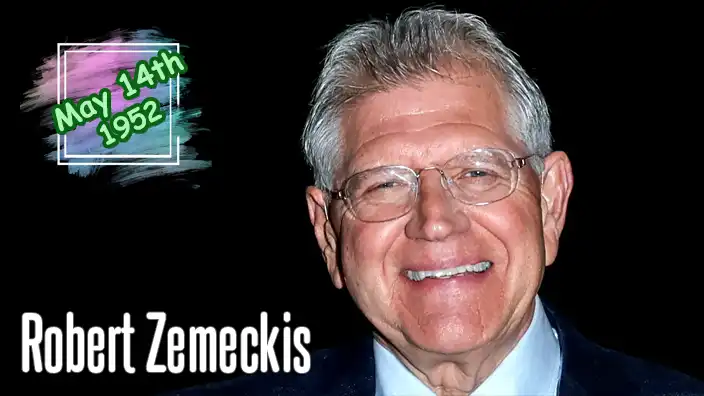
May 14, 1952, in Chicago, Illinois
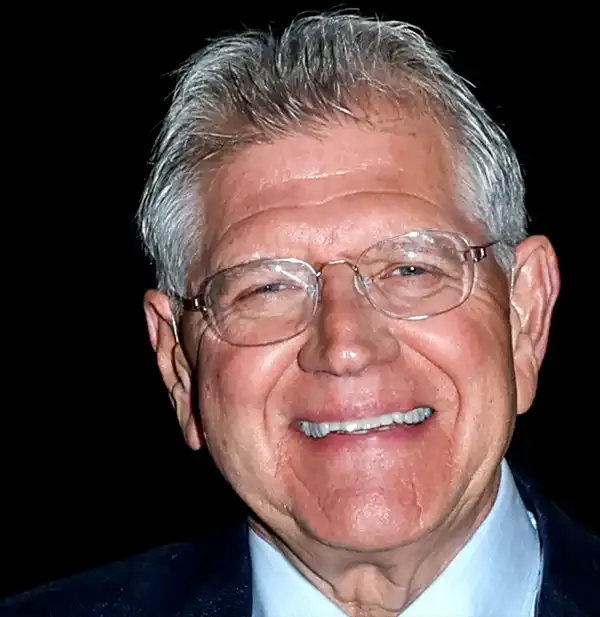
Robert Lee Zemeckis was born on May 14, 1952, in Chicago, Illinois. From an early age, he showed a fascination with storytelling and technology—a combination that would eventually define his entire career. He attended the University of Southern California’s School of Cinematic Arts, where he met future collaborator Bob Gale. That partnership would go on to shape some of the most beloved films in modern cinema.
Like many great careers, Zemeckis didn’t start at the top. His early films, including I Wanna Hold Your Hand (1978), showed promise but didn’t exactly set the box office on fire. Still, his talent caught the attention of Steven Spielberg, who became a mentor and supporter—never a bad person to have in your corner.
Everything changed in 1985 with Back to the Future. Co-written with Gale and produced by Spielberg, the film became an instant classic. Time travel, a DeLorean, and a teenager accidentally interfering with his parents’ past—it shouldn’t have worked as well as it did, but under Zemeckis’ direction, it was magic. The film’s success launched a trilogy and secured his place in Hollywood history.
Zemeckis didn’t slow down after that. Instead, he leaned into what he did best: blending cutting-edge technology with strong storytelling. In 1988, he directed Who Framed Roger Rabbit, a groundbreaking film that combined live-action and animation in a way audiences had never seen before. It wasn’t just impressive—it was revolutionary, setting a new standard for visual effects.
Then came Forrest Gump (1994), a film that proved Zemeckis could do more than spectacle—he could tell deeply human stories. The movie followed the life of an unlikely hero who somehow finds himself at the center of major historical events. It was heartfelt, humorous, and wildly successful, earning Zemeckis an Academy Award for Best Director.
Throughout the late 1990s and early 2000s, Zemeckis continued to push boundaries. Films like Cast Away showcased his ability to tell compelling stories with minimal elements—just one man, one island, and a volleyball that somehow became a supporting character audiences genuinely cared about.
Never one to sit still, Zemeckis became an early adopter of performance capture technology, directing films like The Polar Express (2004), Beowulf (2007), and A Christmas Carol (2009). These projects explored new ways of blending digital animation with live performances, once again putting him at the forefront of cinematic innovation.
His career is defined by a willingness to experiment. While some directors find a formula and stick to it, Zemeckis seems to enjoy tearing up the formula and starting over. Whether it’s time travel, digital effects, or emotionally driven storytelling, he approaches each project with the same curiosity that likely got him into filmmaking in the first place.
What truly sets Robert Zemeckis apart is his balance of heart and technology. It’s easy to rely on special effects, but he uses them to serve the story, not replace it. That’s why his films continue to resonate with audiences across generations.
In a business where trends come and go, Zemeckis has built a legacy by staying one step ahead—while still remembering that, at the end of the day, it’s all about telling a great story.