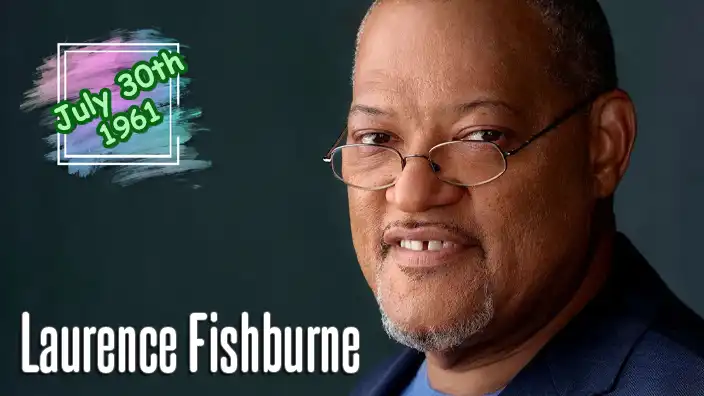
July 30, 1961, in Augusta, Georgia
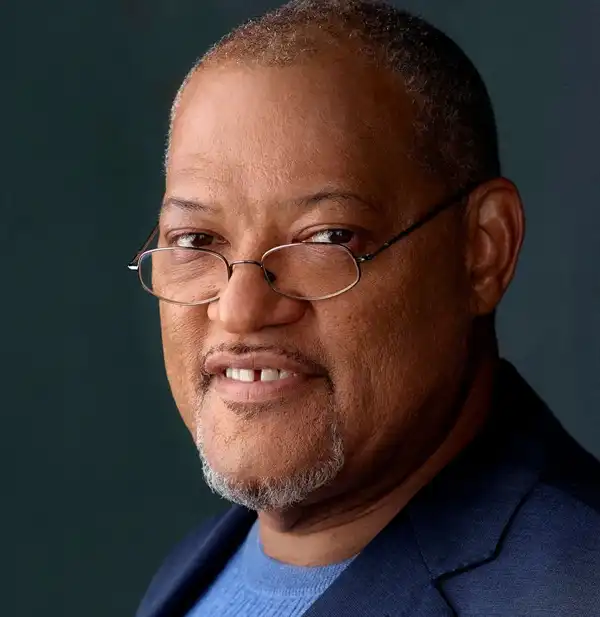
Born Laurence John Fishburne III in Augusta, Georgia, he was raised primarily in Brooklyn, New York, by his mother, Hattie Bell Fishburne, a junior high school mathematics and science teacher. His parents divorced when he was young, but both encouraged his interests, particularly his growing passion for acting. Fishburne showed remarkable confidence as a child and quickly gravitated toward the stage, displaying a maturity well beyond his years.
His professional acting career began astonishingly early. At just 11 years old, he appeared in the daytime soap opera One Life to Live, playing Joshua Hall. The role introduced him to the demands of television production while most children his age were still deciding what they wanted to be when they grew up. It marked the beginning of one of Hollywood's longest and most respected acting careers.
Fishburne's first major film opportunity arrived in 1979 when director Francis Ford Coppola cast him as Tyrone "Mr. Clean" Miller in the Vietnam War epic Apocalypse Now. Although only 14 years old when production began, Fishburne famously claimed to be older in order to secure the role. The film's notoriously lengthy production meant he was considerably older by the time filming concluded, and the experience became an extraordinary education in filmmaking.
Throughout the 1980s, Fishburne steadily built a reputation as one of the industry's finest young dramatic actors. He appeared in films including The Cotton Club, King of New York, School Daze, and Deep Cover, consistently delivering thoughtful, commanding performances that attracted the attention of both critics and directors.
One of his most celebrated early achievements came in 1993 when he portrayed Ike Turner in What's Love Got to Do with It, the acclaimed biography of Tina Turner. Fishburne brought remarkable complexity to a difficult role, avoiding simple caricature while portraying the troubled musician with emotional depth. His performance earned an Academy Award nomination for Best Actor, firmly establishing him among Hollywood's elite dramatic performers.
During the same decade, Fishburne became closely associated with Shakespeare. He starred in director Oliver Parker's film adaptation of Othello (1995), becoming the first African American actor to play the title role in a major motion picture adaptation of the play. His powerful performance demonstrated both his classical training and his extraordinary ability to bring timeless characters to modern audiences.
Then came the role that would permanently secure his place in popular culture.
In 1999, Fishburne portrayed Morpheus in The Matrix. As the mysterious mentor who awakens Neo to the truth about reality, Fishburne delivered one of science fiction's most iconic performances. His calm authority, philosophical dialogue, and unforgettable delivery of lines such as "What if I told you..." became instantly recognizable around the world. Although the phrase itself became famous through internet culture, Fishburne's portrayal of Morpheus remains one of cinema's defining mentor figures.
The overwhelming success of The Matrix led to The Matrix Reloaded and The Matrix Revolutions, completing one of the most influential science-fiction trilogies ever produced. The films revolutionized action cinema through groundbreaking visual effects while exploring themes of free will, artificial intelligence, and human identity.
Fishburne's career has never been limited to one genre. He has appeared in dramas, action films, thrillers, historical epics, animation, and family entertainment. Notable films include Event Horizon, Mystic River, Mission: Impossible III, Predators, John Wick: Chapter 2, John Wick: Chapter 3 – Parabellum, Ant-Man and the Wasp, and numerous others. His ability to move effortlessly between blockbuster productions and intimate dramas has made him one of Hollywood's most dependable performers.
Television has also showcased his remarkable versatility. From 2008 until 2011, Fishburne starred as Dr. Raymond Langston on CSI: Crime Scene Investigation, succeeding William Petersen in one of television's highest-rated crime dramas. Rather than attempting to imitate his predecessor, Fishburne created a distinctive character whose intellectual curiosity and calm professionalism earned widespread praise.
He later received acclaim for his recurring role as Earl "Pops" Johnson on the hit sitcom Black-ish, displaying a wonderful blend of warmth, humor, and wisdom. The performance reminded audiences that Fishburne's talents extend far beyond dramatic roles.
As a producer and director, Fishburne has also contributed significantly behind the camera. He has supported projects exploring African American history, literature, and culture while encouraging greater diversity within the entertainment industry. His production work reflects the same thoughtful approach that has characterized his acting career.
Fishburne is equally respected on the stage. He earned a Tony Award for Two Trains Running by August Wilson and has performed extensively in classical and contemporary theater. His commanding stage presence has long made him one of America's premier theatrical actors as well as a major film star.
One aspect of Fishburne's career that often goes unnoticed is his remarkable voice work. His deep, resonant voice has become one of the most recognizable in entertainment, leading to narration projects, documentaries, animated characters, commercials, and audiobook performances. Whether explaining history, portraying animated heroes, or narrating dramatic stories, his voice alone conveys intelligence, authority, and gravitas.
Throughout his career, Fishburne has earned widespread respect for his professionalism and willingness to tackle challenging material. Rather than chasing celebrity, he has consistently sought roles that offer substance, complexity, and emotional truth. Directors frequently praise his preparation, discipline, and collaborative spirit on set.
His influence extends across multiple generations of actors. Young performers often cite Fishburne as an example of longevity achieved through talent, integrity, and careful career choices. He has demonstrated that lasting success comes not from fleeting fame but from consistently delivering memorable performances across decades.
Today, Laurence Fishburne remains one of Hollywood's most distinguished actors. Whether audiences remember him as Morpheus, Ike Turner, Othello, Dr. Raymond Langston, or one of his many other unforgettable characters, his career reflects remarkable versatility, intelligence, and artistic excellence. Few performers command the screen with such effortless authority, and even fewer have left such an enduring mark on film, television, and theater.