Celebrating the Board Game That Turns Families into Property Tycoons
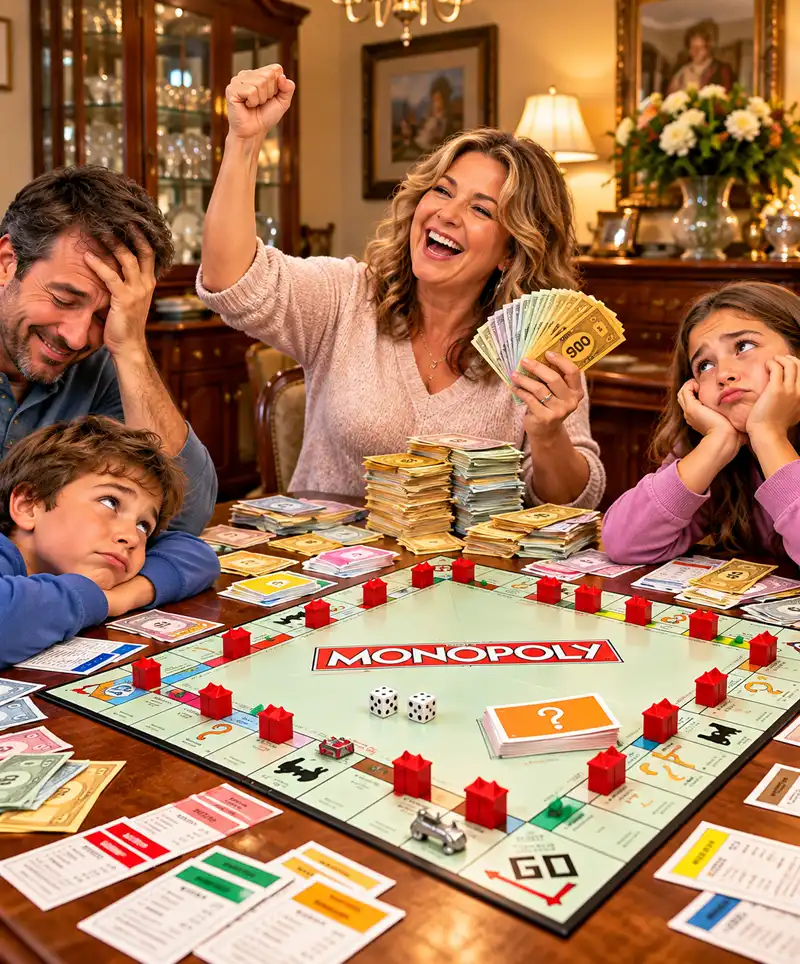
There are few family activities quite as entertaining, competitive, or potentially dangerous to domestic harmony as a game of Monopoly. One moment, everyone is sitting peacefully around the kitchen table, enjoying snacks and friendly conversation. Two hours later, Dad owns half the neighborhood, Grandma is demanding rent from her grandchildren, somebody has been sent to jail for the third time, and the youngest player is accusing the banker of financial misconduct. Welcome to National Play Monopoly Day, celebrated annually on November 19, when families and friends are encouraged to dust off the famous board game, count their colorful money, and discover just how quickly ordinary people can become ruthless real estate investors.
National Play Monopoly Day celebrates the history, popularity, and enduring appeal of Monopoly, the classic property-trading board game that has entertained generations of players. Since becoming a commercial sensation in 1935, Monopoly has introduced countless people to the excitement of buying property, collecting rent, negotiating deals, and occasionally losing everything after an unfortunate encounter with Boardwalk. The game combines luck, strategy, financial decisions, and social interaction in a way that can transform an ordinary evening into a memorable competition. Whether you're a devoted Monopoly enthusiast or someone who remembers being financially destroyed by an eight-year-old cousin, November 19 offers the perfect excuse to roll the dice and try your luck again.
The History and Origins of National Play Monopoly Day
National Play Monopoly Day is an unofficial observance celebrated every November 19 to recognize the famous Monopoly board game and encourage people to enjoy playing it. Although the holiday appears on calendars devoted to unusual and entertaining celebrations, its original creator and establishment date have not been conclusively documented. Unlike Monopoly itself, which has a fascinating and well-recorded history, the origins of the commemorative day remain somewhat mysterious. Fortunately, no property deeds or complicated financial transactions are required to participate.
The holiday reflects the enduring popularity of traditional board games, particularly those that bring friends and family together for an evening of friendly competition. Monopoly has remained a recognizable part of popular culture for decades, with its distinctive board, colorful properties, familiar playing pieces, and miniature houses and hotels. The game has been passed down through generations, creating family traditions and memories that frequently involve dramatic victories, spectacular financial disasters, and spirited disagreements about whose turn it was to collect rent.
Celebrating National Play Monopoly Day is therefore about more than simply playing a board game. It recognizes a pastime that has connected people across different generations, countries, and cultures. Monopoly offers a combination of nostalgia and competition that few games can match, allowing players to imagine themselves as wealthy property owners without requiring a mortgage application, a real estate license, or an appointment with a bank manager.
The Surprising History of Monopoly: Elizabeth Magie and The Landlord's Game
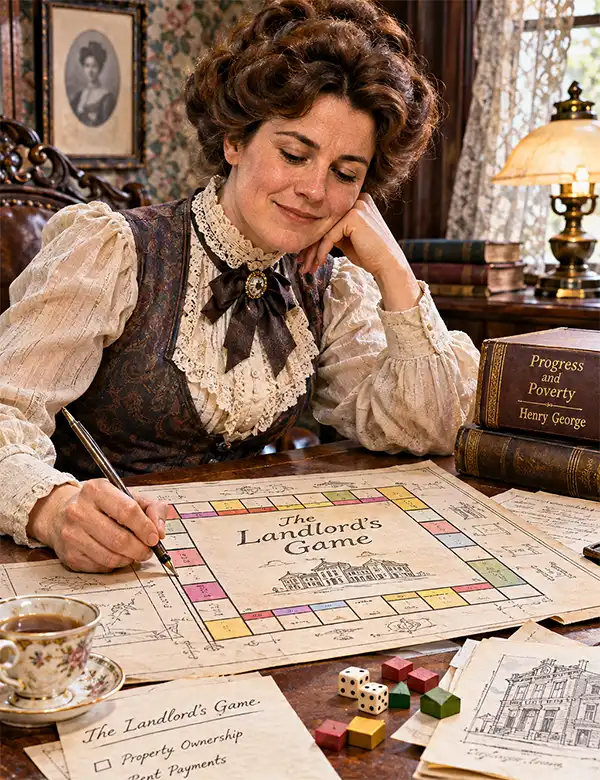
The origins of Monopoly reach back to the early twentieth century and an American inventor named Elizabeth "Lizzie" Magie. Long before the familiar Monopoly board appeared in living rooms around the world, Magie developed a game called The Landlord's Game, which she patented in 1904. Her invention was designed to demonstrate the economic consequences of concentrated land ownership and the advantages that landlords could gain over tenants. Rather than celebrating the accumulation of wealth, Magie wanted players to recognize the problems that could arise when a small number of people controlled valuable property.
Magie was influenced by the economic ideas of Henry George, a nineteenth-century political thinker who advocated changes to land taxation. She believed a board game could help explain complicated economic principles in an entertaining and understandable way. Her design included property ownership, rent payments, taxation, and other financial elements that would eventually become familiar features of Monopoly. Some versions of her game allowed players to explore different economic arrangements, including systems that rewarded cooperation rather than concentrating wealth in the hands of a few individuals.
The great irony is that Magie's educational warning about monopolies eventually evolved into a game in which creating a monopoly became the principal objective. Players enthusiastically competed to acquire properties, increase rents, and bankrupt their opponents, often displaying exactly the sort of behavior the original inventor hoped to encourage people to question. One suspects Magie might have raised an eyebrow upon discovering that generations of children would celebrate her economic lesson by charging their grandparents outrageous rent.
During the following decades, variations of The Landlord's Game circulated among friends, families, and communities. Players modified the rules, created homemade boards, and introduced familiar street names. These informal versions helped shape the game that would eventually become Monopoly, demonstrating how a single invention could evolve through the contributions of numerous players long before it reached commercial success.
Charles Darrow, Parker Brothers, and Monopoly's Rise to Fame
During the early 1930s, Charles Darrow, an unemployed salesman from Pennsylvania, encountered a version of the property-trading game that had developed from Magie's original invention. Darrow adapted the design, produced his own game boards, and began selling copies. His version featured many of the recognizable elements that would become associated with Monopoly, including properties named after streets in Atlantic City, New Jersey.
In 1935, Parker Brothers acquired the rights to Darrow's version and began selling Monopoly commercially. The game became an extraordinary success during the Great Depression, a period when millions of Americans were experiencing financial hardship. There was something strangely appealing about escaping economic uncertainty by spending an evening pretending to become a wealthy property owner. Players who could barely afford their own rent could suddenly purchase entire neighborhoods, build hotels, and demand enormous payments from their friends. The fact that these imaginary financial empires were usually destroyed before bedtime apparently did little to diminish the entertainment.
For many years, Charles Darrow was widely credited as the inventor of Monopoly, while Elizabeth Magie's earlier contribution received relatively little public recognition. Historical research and legal disputes eventually helped restore attention to Magie's role in developing the game's fundamental concepts. Today, the story of Monopoly is recognized as a more complicated history involving an original educational invention, decades of informal adaptations, and the commercial development that transformed the game into an international favorite.
The game's remarkable success established Monopoly as one of the most recognizable board games of the twentieth century. Its familiar streets, colorful property groups, miniature buildings, and memorable playing pieces became part of popular culture. What began as an educational experiment about economic inequality had become a worldwide competition to acquire as much imaginary property as possible. If nothing else, Monopoly demonstrated that people could develop a surprisingly intense emotional attachment to a tiny green wooden house.
How to Play Monopoly: The Rules of Buying, Trading, and Bankruptcy
The basic objective of Monopoly is straightforward: become the last player remaining after your opponents have gone bankrupt. Players move around the board by rolling two dice, purchasing available properties, collecting rent, and managing their money. The traditional American edition includes twenty-two colored street properties, four railroads, and two utilities, along with spaces for taxes, Chance and Community Chest cards, jail, and other familiar features. Each player begins with a supply of Monopoly money, which must be managed carefully to avoid financial disaster.
When a player lands on an unowned property, they generally have the opportunity to purchase it from the bank at the printed price. If they choose not to buy it, the official rules call for the property to be offered at auction, allowing other players to bid. This rule is frequently overlooked by families who have developed their own traditions, but it plays an important role in moving the game forward. Auctions help distribute properties among players and create additional opportunities for negotiation and competition.
The real excitement begins when players acquire every property in a particular color group. Owning a complete set allows a player to develop those properties by purchasing houses and eventually hotels, following the game's building rules. As improvements are added, rent can increase dramatically, transforming an apparently harmless property into a financial trap for unsuspecting opponents. A player who confidently travels around the board with a pocket full of money can suddenly find themselves facing an enormous rent payment and the unpleasant realization that their carefully constructed financial empire is about to collapse.
Players can also negotiate trades, mortgage properties, and make financial arrangements to improve their position. These decisions introduce an element of strategy beyond the luck of the dice. A successful player must consider which properties to acquire, when to invest in buildings, and how much cash to retain for unexpected expenses. Of course, even the most carefully prepared strategy can unravel when a player lands on an expensive hotel and discovers that their available funds would barely cover the cost of the doormat.
Boardwalk, Park Place, and the Famous Monopoly Properties
Few Monopoly properties inspire as much excitement as Boardwalk and Park Place, the two dark-blue properties in the traditional American edition. Their position near the end of the board, high purchase prices, and substantial potential rents have made them symbols of Monopoly wealth and ambition. Acquiring both properties and developing them with houses or hotels can create a formidable financial threat to opponents, particularly when someone has the misfortune to land on Boardwalk at precisely the wrong moment.
However, the most expensive properties are not necessarily the most profitable investments in every game. Experienced players often pay considerable attention to the orange and red property groups because of their locations and the ways players move around the board. Properties near frequently visited spaces can generate regular rent payments, making them valuable even when their individual rents are lower than those associated with Boardwalk. Successful Monopoly strategy involves considering both the amount of rent a property can collect and the likelihood that another player will land there.
The familiar property names have historical connections to Atlantic City, New Jersey, where many of the streets and locations represented on the board can be found. Boardwalk refers to the city's famous seaside promenade, while other properties reflect streets and neighborhoods associated with the resort community. This geographic connection gives the American Monopoly board a distinctive character and links the game to a real place, although actual Atlantic City property owners may be relieved that purchasing an entire street is not quite as simple as handing a banker a few colorful banknotes.
For generations of players, these properties have become more than spaces on a board. They represent ambitions, rivalries, and memorable moments in family gaming history. The player who owns Boardwalk may feel like a financial genius, while everyone else quietly hopes they will be sent directly to jail before another rent payment becomes due.
The Monopoly Playing Pieces: From the Top Hat to the Little Dog
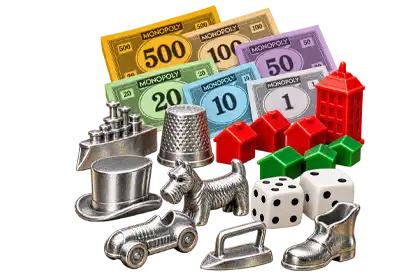
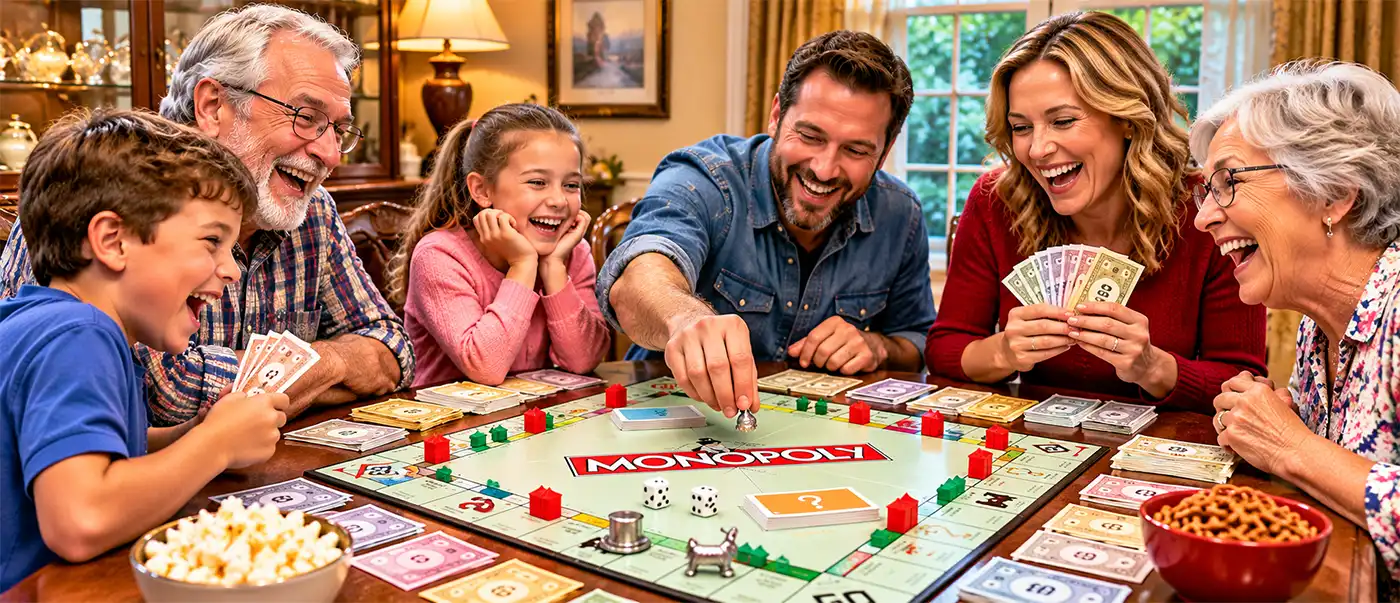
One of Monopoly's most recognizable features is its collection of miniature playing pieces, traditionally known as tokens. These small figures allow players to move around the board while expressing a little personality through their choice of transportation or household object. Classic Monopoly tokens have included the top hat, battleship, racing car, thimble, iron, boot, and Scottish terrier. Over the years, different editions have introduced new pieces, retired familiar favorites, and occasionally inspired surprisingly passionate debates about which token deserves a permanent place in the box.
The Scottish terrier has become particularly beloved among Monopoly enthusiasts, perhaps because a small metal dog seems considerably friendlier than a financial institution dedicated to bankrupting everyone at the table. The racing car appeals to players who enjoy moving quickly around the board, although its impressive appearance provides no actual advantage when the dice refuse to cooperate. The top hat, meanwhile, suggests an air of wealth and sophistication, making it an appropriate choice for someone who intends to spend the evening purchasing railroads and charging their relatives excessive rent.
Monopoly tokens have changed as the game's popularity has expanded and consumer preferences have evolved. Different editions may include themed pieces connected to movies, television programs, cities, sports teams, and other subjects. These variations help keep the game visually interesting while preserving the familiar experience of selecting a favorite piece before the competition begins.
Choosing a Monopoly token is technically a minor decision, but many families treat it with considerable seriousness. Some players insist on using the same piece every time, claiming that their chosen token brings good luck. Others select whichever figure is available after the traditional argument over who gets the little dog. Naturally, the dog is entirely innocent of any subsequent financial wrongdoing.
 Monopoly Strategy: How to Become a Successful Property Tycoon
Although Monopoly involves a significant element of chance, thoughtful decisions can influence the outcome. One of the most important strategies is acquiring properties early in the game, when opportunities are plentiful and competitors have not yet established powerful color groups. Owning a variety of properties provides bargaining opportunities, while completing a color group allows a player to begin collecting increased rents through development. However, purchasing everything in sight without maintaining enough money for future expenses can create problems when unexpected payments arise.
Trading is another essential part of Monopoly strategy. Players frequently discover that they own properties needed by their opponents, creating opportunities to negotiate exchanges. A successful trade may allow both parties to complete valuable color groups, but it can also strengthen a competitor considerably. Before agreeing to an exchange, players should consider whether the benefits outweigh the risks. Giving an opponent the final property needed to build several hotels might seem reasonable when they offer a generous payment, but the decision may become less attractive when those hotels begin collecting rent.
Building houses can be particularly important because developed properties generate significantly more rent than undeveloped ones. The official rules also require houses to be built evenly across properties within a color group, preventing players from concentrating all their improvements on a single location immediately. Managing the available supply of houses can become part of the competition, especially when several players are developing their properties simultaneously.
Perhaps the most valuable Monopoly lesson is that wealth on paper is not always the same as having enough cash to meet immediate obligations. A player might own numerous valuable properties yet still struggle to pay rent after an unfortunate roll of the dice. Mortgaging properties or selling buildings can provide temporary relief, but repeated financial emergencies may eventually lead to bankruptcy. In this respect, Monopoly offers a surprisingly practical reminder that even imaginary millionaires should maintain an emergency fund.
Monopoly House Rules: Why Every Family Plays a Different Game
Anyone who has played Monopoly with different groups of people knows that the official rules and family traditions do not always agree. Many households have developed their own variations over the years, often without realizing that their favorite customs were never included in the printed instructions. These house rules may involve collecting money from Free Parking, allowing players to avoid property auctions, changing the amount of starting money, or introducing special arrangements for loans and trades.
One of the most famous Monopoly house rules involves placing fines and tax payments in the center of the board and awarding the accumulated money to anyone who lands on Free Parking. Although this tradition is popular, the official rules do not provide a cash reward for landing there. Free Parking is simply a space where nothing happens. Adding a large financial prize can inject excitement into the game, but it can also keep struggling players financially afloat and extend the overall playing time.
Another frequently overlooked rule concerns property auctions. When a player declines to purchase an unowned property, the banker is supposed to auction it rather than leaving it available for someone else to land on later. Skipping auctions can slow the acquisition of properties and delay the point at which players begin developing color groups. This helps explain why some family Monopoly games seem to last approximately as long as the construction of an actual shopping center.
House rules are not necessarily a problem, provided everyone agrees on them before the game begins. Trouble usually starts when somebody suddenly announces a previously undisclosed family tradition at the exact moment it would save them from bankruptcy. For the sake of domestic harmony, it is generally advisable to establish the rules before the first dice roll, preferably while everyone is still speaking to one another.
Why Monopoly Games Can Last So Long
Monopoly has developed a reputation for games that continue for hours, occasionally stretching across an entire afternoon or evening. While some games conclude relatively quickly, others become lengthy contests as players accumulate properties, negotiate trades, and struggle to eliminate their competitors. The combination of random movement, financial management, and player decisions means that no two games unfold in exactly the same way.
House rules can also have a substantial influence on playing time. Awarding extra money through Free Parking, providing unofficial loans, or allowing bankrupt players to remain in the game can prolong the competition. When players continually receive additional funds, it becomes more difficult for anyone to be eliminated, allowing the game to continue long after the snacks have disappeared and the family dog has gone to bed.
Another reason Monopoly games can become lengthy is the reluctance of players to make unfavorable trades. Someone may possess the final property needed by another player but refuse to sell it at any reasonable price. Negotiations can then resemble an international diplomatic conference, complete with threats, counteroffers, and accusations of unreasonable behavior. Eventually, someone may agree to a deal simply because they would like to eat dinner before midnight.
For families who prefer a shorter experience, following the official rules, using auctions, and agreeing on a reasonable time limit can help. Some editions also offer alternative formats designed for quicker play. The important thing is to remember that Monopoly is supposed to be entertaining, not a lifelong financial commitment.
What Monopoly Teaches About Money, Negotiation, and Decision-Making
Beneath the colorful money and competitive excitement, Monopoly introduces several basic financial ideas. Players learn that purchasing assets requires an initial investment, that ownership can generate income, and that expenses must be managed carefully. The game also demonstrates how financial circumstances can change unexpectedly, particularly when a player encounters taxes, rent payments, or other obligations. These experiences provide opportunities for discussing money management in a setting where mistakes carry no real financial consequences.
Monopoly also encourages negotiation and decision-making. Players must evaluate possible trades, consider the advantages of different properties, and decide when to invest or conserve their resources. These choices can help younger players practice arithmetic, compare values, and understand the importance of planning ahead. Counting money, calculating change, and following written instructions are useful skills that can be reinforced naturally through gameplay.
However, Monopoly should not be mistaken for a complete or realistic lesson in economics. The game's objective is to eliminate competitors through financial domination, which differs considerably from the complexity of actual markets and economic systems. Its simplified rules also leave out many important aspects of real estate ownership, business activity, taxation, and personal finance. Nevertheless, the game can provide a starting point for conversations about wealth, fairness, cooperation, and the consequences of concentrating resources.
Perhaps the most memorable lesson is that financial success can change the way people behave, at least when miniature houses and brightly colored banknotes are involved. A normally generous family member may suddenly become remarkably enthusiastic about collecting every dollar owed to them. Fortunately, the financial damage usually disappears when the game is packed away, although the emotional consequences of a particularly ruthless trade may linger until Christmas.
Monopoly Around the World: International Editions and Famous Variations
Monopoly's international popularity has inspired editions featuring cities, countries, famous landmarks, fictional worlds, and popular entertainment franchises. While the traditional American game uses properties associated with Atlantic City, other editions replace these locations with familiar streets and destinations from different regions. The British version, for example, includes famous London locations such as Mayfair, Park Lane, and Old Kent Road, giving players the opportunity to become imaginary property tycoons in the nation's capital.
The game's adaptability has helped maintain its appeal across different cultures and generations. Players can enjoy familiar Monopoly mechanics while exploring locations or themes that reflect their own interests. Special editions may feature movies, television series, sports teams, popular characters, or local communities. Some versions introduce different rules and gameplay features, while others retain the traditional property-trading experience with redesigned boards and playing pieces.
Electronic and digital versions have also expanded the ways people can enjoy Monopoly. Video game adaptations and mobile applications allow players to compete without handling physical money, arranging miniature houses, or searching beneath the sofa for a missing playing piece. Digital editions can automate calculations and enforce rules, reducing some of the disagreements associated with traditional gameplay. On the other hand, they also eliminate the satisfaction of dramatically counting out a large rent payment while maintaining direct eye contact with the unfortunate recipient.
Despite these innovations, the classic tabletop version remains appealing because of its physical pieces, face-to-face interaction, and shared experience. There is something special about gathering around a board, rolling actual dice, and watching the expression on someone's face when they realize that their next move could cost them everything.
The Psychology of Monopoly: Why Friendly Competition Gets So Serious
Monopoly is particularly effective at creating emotional investment because players gradually build something they want to protect. Acquiring a valuable property, completing a color group, or constructing a hotel can produce a sense of achievement. Losing those assets, particularly through an unfortunate roll of the dice, can feel surprisingly disappointing. Although the money and buildings are imaginary, the competitive emotions they produce can be very real.
The game also combines skill and chance in ways that can generate dramatic reversals of fortune. A player who has made thoughtful decisions may still suffer a costly setback, while someone who appears to be losing can recover through a fortunate trade or unexpected opportunity. This uncertainty helps keep players engaged, but it can also produce frustration when events seem unfair. The person who repeatedly lands on expensive properties may begin to suspect that the dice are involved in a conspiracy.
Negotiation adds another psychological dimension. Players must decide whom to trust, when to cooperate, and whether a proposed trade is genuinely beneficial. Friendly relationships can become temporarily complicated when someone refuses to surrender a valuable property, and a seemingly generous offer may conceal a carefully calculated strategy. Monopoly provides an entertaining demonstration of how competition, incentives, and personal relationships can influence decisions.
The best Monopoly experiences balance competitive enthusiasm with good sportsmanship. Winning can be satisfying, but the real value of the game lies in shared enjoyment. After all, a victory becomes considerably less impressive if nobody in the family is willing to play with you again.
How to Celebrate National Play Monopoly Day on November 19
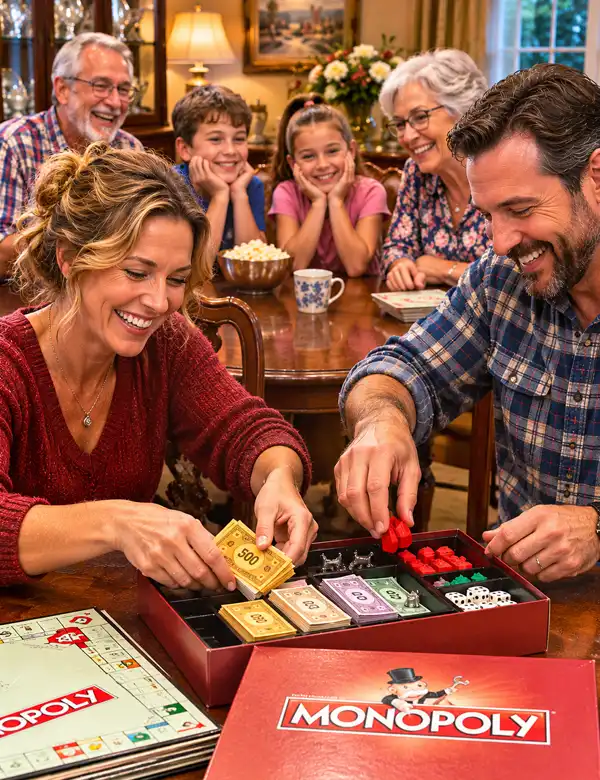
The most obvious way to celebrate National Play Monopoly Day is to gather family members or friends and enjoy a traditional game. Clear the kitchen table, distribute the money, choose your favorite playing pieces, and prepare for an evening of property transactions and financial surprises. For an authentic experience, establish the official rules before beginning, including property auctions and the absence of a Free Parking jackpot. This may come as a shock to players who have spent decades believing that the middle of the board operates as an unofficial savings account.
Families can make the occasion more entertaining by organizing a Monopoly game night with snacks, refreshments, and a little friendly competition. Younger children can participate with assistance from adults, while experienced players may enjoy introducing newcomers to the strategies involved in property trading and development. A small prize for the winner can add excitement, although the satisfaction of bankrupting everyone else may already provide sufficient motivation for certain members of the family.
Another enjoyable way to celebrate is to explore the history of Monopoly and learn about Elizabeth Magie's original Landlord's Game. Her story provides an opportunity to discuss how inventions evolve, how historical credit can become complicated, and how an educational idea can develop into something its creator never expected. Comparing Magie's original purpose with the competitive objective of modern Monopoly can lead to interesting conversations about economics, fairness, and the difference between cooperation and competition.
Collectors and board game enthusiasts might celebrate by exploring unusual Monopoly editions, revisiting a childhood favorite, or comparing the traditional board with a themed version. Those who prefer modern technology can organize an online game with friends or relatives living elsewhere. However you choose to participate, the goal is to enjoy the experience and remember that the financial consequences are entirely imaginary.
Fun Facts About Monopoly
Monopoly has accumulated a remarkable collection of stories, traditions, and historical details during its long existence. Some of the most interesting facts reveal just how unusual the game's development has been.
- November 19: National Play Monopoly Day is celebrated annually on this date.
- 1904: Elizabeth Magie received a patent for The Landlord's Game, Monopoly's influential predecessor.
- 1935: Parker Brothers began commercially publishing Monopoly.
- Atlantic City: The traditional American board uses street names associated with the New Jersey resort.
- Boardwalk: This is the most expensive street property in the traditional American edition.
- Free Parking: Official rules do not award money for landing on this space.
- Jail: Players can still collect rent and conduct property transactions while incarcerated.
- Monopoly Tokens: The familiar playing pieces have changed repeatedly throughout the game's history.
National Play Monopoly Day: A Celebration of Strategy, Luck, and Family Fun
National Play Monopoly Day, observed every November 19, celebrates a board game that has entertained generations while inspiring countless stories of financial triumph, disastrous decisions, and spectacular family rivalries. From Elizabeth Magie's educational Landlord's Game to the commercial success of Parker Brothers' Monopoly in 1935, the game's history reflects changing attitudes toward money, property ownership, competition, and entertainment. What began as a way to explain economic ideas became one of the most recognizable board games in the world.
The continuing appeal of Monopoly lies in its combination of simple rules, strategic decisions, unpredictable events, and personal interaction. Players can experience the excitement of building an imaginary property empire, negotiating important deals, and surviving unexpected financial challenges without risking their actual savings. Along the way, they may practice arithmetic, develop negotiation skills, and discover that their normally mild-mannered relatives possess an astonishing appetite for collecting rent.
So, on National Play Monopoly Day, bring out the board, shuffle the cards, distribute the money, and prepare for another adventure in imaginary real estate. Buy wisely, negotiate carefully, and remember that even the most successful property tycoon is only one unfortunate dice roll away from financial disaster.
And if Grandma offers you a suspiciously generous trade involving Boardwalk, read the agreement carefully. That sweet little lady has been playing Monopoly since before you were born, and she didn't build her empire by being sentimental!
National Day Calendar – National Play Monopoly Day — November 19 observance and its uncertain origins. Smithsonian – The Woman Inventor Behind Monopoly — Elizabeth Magie and The Landlord's Game. Smithsonian National Museum of American History – Playing Monopoly — Monopoly's 1935 commercial success and original economic message. The Strong National Museum of Play – Making Monopoly — Early homemade versions and Charles Darrow's contribution. Hasbro – Official Monopoly Rules (PDF) — Auctions, property development, jail, and Free Parking.References & Sources