A Day Built for the Open Road
National Motorcycle Ride Day is the perfect excuse—like you needed one—to fire up the engine, throw on a helmet, and remind yourself that four wheels are nice… but two wheels are freedom. This celebration of motorcycle riding, biker culture, and the open road is all about getting out there, feeling the wind, and enjoying a ride that’s more about the journey than the destination.
Whether you’re cruising through the countryside, rolling down a coastal highway, or just making a quick loop around town, National Motorcycle Ride Day is a reminder that sometimes the best therapy comes with handlebars.
Celebrating Freedom, Adventure, and Life on Two Wheels
National Motorcycle Ride Day is an annual celebration of motorcycle riding, motorcycle culture, and the freedom of exploring the open road on two wheels. Observed on the second Saturday in October, the occasion encourages motorcycle enthusiasts across the United States and beyond to enjoy recreational riding, discover scenic routes, participate in group rides, and appreciate the history and engineering of motorcycles. It is also an opportunity to promote motorcycle safety, recognize the contributions of motorcycle manufacturers, and celebrate the friendships that develop within the riding community. Whether someone owns a powerful touring motorcycle, a lightweight commuter, a vintage classic, or an adventurous dual-sport machine, the day welcomes riders of different backgrounds and experience levels.
Unlike celebrations tied to a fixed calendar date, National Motorcycle Ride Day moves from year to year. In 2026, it falls on October 10, while in 2027, it will be celebrated on October 9. Its placement in autumn is deliberate, providing many American riders with an opportunity to enjoy cooler temperatures, colorful landscapes, and comfortable riding conditions before winter weather arrives. Of course, October riding conditions vary considerably depending on location. Motorcyclists in Florida may still be enjoying warm sunshine, while riders farther north might be calculating how many layers of clothing they can wear before becoming completely unable to bend their elbows.
For enthusiasts, the attraction goes well beyond transportation. Motorcycle riding offers a distinctive combination of independence, mechanical appreciation, concentration, and adventure. Riders experience their surroundings directly, noticing changes in temperature, road surfaces, wind conditions, and scenery in ways that enclosed vehicles often conceal. Even a relatively short journey can become a memorable experience when the road offers interesting curves, attractive landscapes, or an unexpected destination. National Motorcycle Ride Day celebrates that connection between rider, machine, and environment, recognizing that sometimes the most satisfying journey is one undertaken simply for the pleasure of traveling.
The History of National Motorcycle Ride Day
National Motorcycle Ride Day was established in 2015 by Chad Geer of Dunlop Tire North America, who wanted to create an annual occasion celebrating motorcycle riding and the importance of pneumatic tires to the development of modern motorcycles. National Day Calendar officially recognized the observance and designated the second Saturday in October as its annual date. The celebration was intended to encourage motorcyclists to enjoy favorable autumn riding conditions while acknowledging an invention that transformed transportation on two wheels. Although motorcycles attract attention through their engines, styling, and performance, the tires beneath them are essential to their ability to accelerate, turn, brake, and maintain contact with the road. Without suitable tires, even the most impressive motorcycle would be little more than an unusually expensive garden ornament.

The connection with pneumatic tires reaches back to the nineteenth century, when inventors were experimenting with ways to improve the comfort and efficiency of wheeled transportation. Scottish veterinarian John Boyd Dunlop developed a practical pneumatic tire in 1887, initially seeking to make his son's tricycle ride more comfortably. Air-filled tires represented a significant improvement over solid alternatives, helping absorb irregularities in road surfaces while improving the performance of bicycles and, eventually, motorcycles. Although Dunlop was not the first person to conceive of an inflatable tire, his work contributed significantly to its commercial development and widespread adoption. The invention became especially important as motorcycles evolved from experimental motorized bicycles into faster, heavier, and more sophisticated machines.
The establishment of National Motorcycle Ride Day also reflects the growth of organized motorcycle recreation. Motorcycle clubs, charity rides, rallies, and touring associations have long brought enthusiasts together, creating communities based on shared interests rather than professional backgrounds or social status. Riders may disagree passionately about motorcycle brands, engine configurations, or the correct amount of chrome, but they generally understand the appeal of a well-maintained machine and an inviting stretch of highway. By providing a common annual celebration, National Motorcycle Ride Day encourages these communities to organize activities, welcome newcomers, and share their enthusiasm with the public.
From Motorized Bicycles to Modern Motorcycles
The history of motorcycles began during the nineteenth century, when engineers and inventors started experimenting with attaching mechanical power to bicycles and other lightweight vehicles. Early designs employed steam engines and other propulsion systems, demonstrating that personal transportation might eventually become possible without horses or human-powered pedals. Among these experiments was the 1885 Daimler Reitwagen, developed in Germany by Gottlieb Daimler and Wilhelm Maybach. Often described as an important early gasoline-powered motorcycle, the Reitwagen used a small internal combustion engine mounted within a wooden-framed vehicle. It also featured stabilizing wheels, making it considerably different from the motorcycles familiar to modern riders. Nevertheless, it demonstrated the potential of combining a compact engine with a lightweight personal vehicle.
The early development of motorcycles involved considerable experimentation with engines, frames, transmissions, brakes, and tires. Inventors faced challenges that modern riders rarely consider, including unreliable ignition systems, difficult starting procedures, limited suspension, and road surfaces that could turn an ordinary journey into an endurance test. Many early machines resembled reinforced bicycles with engines attached, while others introduced more specialized designs intended to accommodate greater speed and mechanical power. These pioneering motorcycles were not particularly comfortable or dependable, but they attracted adventurous customers interested in a new form of transportation. At a time when automobiles remained expensive and horse-drawn vehicles were still common, motorcycles offered an appealing combination of mobility and mechanical excitement.
The American motorcycle industry began developing rapidly around the beginning of the twentieth century. Indian Motorcycle traces its origins to 1901 in Springfield, Massachusetts, where bicycle manufacturers George M. Hendee and Oscar Hedstrom helped establish one of America's earliest successful motorcycle companies. Harley-Davidson followed in Milwaukee, Wisconsin, in 1903, when William S. Harley and Arthur Davidson began developing the machines that would eventually establish one of the world's most recognizable motorcycle brands. These companies helped transform motorcycles from experimental inventions into commercially viable vehicles, introducing improved engines, frames, and mechanical systems that attracted an expanding customer base. The Smithsonian Institution preserves important examples of these early American motorcycles, recognizing their role in the development of modern transportation.
Motorcycles quickly demonstrated their usefulness in occupations requiring speed, flexibility, and relatively inexpensive transportation. Police departments adopted them for patrol work, businesses employed them for deliveries, and military organizations recognized their potential for reconnaissance and communications. During World War I, motorcycles were used to transport messages, personnel, and supplies across difficult terrain. Their ability to move more quickly than many traditional vehicles made them valuable in certain military situations, although mud, damaged roads, and mechanical failures could complicate operations. During World War II, manufacturers including Harley-Davidson and Indian produced motorcycles for military use, supplying machines that supported communications, transportation, and other operational requirements.
Following the wars, recreational motorcycle riding became increasingly popular in the United States. Veterans and other enthusiasts formed clubs, organized group rides, and explored the expanding network of American highways. Motorcycles became associated with independence, adventure, and the freedom to travel beyond familiar surroundings. Popular culture reinforced this image through photographs, advertising, music, and motion pictures. The 1953 film The Wild One, starring Marlon Brando, contributed to the rebellious image of motorcycling, while Easy Rider in 1969 established the motorcycle journey as a powerful symbol of freedom and countercultural exploration. These portrayals sometimes exaggerated the behavior of riders, but they helped establish motorcycles as cultural icons rather than merely practical vehicles.
During the second half of the twentieth century, motorcycle manufacturers expanded the range of machines available to consumers. Japanese companies including Honda, Yamaha, Suzuki, and Kawasaki became major international competitors, introducing motorcycles known for innovative engineering, competitive pricing, and increasingly sophisticated performance. European manufacturers such as BMW, Triumph, Ducati, and Moto Guzzi continued developing distinctive machines for touring, sport riding, and other purposes. Advances in suspension, braking systems, tire technology, engine management, and manufacturing techniques made motorcycles more capable and accessible. Modern riders can choose from machines designed for city commuting, long-distance travel, off-road exploration, racing, and nearly every imaginable combination of these activities.
Today, motorcycle engineering continues to evolve through electronic rider assistance systems, improved protective equipment, advanced materials, and electric propulsion. Many contemporary motorcycles feature anti-lock braking systems, traction control, adjustable riding modes, and sophisticated instrumentation. Electric motorcycles are also expanding the possibilities of two-wheeled transportation, offering different approaches to performance, efficiency, and maintenance. Despite these technological developments, the fundamental appeal of riding remains remarkably similar to that experienced by early enthusiasts. The rider still balances the machine, responds to the road, and enjoys the distinctive sensation of traveling through the world on two wheels. Fortunately, modern motorcycles generally require considerably less mechanical improvisation than their nineteenth-century ancestors.

Why Do People Love Riding Motorcycles?
Motorcycle riding appeals to people for many different reasons, but the sensation of freedom remains one of its most frequently celebrated qualities. Unlike traveling inside an enclosed automobile, riding exposes the traveler directly to the surrounding environment. Changes in temperature, the scent of nearby forests, the movement of air, and the character of the road become immediate parts of the journey. A winding mountain road, a quiet rural highway, or a coastal route can provide experiences that feel very different from ordinary transportation. For many riders, this heightened awareness is central to the attraction, transforming travel from a routine necessity into an activity worth enjoying for its own sake.
Riding also demands concentration and coordination. A motorcyclist must continually assess road conditions, anticipate traffic movements, maintain appropriate speed, and manage the machine's balance and direction. This active participation can create a strong sense of engagement, particularly when navigating scenic roads or traveling through unfamiliar surroundings. Some riders describe motorcycling as a way to temporarily set aside everyday concerns, although it is important not to confuse enjoyment with distraction. Safe riding requires attention to the road rather than wandering thoughts, and a motorcycle is not an appropriate place to conduct an argument with yourself about something that happened at work three days earlier.
Another important attraction is the social community surrounding motorcycles. Riding clubs, touring organizations, motorcycle rallies, and charity events provide opportunities to meet people who share an enthusiasm for travel and mechanical engineering. Experienced riders often exchange advice about routes, maintenance, equipment, and destinations, while newcomers can benefit from the knowledge of more established enthusiasts. Group rides can create memorable experiences when participants follow appropriate safety practices and communicate expectations beforehand. Motorcycle friendships frequently develop across differences in age, occupation, and background, demonstrating how a shared interest can connect people who might otherwise have little opportunity to meet.
For others, motorcycles provide a satisfying connection with mechanical craftsmanship and personal expression. Some enthusiasts enjoy restoring vintage motorcycles, maintaining classic engines, or customizing machines to reflect their preferences. Others appreciate the engineering of modern sport bikes, the comfort of touring motorcycles, or the practical simplicity of lightweight commuters. Motorcycle ownership can involve learning about mechanical systems, developing maintenance skills, and understanding how individual components contribute to performance. It can also involve discovering that a supposedly simple repair requires three specialized tools, an unexpected replacement part, and a remarkably creative vocabulary.
Different Types of Motorcycles and Their Purposes
The modern motorcycle market offers an enormous variety of designs, each intended to serve particular riding preferences and conditions. Cruiser motorcycles typically feature relaxed seating positions, relatively low seats, and styling associated with classic American motorcycling. They are popular among riders who appreciate leisurely journeys and distinctive design. Touring motorcycles emphasize long-distance comfort, often incorporating luggage compartments, wind protection, passenger accommodations, and features intended to reduce fatigue during extended trips. Some touring machines are so comprehensively equipped that their owners may begin wondering whether they should have purchased a small vacation home instead.
Sport motorcycles are designed with an emphasis on responsive handling, acceleration, and performance. Their riding positions and mechanical characteristics often reflect engineering developed through motorcycle racing, although their capabilities vary considerably between models. Standard and naked motorcycles generally offer versatile riding positions suitable for commuting, recreation, and everyday transportation. Adventure motorcycles combine long-distance capability with features intended for varied road surfaces, while dual-sport motorcycles are designed for use on public roads and appropriate off-road trails. Dedicated dirt bikes and motocross motorcycles are intended primarily for off-road riding and competition, and may not be legal for ordinary street use without the necessary equipment and registration.
Choosing the right motorcycle depends on more than appearance or engine size. A rider should consider experience, physical fit, intended use, comfort, weight, maintenance requirements, and the type of roads likely to be encountered. A lightweight motorcycle that feels manageable during training may be more appropriate for a beginner than a powerful touring machine with enough luggage capacity for a lengthy expedition. Similarly, a motorcycle designed for racing may not provide the comfort required for extended highway travel. National Motorcycle Ride Day offers an opportunity to appreciate this diversity and recognize that the ideal motorcycle is not necessarily the fastest, largest, or most expensive. It is the machine that suits its rider and intended purpose.
Motorcycle Safety: Enjoying the Road Responsibly
Motorcycle safety is an essential part of National Motorcycle Ride Day because riding involves risks that differ substantially from those associated with enclosed vehicles. Motorcyclists lack the protective passenger compartment, seat belts, and structural barriers found in automobiles, making protective equipment and defensive riding practices particularly important. According to the National Highway Traffic Safety Administration, 6,335 motorcyclists were killed in U.S. traffic crashes during 2023, accounting for approximately 15 percent of all traffic fatalities. These figures demonstrate why motorcycle safety awareness remains important even during a celebration devoted to the enjoyment of riding.
A properly fitted, U.S. Department of Transportation-compliant motorcycle helmet is one of the most important pieces of protective equipment a rider can use. NHTSA estimates that helmets are approximately 37 percent effective in preventing fatal injuries to motorcycle riders and 41 percent effective for passengers. Protective jackets, pants, gloves, sturdy footwear, and eye protection can also help reduce injuries and improve comfort. Clothing designed specifically for motorcycling may incorporate abrasion-resistant materials and impact protection, while bright or reflective elements can improve visibility. Although helmet requirements differ between states, wearing appropriate protection remains a sensible precaution regardless of the minimum legal requirements.
Motorcycle maintenance is another important safety consideration. Before riding, motorcyclists should inspect tire condition and pressure, check brakes and lights, examine fluid levels, and look for signs of mechanical problems. Tire maintenance deserves particular attention because the small contact areas between the tires and road surface are fundamental to braking, steering, and stability. Riders should also consider weather conditions, visibility, traffic patterns, and their own level of experience before choosing a route. Wet leaves, loose gravel, standing water, and damaged pavement can create hazards that require additional caution. Autumn scenery may be beautiful, but a pile of colorful leaves concealing a slippery corner is not nature's idea of a helpful road decoration.
Formal motorcycle training can help both new and experienced riders improve their skills. Courses offered through recognized motorcycle safety organizations typically address basic control, braking, cornering, hazard recognition, and defensive riding techniques. Experienced riders may also benefit from advanced training, particularly when changing to a different type of motorcycle or returning to riding after an extended absence. Motorists who drive cars and trucks share responsibility for motorcycle safety by checking blind spots, allowing adequate following distances, and remaining alert at intersections. National Motorcycle Ride Day provides a useful reminder that enjoying the road depends on mutual consideration among everyone using it.
How to Celebrate National Motorcycle Ride Day
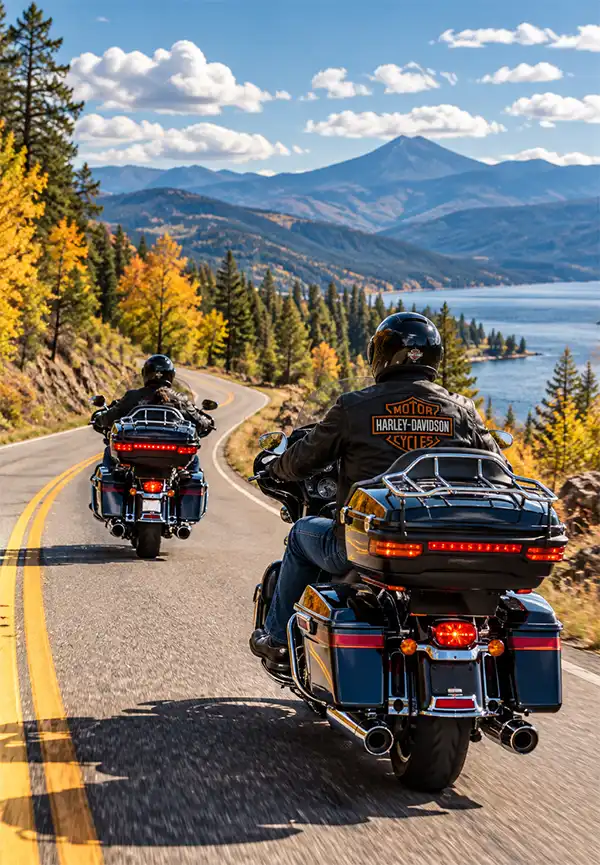
The most obvious way to celebrate National Motorcycle Ride Day is to plan a motorcycle ride. For experienced riders, this might involve exploring a favorite scenic highway, discovering a new destination, or organizing a relaxed journey with friends. Autumn can provide particularly attractive riding conditions in many regions, with changing foliage, comfortable temperatures, and seasonal events offering additional reasons to travel. A successful outing does not need to involve hundreds of miles or an elaborate itinerary. A short ride through familiar countryside can be just as enjoyable when approached with the intention of appreciating the journey rather than rushing toward a destination.
Motorcycle clubs and riding organizations may arrange group rides, charity fundraisers, or community gatherings to mark the occasion. Participating in an organized event can introduce riders to new people and routes while supporting worthwhile causes. Charity motorcycle rides frequently raise money for veterans, children's organizations, medical research, and community assistance programs. Riders interested in joining a group should familiarize themselves with the organizer's expectations, route, riding formation, and safety procedures before departure. Nobody wants to discover halfway through a pleasant countryside outing that the person leading the group has mistaken a farm access road for a scenic shortcut.
Those who do not currently ride can participate by learning more about motorcycles and the people who enjoy them. Visiting a motorcycle museum, attending a public motorcycle show, or exploring the history of a favorite manufacturer can provide an introduction to the culture. Prospective riders might investigate recognized motorcycle training courses or visit a dealership to learn about different motorcycle designs and appropriate beginner equipment. Families can also celebrate by discussing the history of motorcycles, watching documentaries about motorcycle engineering, or visiting a public exhibition featuring vintage machines. There is no requirement to own a motorcycle to appreciate the remarkable development of two-wheeled transportation.
National Motorcycle Ride Day is also an excellent opportunity to give an existing motorcycle some attention. Cleaning the machine, checking maintenance schedules, inspecting tires, and replacing worn equipment can help prepare it for future journeys. Enthusiasts who enjoy restoration projects might spend the day working on a vintage motorcycle or researching the history of a particular model. Others may prefer sharing photographs, memories, and favorite routes with fellow riders using the hashtag #NationalMotorcycleRideDay. The important thing is to celebrate motorcycling in a way that reflects personal interests while encouraging responsible enjoyment of the road.
Fun Facts About Motorcycles
Motorcycles have accumulated an impressive collection of engineering achievements, unusual traditions, and cultural milestones since their earliest development. These facts offer a glimpse into the machines and personalities that helped shape the world of motorcycling.
- The 1885 Daimler Reitwagen was an early gasoline-powered motorcycle.
- Indian Motorcycle traces its origins to 1901.
- Harley-Davidson was founded in Milwaukee in 1903.
- Early motorcycles were frequently developed from bicycle designs.
- Motorcycles served as military transport during both world wars.
- The Isle of Man TT motorcycle races began in 1907.
- Motorcycle engine displacement is commonly expressed in cubic centimeters, or cc.
- National Motorcycle Ride Day was established in 2015.
Why National Motorcycle Ride Day Matters
National Motorcycle Ride Day celebrates more than a particular form of transportation. It recognizes the engineering innovations, cultural traditions, personal experiences, and communities that have developed around motorcycles for well over a century. From early inventors experimenting with motorized bicycles to modern manufacturers producing sophisticated touring machines and electric motorcycles, the history of motorcycling reflects a continuing desire to explore new possibilities in personal mobility. The occasion also honors the contributions of engineers, mechanics, racers, instructors, manufacturers, and enthusiasts whose dedication has helped transform motorcycles into an enduring part of transportation history.
The celebration provides an opportunity to encourage responsible riding and strengthen relationships between motorcyclists and other road users. Motorcycle enthusiasts understand that the enjoyment of riding depends on maintaining their machines, developing appropriate skills, respecting traffic laws, and remaining aware of surrounding conditions. By combining the pleasures of travel with an appreciation for safety and community, National Motorcycle Ride Day promotes a balanced understanding of what motorcycling represents. It is an invitation to enjoy the freedom of the road without forgetting the responsibilities that accompany it.
Ultimately, the appeal of National Motorcycle Ride Day lies in the simple pleasure of taking a journey on two wheels. Whether someone rides a vintage cruiser, a modern touring motorcycle, a nimble commuter, or an adventure bike equipped for distant destinations, the experience offers an opportunity to appreciate the landscape, enjoy the companionship of fellow riders, and discover something new along the way. The motorcycle may have changed enormously since its earliest experimental beginnings, but the enthusiasm of the people who ride them remains remarkably familiar. So check the tires, fasten the helmet, choose a suitable route, and enjoy the occasion. After all, the road is waiting—and unlike the family dog, it probably won't complain if you disappear for a couple of hours.
Frequently Asked Questions About National Motorcycle Ride Day
National Motorcycle Ride Day raises plenty of questions, especially among those who are new to the wonderful world of two wheels. From when the celebration takes place and how it began to motorcycle safety, riding traditions, and ways to join the fun, there's always something worth discovering. We've gathered some frequently asked questions to help you navigate the occasion without taking a wrong turn. No helmet required for reading, although a good sense of adventure is highly recommended!
When is National Motorcycle Ride Day celebrated?
National Motorcycle Ride Day is observed annually on the second Saturday in October. In 2026, the celebration falls on October 10. Because the observance follows a particular Saturday rather than a fixed date, its calendar date changes each year.
Who founded National Motorcycle Ride Day?
National Motorcycle Ride Day was established in 2015 by Chad Geer of Dunlop Tire North America. The occasion was created to celebrate motorcycle riding, favorable autumn riding conditions, and the importance of pneumatic tires in motorcycle history.
Why is National Motorcycle Ride Day celebrated in October?
October offers comfortable autumn riding conditions in many parts of the United States. The observance also recognizes the historical development of pneumatic tires, which helped make motorcycles more practical, comfortable, and capable.
Do you need to own a motorcycle to celebrate?
No. Anyone interested in motorcycles can participate by visiting a motorcycle museum, attending a public motorcycle event, learning about motorcycle history, or exploring motorcycle safety courses. The celebration welcomes enthusiasts as well as experienced riders.
What is the best way to celebrate National Motorcycle Ride Day?
Popular activities include taking a scenic motorcycle ride, joining an organized group ride, attending a motorcycle gathering, supporting a motorcycle-related charity event, or spending time maintaining and appreciating a motorcycle.
What safety precautions should motorcyclists take?
Motorcyclists should wear a properly fitted, DOT-compliant helmet and appropriate protective equipment, inspect their motorcycles before riding, obey traffic laws, avoid impairment, and adjust their riding to weather, road, and traffic conditions.
What are the main types of motorcycles?
Common motorcycle categories include cruisers, touring motorcycles, sport bikes, standard motorcycles, adventure motorcycles, dual-sport motorcycles, and off-road motorcycles. Each type is designed around different riding conditions and preferences.
What is the National Motorcycle Ride Day hashtag?
The commonly used hashtag is #NationalMotorcycleRideDay, which riders and motorcycle organizations can use to share photographs, riding experiences, and celebration activities.
Keep The Shiny Side Up
Among motorcyclists, the familiar expression “Keep the shiny side up and the rubber side down” is more than a cheerful farewell. It's a friendly reminder that every enjoyable motorcycle ride should end with the rider, the motorcycle, and all their important bits arriving safely at the destination. National Motorcycle Ride Day celebrates the thrill of the open road, but it also reminds us that freedom comes with responsibility. A well-maintained motorcycle, proper protective gear, good judgment, and a healthy respect for other road users are essential ingredients in any successful adventure. After all, the object is to collect memories, not replacement body parts.
Whether you're riding a gleaming Harley-Davidson, a vintage Triumph, a nimble Honda, or a motorcycle that occasionally requires a firm conversation before starting, the joy of motorcycling has little to do with the price of the machine or the number of miles traveled. It's about the experience, the scenery, the friendships, and those wonderful moments when the road ahead seems to offer endless possibilities. So, on National Motorcycle Ride Day, enjoy the curves, appreciate the countryside, wave to your fellow riders, and remember that getting home safely is every bit as important as setting off.
And if somebody asks where you're going, there's nothing wrong with answering, "I'll know when I get there." Just make sure you've got enough gas to find out.
Keep the shiny side up, the rubber side down, and the bugs out of your teeth!