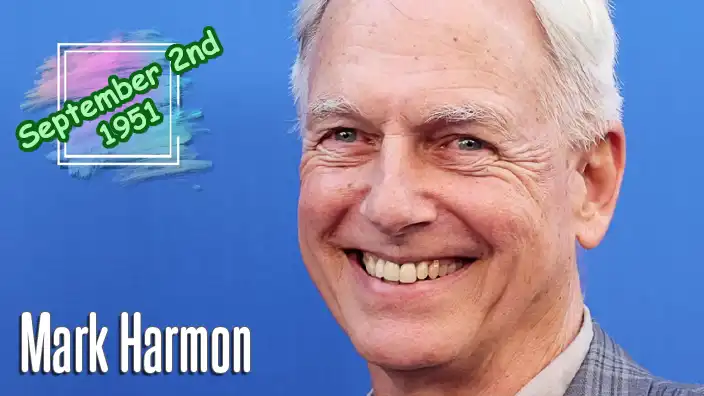
September 2, 1951, in Burbank, California
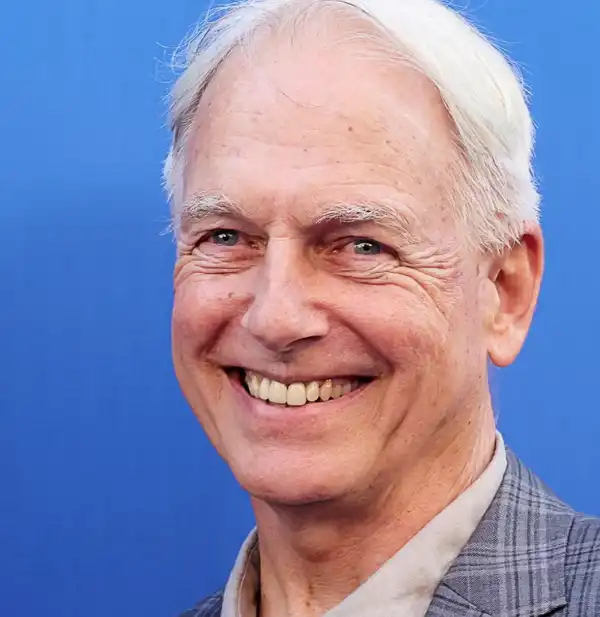
Thomas Mark Harmon was born on September 2, 1951, in Burbank, California, into a family in which achievement was already something of a household habit. His father, Tom Harmon, was a celebrated University of Michigan football player who won the 1940 Heisman Trophy and later became a sports broadcaster. His mother, Elyse Knox, was an actress, model and artist. Mark therefore grew up with both football and show business readily available, although nobody could have predicted that he would eventually combine the discipline of the former with a remarkably long career in the latter.
Harmon initially appeared more likely to follow his father onto the football field than his mother onto a film set. After attending Pierce Junior College, he transferred to UCLA and became quarterback for the Bruins. His arrival coincided with an impressive turnaround for the team. In his first game for UCLA in 1972, Harmon helped the Bruins defeat defending national champion Nebraska, ending the Cornhuskers' 32-game unbeaten streak.
During Harmon's two seasons as UCLA quarterback, the Bruins compiled a 17–5 record. He was named a National Football Foundation National Scholar-Athlete in 1973 and graduated from UCLA in 1974, cum laude, with a degree in communications. Despite opportunities to continue in football, Harmon chose another direction.
It wasn't immediately Hollywood.
Harmon worked at various times in advertising, as a shoe salesman and as a carpenter while trying to establish himself as an actor. Carpentry became a lasting interest, which makes the later sight of Gibbs happily building wooden boats in his basement seem considerably less like clever television characterization and considerably more like somebody on the writing staff had been paying attention.
His early television work began during the 1970s with appearances on shows including Emergency!, Police Woman and Adam-12. By the beginning of the 1980s, Harmon was becoming a recognizable television performer. A role on the prime-time soap Flamingo Road helped raise his profile, but St. Elsewhere demonstrated that he could handle considerably heavier material.
Beginning in 1983, Harmon played Dr. Robert Caldwell on the acclaimed medical drama. Caldwell was handsome, confident and successful — characteristics television was perfectly happy to hand Mark Harmon without much argument — but the character became part of an important storyline when he contracted HIV. At a time when AIDS was widely misunderstood and heavily stigmatized, the storyline placed the disease before a mainstream television audience in unusually direct fashion.
Harmon was now firmly established, and Hollywood discovered that he could be used for almost anything. He played serial killer Ted Bundy in the 1986 television miniseries The Deliberate Stranger, a distinctly unsettling departure from his more likable roles. Then came comedy.
In the 1987 film Summer School, Harmon played Freddy Shoop, a laid-back high-school gym teacher forced to teach remedial English during his vacation. The movie became one of his best-remembered film roles and demonstrated that Harmon could carry a comedy without behaving as though he desperately wanted everyone to notice that he was being funny.
His film career continued with The Presidio alongside Sean Connery and Meg Ryan, Stealing Home, Worth Winning and Wyatt Earp. Television, however, remained the medium in which Harmon seemed most at home.
He returned to medical drama as Dr. Jack McNeil on Chicago Hope and later appeared in The West Wing as Secret Service agent Simon Donovan. His Donovan character made enough of an impression to earn Harmon an Emmy nomination for Outstanding Guest Actor in a Drama Series.
Then, in 2003, along came Gibbs.
Actually, Gibbs arrived slightly earlier. Harmon first appeared as Naval Criminal Investigative Service Special Agent Leroy Jethro Gibbs in a two-part 2003 episode of JAG. The episodes served as a backdoor pilot for a new series initially called Navy NCIS.
When NCIS premiered in September 2003, few could have anticipated what followed. Gibbs was a former Marine sniper turned federal investigator: disciplined, intensely private, loyal to his people and spectacularly unimpressed by excuses. He communicated through rules, looks, occasional head slaps and quantities of coffee sufficient to concern a cardiologist.
Harmon made understatement one of Gibbs' greatest strengths. Television detectives are often given lengthy speeches explaining exactly how brilliant they are. Gibbs generally preferred staring at somebody until they confessed.
The character also possessed a complicated personal history. Multiple marriages, the murder of his first wife and daughter, his Marine service and his difficulty allowing people close to him gradually emerged across the series. Beneath the intimidating exterior was a man fiercely protective of the team he had assembled around him.
That team became central to NCIS. Characters came and went over the years, but Harmon remained its anchor through nearly two decades of cast changes, storylines and an astonishing number of unfortunate people discovering that committing murder within the jurisdiction of the United States Navy was a very poor career decision.
The show's success became extraordinary. What began as a spin-off of JAG developed into an international television franchise and one of CBS's most dependable programs. Harmon also assumed responsibilities behind the camera, becoming an executive producer on NCIS and later helping develop NCIS: New Orleans.
His run as the regular star of NCIS finally came to an end during Season 19. In the October 2021 episode "Great Wide Open," Gibbs remained in Alaska after solving a case with Timothy McGee. The departure was characteristically restrained. There was no enormous explosion, elaborate funeral or discovery that Gibbs was secretly an alien. He simply decided that, after years of turmoil, he had found some peace and wanted to stay.
For an actor who had been the center of the series since 2003, it was an unusually quiet farewell — and therefore an entirely appropriate one.
Harmon did not sever his connection with the franchise. He remained associated with NCIS behind the scenes, and another chapter opened with NCIS: Origins, the prequel exploring the younger Gibbs' early career. Harmon serves as an executive producer and narrator, while Austin Stowell portrays the younger Leroy Jethro Gibbs.
Away from television, Harmon has generally maintained a much more private existence than his level of fame might suggest. He married actress Pam Dawber, best remembered for Mork & Mindy, in 1987. They have two sons and have deliberately kept much of their family life away from Hollywood publicity.
One incident from Harmon's private life nevertheless became public for a very good reason. In 1996, two teenagers were trapped after a car crashed near his home and caught fire. Harmon reportedly used a sledgehammer to break a window and helped pull the teenagers from the burning vehicle while Dawber called emergency services. He subsequently played down his actions.
There is something remarkably consistent about Mark Harmon's career. Whether quarterbacking UCLA, working as a carpenter, portraying doctors and police officers, or spending nearly twenty years as Gibbs, he developed a reputation based less on theatrical celebrity than dependability.
The National Football Foundation recognized that career and his character in 2019 when it presented Harmon with its Gold Medal, the organization's highest honor. It was another connection to the football world in which his public life had begun decades earlier.
Harmon has also received a star on the Hollywood Walk of Fame and accumulated a career spanning television dramas, comedy, feature films, producing and directing. Yet Gibbs inevitably occupies an enormous portion of his professional legacy.
That isn't a bad fate for an actor.
Leroy Jethro Gibbs became one of American television's most enduring characters precisely because Harmon rarely appeared to be trying to make him one. Gibbs wasn't flashy. He didn't require catchphrases every thirty seconds or miraculous technology appearing whenever the plot got stuck. He relied on experience, instinct, loyalty and rules — lots and lots of rules.
And Mark Harmon made it work for almost twenty years.
For somebody who once made his living deciding where to send a football while several large men attempted to flatten him, perhaps becoming the steady hand at the center of one of television's biggest franchises wasn't such an unlikely second career after all.