July 12, 1997, in Mingora, in Pakistan
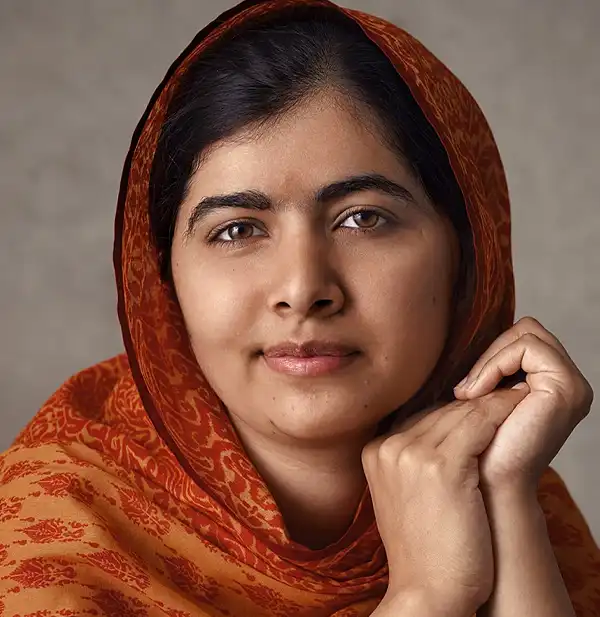
Few people have changed the world at such a young age as Malala Yousafzai. Internationally recognized as a fearless advocate for girls' education, she became a symbol of courage after surviving an assassination attempt and refusing to abandon the cause she believed in. Her determination transformed her into one of the world's most influential human rights activists and earned her the distinction of becoming the youngest recipient of the Nobel Peace Prize.
Malala Yousafzai was born in Pakistan's Swat Valley. She grew up in a family that deeply valued education. Her father, Ziauddin Yousafzai, was an educator who founded and operated schools while encouraging his daughter to pursue knowledge and speak confidently about issues affecting her community.
During Malala's childhood, conditions in the Swat Valley changed dramatically as the Taliban gained control of the region. Schools, particularly those educating girls, faced increasing restrictions. Many were forced to close, and attending school became both difficult and dangerous.
Despite these threats, Malala continued her education and began speaking publicly about the importance of allowing girls to attend school. At just eleven years old, she anonymously wrote an online diary for the BBC describing daily life under Taliban rule. Her thoughtful observations gave readers around the world a rare glimpse into the challenges faced by young girls living under extremist control.
As her identity became known, Malala appeared in interviews, participated in documentaries, and continued advocating for education despite growing threats against her safety. Her message was simple yet powerful: every child deserves the opportunity to learn.
On October 9, 2012, while riding home from school, Malala was shot in the head by a Taliban gunman who sought to silence her activism. The attack shocked the international community and sparked widespread condemnation. She was initially treated in Pakistan before being flown to the United Kingdom for specialist medical care.
Against tremendous odds, Malala made a remarkable recovery. Rather than retreating from public life, she emerged with an even stronger commitment to promoting education worldwide. Her resilience inspired millions and transformed her into a global symbol of hope and perseverance.
In 2013, Malala addressed the United Nations Youth Assembly on her sixteenth birthday. During her speech, she declared that "one child, one teacher, one book, and one pen can change the world." The address became one of the defining moments of her career and reinforced her belief that education is one of humanity's most powerful tools for creating peace and opportunity.
That same year, the United Nations officially recognized July 12 as Malala Day, honoring not only Malala herself but also the importance of education and the millions of children around the world who continue to face barriers to learning.
In 2014, Malala received the Nobel Peace Prize, sharing the honor with Indian children's rights activist Kailash Satyarthi. At just seventeen years old, she became the youngest Nobel Prize laureate in history, a record she continues to hold. The award recognized her unwavering commitment to children's rights and universal access to education.
Malala and her father also established the Malala Fund, an international organization dedicated to ensuring that girls around the world have access to twelve years of free, safe, and quality education. The organization works with local educators and community leaders in countries where girls face significant barriers to attending school.
Despite her demanding advocacy work, Malala continued her own education. She attended school in England following her recovery and later studied Philosophy, Politics, and Economics at the University of Oxford, graduating in 2020. Her academic success reflected the very values she has spent her life promoting.
Over the years, Malala has written bestselling books, spoken before world leaders, received numerous international honors, and met with presidents, prime ministers, royalty, and educators. Yet her central message has remained remarkably consistent: education is a fundamental human right, not a privilege reserved for a fortunate few.
Her influence extends well beyond speeches and awards. Through the Malala Fund and her continuing advocacy, she has helped bring international attention to educational inequality, conflict, poverty, and discrimination that prevent millions of girls from attending school. Her work has inspired governments, charities, educators, and young people to invest in education as a pathway toward stronger communities and more peaceful societies.
Today, Malala Yousafzai remains one of the world's most respected human rights advocates. Her courage in the face of violence, combined with her unwavering belief in the power of education, has made her an enduring symbol of hope. While many people become famous through extraordinary achievements in sport or entertainment, Malala earned global admiration by reminding the world that the simple act of going to school should never require extraordinary bravery.