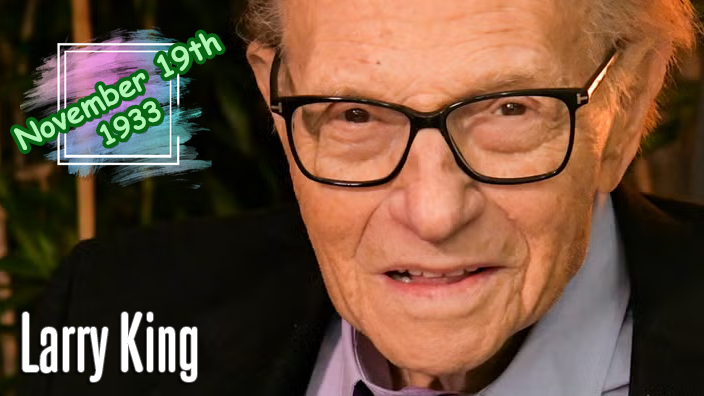
November 19, 1933, in Brooklyn, New York
 January 23, 2021, in Los Angeles, California

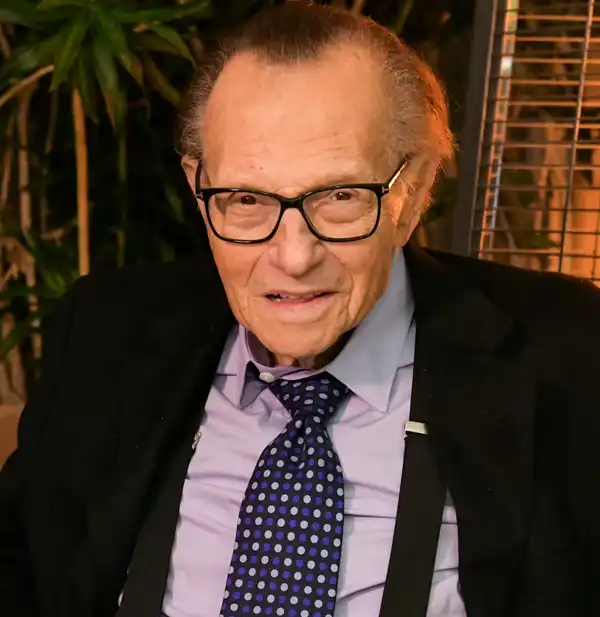
Larry King, born Lawrence Harvey Zeiger on November 19, 1933, in Brooklyn, New York, was an American television and radio personality, journalist, author, and broadcasting pioneer whose extraordinary career helped shape modern talk radio and television interviewing. Best known for hosting Larry King Live on CNN from 1985 to 2010, King became internationally recognized for his conversational interviewing style, distinctive appearance, and remarkable ability to engage people from almost every imaginable background. His guests included United States presidents, foreign leaders, Hollywood celebrities, musicians, athletes, scientists, authors, and ordinary individuals whose experiences had attracted public attention. Over a broadcasting career spanning more than sixty years, King conducted an estimated 50,000 interviews, establishing himself as one of the most prolific interviewers in American media history.
King was born into a working-class Jewish family in Brooklyn, where his parents, Edward Zeiger and Jennie Gitlitz Zeiger, had roots in Eastern Europe. His father operated a restaurant, while his mother worked in the garment industry, helping support the family during the difficult economic conditions of the Great Depression. Growing up in Brooklyn introduced King to a diverse community of immigrants, working families, and colorful neighborhood personalities. These experiences contributed to his lifelong fascination with people and their stories, although the young Larry initially had no reason to suspect that asking strangers questions would eventually become a remarkably successful profession.
From an early age, King developed an intense fascination with radio. He listened enthusiastically to announcers, comedians, sports commentators, and popular entertainment programs, becoming particularly interested in the personalities whose voices filled American homes. Radio offered an extraordinary world of imagination, allowing listeners to experience sporting events, dramatic adventures, and conversations without ever seeing the people involved. For a young boy growing up in Brooklyn, the medium represented both entertainment and an exciting possibility for the future. King reportedly practiced speaking into imaginary microphones, developing the vocal confidence that would eventually become central to his professional identity.
One of his greatest childhood passions was baseball, particularly the Brooklyn Dodgers. King followed the team's fortunes with extraordinary enthusiasm, listening to radio broadcasts and developing a lifelong affection for the sport. His interest in baseball continued throughout his career, frequently appearing in interviews, personal anecdotes, and discussions with professional athletes. The Dodgers' eventual relocation to Los Angeles in 1958 disappointed countless Brooklyn supporters, but King remained loyal to the franchise. For him, baseball was not simply a sporting competition; it was an important connection to his childhood and the neighborhood that had shaped his earliest experiences.
King's childhood was profoundly affected by the death of his father from a heart attack in 1943. The loss created serious financial difficulties for the family, forcing his mother to rely on public assistance while raising her children. The experience had a lasting emotional impact on King, whose academic performance declined as he struggled with grief and uncertainty. Although he had previously been an enthusiastic student, he became increasingly disengaged from formal education. His experiences during this difficult period would later influence his interest in heart disease prevention and charitable efforts to improve access to medical care.
After attending Lafayette High School in Brooklyn, King decided against pursuing a university education. Instead, he concentrated on finding employment and exploring opportunities in broadcasting. His ambition was straightforward: he wanted to work in radio, preferably somewhere that would allow him to speak into a microphone and receive a paycheck for doing so. Unfortunately, the broadcasting industry was not particularly interested in hiring inexperienced young men simply because they enjoyed talking. King worked various jobs while searching for an opportunity, gradually discovering that determination was an essential qualification for anyone hoping to enter the entertainment business.
A chance conversation with a broadcasting professional eventually encouraged King to consider moving to Florida, where the expanding radio industry offered opportunities for newcomers. In 1957, he relocated to Miami, hoping to establish himself in broadcasting. The move represented a significant personal gamble, taking him away from familiar surroundings and placing him in a city where he had few professional connections. Nevertheless, Miami's growing population, lively entertainment industry, and expanding radio market provided an environment in which an ambitious young announcer might eventually find an opening.
King's first radio position was hardly glamorous. He began working at WAHR, a small Miami Beach station, performing routine tasks and helping with station operations. His duties included cleaning and assisting other employees, giving him an opportunity to observe professional broadcasting from behind the scenes. The job provided little immediate recognition, but it placed him close to the microphones he had dreamed of using since childhood. Then, when a station announcer unexpectedly departed, King received an opportunity to go on the air. On May 1, 1957, he began his professional broadcasting career, launching a journey that would eventually make his voice familiar to audiences around the world.
It was during this early period that Lawrence Zeiger became Larry King. A station manager reportedly suggested that his original surname was too difficult for listeners to remember, encouraging him to adopt something shorter and more suitable for broadcasting. King selected his new professional name after noticing an advertisement for King's Wholesale Liquors in a newspaper. The decision created one of the most recognizable names in American broadcasting, demonstrating that an important career choice can occasionally emerge from something as ordinary as a liquor advertisement. Considering the success that followed, the advertising department probably deserved a small commission.
King quickly discovered that his greatest professional strength was not delivering prepared announcements but engaging people in conversation. He developed a relaxed interviewing style that encouraged guests to speak openly, allowing discussions to unfold naturally rather than following rigid scripts. His curiosity extended beyond famous personalities to ordinary individuals whose experiences might otherwise have received little attention. King believed that almost everyone possessed an interesting story, provided someone was willing to ask the right questions and listen carefully to the answers.
One of his early successes involved broadcasting from Pumpernik's Restaurant in Miami Beach, where he interviewed customers, employees, entertainers, and visiting celebrities. The informal setting created a distinctive atmosphere, allowing King to develop his conversational technique while interacting with a constantly changing collection of personalities. His guests might include a famous entertainer one moment and a restaurant employee the next, demonstrating his belief that interesting conversation was not necessarily dependent on celebrity status. It also provided an excellent professional arrangement for someone who enjoyed talking and appreciated the convenience of having food available nearby.
King's growing popularity in South Florida led to additional broadcasting opportunities, including positions at radio stations such as WKAT and WIOD. He also became involved in local television, hosting interview and discussion programs that introduced his distinctive style to a broader audience. His work frequently combined entertainment, public affairs, and spontaneous conversation, reflecting his willingness to explore almost any subject that might interest listeners. By the early 1960s, King had become a recognizable figure in Miami broadcasting, establishing a reputation for curiosity, humor, and an ability to make guests feel comfortable.
His early interviews included conversations with prominent entertainers such as Frank Sinatra and Jackie Gleason, who maintained strong connections to South Florida. These appearances helped strengthen King's professional reputation and demonstrated that his informal approach could appeal to major celebrities. Rather than confronting guests with elaborate questions designed to demonstrate his own intelligence, King preferred direct inquiries that encouraged people to explain their experiences in their own words. His technique made interviews accessible to listeners who might know little about the guest, while often producing unexpected revelations from individuals accustomed to answering the same promotional questions repeatedly.
King also developed a career in print journalism, writing columns for Miami newspapers and offering observations about entertainment, sports, and local affairs. His writing reflected the same conversational style that distinguished his broadcasting, frequently incorporating personal anecdotes and opinions. Although radio remained his principal professional interest, newspaper work helped establish him as a versatile media personality capable of communicating through different formats. His enthusiasm for expressing opinions occasionally produced disagreements, but it also reinforced the distinctive personality that attracted loyal listeners.
During the late 1960s and early 1970s, King's career encountered serious difficulties. In 1971, he was arrested following a financial dispute involving a former business associate and was charged with grand larceny. The criminal charge was subsequently dismissed, but the controversy damaged his professional reputation and resulted in the loss of important broadcasting and newspaper positions. The incident represented a major setback for someone who had spent years establishing himself within the competitive Miami media industry. King's experiences demonstrated that professional success can be remarkably fragile, particularly when public controversy becomes more interesting to audiences than the work that originally made someone famous.
Following the collapse of his Miami broadcasting career, King struggled financially and accepted a variety of temporary positions. He worked in public relations, sports broadcasting, and other media-related activities, including assignments in Louisiana. The period was marked by professional uncertainty and financial difficulties, but King remained determined to return to radio. His willingness to accept less prestigious work reflected a practical understanding that rebuilding a career often requires beginning again without the advantages previously enjoyed. Fortunately, he possessed a skill that remained valuable regardless of circumstances: he could talk to almost anyone, about almost anything, for an impressively long time.
By the mid-1970s, King had begun rebuilding his broadcasting career in Miami, eventually returning to WIOD. His programs once again attracted listeners through informal interviews and audience participation, demonstrating that his earlier professional difficulties had not diminished his appeal. The opportunity to return to radio allowed him to refine the conversational techniques that would soon make him nationally famous. His comeback also demonstrated the importance of persistence in an industry where reputations can rise and fall with remarkable speed.
King's national breakthrough arrived on January 30, 1978, when he began hosting The Larry King Show on the Mutual Broadcasting System. The overnight radio program initially aired on 28 stations, offering interviews, discussions, and telephone conversations with listeners across the United States. Its unusual scheduling allowed audiences to participate during the late-night and early-morning hours, creating a community of truck drivers, night-shift workers, insomniacs, and people who simply preferred interesting conversation to the alternatives available on television.
The format of The Larry King Show became one of its greatest strengths. King typically began with an extended interview featuring a prominent guest, followed by opportunities for listeners to telephone the program and ask questions. Later portions of the broadcast frequently featured open telephone lines, allowing callers to discuss current events, personal experiences, and occasionally subjects that appeared to have little connection to anything previously mentioned. The unpredictable nature of live radio created an entertaining atmosphere, particularly when callers introduced unexpected opinions or stories that required King to think quickly.
King's overnight program became enormously popular, eventually expanding to hundreds of affiliated radio stations and attracting millions of listeners. His relaxed delivery and willingness to engage with callers distinguished him from more confrontational talk radio personalities. He rarely attempted to overwhelm guests with elaborate arguments, preferring to ask straightforward questions and allow listeners to form their own conclusions. The approach created an atmosphere in which political leaders, entertainers, and ordinary callers could participate without feeling that every conversation needed to become a competitive shouting match.
His radio success earned King significant professional recognition, including a Peabody Award in 1982. The honor acknowledged the quality and influence of his broadcasting work, confirming that a program built around extended conversations and listener participation could achieve both commercial popularity and critical respect. His success also demonstrated the growing potential of nationally syndicated talk radio, helping establish a format that would become increasingly important within American broadcasting.
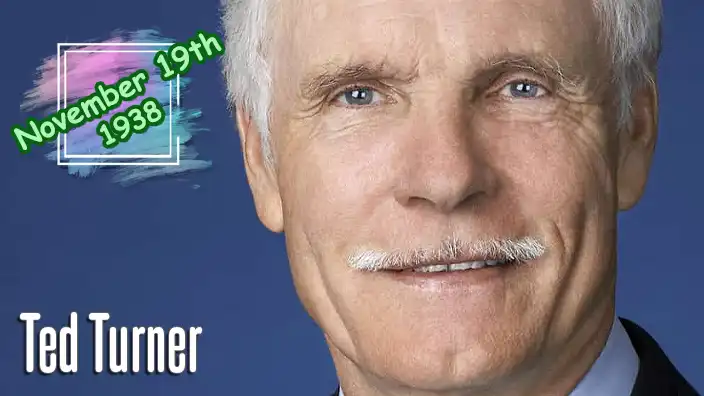
By the early 1980s, King's reputation had attracted the attention of television executives searching for personalities capable of reaching national audiences. Among those interested in his work was Ted Turner, the outspoken media entrepreneur who had launched CNN in 1980. Turner was determined to establish his network as a major source of news and public affairs programming, and he recognized that King's conversational style could provide an appealing alternative to conventional television interviews.
In 1985, King joined CNN to host Larry King Live, a nightly interview program that would become one of the network's most recognizable productions. The show premiered on June 3, 1985, introducing his distinctive interviewing style to television audiences across the United States and eventually around the world. The program featured prominent guests discussing politics, entertainment, sports, science, current events, and personal experiences. Its live format also incorporated telephone calls from viewers, preserving an important element of King's successful radio career.
Larry King Live quickly established itself as an important destination for public figures seeking to communicate directly with American audiences. King's approachable manner encouraged guests to discuss complicated subjects without the aggressive questioning sometimes associated with political journalism. His program became particularly popular because it allowed viewers to observe famous individuals in extended conversations rather than brief promotional appearances. The combination of live television, audience participation, and recognizable personalities helped establish Larry King Live as one of CNN's most successful programs.
King's interviewing philosophy was famously straightforward. He believed that short, uncomplicated questions often produced more revealing answers than elaborate inquiries designed to demonstrate the interviewer's knowledge. Rather than preparing extensive lists of technical questions, he frequently approached conversations from the perspective of an ordinary viewer encountering a subject for the first time. This technique occasionally attracted criticism from journalists who believed he should challenge guests more aggressively, but it also allowed him to conduct interviews that felt unusually natural and accessible.
His style was particularly effective when interviewing entertainers and public personalities who were accustomed to highly structured publicity appearances. King frequently asked about childhood experiences, family relationships, professional ambitions, and personal disappointments, encouraging guests to reveal aspects of their lives that might otherwise remain hidden behind carefully managed public images. His curiosity extended beyond the familiar details of celebrity careers, allowing conversations to explore the motivations and experiences that shaped the individuals sitting across from him.
King's television guests included virtually every major category of public figure imaginable. He interviewed United States presidents, foreign heads of government, religious leaders, celebrated actors, bestselling authors, scientists, professional athletes, and individuals whose personal experiences had attracted national attention. His programs frequently reflected the major political and cultural developments of their time, creating a valuable record of American public life during the late twentieth and early twenty-first centuries.
Among his most significant political interviews were conversations with Presidents Richard Nixon, Gerald Ford, Jimmy Carter, Ronald Reagan, George H. W. Bush, Bill Clinton, George W. Bush, and Barack Obama, along with other influential political figures. King's ability to attract prominent guests reflected both his personal reputation and the growing importance of CNN as an international news organization. Political leaders recognized that appearing on his program offered an opportunity to reach a large audience through a relatively informal conversational format.
One of the most memorable moments in King's television career occurred in 1992, when billionaire businessman Ross Perot appeared on Larry King Live during the presidential election campaign. Perot's appearances helped generate enormous public interest in his potential independent presidential candidacy, demonstrating the influence that a television interview could have on national political discussion. The episode illustrated how King's program had evolved beyond conventional celebrity entertainment into an important platform for political communication.
The program also became known for its coverage of major breaking news events, including presidential elections, international conflicts, natural disasters, and significant criminal investigations. King's ability to respond to developing stories while maintaining his conversational style made the show an important component of CNN's programming. He could interview a Hollywood actor one evening and a government official discussing an international crisis the next, demonstrating remarkable flexibility across subjects that required very different approaches.
King's interviews with entertainment personalities became particularly popular among viewers. His guests included Frank Sinatra, Elizabeth Taylor, Marlon Brando, Paul McCartney, Madonna, and countless other prominent figures from film, television, and music. These conversations frequently explored personal relationships, professional achievements, and the unusual experiences associated with fame. King's informal approach often encouraged celebrities to speak more openly than they might during conventional promotional interviews, producing memorable television moments that continued circulating long after the original broadcasts.
His 1994 interview with Marlon Brando became one of the most frequently remembered appearances in the show's history. The famously private actor rarely participated in television interviews, making his conversation with King particularly significant. Their discussion moved through a variety of subjects, including acting, personal beliefs, and Brando's unusual relationship with celebrity culture. The interview concluded with an unexpected kiss between the two men, creating a moment of television spontaneity that audiences continued discussing for years. King had interviewed thousands of famous personalities, but even he probably hadn't expected that particular ending when he arrived at work.
King's conversations with Elizabeth Taylor similarly attracted considerable attention, particularly when discussing her extraordinary Hollywood career, personal relationships, and charitable activities. Taylor was known for her outspoken personality and willingness to challenge public expectations, qualities that made her an engaging guest. King's ability to encourage comfortable conversation allowed her to discuss serious subjects alongside humorous anecdotes, demonstrating the appeal of interviews that treated famous individuals as complicated human beings rather than simply collections of movie credits.
One of the most significant developments in King's broadcasting career was his ability to attract guests involved in major public controversies. Individuals facing legal difficulties, political scandals, or intense media scrutiny frequently appeared on Larry King Live to explain their positions. His relatively nonconfrontational style made the program attractive to people who might have avoided more aggressive interviewers. Critics sometimes argued that this approach allowed guests to evade difficult questions, while supporters maintained that King's conversational technique encouraged individuals to speak openly and occasionally reveal more than they intended.
The program's popularity reflected the growing influence of personality-driven television journalism during the 1980s and 1990s. King became one of CNN's most recognizable figures, attracting viewers who appreciated his familiar appearance, direct questions, and ability to engage with people from different backgrounds. His trademark suspenders, thick glasses, and rolled-up shirt sleeves became an instantly recognizable visual identity, distinguishing him from television presenters who favored more formal business attire. King had effectively created a broadcasting uniform, although it was one that occasionally suggested he had removed his jacket five minutes before the interview and forgotten where he had put it.
His distinctive voice also contributed to his public identity. King's gravelly delivery, Brooklyn accent, and conversational rhythm made him immediately recognizable, even to listeners who could not see him. Unlike broadcasters who carefully cultivated polished announcer voices, King embraced his natural speaking style, demonstrating that personality and authenticity could be more important than conventional vocal perfection. His voice became so closely associated with interviewing that comedians frequently imitated it, often adding exaggerated references to his suspenders and enthusiastic curiosity.
King's professional success brought numerous awards and honors. He received two Peabody Awards, recognizing his achievements in radio and television broadcasting, along with multiple CableACE Awards and other industry distinctions. In 1989, he was inducted into the National Radio Hall of Fame, acknowledging his contributions to the development of nationally syndicated talk radio. His recognition reflected the influence of a career that had helped establish extended interviews and audience participation as important elements of modern broadcasting.
Beyond his nightly television program, King became a familiar personality in movies, television comedies, and popular entertainment. He frequently appeared as himself, providing an instantly recognizable symbol of television interviewing. His appearances included films such as Ghostbusters (1984), Dave (1993), and Contact (1997), along with television programs including The Simpsons, Frasier, and 30 Rock. These appearances demonstrated his willingness to embrace humor and occasionally poke fun at his own public image.
King also developed a successful writing career, publishing books about his broadcasting experiences, personal relationships, and the people he had interviewed. His publications included Larry King by Larry King, How to Talk to Anyone, Anytime, Anywhere, and My Remarkable Journey. These works explored his professional philosophy and offered insights into the art of conversation, often emphasizing the importance of curiosity, listening, and making other people feel comfortable. His advice was generally straightforward: ask questions, pay attention to the answers, and avoid assuming that an interesting conversation requires complicated language.
His book How to Talk to Anyone, Anytime, Anywhere, published in 1994, became particularly popular among readers interested in improving their communication skills. King argued that successful conversation depended less on impressive vocabulary than on genuine interest in other people. He encouraged readers to ask open-ended questions, listen carefully, and remain willing to explore unexpected subjects. The advice reflected decades of experience interviewing people from almost every imaginable profession and background, although one suspects that mastering the technique became considerably easier after he had spent several thousand hours practicing on national television.
King's personal life was often as complicated as the stories discussed on his programs. He married eight times to seven women, including two marriages to Alene Akins. His relationships attracted media attention, particularly as his professional fame increased. His final marriage was to actress and singer Shawn Southwick, whom he married in 1997. The couple had two sons together, Chance and Cannon, and remained married but separated at the time of King's death. His personal experiences provided considerable material for discussions about marriage, relationships, and the difficulties of maintaining stability while working in a demanding entertainment industry.
Despite his professional success, King experienced significant health challenges throughout his life. In 1987, he suffered a major heart attack that required quintuple coronary bypass surgery. The experience profoundly influenced his outlook, prompting him to quit smoking and become increasingly involved in public education about cardiovascular disease. His recovery also demonstrated the importance of medical treatment, lifestyle changes, and regular health monitoring, particularly for individuals with a history of heart problems.
Following his heart attack, King established the Larry King Cardiac Foundation in 1988, supporting efforts to provide cardiac care to individuals who could not otherwise afford necessary treatment. The foundation helped raise awareness of cardiovascular disease and supported access to medical procedures, reflecting King's desire to use his public influence for purposes beyond entertainment. His involvement in heart health advocacy became an important part of his charitable legacy, demonstrating that personal difficulties could inspire efforts to help others facing similar challenges.
King's health challenges continued in later years, including treatment for prostate cancer and lung cancer. He also experienced additional cardiovascular problems, requiring medical care and ongoing attention to his health. Despite these difficulties, he remained professionally active for many years, demonstrating an extraordinary commitment to broadcasting. His willingness to continue working reflected both his personal determination and his genuine enjoyment of interviewing, a profession that had become inseparable from his identity.
In 2010, King announced that he would conclude his nightly CNN program after twenty-five years. His final episode of Larry King Live aired on December 16, 2010, marking the end of one of the longest-running and most recognizable interview programs in American cable television history. The farewell broadcast featured tributes from prominent guests and reflections on his extraordinary career, acknowledging the influence of a broadcaster who had helped establish CNN as a major international news organization.
The conclusion of Larry King Live did not represent retirement in the conventional sense. King remained enthusiastic about broadcasting and continued exploring opportunities to interview interesting people through new platforms. In 2012, he co-founded Ora TV with Mexican businessman Carlos Slim, launching a digital media company focused on producing original interview and discussion programs. The venture reflected King's willingness to adapt to changing technology, demonstrating that a broadcaster whose career began with traditional radio could remain relevant in the era of internet streaming.
His new program, Larry King Now, premiered in 2012, initially appearing through Hulu and other digital platforms. The show continued his familiar interviewing approach, featuring conversations with entertainers, politicians, athletes, and other public figures. Although the distribution methods differed considerably from those of his earlier radio and CNN programs, the essential format remained recognizable: Larry King sitting across from an interesting guest, asking straightforward questions, and allowing the conversation to develop naturally.
King also hosted Politicking with Larry King, a political discussion program that explored contemporary issues and featured interviews with public figures representing different perspectives. The show reflected his continuing interest in political affairs and demonstrated that he remained willing to engage with controversial subjects long after leaving CNN. His later programs were distributed through several platforms, including RT America, a Russian state-funded television network, an arrangement that attracted criticism because of concerns about Russian government influence and media independence. King maintained that he retained editorial independence over his interviews.
His willingness to embrace digital broadcasting reflected a remarkable adaptability across more than six decades of technological change. King began his career when radio was a dominant source of entertainment, established himself nationally through syndicated broadcasting, became an international television personality through cable news, and eventually moved into internet-based programming. Few media figures have remained professionally active across such dramatically different technological environments. King appeared to regard new broadcasting platforms primarily as additional opportunities to do what he enjoyed most: talk to people.
Throughout his career, King frequently discussed the importance of curiosity. He believed that successful interviewing required a genuine desire to understand another person's experiences rather than simply demonstrating the interviewer's knowledge. His approach was sometimes criticized for insufficient preparation, particularly when discussing complicated political or scientific subjects. Nevertheless, King argued that asking questions from an ordinary viewer's perspective could make difficult topics more accessible and encourage guests to explain themselves clearly.
This philosophy distinguished King from more confrontational interviewers who emphasized challenging questions and aggressive follow-up techniques. His supporters appreciated the relaxed atmosphere and opportunities for guests to express themselves, while critics sometimes argued that his style allowed powerful individuals to avoid accountability. Both perspectives contributed to his complicated professional legacy. King was not generally regarded as an investigative journalist, but he became exceptionally successful at creating conversations that attracted public attention and encouraged audiences to learn more about the people appearing on his programs.
One of King's greatest professional strengths was his ability to make almost anyone feel comfortable. He could interview a president, a Hollywood actor, a professional athlete, or an ordinary citizen without dramatically changing his conversational manner. His questions frequently explored familiar human experiences such as childhood, family, ambition, disappointment, and personal achievement, creating connections between guests whose circumstances might otherwise appear completely different. This accessibility helped explain why his programs attracted such a broad audience.
His enthusiasm for baseball remained a constant throughout his life. King was a devoted Dodgers supporter and frequently attended games, maintaining his connection to the sport that had captured his imagination during childhood. He also enjoyed discussing baseball history, legendary players, and the emotional experiences associated with supporting a favorite team. His passion reflected a broader appreciation for American popular culture, particularly the traditions and personalities that had shaped his early years in Brooklyn.
King's later life included profound personal losses. In 2020, two of his children, Andy King and Chaia King, died within weeks of one another. Andy died of a heart attack, while Chaia died following a battle with lung cancer. The tragedies devastated King, who publicly expressed his grief and the difficulty of losing children. These experiences occurred during a period when he was already confronting significant health challenges, adding extraordinary emotional hardship to the final chapter of his life.
In early January 2021, reports emerged that King had been hospitalized in Los Angeles after contracting COVID-19. He had previously experienced numerous serious health problems, including cardiovascular disease and cancer, making his hospitalization particularly concerning. King died on January 23, 2021, at Cedars-Sinai Medical Center in Los Angeles. His death was announced by Ora Media, the production company he had helped establish. The initial announcement did not specify a cause of death, although subsequent reporting discussed complications associated with his hospitalization and underlying medical conditions.
Tributes following King's death came from journalists, politicians, entertainers, athletes, and broadcasting professionals around the world. Many remembered his distinctive interviewing style, remarkable professional longevity, and genuine curiosity about other people's lives. His career had connected generations of audiences with some of the most influential figures of modern history, preserving conversations that continue to provide valuable insights into American politics, entertainment, and public life.
King's influence on modern broadcasting extended beyond the enormous number of interviews he conducted. He helped popularize the extended interview format, demonstrated the commercial potential of nationally syndicated overnight talk radio, and became one of the defining personalities of cable television news. His programs also illustrated the importance of creating a recognizable personal identity within broadcasting, combining distinctive appearance, vocal delivery, and conversational technique into a style that audiences could immediately identify.
His legacy can be seen in the continuing popularity of interview-based podcasts, digital discussion programs, and long-form conversations distributed through online platforms. Although technology has changed dramatically since King first entered a Miami radio studio in 1957, the fundamental appeal of interesting people discussing their experiences remains remarkably consistent. King's career demonstrated that audiences appreciate conversations that reveal unexpected information, explore familiar concerns, and occasionally produce moments of genuine humor.
The historical value of his interviews has also increased over time. His conversations with presidents, entertainers, athletes, and public figures preserve an extensive record of American cultural and political life across several decades. These recordings allow later generations to observe influential individuals discussing their experiences in their own words, providing perspectives that may differ from carefully edited biographies or conventional historical accounts. King's enormous archive represents a significant contribution to broadcasting history, even when individual interviews attracted criticism for their relatively gentle approach.
Larry King's extraordinary journey from a working-class Brooklyn childhood to international broadcasting fame demonstrated the importance of persistence, curiosity, and adaptability. He overcame early family tragedy, professional setbacks, financial difficulties, and serious health challenges while maintaining an enthusiasm for the profession he had dreamed of entering as a child. His career included nationally syndicated radio, internationally recognized television programs, bestselling books, charitable activities, and successful ventures into digital media.
Few broadcasters have remained recognizable and professionally active for such an extraordinary length of time. King interviewed generations of political leaders, entertained millions of listeners and viewers, and became a familiar presence in American homes through decades of social and technological change. His style was not universally admired, and his professional approach occasionally generated criticism, but his influence on modern interviewing remains substantial. He demonstrated that asking questions could become an art form, particularly when the interviewer possessed enough curiosity to remain interested in the answers.
Ultimately, Larry King built his remarkable career around a simple principle: everyone has a story worth hearing. Whether speaking with a president, a movie star, a scientist, or an ordinary person experiencing extraordinary circumstances, he approached conversations with the same unmistakable curiosity. His thick glasses, gravelly voice, and colorful suspenders became symbols of an era when millions of Americans gathered around their televisions to hear what his guests might say next. And after more than sixty years behind the microphone, one thing is certain: Larry King probably asked more questions than anyone else in broadcasting history, and somehow managed to make a very successful living out of being wonderfully nosy.
References & Sources