Juniper, Tonic and Several Centuries of Bad Decisions.
World Gin Day celebrates the magnificent moment when somebody looked at a collection of juniper berries and thought, “You know what these need? Alcohol.” Celebrated on the second Saturday in June, it is a worldwide salute to gin, gin and tonic, martinis, distillers, bartenders and the little green berry that somehow talked its way into becoming an international celebrity.
Gin lovers around the world have a particularly good reason to raise a glass on World Gin Day. Whether your preference is a classic gin and tonic, a dry martini, a Negroni, a Tom Collins or simply gin served over ice, the occasion celebrates one of the world's most recognizable spirits and the extraordinary variety that modern distillers have created from a deceptively simple idea.
At the heart of gin is juniper. Other botanicals may contribute citrus, floral, herbal, earthy or spicy flavors, but juniper provides the characteristic flavor that defines gin. Coriander seed, angelica root, citrus peel, cardamom, cassia and countless other ingredients can join the botanical gathering, which means two bottles carrying the word “gin” can taste remarkably different.
That's excellent news for World Gin Day because otherwise the research could become terribly repetitive.
When Is World Gin Day?
World Gin Day is celebrated annually on the second Saturday in June, so its calendar date changes from year to year. The official World Gin Day organization describes the occasion as an opportunity for adults of legal drinking age to celebrate and enjoy gin, whether they're established enthusiasts or meeting the juniper-flavored spirit for the first time.
The observance began on a much smaller scale. Gin enthusiast Neil Houston founded World Gin Day in Birmingham, England, in 2009, essentially as an opportunity to bring friends together over gin. Emma Stokes, better known in gin circles as Gin Monkey, joined Houston in taking the celebration to London the following year, when friends gathered at the Graphic bar in Soho.
Stokes formally assumed responsibility for World Gin Day in 2013 when Houston's work commitments made running the event difficult. Under her stewardship, what began as friends enjoying gin together developed into an international celebration involving bars, distilleries, brands and gin enthusiasts around the world.
It is reassuring to know that occasionally inviting a few friends around for a drink really can get completely out of hand.
What Exactly Is Gin?
At its simplest, gin is a distilled spirit whose defining botanical flavor comes from juniper berries. Calling them berries is botanically convenient rather than entirely accurate — they are actually the fleshy seed cones produced by juniper plants — but pointing this out while somebody is preparing your gin and tonic may considerably reduce your chances of being invited back.
Juniper gives traditional gin its familiar piney, resinous and aromatic character, but distillers rarely stop there. Recipes may contain coriander, angelica, lemon peel, orange peel, orris root, licorice, cinnamon, cardamom, cucumber, herbs, flowers and a bewildering selection of other botanicals. Each combination allows the distiller to produce a distinctive flavor while retaining juniper as the essential foundation.
Among the best-known styles is London Dry Gin. Despite the name, London Dry doesn't have to be produced in London. The term refers primarily to a regulated production style rather than a geographical birthplace. Other styles include Old Tom gin, which is generally sweeter than London Dry, and contemporary gins that may emphasize citrus, floral or other botanical flavors alongside juniper.
Then there is genever, gin's important Dutch and Belgian relative and historical predecessor. The two spirits are distinct today, but the history of gin cannot sensibly be told without genever lurking somewhere near the beginning.
From Medicine Cabinet to Drinks Cabinet
Juniper-flavored spirits existed in continental Europe long before the modern bottle of gin appeared. Distilled preparations containing juniper were associated with medicinal use for centuries, particularly in the Low Countries, where genever developed into an established spirit.
English soldiers encountered genever and other Dutch spirits during periods of military involvement in continental Europe, and juniper-flavored liquor gradually became familiar in England. Gin's enormous expansion, however, came after the political changes surrounding William III, the Dutch-born king who took the English throne with Mary II in 1689.
Domestic distillation expanded dramatically as restrictions changed and imported spirits such as French brandy became politically and economically less attractive. Gin could be produced relatively cheaply, and London discovered it with an enthusiasm that might politely be described as excessive.
By the early 18th century, Britain was heading toward the notorious Gin Craze.
When London Went Gin Mad
During the first half of the 1700s, cheap gin became extraordinarily widespread in London. It was sold in shops, houses and drinking establishments, and consumption reached levels that alarmed politicians, social reformers and anyone unfortunate enough to encounter the consequences on the street.
Gin became associated with poverty, public drunkenness, crime and social disorder. Artist William Hogarth famously captured contemporary anxieties in his 1751 print Gin Lane, portraying a chaotic society being destroyed by cheap spirits. Its companion, Beer Street, presented beer drinking in a considerably more flattering light. The message wasn't particularly subtle.
The British government repeatedly attempted to control gin through licensing requirements, taxes and legislation. The notorious Gin Act of 1736 imposed heavy costs on retailers and provoked widespread resistance. Later measures proved more effective, particularly as regulation improved and economic circumstances changed.
Eventually gin climbed out of the gutter, straightened its jacket and began associating with considerably more respectable company.
Gin Meets Tonic
One of gin's most famous partnerships developed through Britain's presence in tropical regions where malaria posed a serious threat. Quinine, derived from cinchona bark, was used against malaria, but its bitter taste wasn't exactly encouraging people to request a second helping.
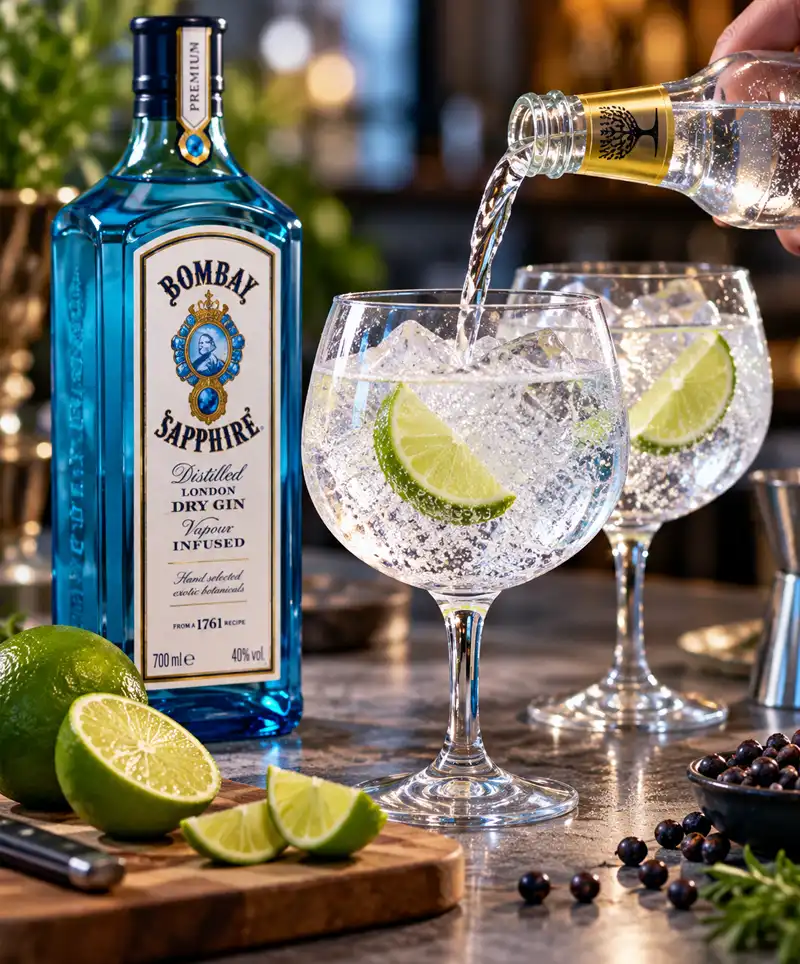
Quinine mixed with water evolved into tonic water, and British drinkers discovered that gin, sugar and citrus could make the medicinal bitterness considerably more agreeable. Over time, the combination developed into the gin and tonic, one of the world's most enduring mixed drinks.
Modern tonic water generally contains far less quinine than medicinal preparations once did, so ordering another G&T on the grounds that you're bravely fighting malaria is unlikely to impress your doctor.
It may, however, impress the bartender.
Gin and the Cocktail Glass
Gin became one of the great foundations of cocktail culture, and its botanical character made it an unusually versatile spirit for bartenders. Some of the world's best-known cocktails depend upon it.
The martini, traditionally made with gin and dry vermouth, became an icon of cocktail sophistication. The Negroni combines gin with Campari and sweet vermouth. The Tom Collins brings together gin, lemon, sugar and carbonated water, while the Gimlet pairs gin with lime. Other classics include the Gin Fizz, Aviation, French 75 and Singapore Sling.
And, of course, there is the gin and tonic, which demonstrates that sometimes two principal ingredients and a slice of something citrusy are perfectly capable of getting the job done.
Modern cocktail bars have pushed gin considerably further, pairing different botanical styles with herbs, fruits, spices and increasingly elaborate garnishes. Order a gin and tonic today and you may receive anything from a simple highball with lime to something resembling a small botanical garden floating in a glass.
The Great Gin Revival
Gin has experienced a remarkable modern revival, particularly with the growth of craft distilleries and small-batch spirits. Distillers have experimented with locally sourced botanicals, unusual flavor combinations and regional ingredients, creating gins that deliberately reflect the places where they are made.
This has transformed the gin shelf from a relatively straightforward selection into something approaching a library. Classic juniper-forward London Dry styles sit alongside citrus-heavy gins, floral gins, herbaceous varieties, barrel-aged versions and products incorporating botanicals ranging from tea and seaweed to pepper, berries and native plants.
For gin enthusiasts, this is wonderful.
For somebody who walked into the store intending to “just grab a bottle of gin,” it may require bringing a folding chair.
The revival has also encouraged renewed interest in distilling itself. Distillery tours, gin schools, tasting sessions and botanical workshops allow visitors to learn how different ingredients influence aroma and flavor. World Gin Day provides a natural opportunity for producers and bars to introduce those differences to people who might otherwise assume that all gin tastes roughly the same.
How to Celebrate World Gin Day
The traditional approach is refreshingly uncomplicated: enjoy some gin, assuming you're of legal drinking age and alcohol is appropriate for you. Try a classic gin and tonic, revisit an old cocktail or sample a style you've never encountered before. A tasting involving several different gins can be particularly interesting because comparing them side by side makes their botanical differences much easier to recognize.
World Gin Day is also an excellent excuse to visit a local distillery or learn something about how gin is produced. Instead of simply deciding whether you like a particular bottle, investigate what's actually in it. Which botanicals were used? Is juniper dominant? Can you detect citrus, coriander, herbs or spices? Suddenly you're not drinking gin — you're conducting research.
You can also experiment with tonic waters and garnishes. Lemon, lime and grapefruit are familiar companions, but rosemary, cucumber, mint, berries and other ingredients can complement particular gins. The important word there is complement. If your garnish requires pruning shears and prevents you from locating the drink underneath it, the shrubbery may have won.
And there's nothing wrong with celebrating World Gin Day without drinking alcohol. Alcohol-free gin-style spirits and botanical drinks have become increasingly common, allowing people who avoid alcohol to participate in the flavors and ritual of a G&T without the gin itself doing what gin traditionally does.
Gin FAQs
Gin has traveled from old European distilleries through London's notorious Gin Craze and into some of the world's most famous cocktail glasses, picking up plenty of history, terminology and confusion along the way. So before somebody orders another round in the interests of “research,” here are answers to some frequently asked questions about gin and World Gin Day.
When is World Gin Day?
World Gin Day is celebrated on the second Saturday in June each year. Because it is tied to a Saturday rather than a fixed calendar date, the actual date changes annually. Conveniently, this also means most celebrants don't have to explain to the boss why they're conducting botanical research on a Tuesday afternoon.
When did World Gin Day begin?
World Gin Day was founded by Neil Houston in Birmingham, England, in 2009 as a way of bringing friends together to enjoy gin. Emma Stokes, known as Gin Monkey, became involved the following year and took responsibility for the celebration in 2013. It has since developed into an international event involving gin enthusiasts, bars, distilleries and producers.
What is gin made from?
Gin begins with a neutral spirit that is flavored with botanicals. The essential botanical is juniper, which provides gin with its characteristic piney, aromatic flavor. Distillers may also use coriander seed, angelica root, citrus peel, cardamom, cassia, herbs, flowers, spices and numerous other ingredients to create distinctive recipes.
Are juniper berries really berries?
Not quite. Despite their familiar name, juniper berries are technically fleshy seed cones produced by juniper plants. Calling your bartender over to explain this distinction is entirely optional and may affect the speed at which your next drink arrives.
Does London Dry Gin have to be made in London?
No. London Dry describes a regulated style and method of production rather than requiring the gin to come from London. A London Dry Gin can therefore be produced elsewhere, which must have come as something of a relief to distillers who couldn't afford London property prices.
What is the difference between gin and genever?
Genever is a traditional Dutch and Belgian juniper-flavored spirit that played an important role in gin's development. Although the two share historical connections and juniper flavors, genever commonly has a richer, maltier character because of the way its base spirit is produced. Modern gin and genever are therefore related, but they are distinct spirits.
Why are gin and tonic served together?
The combination has historical connections with quinine, which was used to prevent and treat malaria. Quinine is extremely bitter, and mixing it with water produced an early form of tonic water. British drinkers discovered that adding gin, sugar and citrus made the experience considerably more pleasant. Modern tonic water contains much less quinine than medicinal preparations once did, so today's gin and tonic should be considered refreshment rather than malaria treatment.
What are some classic gin cocktails?
Gin appears in an impressive collection of classic cocktails. Among the best known are the Martini, Negroni, Tom Collins, Gimlet, Gin Fizz, Aviation and French 75, along with the ever-popular gin and tonic. This gives anyone celebrating World Gin Day plenty of options without having to invent something involving gin, chocolate syrup and whatever happens to be lurking at the back of the refrigerator.
What is the best way to drink gin?
There is no single correct way. Gin can be served with tonic, used in cocktails, poured over ice or enjoyed with a simple garnish that complements its botanicals. Different gins emphasize different flavors, so experimenting with tonic waters, citrus fruits, herbs and other garnishes can reveal surprisingly different characteristics. The best method is the one you enjoy — provided, of course, that you're of legal drinking age and enjoying it responsibly.
Here's to World Gin Day
What began in Birmingham in 2009 as friends gathering over gin has grown into a worldwide celebration of distillers, bartenders, botanicals, cocktails and centuries of drinking history. World Gin Day isn't tied to one brand or one particular way of enjoying the spirit. Its appeal lies in precisely the opposite direction: gin has become astonishingly diverse while retaining juniper as the familiar thread running through the category.
Its history hasn't always been elegant. Gin has traveled from medicinal preparations to the chaos of the Gin Craze, through imperial history and cocktail culture, into martini glasses, neighborhood distilleries and modern bars around the world. Few drinks have managed to be blamed for social collapse, associated with malaria prevention and served with an olive while looking sophisticated enough for a tuxedo.
So, on the second Saturday in June, raise a glass to World Gin Day and the remarkable little juniper cone that started the whole business. Just remember to celebrate responsibly. After all, there's a reason World Gin Day is held on a Saturday — and, according to the official organizers, leaving Sunday available for recovery was not entirely accidental.