November 27, 1942, in Seattle, Washington
 September 18, 1970, in London, England

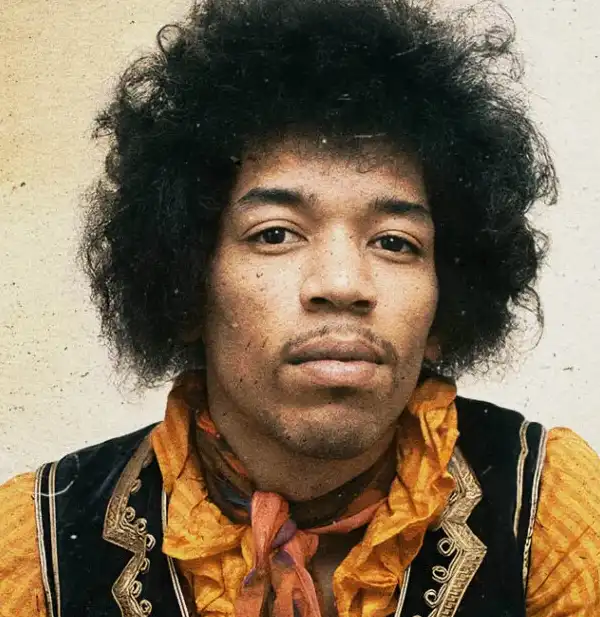
Jimi Hendrix was a legendary American guitarist, singer-songwriter and musical innovator whose extraordinary talent transformed the sound of rock music. Combining blues, hard rock, psychedelic rock, soul and rhythm and blues, Hendrix created a distinctive musical style that continues to inspire generations of musicians. His remarkable ability to manipulate an electric guitar turned distortion, feedback and unconventional playing techniques into legitimate musical expressions. While most guitarists were concerned about making their instruments sound better, Hendrix appeared determined to discover whether his could communicate with civilizations on other planets.
Growing up in Seattle, Washington, Hendrix experienced a difficult childhood marked by financial hardship and family instability. Originally named Johnny Allen Hendrix, he was subsequently renamed James Marshall Hendrix by his father. Music provided an escape from his troubles, and he developed an appreciation for artists such as Muddy Waters, B.B. King, Howlin' Wolf and Buddy Holly. Before acquiring a proper guitar, Hendrix reportedly entertained himself by strumming a broom and later playing a ukulele with a single string. Considering what he eventually accomplished with six strings, one can only imagine what the household cleaning equipment sounded like.
Hendrix was largely self-taught, developing his musical abilities through listening, experimentation and relentless practice rather than formal musical education. Unable to read conventional musical notation, he relied on his exceptional ear and natural understanding of rhythm, melody and harmony. Being left-handed presented another challenge, as suitable guitars were not always readily available. Hendrix famously adapted conventional right-handed guitars by turning them upside down and restringing them for left-handed playing. What began as a practical solution eventually became one of the most recognizable features of his performances.
Before becoming an international rock superstar, Jimi Hendrix served in the United States Army, joining in 1961 and training as a paratrooper with the 101st Airborne Division. During his military service, he met bassist Billy Cox, who would become a longtime friend and musical collaborator. The pair formed a band called the King Kasuals, allowing Hendrix to continue developing his musical skills while fulfilling his military responsibilities. Following his discharge in 1962, Hendrix pursued music professionally, exchanging military discipline for a career in which excessive noise was generally considered an occupational advantage.
Hendrix spent several years working as a supporting guitarist on the American rhythm and blues circuit, performing with influential musicians including Little Richard, the Isley Brothers and Curtis Knight. These experiences exposed him to different musical styles and demanding audiences, helping him become an accomplished and versatile performer. However, Hendrix's increasingly flamboyant stage presence and tendency to attract attention made him somewhat unsuitable for a supporting role. When the audience begins watching the guitarist instead of the advertised star, it is usually time for someone to reconsider the billing arrangements.
By 1966, Hendrix was performing in New York City's Greenwich Village under the name Jimmy James, leading a group known as Jimmy James and the Blue Flames. His extraordinary playing attracted the attention of Linda Keith, who helped introduce him to Chas Chandler, the former bassist of the Animals. Recognizing Hendrix's potential, Chandler persuaded him to relocate to England, where the guitarist's career underwent a dramatic transformation. Together with bassist Noel Redding and drummer Mitch Mitchell, Hendrix formed the Jimi Hendrix Experience, a power trio that would become one of the defining musical acts of the 1960s.
The Jimi Hendrix Experience quickly achieved commercial success in Britain with songs including Hey Joe, Purple Haze and The Wind Cries Mary. Their debut album, Are You Experienced, released in 1967, established Hendrix as an innovative force in psychedelic rock music. His combination of powerful guitar riffs, imaginative lyrics and unconventional arrangements challenged established ideas about popular music. Fellow guitarists were particularly fascinated by his performances, although watching Hendrix play may not have been especially beneficial to their professional self-confidence.
Hendrix achieved widespread recognition in the United States following his unforgettable appearance at the 1967 Monterey International Pop Festival. His electrifying performance culminated in a rendition of Wild Thing, during which he set his guitar on fire before smashing it. The spectacle became one of the most enduring images in rock and roll history, demonstrating that Hendrix was as much a theatrical performer as a musical revolutionary. It also established a remarkably expensive alternative to the traditional practice of taking a bow.
The Jimi Hendrix Experience continued its remarkable success with Axis: Bold as Love and Electric Ladyland. These albums revealed Hendrix's considerable talents as a songwriter, arranger and recording artist. Songs such as Little Wing, Castles Made of Sand, Bold as Love and Voodoo Child (Slight Return) demonstrated his ability to combine delicate melodies with explosive guitar work. Electric Ladyland, released in 1968, became his only album to reach number one on the American Billboard album chart, securing his position among the most influential recording artists of his generation.
Among Hendrix's most celebrated recordings was his interpretation of Bob Dylan's All Along the Watchtower. Hendrix transformed the relatively understated original into a dramatic electric rock masterpiece, layering guitars and creating an entirely different musical atmosphere. Dylan himself expressed admiration for the recording and subsequently incorporated elements of Hendrix's interpretation into his own live performances. When the original songwriter starts borrowing ideas from your cover version, it is generally a reliable indication that you have done something rather special.
Hendrix's innovative use of electric guitar technology helped redefine the possibilities of the instrument. He embraced amplifier feedback, fuzz effects, wah-wah pedals, distortion and experimental studio techniques, incorporating sounds that many musicians and recording engineers had previously attempted to eliminate. His ability to control these effects allowed him to create expressive musical passages that could range from gentle whispers to thunderous explosions. Hendrix effectively turned what might otherwise have been considered an electrical malfunction into an internationally successful musical career.
One of the defining moments of his career occurred at the 1969 Woodstock Music and Art Fair. Performing with an expanded group of musicians, Hendrix delivered his extraordinary interpretation of The Star-Spangled Banner. Using feedback, distortion, dramatic string bends and sustained notes, he recreated sounds reminiscent of warfare while presenting a deeply unconventional interpretation of the American national anthem. The performance became closely associated with the social and political atmosphere of the Vietnam War era and remains one of the most extensively discussed musical performances in rock history.
Following the dissolution of the original Jimi Hendrix Experience, Hendrix continued exploring new musical directions. He reunited with Billy Cox and joined drummer Buddy Miles to form Band of Gypsys, a group that incorporated stronger elements of funk, soul and rhythm and blues into his music. Their live album, Band of Gypsys, released in 1970, featured the powerful composition Machine Gun, widely regarded as one of Hendrix's greatest recorded guitar performances. The project demonstrated that his musical ambitions extended far beyond psychedelic rock and that he was continually searching for new ways to express himself.
Hendrix also invested considerable time and resources in establishing Electric Lady Studios in New York City. Designed to provide an environment where he could experiment freely without the pressures of conventional commercial recording sessions, the studio opened in 1970. Although Hendrix had limited opportunity to enjoy his creation, Electric Lady Studios subsequently became one of the world's most respected recording facilities, welcoming numerous internationally acclaimed musicians. His investment in the studio reflected his understanding that musical innovation required not only imagination but also the freedom to explore it.
Sadly, Jimi Hendrix died in London in September 1970 following drug-related complications. His death brought an abrupt end to an extraordinary career that had fundamentally altered popular music in just four years of international prominence. Numerous unfinished recordings and musical projects remained, many of which were subsequently released, providing further insight into the creative directions he had been exploring. His passing represented an enormous loss to the music industry, particularly considering how much he had accomplished and how many musical possibilities remained unexplored.
The legacy of Jimi Hendrix extends across numerous musical genres, including hard rock, heavy metal, blues rock, funk and experimental music. Guitarists such as Stevie Ray Vaughan, Eddie Van Halen, Prince and countless others have demonstrated elements of his influence through their own performances and recording styles. The Jimi Hendrix Experience was inducted into the Rock & Roll Hall of Fame in 1992, recognizing the group's extraordinary contribution to popular music. Hendrix also received a posthumous Grammy Lifetime Achievement Award in 1992, further acknowledging his lasting influence on the recording industry.
Celebrating the birthday of Jimi Hendrix provides an opportunity to appreciate a musician who refused to accept conventional limitations. His creativity, technical brilliance, adventurous songwriting and extraordinary stage presence helped transform the electric guitar from a musical instrument into an almost limitless means of artistic expression. Whether listeners prefer the tenderness of Little Wing, the psychedelic energy of Purple Haze or the raw power of Voodoo Child, Hendrix offers something extraordinary for anyone who appreciates musical originality. Just remember that turning up the volume is encouraged; setting fire to the guitar remains entirely optional.
IMDb – Jimi Hendrix – Personal details, professional credits, photographs, videos and trivia. PBS American Masters – Jimi Hendrix Biography – Childhood, musical development, military service and professional career. Rock & Roll Hall of Fame – The Jimi Hendrix Experience – Musical innovations, industry influence and induction history. Biography – Jimi Hendrix – Personal history, musical achievements and enduring legacy. AllMusic – Jimi Hendrix – Comprehensive musical biography, discography and album reviews. Hollywood Walk of Fame – Jimi Hendrix – Career recognition, musical achievements and commemorative star. References & Sources