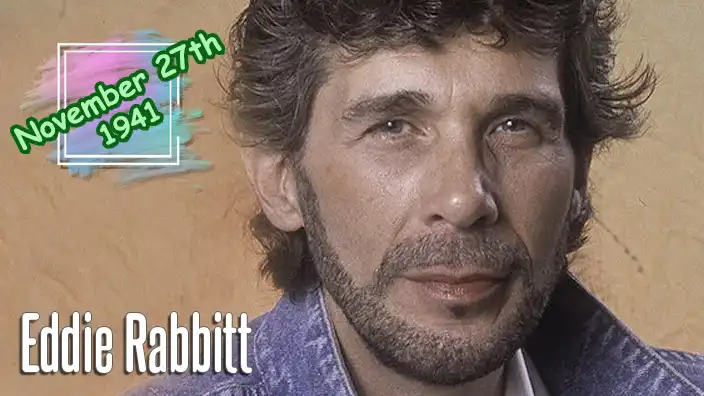
November 27, 1941, in Brooklyn, New York
 May 7, 1998, in Nashville, Tennessee

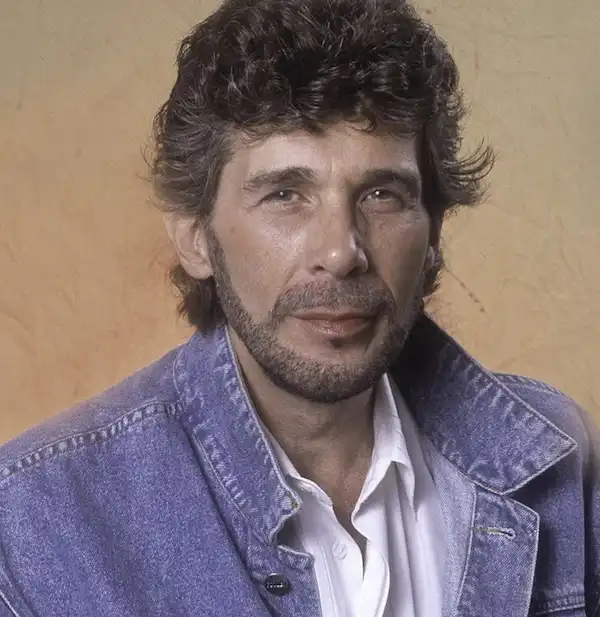
Eddie Rabbitt was an American country music singer, songwriter and guitarist whose distinctive blend of country, pop, rockabilly and soft rock helped transform the Nashville music scene. With memorable songs such as I Love a Rainy Night, Drivin' My Life Away, Every Which Way but Loose and Step by Step, Rabbitt became one of the most recognizable voices in country music during the 1970s and 1980s. His infectious melodies and smooth vocals attracted listeners who might otherwise have avoided country music altogether. He also accomplished something particularly remarkable: persuading millions of people that thunderstorms were considerably more entertaining than the local weather forecast suggested.
Born Edward Thomas Rabbitt in Brooklyn, New York, to Irish immigrant parents, Eddie grew up in East Orange, New Jersey. His father was an accomplished fiddle and accordion player who entertained audiences at local dances, giving Eddie an early appreciation for music. A neighborhood scoutmaster taught him to play guitar and introduced him to country music, a genre that captured his imagination. Although New Jersey was hardly considered the traditional breeding ground for Nashville country music stars, Rabbitt demonstrated that appreciating country music did not require owning a ranch, riding a horse or knowing which end of a cow was responsible for the milk.
Rabbitt struggled academically and left high school following his parents' divorce, although he subsequently earned his diploma through night classes. His ambitions remained firmly focused on music, and he began entertaining audiences in local establishments while supporting himself through various jobs. Winning a talent competition earned him an opportunity to perform on local radio, providing valuable exposure and experience. His earliest commercial recordings appeared in 1964, but widespread recognition proved elusive. Like many aspiring musicians, Rabbitt discovered that possessing considerable talent and persuading the record-buying public to notice it were two entirely different propositions.
In 1968, Eddie Rabbitt relocated to Nashville, Tennessee, determined to establish himself within the country music industry. While developing his songwriting career, he supplemented his income by working as a truck driver and soda fountain attendant. These experiences gave him a firsthand understanding of everyday working life, something that would later resonate throughout his music. His eventual success with Drivin' My Life Away was particularly appropriate considering that he had genuinely spent time earning a living behind the wheel rather than simply admiring trucks from a comfortable recording studio.
Rabbitt's major songwriting breakthrough came when Elvis Presley recorded Kentucky Rain, which he co-wrote with Dick Heard. Released in 1970, the song became a significant commercial success and demonstrated Rabbitt's ability to create emotionally compelling stories through music. Presley also recorded other Rabbitt compositions, including Patch It Up and Inherit the Wind. Having the King of Rock and Roll record your material was an impressive addition to any aspiring songwriter's résumé, particularly one whose previous employment had involved serving refreshments and negotiating highway traffic.
Another major achievement arrived in 1974 when country music singer Ronnie Milsap recorded Rabbitt's composition Pure Love. The song reached number one on the country music chart, further establishing Rabbitt as one of Nashville's promising songwriting talents. His ability to combine traditional country themes with accessible, upbeat melodies attracted the attention of record executives, eventually leading to a recording contract with Elektra Records. Having supplied other musicians with successful material, Rabbitt was finally in a position to keep some of his musical creations for himself.
His recording career gained significant momentum with the album Rocky Mountain Music, which featured his first number-one country single, Drinkin' My Baby (Off My Mind), in 1976. Other popular recordings, including Two Dollars in the Jukebox and I Can't Help Myself, demonstrated his talent for transforming familiar country music themes into highly memorable songs. In 1977, the Academy of Country Music recognized Rabbitt as its Top New Male Vocalist, confirming that his abilities extended well beyond songwriting. Nashville had discovered that the man supplying successful songs could also do a rather impressive job of singing them.
Eddie Rabbitt gained further international exposure through his recording of Every Which Way but Loose, the theme song for the 1978 comedy film of the same name starring Clint Eastwood. The movie followed the adventures of a trucker, amateur fighter and his orangutan companion, Clyde. Rabbitt's energetic recording complemented the film's unconventional combination of comedy, action and country culture. The song became another country chart success, proving that a popular soundtrack could survive even when one of the film's most memorable performers was considerably hairier than its leading man.
Rabbitt's crossover appeal became increasingly apparent with the release of Suspicions in 1979. The romantic ballad combined country songwriting with sophisticated arrangements and elements of pop and rhythm and blues, attracting audiences across several radio formats. Its success reflected a broader transformation occurring within country music, as performers experimented with contemporary production without abandoning their musical roots. Rabbitt understood that a good song could appeal to listeners regardless of whether their record collection contained cowboy hats, electric guitars or romantic ballads intended to improve diplomatic relations with their spouses.
The release of his 1980 album Horizon marked an especially successful period in Eddie Rabbitt's career. Among its standout recordings was Drivin' My Life Away, an energetic celebration of life on the road that incorporated rockabilly influences and an irresistible rhythm. The song appeared in the comedy film Roadie and became particularly popular among motorists and professional truck drivers. With its infectious beat and highway imagery, the recording almost demanded to be played while traveling, preferably with the windows down and without allowing the accelerator pedal to develop an enthusiasm of its own.
Perhaps Eddie Rabbitt's most recognizable song, I Love a Rainy Night, became an international sensation. Co-written with David Malloy and Even Stevens, the recording reached number one on the Billboard Hot 100, the country music chart and the adult contemporary chart. Its distinctive rhythm, cheerful delivery and celebration of thunderstorms made it remarkably appealing to listeners across musical generations. While most people associate heavy rain with leaking roofs, muddy gardens and questionable weather forecasts, Rabbitt managed to turn the entire experience into a commercially successful expression of happiness. Whether poultry farmers and people living down dirt roads share his enthusiasm remains open to considerable debate.
Rabbitt continued his successful career with Step by Step, Someone Could Lose a Heart Tonight and other recordings that demonstrated his versatility as a vocalist and songwriter. He avoided being confined to a single musical formula, comfortably moving between energetic country-rock numbers and sentimental love songs. His ability to appeal simultaneously to country and mainstream pop audiences helped establish a commercial approach that subsequent generations of country music performers would embrace. Long before crossover success became commonplace in Nashville, Rabbitt was demonstrating that musical boundaries were considerably less important than a memorable melody.
One of his most celebrated collaborations was You and I, a romantic duet recorded with country music star Crystal Gayle in 1982. Their complementary voices helped make the recording a favorite among country, pop and adult contemporary audiences. The song became particularly associated with weddings and romantic celebrations, offering a gentler alternative to Rabbitt's energetic recordings about highways and thunderstorms. He later enjoyed additional success alongside Juice Newton with Both to Each Other (Friends and Lovers), further demonstrating his talent for musical partnerships and emotionally expressive performances.
Away from the recording studio, Eddie Rabbitt experienced considerable personal tragedy when his young son, Timmy, died in 1985 following a serious medical condition and liver transplantation. The loss profoundly affected Rabbitt and his family, and he became involved in charitable efforts supporting children with serious illnesses and disabilities. His commitment to these causes reflected a compassionate side of the entertainer that audiences might not have encountered through his upbeat musical performances. Despite the demands of a successful recording career, Rabbitt placed considerable importance on his responsibilities as a husband and father.
As country music evolved during the late 1980s and early 1990s, Rabbitt continued recording material that demonstrated his versatility. Songs such as I Wanna Dance with You, The Best Year of My Life and On Second Thought maintained his connection with country music audiences. He also explored patriotic themes with American Boy and eventually ventured into children's entertainment with the album Welcome to Rabbittland. The latter allowed him to introduce his songwriting talents to a considerably younger audience, presumably one that appreciated an entertainer whose surname already sounded like the principal character in a children's story.
Eddie Rabbitt died from lung cancer in Nashville in May 1998, bringing an end to a remarkable musical career. During his lifetime, he achieved 17 number-one singles on Billboard's country songs chart and 34 top-ten entries. His induction into the Nashville Songwriters Hall of Fame in 1998 recognized his considerable contributions to American popular music. Although his commercial success was often associated with his recordings, his accomplishments as a songwriter were equally impressive, demonstrating an understanding of storytelling, melody and musical accessibility that transcended individual genres.
Celebrating the birthday of Eddie Rabbitt offers an opportunity to rediscover an entertainer who helped reshape modern country music without sacrificing the storytelling traditions that made the genre so appealing. His music continues to entertain listeners through classic country radio stations, film soundtracks, television programs and personal music collections. Whether providing companionship during a long highway journey, supplying the soundtrack to a romantic evening or encouraging listeners to appreciate a thunderstorm, Eddie Rabbitt possessed an extraordinary ability to make ordinary experiences memorable. Just remember that loving a rainy night is considerably easier when the roof doesn't leak.
IMDb – Eddie Rabbitt – Personal biography, professional credits, soundtrack appearances, videos and trivia. Eddie Rabbitt – Official Website – Early life, musical development, recording career and signature songs. Nashville Songwriters Hall of Fame – Eddie Rabbitt – Songwriting achievements, chart performances and industry recognition. AllMusic – Eddie Rabbitt – Musical biography, discography, artistic influences and crossover success. Billboard – Country Update – Verified Billboard chart statistics and the commercial success of Suspicions. MusicRow – Primary Wave Music Acquires Eddie Rabbitt Catalog – Songwriting awards, publishing achievements and musical legacy. Musician Guide – Eddie Rabbitt Biography – Career milestones, awards, family circumstances and discography. References & Sources