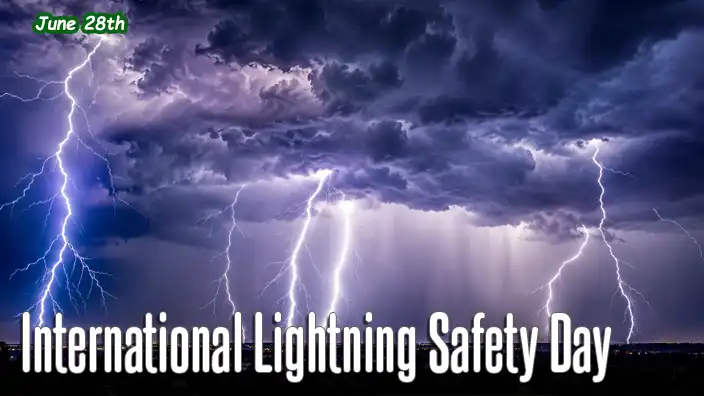
Shocking Truths and Electrifying Humor
Every June, we are reminded of the electrifying force of nature that is both awe-inspiring and terrifying: lightning. National Lightning Safety Awareness Week serves as a vital reminder of the dangers posed by lightning and the precautions we should take to stay safe. While lightning can be a beautiful spectacle, it can also be deadly. So, let’s illuminate some important facts about lightning safety with a sprinkle of humor to keep things light (pun intended).
What Exactly Is Lightning?
Lightning is one of nature's most awe-inspiring and powerful phenomena. It is a sudden and dramatic electrostatic discharge that occurs during a thunderstorm. This incredible display of electricity happens when there is a significant buildup of electrical charges within clouds or between clouds and the ground.
The Science Behind Lightning: The process begins with a thunderstorm cloud called a cumulonimbus cloud. Various particles, such as water droplets, ice crystals, and dust particles, collide and interact within this cloud. These collisions cause a separation of charges: positively charged particles move to the top of the cloud, while negatively charged particles accumulate at the bottom. This separation creates a strong electric field within the cloud.
When the electric field becomes intense enough, it seeks to neutralize itself by discharging the accumulated energy. This discharge can occur within the cloud (intra-cloud lightning), between different clouds (cloud-to-cloud lightning), or between the cloud and the ground (cloud-to-ground lightning). The latter is the type most people are familiar with and often the most dangerous.
The Path of a Lightning Bolt: Contrary to what one might think, a lightning bolt doesn't travel directly from the cloud to the ground in a straight line. Instead, it follows a jagged, zigzag path. This path is determined by the various channels of ionized air, known as step leaders, that form as the electrical charges build up. These step leaders extend downward from the cloud in short bursts, seeking the path of least resistance toward the ground.

Once a step leader gets close enough to the ground, it connects with an upward leader formed from a tall object or the ground itself. This connection completes the circuit, and a powerful discharge of electricity, known as the return stroke, travels back up the path created by the step leaders. This return stroke is the bright flash of lightning we see and can carry up to one billion volts of electricity.
The Thunderous Boom: The intense heat a lightning bolt generates, reaching around 30,000 Kelvin (53,540 degrees Fahrenheit), causes the air around it to expand rapidly. This rapid expansion creates a shock wave that we hear as thunder. Because light travels faster than sound, we see the flash of lightning before we hear the thunder. By counting the seconds between the flash and the boom, you can estimate the distance of the lightning strike—every five seconds roughly equals one mile.
Types of Lightning
- Cloud-to-Ground (CG) Lightning: The most well-known type, where the discharge occurs between the cloud and the ground. It's the kind of lightning most associated with thunderstorm dangers.
- Intra-Cloud (IC) Lightning: This type occurs within a single cloud, accounting for most lightning flashes. It can light up the entire cloud and is often seen as a flickering within the storm.
- Cloud-to-Cloud (CC) Lightning: This occurs between two separate clouds. It's less common than intra-cloud lightning but can create spectacular light shows.
- Ball Lightning: A rare and mysterious form of lightning that appears as a glowing, spherical object, typically during a thunderstorm. Its behavior and properties are still not entirely understood.
Lightning is a powerful natural force that commands respect and caution. By understanding its mechanisms and behaviors, we can better appreciate its beauty and take the necessary steps to protect ourselves from its dangers.
If you suddenly feel the effects of static electricity in your vicinity during a thunderstorm, such as your hair standing on end or a tingling sensation on your skin, take immediate action to minimize the risk of being struck by lightning. What you can feel is a step leader, and a strike is imminent. Crouch down low on the balls of your feet, tuck in your head, and cover your ears, making yourself as small a target as possible. Avoid lying flat on the ground, as this increases your contact with the ground and the potential for injury. If shelter is available, seek it immediately, preferably in a building or a car, and stay away from tall objects, open fields, and bodies of water.
Nature’s Showstopper
Lightning can strike the same place twice (sorry, Myth Busters), and it does so with impressive force. Each lightning bolt can carry up to one billion volts of electricity. That’s like powering a billion light bulbs with one strike! No wonder we’re fascinated and terrified by this powerful display.
While lightning fatalities have decreased over the years due to better awareness and safety measures, it still poses a significant risk. In the United States, an average of 20-30 people are killed by lightning each year, with hundreds more injured. These numbers highlight the importance of observing National Lightning Safety Awareness Week and taking precautions seriously.
Safety Tips with a Spark of Humor
-
When Thunder Roars, Go Indoors: This catchy phrase isn’t just fun to say; it’s a life-saving tip. If you can hear thunder, lightning is close enough to strike. So, resist the urge to become an impromptu storm chaser and head indoors. Remember, even superheroes seek shelter during storms—Thor included.
-
Avoid Water: Swimming during a thunderstorm is like holding a metal rod in a lightning storm—only wetter. Lightning can strike water and travel significant distances, so avoid pools, lakes, and even the bathtub during a storm. It’s the perfect excuse to skip that post-workout shower, right?
-
Stay Away from Tall Objects: During a storm, trees, poles, and golf clubs are not your friends. Lightning tends to strike the tallest object, so don’t make yourself a target. If you’re caught outside without shelter, crouch low to the ground without lying flat. It’s not the most glamorous pose, but it beats being a human lightning rod.
-
Unplug Appliances: Lightning can cause power surges that damage electronics. Unplugging appliances and devices protects them and prevents you from experiencing the shocking aftermath of fried electronics. Plus, it’s a great excuse to take a break from your screens and read a book by candlelight (just not during the storm).
-
Avoid Concrete Structures: Concrete walls and floors may seem like safe options, but they often contain metal rebar, which can conduct electricity. So, during a storm, steer clear of basements and concrete buildings. Your best bet is a fully enclosed structure with plumbing and wiring.
Fun Facts to Brighten Your Day
- Lightning’s Speed: Lightning travels at a speed of about 220,000 miles per hour. That’s fast enough to circle the Earth in just over seven seconds. Imagine commuting at that speed—no more traffic jams!
- The Color of Lightning: Lightning can appear in different colors depending on the atmospheric conditions. While we often see white or blue lightning, it can also appear red, yellow, or even green. Who knew lightning could be so stylish?
- Lightning Strikes and Space: Astronauts on the International Space Station can witness lightning storms from space. It’s like having a front-row seat to the greatest light show on Earth.
- Lightning Strikes Earth Frequently: There are about 100 lightning strikes per second worldwide, up to roughly 8.6 million daily strikes. Despite this, the odds of being struck by lightning in any given year are about 1 in 500,000.
- Lightning and Temperature: The extreme lightning heat can fuse sand into glass. When lightning strikes sandy soil, it can create fulgurites, which are glassy, tubular structures formed by the intense heat.
- Positive Lightning: This is a more powerful type of lightning that originates from the top of the thunderstorm cloud and carries a positive charge. It can strike several miles from the storm and is more destructive than the common negative lightning.
National Lightning Safety Awareness Week is an essential reminder to respect the power of lightning and take necessary precautions. While we can marvel at its beauty from a safe distance, it’s crucial to prioritize safety when a storm rolls in. So, remember these tips next time you hear thunder and stay safe. After all, it’s better to be a lightning safety nerd than a lightning strike statistic. Stay safe, stay indoors, and let’s weather the storm with a smile.