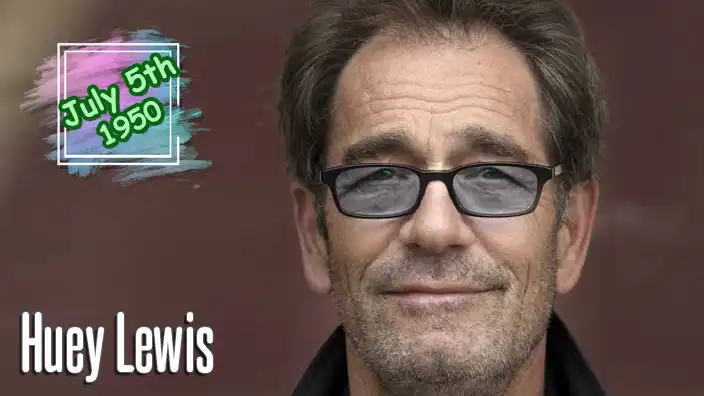
July 5, 1950, in New York City
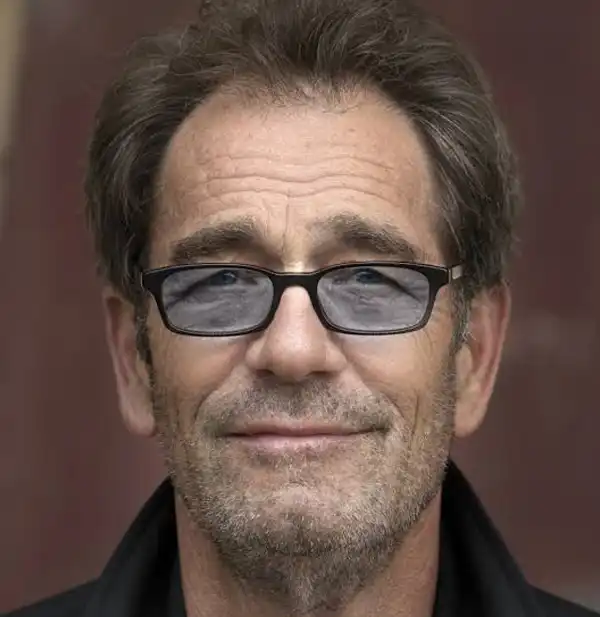
Huey Lewis was born Hugh Anthony Cregg III in New York City. Although he was born on the East Coast, his musical identity became closely tied to California, especially the Bay Area. His family moved to Marin County when he was young, placing him near the musical stew that would later help shape his sound: rock, rhythm and blues, soul, bar-band grit, and just enough polish to make radio programmers sit up straight.
Before he became Huey Lewis, arena-filling frontman, he had the kind of young life that sounds almost suspiciously overqualified for a rock biography. He attended the Lawrenceville School in New Jersey, played harmonica, hitchhiked through Europe, and later spent time at Cornell University. Somewhere in there, music stopped being a hobby and became the thing that would eventually pay the bills, sell the records, and put him permanently on every decent 1980s playlist.
Lewis first gained professional experience with the Bay Area band Clover. The group never became a major commercial force, but it gave him real seasoning. Clover even spent time in Britain and worked with producer Robert John “Mutt” Lange, long before Lewis and Lange would be linked again through later hitmaking. Lewis played harmonica and sang, learning the road, the studio, and the useful lesson that the music business is rarely impressed by effort alone. It wants songs. Good ones. Preferably yesterday.
After Clover, Lewis helped form the group that became Huey Lewis and the News. Their early years were not instant fireworks. Their 1980 debut album did not make them stars, but the band kept working. The breakthrough came with Picture This in 1982, helped by “Do You Believe in Love,” which became their first major Top 40 hit. It was catchy, clean, confident, and sounded like a band discovering exactly what it was good at.
Then came Sports in 1983, and that changed everything. The album became a massive commercial success, reaching number one on the Billboard 200 and producing a string of major hits, including “Heart and Soul,” “I Want a New Drug,” “The Heart of Rock & Roll,” and “If This Is It.” It was one of those rare albums that seemed to be everywhere without wearing out its welcome. Radio loved it. MTV loved it. People with cassette decks loved it. People pretending they did not love it probably owned it anyway.
The appeal of Huey Lewis and the News was not mystery. They sounded like a real band. Not a studio invention, not a fashion experiment, not a synthesizer wearing sunglasses. Their music mixed rock and roll, soul, pop, doo-wop, rhythm and blues, and sharp 1980s production into something friendly but muscular. The horns gave the songs a punch, Lewis gave them personality, and the band played with the confidence of people who had earned their chops in clubs instead of being assembled in a boardroom.
“I Want a New Drug” became one of the band’s signature songs, even though its title invited plenty of raised eyebrows. The song was not a celebration of illegal excess so much as a witty, high-energy pop-rock number about wanting something that produces all the good feelings without the bad consequences. In other words, the most responsible irresponsible-sounding song of the decade.
In 1985, Huey Lewis and the News reached another level with “The Power of Love,” written for Back to the Future. The song became the band’s first number-one hit on the Billboard Hot 100 and helped tie Lewis forever to one of the most beloved films of the 1980s. Lewis also made a brief cameo in the movie as a school talent-show judge who rejects Marty McFly’s band for being “just too darn loud.” That is quality irony, neatly folded and delivered with a grin.
“The Power of Love” also earned major recognition, including Grammy nominations and an Academy Award nomination for Best Original Song. It remains one of the great film-linked pop songs of its era, the kind of track that can make people think about DeLoreans, skateboards, and questionable time-travel decisions within the first few seconds.
The band followed with Fore! in 1986, another huge success. It reached number one on the Billboard 200 and produced hits including “Stuck with You,” “Jacob’s Ladder,” and “Hip to Be Square.” By this point, Huey Lewis and the News were not just successful; they were part of the cultural furniture of the decade. If the 1980s had a jukebox in the corner, their songs were already loaded and waiting.
Lewis’s voice played a major role in that success. He was not trying to be operatic, tortured, or mysterious. He sounded direct, energetic, and human. There was a working-band honesty to his delivery, whether he was singing about love, frustration, ambition, or the simple need to keep going. That was part of the charm. He sounded less like a distant rock idol and more like the guy at the end of the bar who happened to have a platinum record in his jacket pocket.
The band’s success continued into the late 1980s and early 1990s with albums such as Small World and Hard at Play. While the pop landscape changed, Lewis and the News kept touring and recording, maintaining a loyal audience that appreciated musicianship over trend-chasing. Their catalog remained durable because the songs were built properly. Hooks, harmonies, rhythm, horns, choruses—old-fashioned ingredients, well cooked.
Lewis also appeared as an actor and composer in film and television projects, building on the visibility he gained through Back to the Future. His screen appearances were usually relaxed and self-aware, which suited him. He never seemed desperate to become a movie star; he simply looked comfortable showing up, doing the job, and not knocking over the furniture.
In later years, Lewis faced a devastating challenge when Ménière’s disease severely affected his hearing. In 2018, he announced that he could no longer hear well enough to sing, forcing the cancellation of scheduled performances. For a singer, that is not a minor inconvenience; that is the roof coming off the house. Lewis has spoken openly about the emotional impact of losing the ability to hear music properly, while also expressing gratitude for the life and career he has had.
Even with those difficulties, his music continued finding new audiences. The jukebox musical The Heart of Rock and Roll, built around songs by Huey Lewis and the News, reached Broadway in 2024. That says plenty about the strength of the catalog. Plenty of old hits are nostalgic. His are stage-ready, crowd-ready, and still wearing comfortable shoes.
Huey Lewis’s legacy rests on more than catchy choruses. He helped define mainstream American pop-rock in the 1980s without sounding manufactured or disposable. He brought bar-band muscle to radio, harmonica swagger to MTV, and a plainspoken voice to songs that still sound cheerful without being flimsy. That is harder than it looks. Plenty tried. Fewer landed it.
For anyone ranking celebrity birthdays, Huey Lewis belongs high on the list because he represents an entire era of popular music at its most confident and accessible. He was the frontman of a band that sold millions of albums, scored major chart hits, helped power one of cinema’s most famous soundtracks, and proved that rock and roll could be sharp, fun, and professionally dressed without losing its pulse.