November 15, 1951, in Columbus, Ohio

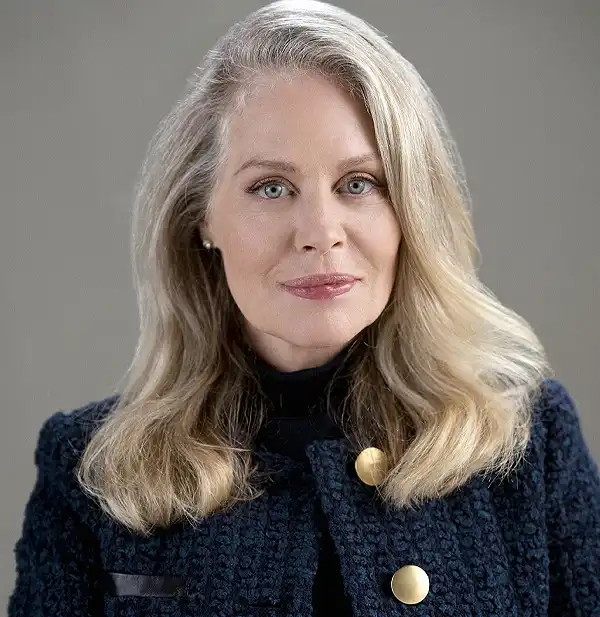
Beverly Heather D'Angelo was born on November 15, 1951, in Columbus, Ohio, into a family with strong connections to music, broadcasting, and the arts. Her father, Eugene Constantino D'Angelo, was a bass player and television station manager, while her mother, Priscilla Ruth Smith, was a violinist. Her maternal grandfather, Howard Dwight Smith, was a distinguished architect who designed Ohio Stadium at Ohio State University, a structure affectionately known as the Horseshoe. Growing up in a household where music and creativity were part of everyday life gave Beverly an early appreciation for artistic expression. With a musician for a father, a violinist for a mother, and an architect responsible for one of America's most recognizable stadiums in the family tree, choosing an ordinary office career might have seemed almost rebellious.
D'Angelo attended Upper Arlington High School in suburban Columbus, where she developed interests in art, music, and performance. Although she would eventually become internationally recognized as an actress, her earliest professional ambitions were not necessarily directed toward Hollywood. She initially explored visual arts and music, demonstrating a creative curiosity that would later help her move comfortably between different forms of entertainment. Her upbringing encouraged artistic independence, and she developed the confidence to pursue opportunities that did not always follow a conventional career path. Before audiences knew her as the patient wife of America's most accident-prone vacation planner, she was a young woman interested in discovering just how many different ways she could express herself creatively.
During her early professional years, D'Angelo worked as an illustrator and cartoonist at Hanna-Barbera Studios, the animation company responsible for beloved television characters such as The Flintstones, The Jetsons, and Scooby-Doo. The experience allowed her to use her artistic abilities while gaining an introduction to the entertainment industry from behind the scenes. Working in animation was a considerable distance from starring in major motion pictures, but it provided valuable exposure to the creative processes involved in producing popular entertainment. One can only imagine whether she ever suspected that her future career would involve situations even more ridiculous than anything Fred Flintstone managed to accomplish with his prehistoric automobile.
Her musical interests also led her to Canada, where she became involved with the rock music scene in Toronto. During the early 1970s, she performed as a singer with a group associated with musician Ronnie Hawkins, whose backing band had previously included members who would become famous as The Band. This experience helped develop her confidence as a performer and strengthened her understanding of professional music. Singing before live audiences required timing, personality, and the ability to communicate emotion, skills that would eventually prove equally useful in acting. Her early musical career also explains why she would later be such a convincing choice to portray one of country music's most celebrated singers.
D'Angelo's transition into acting began through theater, where she developed her performance skills in stage productions. She appeared in the Broadway musical Rockabye Hamlet in 1976, an unconventional rock adaptation of Shakespeare's famous tragedy. The production was not a major commercial success, but it provided valuable professional experience and introduced her to the demands of theatrical performance. Combining Shakespeare with rock music was certainly an ambitious idea, although the original play already contained enough family arguments, suspicious behavior, and unfortunate deaths to qualify as an unusually dramatic rock opera. For D'Angelo, the experience represented another step toward a career that would eventually include nearly every major entertainment medium.
Her screen career began gaining momentum during the late 1970s with appearances in television productions and feature films. One of her early movie roles came in Woody Allen's Annie Hall in 1977, in which she made a brief appearance. She subsequently appeared in Every Which Way but Loose in 1978, the popular action-comedy starring Clint Eastwood and an orangutan named Clyde. The film introduced her to a broader audience and demonstrated her ability to participate in commercially successful productions. Working in a movie featuring a motorcycle gang, a truck driver, and an unusually expressive orangutan was probably excellent preparation for the unpredictable comedy that would later become a major part of her career.
In 1979, D'Angelo appeared in Hair, the film adaptation of the celebrated counterculture musical directed by Miloš Forman. She portrayed Sheila Franklin, a young woman whose experiences become intertwined with a group of free-spirited young people during the Vietnam War era. The production combined music, romance, political themes, and social commentary, providing D'Angelo with an opportunity to demonstrate both her acting and singing abilities. The film featured elaborate musical sequences and a distinctive visual style reflecting the cultural changes of the 1960s. Her performance helped establish her reputation as a versatile actress capable of handling dramatic material alongside musical entertainment.
Her breakthrough as a dramatic performer came in 1980 with Coal Miner's Daughter, the acclaimed biographical film about country music singer Loretta Lynn. Directed by Michael Apted, the movie starred Sissy Spacek as Lynn and Tommy Lee Jones as her husband, Doolittle. D'Angelo portrayed Patsy Cline, the legendary country singer who became a friend and mentor to Lynn before her tragic death in a plane crash in 1963. Rather than simply imitating Cline's mannerisms, D'Angelo delivered a performance that captured the singer's warmth, confidence, and powerful personality. She also performed her own singing for the film, demonstrating that her earlier musical experience was considerably more than an interesting footnote in her biography.
Coal Miner's Daughter received widespread critical acclaim and became one of the most celebrated musical biographies of its era. Sissy Spacek won the Academy Award for Best Actress, while D'Angelo earned a Golden Globe nomination for Best Supporting Actress for her portrayal of Patsy Cline. Her performance was particularly impressive because Cline possessed one of the most distinctive voices in country music history, making the role challenging for any performer. D'Angelo's ability to sing convincingly while portraying such a recognizable personality demonstrated exceptional musical and dramatic versatility. It also proved that the woman who would later become Ellen Griswold could do considerably more than look concerned while her fictional husband made another disastrous decision.
Throughout the early 1980s, D'Angelo continued building her film career with roles in productions such as Honky Tonk Freeway in 1981 and Paternity the same year. These appearances allowed her to explore different characters and develop her comedic timing, which would soon become one of her most recognizable strengths. Her performances combined natural warmth with an ability to deliver sharp dialogue and react convincingly to increasingly absurd situations. These qualities made her particularly effective in ensemble comedies, where much of the humor depends on the interactions between characters rather than elaborate jokes. Hollywood was about to discover that she was exceptionally good at portraying a sensible woman surrounded by people behaving like complete idiots.
That discovery became official in 1983 when D'Angelo was cast as Ellen Griswold in National Lampoon's Vacation, directed by Harold Ramis and written by John Hughes. The film starred Chevy Chase as Clark Griswold, an enthusiastic but frequently misguided father determined to take his family on the perfect cross-country vacation. D'Angelo portrayed Ellen, Clark's patient and increasingly exasperated wife, who attempts to maintain some degree of normality as the family's journey descends into chaos. Their destination, the fictional Walley World amusement park, becomes the focus of a road trip involving disastrous detours, family arguments, mechanical problems, and an impressive collection of poor decisions. It was the sort of vacation that would make most families reconsider whether staying home and mowing the lawn might be more relaxing.
The film became a major commercial success and established the Griswold family as one of American cinema's most recognizable comedy households. D'Angelo's portrayal of Ellen was essential to the movie's appeal because she provided a believable emotional balance to Chevy Chase's increasingly ridiculous behavior. While Clark pursued his unrealistic vision of family happiness, Ellen attempted to keep the children safe, manage the practical problems, and prevent her husband from making the situation even worse. Her reactions often delivered as much humor as the elaborate disasters themselves. D'Angelo understood that comedy frequently works best when one character treats an absurd situation with complete seriousness, particularly when the person responsible for the chaos remains convinced that everything is proceeding according to plan.
The popularity of National Lampoon's Vacation led to European Vacation in 1985, with D'Angelo and Chase returning as Ellen and Clark Griswold. This time, the family wins a trip to Europe through a television game show, providing Clark with an entirely new continent in which to demonstrate his questionable travel-planning abilities. Their adventures take them through England, France, Germany, and Italy, with predictable misunderstandings and mishaps accompanying nearly every stop. D'Angelo again provided the sensible counterweight to Chase's enthusiastic incompetence, helping maintain the familiar family dynamic that audiences enjoyed. For European tourism officials, the movie probably served as a useful reminder that some American visitors should be issued detailed instructions before being allowed to rent a car.
In 1989, D'Angelo returned for what would become one of the most beloved holiday comedies ever made, National Lampoon's Christmas Vacation. Written by John Hughes and directed by Jeremiah S. Chechik, the film follows Clark Griswold's determination to create the perfect traditional family Christmas. Naturally, his plans involve an excessive number of Christmas lights, unexpected relatives, financial worries, a troublesome squirrel, and a series of catastrophes that threaten to destroy the holiday spirit. D'Angelo's Ellen once again attempts to preserve family harmony while navigating Clark's increasingly elaborate disasters. Her performance helped transform the movie into an enduring seasonal favorite, particularly among viewers who recognize that family Christmas celebrations occasionally resemble a military operation conducted without adequate planning.
Christmas Vacation became especially popular through repeated television broadcasts and home-video releases, eventually establishing itself as a holiday tradition for countless families. D'Angelo's chemistry with Chevy Chase remained central to the film's success, creating a believable married couple whose relationship survived circumstances that would test the patience of almost anyone. Ellen's combination of affection, frustration, and quiet determination made her one of the franchise's most memorable characters. Although Clark frequently attracted attention through spectacular mistakes, Ellen's reactions provided the emotional grounding that made the comedy effective. After enduring the Griswold family's Christmas celebrations, she probably deserved an extended holiday somewhere with no relatives, no decorations, and absolutely no electrical equipment.
D'Angelo returned to the franchise in Vegas Vacation in 1997, which followed the Griswolds on another ill-advised family holiday, this time to Las Vegas. The film introduced new opportunities for Clark to make questionable financial decisions while Ellen became involved in a storyline featuring legendary entertainer Wayne Newton. Although the movie received mixed reviews, it continued the familiar family comedy formula and reinforced D'Angelo's association with the character. The actress later appeared alongside Chevy Chase in the 2015 film Vacation, a continuation of the franchise centered on the grown-up Rusty Griswold and his own family's disastrous road trip. Their appearances provided a nostalgic connection to the original films and demonstrated that some fictional families are simply incapable of learning from experience.
Although the Vacation movies became her most recognizable work, D'Angelo consistently pursued dramatic roles that demonstrated her range beyond comedy. In 1984, she appeared in Finders Keepers, followed by performances in films such as The Men's Club in 1986 and High Spirits in 1988. She also appeared in the 1990 thriller Pacific Heights, starring Michael Keaton, Melanie Griffith, and Matthew Modine. These projects allowed her to portray characters facing different emotional and psychological challenges, reminding audiences that her abilities extended far beyond the familiar role of Ellen Griswold. Her willingness to alternate between comedy, drama, and suspense helped establish a varied professional career rather than allowing one successful franchise to define her entire body of work.
In 1992, D'Angelo appeared in the critically acclaimed drama American History X, released in 1998, portraying Doris Vinyard, the mother of two brothers whose lives are affected by racism, violence, and extremist ideology. The film starred Edward Norton as Derek Vinyard, a former neo-Nazi attempting to confront the consequences of his past actions. D'Angelo's performance brought emotional weight to the family relationships at the center of the story, portraying a mother struggling with the destructive influences affecting her children. The role represented a dramatic departure from her familiar comedy performances and demonstrated her ability to contribute meaningfully to serious, socially challenging material. It also reminded audiences that an actress capable of surviving Clark Griswold's Christmas lights could handle considerably darker fictional circumstances.
D'Angelo continued working steadily throughout the 1990s and 2000s, appearing in films such as Nowhere in 1997, Illtown in 1996, and The House Bunny in 2008. Her performances ranged from independent dramas to mainstream comedies, often involving supporting characters whose personalities added depth or humor to the central story. She also appeared in television productions, demonstrating the adaptability that had characterized her career since its earliest years. Rather than relying exclusively on leading roles, she embraced opportunities to portray memorable supporting characters, recognizing that a strong performance can leave a lasting impression regardless of the amount of screen time involved.
One of her most notable television roles came in HBO's acclaimed drama series Entourage, in which she portrayed Barbara "Babs" Miller, a powerful Hollywood talent agent and business partner of Ari Gold, played by Jeremy Piven. Appearing throughout several seasons, D'Angelo brought confidence, sharp humor, and professional authority to a character operating within the competitive entertainment industry. Her scenes frequently involved confrontations, negotiations, and sarcastic exchanges, allowing her to demonstrate the quick comedic timing that had made her so effective in the Vacation films. Playing a formidable Hollywood agent also offered an entertaining contrast to Ellen Griswold, who had spent years attempting to manage one particularly troublesome husband rather than an entire collection of demanding entertainment personalities.
Her television work also included guest appearances on popular programs such as Law & Order: Special Victims Unit, The Simpsons, and Family Guy. Voice acting provided another outlet for her comedic abilities, allowing her to participate in animated productions without the physical demands of live-action filming. Her appearances across different television genres helped introduce her to younger audiences who might not have experienced the original Vacation films during their theatrical releases. This continued visibility demonstrated the importance of versatility in maintaining a lengthy entertainment career, particularly as television and film production underwent significant changes with the growth of cable networks and streaming services.
D'Angelo's personal life has occasionally attracted considerable public attention, particularly her relationship with acclaimed actor Al Pacino. The couple began a relationship in the late 1990s and became parents to twins, Anton James and Olivia Rose, in 2001. Although their relationship eventually ended, they continued sharing responsibilities as parents. D'Angelo has spoken publicly about the challenges and rewards of motherhood, particularly the experience of raising children while maintaining a demanding professional career. Her relationship with Pacino brought additional media interest, although both performers had already established successful careers long before their personal lives became a subject of celebrity reporting.
Before her relationship with Pacino, D'Angelo was married to Italian aristocrat Lorenzo Salviati, whom she wed in 1981. Their marriage eventually ended in divorce, but the experience added another unusual chapter to her personal history. From growing up in Ohio to working in animation, singing with rock musicians, appearing in Hollywood films, and marrying into an Italian noble family, D'Angelo's life has rarely followed an entirely predictable course. Her experiences have provided a wealth of material for interviews and personal reflections, although one suspects that very few fictional screenwriters would attempt to include quite so many unexpected developments in a single character's biography.
In addition to her acting career, D'Angelo has maintained a lifelong interest in music. Her portrayal of Patsy Cline in Coal Miner's Daughter remains one of the clearest demonstrations of her singing abilities, but music has continued influencing her artistic choices throughout her career. Her background as a vocalist helped her develop an understanding of rhythm, timing, and emotional expression, qualities that also contribute to effective dramatic and comedic performances. Whether delivering a musical number or reacting to Chevy Chase's latest catastrophe, D'Angelo has consistently demonstrated an instinctive sense of timing. In comedy, as in music, knowing precisely when to pause can be just as important as knowing when to make noise.
Her career has also included work in independent films and productions that explore unconventional themes. In 2013, she appeared in Bounty Killer, an action-comedy set in a dystopian future, while later projects included The Good House and the 2022 holiday action-comedy Violent Night. In Violent Night, D'Angelo portrayed Gertrude Lightstone, the wealthy and formidable matriarch of a family whose Christmas celebration becomes the setting for an unexpectedly violent confrontation. The film starred David Harbour as a very unconventional Santa Claus and combined dark humor with action sequences. For D'Angelo, returning to a disastrous fictional Christmas was almost a professional tradition, although this particular holiday involved considerably more fighting than the Griswolds ever managed.
Her appearance in Violent Night demonstrated that she remained willing to explore unusual characters and contemporary entertainment styles. Gertrude Lightstone was far removed from the patient and affectionate Ellen Griswold, allowing D'Angelo to portray a powerful, demanding personality with a distinctly sharper sense of humor. The film introduced her to another generation of viewers while providing longtime fans with an entertaining reminder of her versatility. Having spent decades portraying one of cinema's most recognizable holiday mothers, she was now playing a wealthy family matriarch whose Christmas problems required considerably more than replacing a few broken light bulbs.
Throughout her career, D'Angelo has earned recognition for her ability to move between contrasting genres while maintaining a distinctive screen presence. Her Golden Globe nomination for Coal Miner's Daughter highlighted her dramatic and musical talents, while her enduring association with the Vacation franchise established her as an important figure in American film comedy. She also received an Emmy nomination for her performance in the 1984 television adaptation of A Streetcar Named Desire, further demonstrating her ability to handle serious dramatic material. These achievements reflect a career built upon far more than a single successful character, even if Ellen Griswold remains the role most audiences immediately recognize.
The continuing popularity of the National Lampoon's Vacation films has ensured that D'Angelo remains familiar to audiences across generations. Christmas Vacation, in particular, has become an annual viewing tradition for families who enjoy watching fictional relatives experience holiday disasters considerably worse than their own. Ellen Griswold's patience, humor, and occasional frustration remain recognizable to anyone who has attempted to organize a family gathering while dealing with an enthusiastic but impractical relative. D'Angelo's performance helped make the character believable, transforming what might have been a simple supporting role into an essential part of the franchise's enduring appeal.
Beverly D'Angelo's career illustrates the value of versatility, persistence, and a willingness to embrace unexpected opportunities. From her early work as an illustrator and singer to her acclaimed portrayal of Patsy Cline and her unforgettable performances as Ellen Griswold, she has demonstrated a remarkable ability to adapt to different artistic challenges. Her contributions to film, television, theater, and music have established her as a respected entertainer whose work extends across numerous decades. She has portrayed loving mothers, formidable businesswomen, troubled family members, historical personalities, and characters whose lives become complicated in ways that would exhaust even the most experienced marriage counselor.
Beverly D'Angelo remains one of Hollywood's most recognizable and versatile performers, combining warmth, humor, musical talent, and dramatic ability throughout an extraordinary career. Her performances have entertained millions of viewers while contributing to films that continue attracting audiences long after their original releases. Whether portraying Patsy Cline's musical brilliance, confronting serious family problems in dramatic productions, or attempting to prevent Clark Griswold from destroying another perfectly good holiday, she has consistently brought personality and authenticity to her roles. And if the Griswold family ever decides to organize another vacation, someone really ought to ask Ellen whether she'd prefer to stay home. After everything she's endured, nobody could reasonably blame her.
References & Sources