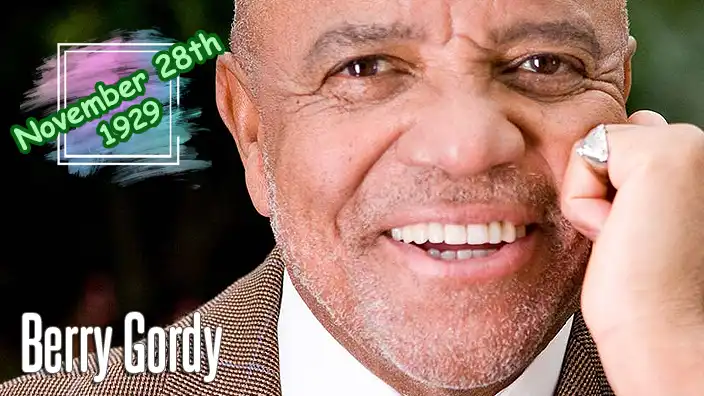
November 28, 1929, in Detroit, Michigan

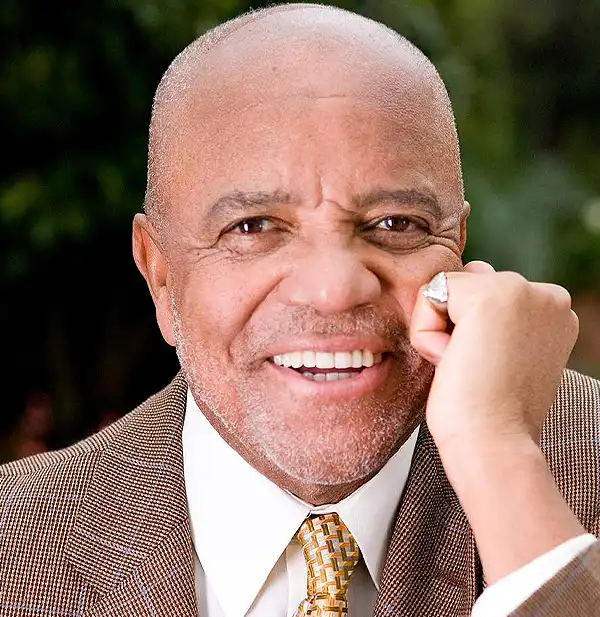
Berry Gordy is an American record executive, songwriter, record producer, filmmaker, and entrepreneur best known as the founder of Motown Records. Few individuals have influenced the direction of popular music quite as profoundly as Gordy, whose remarkable ability to recognize talent helped introduce some of the world's most celebrated recording artists. From Diana Ross and the Supremes to Stevie Wonder, Marvin Gaye, the Temptations, and the Jackson 5, Gordy assembled a collection of musical talent that transformed the entertainment industry and provided the soundtrack to several generations.
Growing up in Detroit, Michigan, Berry Gordy Jr. was the seventh of eight children in a hardworking, entrepreneurial family. His parents operated several businesses, giving their children an appreciation for determination, financial independence, and the importance of hard work. Gordy developed an interest in music and boxing, although his journey toward becoming one of the most influential figures in music history was anything but straightforward. Before producing knockout records, he attempted to deliver knockouts of an entirely different variety as a professional boxer.
Gordy's boxing career was interrupted by military service in the United States Army during the Korean War. During his service, he also worked as a chaplain's assistant and played the organ at religious services. After returning to civilian life, he opened a Detroit record store specializing in jazz. Unfortunately, his enthusiasm for jazz was considerably greater than his customers' willingness to purchase it, and the business eventually closed. It was an expensive lesson in understanding what the public wanted, something Gordy would subsequently become exceptionally good at.
Following the failure of his record store, Gordy found employment at Ford Motor Company's Lincoln-Mercury plant. Although assembling automobiles was hardly his life's ambition, the experience provided an unexpected education in business organization. He observed how individual workers contributed specialized skills to produce a finished automobile, and he later adapted similar principles to the music industry. Instead of installing engines and attaching wheels, his future employees would be composing melodies, arranging harmonies, and transforming promising singers into polished entertainers.
Berry Gordy's professional songwriting career gained momentum during the late 1950s through his association with singer Jackie Wilson. Working with fellow songwriters, Gordy contributed to memorable recordings such as "Reet Petite," "To Be Loved," and "Lonely Teardrops." These successes established his credentials within the music business, although the financial rewards were not always as impressive as the popularity of the records. Gordy realized that owning a record company and controlling music publishing could offer considerably greater opportunities than simply collecting songwriting royalties.
In 1959, with an $800 loan from his family's cooperative savings fund, Gordy established Tamla Records. The following year, Motown Record Corporation was formally incorporated, beginning one of the most remarkable chapters in American music history. The name Motown combined elements of Detroit's famous nickname, the Motor City, creating a brand that would eventually become synonymous with soul music, rhythm and blues, and exceptionally catchy popular songs. Considering what Gordy achieved with his family's money, it may rank among the more successful occasions when relatives were asked for a loan.
Gordy established his company's headquarters in a house on West Grand Boulevard in Detroit, naming it Hitsville U.S.A. A former photography studio was converted into a recording facility, becoming the legendary Studio A. The building brought together singers, musicians, producers, arrangers, and songwriters, creating an extraordinarily productive environment. While other businesses might have measured success by the number of widgets leaving the factory, Gordy could measure his company's performance by the number of songs climbing the Billboard charts.
Among Motown's earliest successes were Barrett Strong's "Money (That's What I Want)," the Miracles' "Shop Around," and the Marvelettes' "Please Mr. Postman." The latter became the company's first single to reach number one on the Billboard Hot 100. These recordings demonstrated that Gordy's business model could successfully compete with established record companies and reach audiences far beyond Detroit. Motown was rapidly becoming a national musical phenomenon rather than merely a promising local enterprise.
One of Gordy's greatest strengths was recognizing performers with exceptional potential and surrounding them with people capable of developing their abilities. Motown's legendary songwriting and production teams included Holland-Dozier-Holland, Smokey Robinson, and Norman Whitfield, while its celebrated studio musicians, collectively known as the Funk Brothers, provided the instrumental foundation for numerous classic recordings. Their combined contributions helped establish the distinctive Motown Sound, characterized by infectious rhythms, memorable melodies, expressive vocals, and sophisticated musical arrangements.
Gordy understood that developing successful recording artists required considerably more than possessing a good singing voice. Motown's artist development program provided instruction in choreography, stage presentation, personal grooming, public speaking, and etiquette. Performers learned how to handle interviews, entertain audiences, and present themselves professionally. Apparently, recording a number-one single was not sufficient reason to be excused from learning proper table manners.
The success of Motown Records was particularly significant during the American civil rights movement. At a time when racial segregation and discrimination remained widespread, Motown brought African American performers into mainstream popular culture and attracted audiences across racial and social boundaries. Gordy's company helped expand commercial opportunities for Black musicians, songwriters, and entertainment professionals while demonstrating that great music could appeal to listeners regardless of their backgrounds. Its widely recognized slogan, "The Sound of Young America," reflected ambitions that extended well beyond the traditional boundaries of the recording industry.
Gordy's relationship with Diana Ross and the Supremes produced some of Motown's most commercially successful recordings, including "Where Did Our Love Go," "Baby Love," and "Stop! In the Name of Love." The company's extraordinary roster also included the Four Tops, Martha and the Vandellas, Mary Wells, Gladys Knight & the Pips, and the Commodores. Meanwhile, the emergence of Stevie Wonder and Michael Jackson demonstrated Motown's ability to nurture exceptionally talented young performers whose careers would extend far beyond their earliest recordings.
Although Gordy encouraged commercial success, his approach occasionally brought him into conflict with artists seeking greater creative independence. Marvin Gaye's determination to address social and political issues through his music challenged Motown's established formula, particularly during the development of his acclaimed album What's Going On. Gordy initially resisted the change in musical direction, but the album's eventual success demonstrated that socially conscious music could achieve both critical and commercial recognition. Even the man responsible for an extraordinary number of hits occasionally discovered that the artist knew best.
Berry Gordy expanded his entertainment empire into television and motion pictures, relocating Motown's headquarters to Los Angeles in 1972. His film ventures included Lady Sings the Blues, starring Diana Ross as legendary jazz singer Billie Holiday, and Mahogany, which Gordy also directed. He was involved in producing The Wiz, a musical adaptation of The Wonderful Wizard of Oz featuring Diana Ross and Michael Jackson. His move into filmmaking demonstrated that his ambitions extended considerably beyond the recording studio, although Hollywood proved to be a somewhat different business from manufacturing three-minute hit singles.
In 1988, Gordy sold Motown Records in a transaction valued at approximately $61 million. That original $800 family loan had helped create an entertainment institution whose cultural value was immeasurable. Motown's recordings continued to attract new generations of listeners through radio broadcasts, films, television programs, advertisements, and digital music platforms, ensuring that the company's distinctive sound remained an enduring part of popular culture.
Gordy's contributions to music and entertainment have earned him numerous prestigious honors, including induction into the Rock & Roll Hall of Fame, a Grammy Trustees Award, a star on the Hollywood Walk of Fame, and the National Medal of Arts. His autobiography, To Be Loved: The Music, the Magic, the Memories of Motown, provides a personal account of his experiences building one of the world's most recognizable record companies.
The extraordinary career of Berry Gordy demonstrates how entrepreneurial vision, determination, creativity, and an appreciation for talent can reshape an entire industry. His influence extends beyond record sales and chart positions, encompassing cultural change, artistic development, and opportunities for generations of musicians. Whether audiences are dancing to the Temptations, singing along with the Supremes, or enjoying the unmistakable music of Stevie Wonder, they are experiencing part of the remarkable legacy of Motown Records. Detroit may be famous for putting America on wheels, but Berry Gordy certainly gave everyone something worth listening to while driving.
IMDb – Berry Gordy – Personal details, professional credits, filmography, videos, and trivia. Motown Museum – Berry Gordy – Official biography, songwriting career, Motown Records, and artist development. Detroit Historical Society – Berry Gordy Jr. – Early life, business ventures, and musical achievements. The HistoryMakers – Berry Gordy – Military service, boxing career, professional accomplishments, and awards. Global Business Hall of Fame – Berry Gordy Jr. – Entrepreneurial achievements and influence on the recording industry. Smithsonian National Portrait Gallery – Berry Gordy – The history of Motown and its cultural significance. Hollywood Walk of Fame – Berry Gordy – Career biography, family background, and recording industry recognition. California State University – For the Love of Music – A historical examination of Berry Gordy and Motown Records. References & Sources