A Celebration of the Master of Middle-Earth
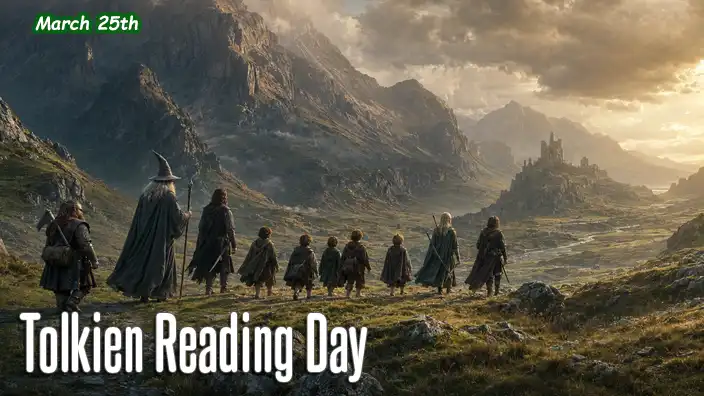
Every year, the week of September 22nd is transformed into Tolkien Week, a time to celebrate the man who introduced us to hobbits, elves, dragons, and wizards with serious beard games. J.R.R. Tolkien’s work has inspired millions of readers, film fans, and, let’s face it, the kind of people who think a weekend spent memorizing Elvish sounds like a pretty good time. From the Shire's rolling hills to Mount Doom's fiery depths, Tolkien’s world-building has influenced fantasy literature like no other.
So, grab your walking stick, toss on a cloak (optional), and take a journey through the life and works of the man who brought us Middle-earth—and taught us all that second breakfast is acceptable and preferable.
The Man Behind the Myth
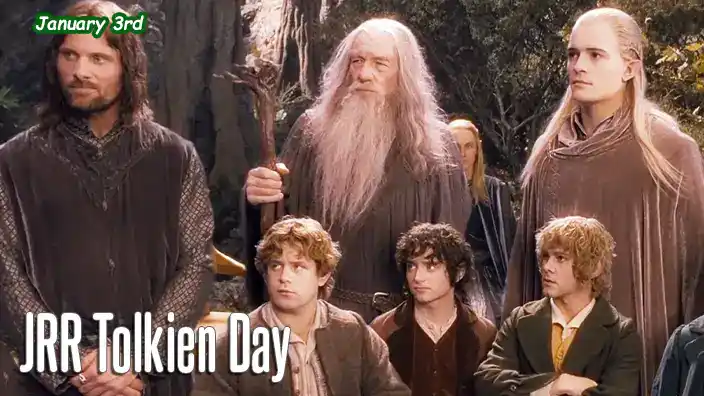
John Ronald Reuel Tolkien was born on January 3, 1892, in Bloemfontein, South Africa. Yes, that’s right—the creator of the quintessentially English Shire was born in a land far away from the green hills of England. But Tolkien’s time in South Africa didn’t last long. After his father passed away, Tolkien’s mother moved him and his brother back to England when he was just three years old. This return to England would spark a lifelong love of its rural landscapes and mythology, which would later serve as the foundation for his epic tales.

Tolkien was a man of many hats: philologist, academic, writer, poet, and devoted family man. But perhaps most importantly, he was a lover of languages. Tolkien famously invented multiple languages for his Middle-earth tales, including Elvish dialects like Quenya and Sindarin. And when you create entire languages as a hobby, it's pretty clear you're operating on a different level of genius than the rest of us.
A Long Road to the Shire
The creation of Middle-earth wasn’t something that happened overnight. Tolkien began crafting his world long before the publication of The Hobbit in 1937. In fact, his love of mythology and languages, combined with his experiences during World War I, heavily influenced his storytelling. It’s hard not to see echoes of the war’s devastation in the dark, battle-scarred lands of Mordor or the heroism in unlikely figures like Frodo Baggins and Samwise Gamgee.
Tolkien’s magnum opus, The Lord of the Rings, was first published in three volumes between 1954 and 1955. While today we celebrate the book’s complex characters, rich world-building, and timeless themes, early reactions were…mixed. Some critics dismissed the epic as overly long and indulgent, which is, frankly, a bit like saying, "This Michelangelo painting is okay, but does it really need to be that big?"
Fortunately for Tolkien (and us), the fans had the final say. The Lord of the Rings quickly gained a dedicated following, leading to its status as one of the best-selling novels of all time. Even if you've never read a single page, you’ve likely heard of Gollum, Gandalf, and Legolas—not to mention the fiery Eye of Sauron, which has probably haunted your dreams at least once.
Celebrating All Things Middle-earth
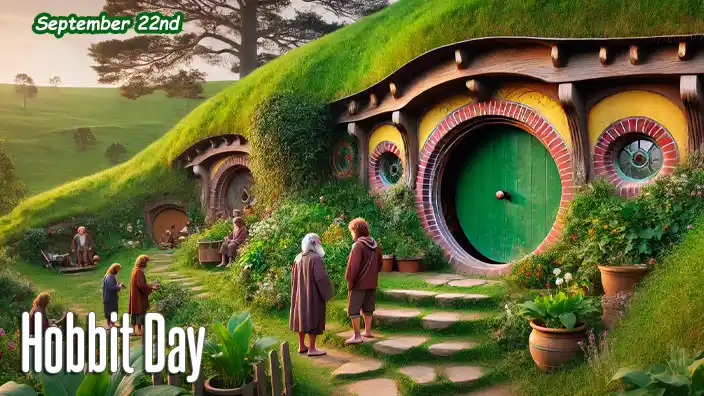
Tolkien Week was officially declared in 1978 by the American Tolkien Society, ensuring that fans everywhere have a reason to celebrate their favorite hobbits, elves, and wizards. The week always includes September 22nd, which just so happens to be both Bilbo and Frodo Baggins’ birthdays. It’s also known as Hobbit Day, making it the perfect excuse to throw on your best waistcoat, serve up a feast, and go barefoot in the garden.
How do people celebrate Tolkien Week? Let me count the ways:
- Hobbit Feasts: Embrace your inner hobbit and eat like one. That means starting with breakfast, followed by second breakfast, elevenses, luncheon, afternoon tea, dinner, and supper. Feel free to throw in a snack or two between meals—hobbits wouldn’t judge you.
- Movie Marathons: For some, Tolkien Week isn’t complete without watching Peter Jackson’s The Lord of the Rings films, ideally the extended editions. You may want to clear your entire schedule for this one—those films are as long as Ent conversations.
- Middle-earth Trivia: Test your knowledge of all things Middle-earth with a Tolkien trivia night. Whether you know how to spell Silmarillion without looking it up or can explain the difference between a Balrog and a Nazgûl, there’s no better time to show off your Tolkien smarts.
- Costume Contests: Dressing up as your favorite Tolkien character is not only encouraged during Tolkien Week, it’s practically a requirement. Bonus points if you can pull off a convincing wizard beard or dwarf armor made of kitchen pots and pans.
- Reading Parties: Dust off your old copy of The Hobbit or The Silmarillion and dive back into Tolkien’s prose. If you’re feeling extra ambitious, tackle the appendices of The Lord of the Rings for a deep dive into Middle-earth’s detailed history.
Fun and Unexpected Tolkien Facts
- A Reluctant Fame: Tolkien didn’t expect his books to become cultural phenomenons. In fact, when fans began calling him at home and showing up on his doorstep, he often grew frustrated with the attention. (Apparently, Tolkien wasn’t a fan of people turning up unannounced—much like Bilbo!)
- The Leaf Thief: In a strange twist of fate, a fan once stole a leaf from Tolkien’s garden, presumably to keep as a keepsake from the home of the man who wrote about the lush forests of Middle-earth. Tolkien reportedly wasn’t amused.
- One Draft to Rule Them All: Tolkien wasn’t known for writing quickly. He revised The Lord of the Rings multiple times over the course of 12 years. So, next time you’re procrastinating on a project, just remember that even Tolkien needed over a decade to finish his masterpiece.
- Elvish Lullabies: Tolkien would often make up stories and sing songs in Elvish to his children. Imagine a bedtime story in a language no one else understands—Tolkien kids had that every night.

J.R.R. Tolkien didn’t just change the fantasy genre—he helped define it. Before Tolkien, the idea of creating an entire, deeply detailed world with its own languages, histories, and cultures was nearly unheard of. Today, fantasy authors from George R.R. Martin to J.K. Rowling owe much of their world-building to the groundwork Tolkien laid. He didn’t just write a story; he created an entire mythos.
The themes of friendship, courage, and the eternal struggle between good and evil in Tolkien’s work have resonated with readers of all ages. His characters, though mythical, grapple with very human emotions and dilemmas, making Middle-earth feel like a place we all could visit if we just stepped through the right wardrobe… er, wrong fantasy. You get the point.
What Would Tolkien Think of All This?
Tolkien, by all accounts, was a man of wit and charm, but he wasn’t exactly a fan of modern attention. The fact that Tolkien Week exists, where fans dress up in hobbit costumes and throw themed parties, might have both amused and bewildered him. Imagine Tolkien stepping into a Comic-Con, where thousands of fans are debating which actor best embodies Aragorn or arguing over the merits of Jackson’s film adaptations. He’d probably be torn between appreciation and finding a hobbit hole to hide in.
And speaking of those adaptations, one has to wonder what Tolkien would think of all the CGI dragons, orcs, and battles in the films. He was, after all, a man who spent years crafting his stories on typewriters, likely sipping tea by the fire. We can only guess, but there’s a good chance he’d offer a wry smile and say, "Well, it’s certainly an adventure, isn’t it?"

Tolkien’s Legacy Lives On
Tolkien Week is more than just a time to rewatch the movies or reread the books—it’s a celebration of imagination, storytelling, and the lasting impact of a world where small, seemingly insignificant people can change the course of history. It reminds us that even in the darkest times, there’s light and hope—whether you find it in a hobbit’s smile, a wizard’s wisdom, or the loyalty of a friend willing to carry you up a mountain.
So, during Tolkien Week, take a moment to raise a glass (or a pint of ale), enjoy a feast, and reflect on the magic of Middle-earth. After all, it’s not the size of the hobbit that matters—it’s the heart.
Happy Tolkien Week!