July 13, 1940, in Mirfield, England
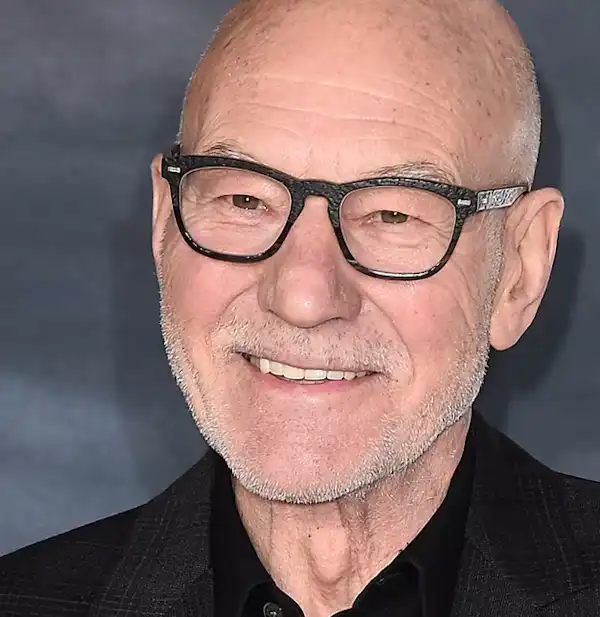
Born in Mirfield, West Yorkshire, England, Sir Patrick Stewart has become one of the most respected actors of his generation. Equally at home on the Shakespearean stage, in science fiction, or portraying powerful dramatic characters, Stewart has built a career founded on extraordinary talent, professionalism, and an unmistakable voice that audiences recognize almost instantly.
Although millions know him as Captain Jean-Luc Picard and Professor Charles Xavier, his acting achievements stretch far beyond those iconic roles. His work spans theatre, film, television, radio, voice acting, and documentary narration, making him one of Britain's most versatile performers.
Stewart's childhood was far from glamorous.
He was raised in a working-class household where money was often scarce. His father had served in the British Army during the Second World War and later struggled with what would now be recognized as post-traumatic stress disorder. Stewart has spoken openly about witnessing domestic violence as a child, experiences that later inspired his support for organizations helping survivors of domestic abuse.
Despite these hardships, Stewart discovered an early love of literature and performance. Encouraged by an English teacher who recognized his remarkable reading voice, he developed a passion for acting that would shape the rest of his life.
He left school at fifteen and began working as a newspaper reporter while participating in local theatre productions. Before long, the stage proved irresistible, and he enrolled at the Bristol Old Vic Theatre School, one of Britain's most respected acting institutions.
His professional career quickly flourished.
In the 1960s Stewart joined the prestigious Royal Shakespeare Company, where he spent many years performing in productions by William Shakespeare and other classical playwrights. He portrayed a wide range of memorable characters, including Macbeth, Prospero, King Claudius, Shylock, and Antony, earning widespread praise for his commanding stage presence and emotional depth.
Throughout the following decades, he became one of Britain's most admired classical actors, appearing in theatre productions across the United Kingdom and internationally.
Everything changed in 1987.
That year Stewart accepted the role of Captain Jean-Luc Picard in Star Trek: The Next Generation. Initially uncertain about accepting a science-fiction series, he reportedly believed the show would last only a single season. Instead, it became one of television's most beloved franchises.
Picard differed greatly from previous Star Trek captains. Rather than relying primarily on action, he solved problems through diplomacy, intelligence, ethics, and thoughtful leadership. Stewart's calm authority transformed the character into one of television's greatest captains, admired by fans around the world.
The success of The Next Generation led to four feature films, including Star Trek: First Contact, often regarded as one of the finest entries in the franchise.
More than thirty years after first taking command of the USS Enterprise, Stewart returned to the role in the acclaimed series Star Trek: Picard. The series explored the character later in life, allowing Stewart to bring even greater emotional depth to one of television's most enduring heroes.
As if one legendary franchise wasn't enough, another soon followed.
In 2000, Stewart portrayed Professor Charles Xavier in X-Men. As founder of Xavier's School for Gifted Youngsters, Professor X became one of the defining characters of the superhero genre. Stewart's thoughtful performance perfectly captured the wisdom, compassion, and quiet determination that comic book readers had admired for decades.
His portrayal opposite Sir Ian McKellen's Magneto created one of modern cinema's greatest rivalries, with the two actors' lifelong friendship adding extra warmth behind the scenes.
Stewart returned to Professor Xavier numerous times over the following two decades, helping establish the X-Men films as one of the most successful superhero franchises ever produced.
Away from science fiction and superheroes, Stewart has continued to demonstrate remarkable versatility.
He has appeared in dramas, historical productions, comedies, animated films, and television series, lending his distinctive voice to countless documentaries, audiobooks, and animated characters. Younger audiences may recognize him from roles in American Dad!, Family Guy, The Emoji Movie, and numerous video games.
He has also remained deeply committed to the theatre throughout his career, regularly returning to Shakespeare and other classical works even after achieving worldwide fame.
In 2010, Patrick Stewart was knighted by Queen Elizabeth II for services to drama, becoming Sir Patrick Stewart. The honour recognized decades of outstanding contributions to British theatre and international entertainment.
Outside acting, Stewart is known for his advocacy on behalf of domestic violence awareness, military veterans, animal welfare, and numerous charitable causes. His willingness to discuss difficult experiences from his childhood has helped bring greater public attention to issues affecting countless families.
Despite playing some of fiction's most commanding leaders, Stewart is widely known among colleagues for his warmth, humor, and willingness to laugh at himself. His appearances alongside longtime friend Sir Ian McKellen have become favorites with fans, often showcasing their playful personalities and genuine affection for one another.
Even after more than sixty years in the entertainment industry, Patrick Stewart continues to take on challenging roles while remaining one of the most admired actors in the world.
Few performers have successfully balanced classical theatre, blockbuster films, and beloved television series with such consistency. Whether standing on a Shakespearean stage, commanding a starship, or mentoring a new generation of mutants, Sir Patrick Stewart has shown that true leadership is measured not by power, but by wisdom, compassion, and integrity.