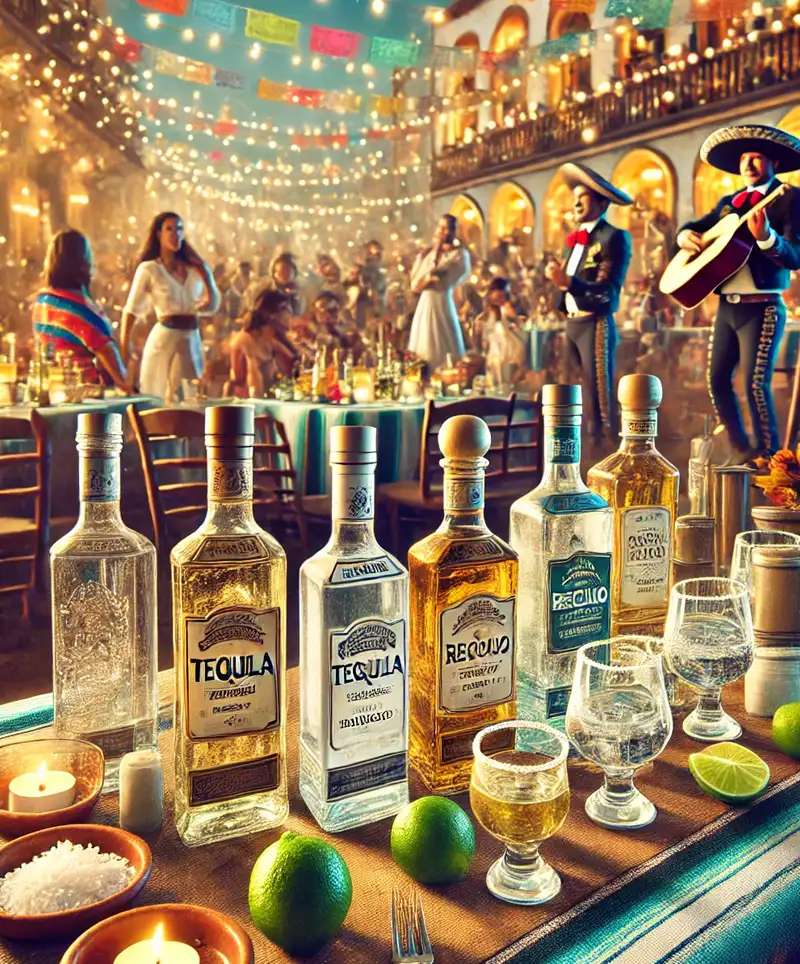
When Life Hands You Limes, Grab the Tequila
Tequila is the elixir that transforms mild-mannered humans into karaoke superstars and dance floor legends. It's the only spirit with the magical ability to make you believe you’re fluent in Spanish, even if the only phrase you know is "Otra ronda, por favor!" One minute you're toasting to good times with friends, and the next, you're earnestly debating the merits of owning a pet llama. Tequila is like that friend who convinces you to jump into the pool fully clothed—it might seem like a wild idea at first, but somehow, it ends up being the highlight of your night. Just remember, while tequila may come with a lime and salt, the best chaser is always a good laugh and an even better story.
What Is National Tequila Day?
National Tequila Day, celebrated every year on July 24, is a lighthearted tribute to one of the world's most recognizable distilled spirits. It gives tequila enthusiasts, cocktail lovers, and curious newcomers an excuse to learn more about authentic tequila, discover its rich Mexican heritage, and enjoy it responsibly with family and friends. Whether you're sipping a carefully aged añejo, mixing a refreshing margarita, or trying a crisp Paloma for the first time, the day is all about appreciating the craftsmanship that goes into every bottle.
Although the exact origins of National Tequila Day remain uncertain, the celebration has steadily grown in popularity across the United States and beyond. Restaurants feature tequila tastings, bars create special cocktail menus, and many people use the occasion to sample different tequila styles or finally discover that quality tequila is meant to be savored rather than hurried. It's a day that encourages people to look beyond the stereotype of salt, lime, and questionable karaoke decisions.
National Tequila Day is also an opportunity to recognize the centuries of tradition behind authentic tequila. Genuine tequila is produced from Blue Weber agave and can only be made in specific regions of Mexico under strict regulations that protect its quality and authenticity. Every bottle represents years of patient cultivation, skilled harvesting, careful distillation, and generations of expertise passed from one producer to the next.
Of course, no celebration would be complete without a little laughter. Tequila has earned a legendary reputation for turning quiet dinner conversations into enthusiastic debates about who really invented nachos or convincing perfectly sensible adults that they absolutely know all the words to songs they haven't heard in twenty years. Fortunately, National Tequila Day isn't about drinking the most tequila—it's about enjoying good company, appreciating an iconic spirit, and raising a glass to one of Mexico's greatest contributions to the world.
Raise Your Glass
Let's gather in cheerful spirits (quite literally) to celebrate the enigmatic and exhilarating elixir known as tequila. National Tequila Day is more than just an excuse to sip margaritas by the pool—it’s a fiesta of flavor, a tribute to tradition, and a nod to the one drink that can inspire dancing, deep conversations, and regrettable tattoos—all in the same evening.
Whether you're savoring a premium añejo in a crystal glass or throwing back shots with a lime wedge and a war cry, this is a day to raise a glass, toast the agave gods, and say “Salud!” to the wild, wonderful ride that is tequila.
The Birth of Tequila – It Didn’t Start in a College Bar
Long before tequila found its way into margaritas, cantinas, and backyard celebrations, it was deeply connected to the land and culture of Mexico. Its story begins in the rich volcanic soils surrounding the town of Tequila in the state of Jalisco, where the Blue Weber agave plant has flourished for centuries. While today's bottles feature elegant labels and premium price tags, tequila's roots are surprisingly humble.
Long before European explorers arrived, the Indigenous peoples of central Mexico were harvesting agave for food, fiber, medicine, and drink. One of their most valued beverages was pulque, a naturally fermented drink made from the sap of the agave plant. Thick, milky, and only mildly alcoholic, pulque was often reserved for religious ceremonies, festivals, and important community gatherings. It held cultural and spiritual significance long before anyone dreamed of distilling spirits.
Everything changed in the 1500s when Spanish conquistadors arrived in Mexico. They brought their own distilled spirits, but supplies quickly ran low as settlements grew farther from Spain. Faced with empty barrels and thirsty colonists, they began experimenting with the abundant agave plants that surrounded them. By distilling fermented agave instead of simply drinking it as pulque, they created a stronger spirit that would eventually evolve into what we now know as tequila. History doesn't record exactly who had the first brilliant—or dangerous—idea, but one adventurous soul deserves credit for looking at a giant spiky plant and thinking, "I wonder if we can make this more exciting."
As distillation techniques improved over the following centuries, tequila production became more refined. Families passed their knowledge from one generation to the next, perfecting recipes and production methods that are still used today. In 1758, José Antonio de Cuervo received one of the earliest official land grants to cultivate agave commercially, laying the foundation for what would become one of the world's most recognizable tequila producers. A little more than a century later, the Sauza family helped introduce tequila to international markets, transforming it from a regional specialty into a globally celebrated spirit.
One reason authentic tequila enjoys such an outstanding reputation today is because its production is carefully protected. Like Champagne in France or Parmigiano Reggiano in Italy, tequila has a Denomination of Origin, meaning it can only be produced in specific regions of Mexico and must follow strict government standards. Most tequila comes from the state of Jalisco, although limited production is also permitted in parts of Guanajuato, Michoacán, Nayarit, and Tamaulipas. If it isn't made according to these rules, it may be an agave spirit—but it isn't legally tequila.
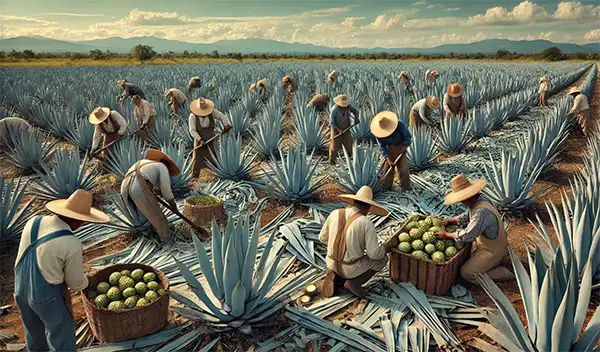
At the heart of every authentic bottle is the Blue Weber agave (Agave tequilana). Despite its appearance, the agave isn't a cactus at all but a member of the asparagus family. Each plant takes between six and eight years—sometimes even longer—to reach maturity. Skilled harvesters known as jimadores carefully remove the long, spiny leaves to reveal the massive heart of the plant, called the piña, which can weigh well over 100 pounds. Those piñas are slowly cooked to convert their starches into fermentable sugars before being crushed, fermented, distilled, and, depending on the style, aged in oak barrels.
Today, tequila is enjoyed in nearly every corner of the globe, yet it remains proudly Mexican at heart. Every sip carries centuries of history, generations of craftsmanship, and the patient work of farmers and distillers who have turned a remarkable desert plant into one of the world's most celebrated spirits. That's quite an impressive journey for something that many people still insist on introducing with nothing more than a wedge of lime and a pinch of salt.
Making Tequila
Every bottle of authentic tequila begins with patience. Unlike many crops that can be harvested every year, the Blue Weber agave plant takes between six and eight years, and sometimes even longer, to reach maturity. During that time, the plant quietly stores natural sugars in its massive heart, known as the piña, preparing for the day it will become one of the world's most celebrated spirits.
When the agave is ready, skilled harvesters called jimadores head into the fields armed with a specialized tool called a coa de jima, a long-handled blade designed specifically for harvesting agave. With remarkable speed and precision, they slice away the sharp, spiny leaves until only the large piña remains. An experienced jimador can harvest hundreds of agave plants in a single day, each one requiring years of careful growth before it reaches that moment.
The harvested piñas are transported to the distillery, where they are slowly baked in large brick ovens or modern stainless-steel autoclaves. This cooking process transforms the plant's natural starches into fermentable sugars while softening the tough fibers. The sweet aroma that fills the air at this stage has been compared to roasted pumpkin, honey, and baked sweet potatoes—a far cry from the fiery reputation tequila sometimes enjoys.
Once cooked, the softened piñas are crushed to extract their sugary juice. Traditionally, this was done using a massive volcanic stone wheel called a tahona, pulled in circles by mules or oxen. Many distilleries still use this centuries-old method because it produces distinctive flavors, while others rely on modern roller mills that extract the juice more efficiently. Both techniques have their devoted supporters, much like the never-ending debate over whether pineapple belongs on pizza.
The extracted juice is then transferred to fermentation tanks, where yeast is added. Over several days, the yeast converts the natural sugars into alcohol while creating many of the flavors and aromas that make each tequila unique. Some producers use carefully selected commercial yeast strains, while others proudly maintain their own generations-old house yeast, giving their tequila a signature character that can't easily be duplicated.
After fermentation comes distillation, usually performed twice in copper pot stills or stainless-steel stills. The first distillation creates a rough spirit, while the second refines it into the smooth tequila destined for the bottle. Master distillers carefully separate the desirable "heart" of the spirit from the less desirable portions produced at the beginning and end of the process, ensuring consistency and quality with every batch.
At this stage, the tequila may be bottled immediately as Blanco, or it may spend months or even years resting in oak barrels to become Reposado, Añejo, or Extra Añejo. During aging, the spirit gradually develops deeper flavors of vanilla, caramel, toasted oak, chocolate, and warm spices, creating the rich complexity that premium tequila lovers appreciate.
From the first agave shoot breaking through the soil to the final cork being placed in the bottle, making tequila is a process that can take nearly a decade. It is a remarkable blend of agriculture, science, craftsmanship, and tradition. The next time someone casually refers to tequila as "just another shot," you'll know they're overlooking years of hard work, generations of expertise, and one extraordinarily patient plant.
Tequila Categories – Because Not All Tequila Tastes Like Bad Decisions
If your entire tequila experience has involved a quick shot followed by a frantic search for a lime wedge, you're only seeing a tiny part of the story. Tequila is a remarkably diverse spirit, with flavors ranging from bright and peppery to rich and velvety. The difference comes from how long the tequila is aged and how it is produced. Much like wine or whiskey, each category has its own personality, best uses, and devoted fans.
Whether you're mixing cocktails, pairing tequila with a meal, or simply sipping it neat, understanding the different styles can completely change the way you experience this iconic Mexican spirit. Here's a closer look at the five official categories.
Blanco (Silver) – The youngest and purest expression of tequila. Bottled immediately after distillation or aged for no more than two months, Blanco showcases the fresh character of the Blue Weber agave. Expect bright citrus notes, black pepper, herbs, and a lively, slightly spicy finish. It's the favorite choice for margaritas and many classic tequila cocktails. Think of Blanco as the enthusiastic youngster who hasn't quite learned to slow down yet—but certainly knows how to make an entrance.
Joven (Gold) – Often called Gold tequila, Joven is typically created by blending Blanco tequila with aged tequilas such as Reposado or Añejo, although some are simply Blanco enhanced with approved coloring or flavoring. Good-quality Joven tequilas can be surprisingly smooth and flavorful, making them excellent for cocktails. Consider it the tequila that decided to dress up for dinner without becoming overly formal.
Reposado (Rested) – Aged in oak barrels for two months to one year, Reposado strikes a beautiful balance between the fresh agave flavors of Blanco and the mellow richness developed through aging. The oak adds notes of vanilla, caramel, baking spices, and light toasted wood while allowing the agave to remain the star of the show. It's wonderfully versatile—equally at home in premium cocktails or enjoyed slowly in a glass while solving the world's problems with good friends.
Añejo (Aged) – Matured in oak barrels for one to three years, Añejo is crafted for sipping rather than shooting. Extended aging produces a deeper amber color and complex flavors of vanilla, chocolate, dried fruit, butterscotch, toasted oak, and warm spices. This is the tequila equivalent of someone who has gained wisdom with age and no longer feels the need to shout across the room to get attention.
Extra Añejo (Extra Aged) – Introduced as an official category in 2006, Extra Añejo spends more than three years maturing in oak barrels. The result is an exceptionally smooth and luxurious tequila with layers of caramel, dark chocolate, roasted nuts, coffee, leather, dried fruit, and rich oak. Many connoisseurs compare the experience to enjoying a fine cognac or aged single malt whisky. This is the elder statesman of the tequila family—refined, sophisticated, and perfectly content to let everyone else argue while it quietly steals the spotlight.
No category is inherently "better" than another because each is designed for a different purpose. A crisp Blanco may be the perfect choice for a refreshing summer cocktail, while an Extra Añejo deserves to be appreciated slowly after dinner. The real fun of National Tequila Day is discovering which style best suits your own palate. Just remember that "sampling the entire lineup" and "remaining perfectly coordinated" aren't always compatible goals.
Beyond the Margarita – Because You Deserve Options
We all love a good margarita, but tequila has so many more tricks up its salted sleeve. Here are some dazzling alternatives:
- Tequila Sunrise – Because nothing says “I might be bad at decisions” quite like drinking something that looks like a beach at dawn.
- Paloma – The grapefruit soda version of a friendly slap in the face. Bright, zesty, and dangerously refreshing.
- Tequila Mule – Swap out the vodka in your Moscow Mule with tequila. Suddenly you’re on a beach in Mexico instead of stuck in a Russian winter.
- Ranch Water – Texans swear by this one: tequila, sparkling mineral water, lime juice, and a dose of dry humor.
And if you’re feeling extra adventurous: Tequila Espresso Martini. Yes, it’s a thing. Yes, it’s magnificent. No, you probably shouldn’t have more than one.
How to Celebrate (and Still Be Functional Tomorrow)
You don’t need a passport or a sombrero to celebrate National Tequila Day—though both are welcome. Try these ideas:
- Host a Tasting Night – Invite friends and sample all five tequila types. Provide notes cards so people can pretend they’re wine connoisseurs instead of folks just trying not to fall off the barstool.
- Make a Tequila-Infused Meal – Tequila-marinated chicken or shrimp, tequila-lime desserts, or a tequila-laced salsa to spice things up.
- Mexican Fiesta Vibes – Crank up the Mariachi, break out the guac, and celebrate the Mexican heritage behind this drink with respect and revelry.
- Toast With Tradition – In Mexico, it's customary to toast with "Arriba! Abajo! Al centro! Pa’ dentro!” (Up! Down! To the center! Down the hatch!) And if you can say that after a few shots, you deserve a medal.
Fun Facts To Sip On
Tequila isn’t just the liquid courage that convinced you to dance on that table in Cabo—it’s also full of fascinating trivia that pairs surprisingly well with lime. These fun facts are perfect for impressing your friends at parties or at least giving you something clever to mumble while trying to remember where you left your shoes. So take a shot (of knowledge), and let's see how much agave wisdom you can handle before things get a little... blurry.
- The agave plant isn’t a cactus—it’s actually part of the lily family. So technically, you’re just drinking herbal tea… right?
- Agave only flowers once in its life—right before it dies. Which is both tragic and weirdly poetic.
- A single piña can weigh up to 150 pounds. That’s one hefty future hangover.
- Mexico has over 1,500 registered tequila brands. That’s a lot of taste-testing in your future.
- George Clooney sold his tequila brand, Casamigos, for a cool $1 billion. So yes, tequila can pay the bills.
Frequently Asked Questions About National Tequila Day
Got questions about tequila? You're certainly not alone. From how it's made and where it comes from to the difference between Blanco and Extra Añejo, there's far more to this famous Mexican spirit than meets the eye. These frequently asked questions answer some of the most common queries about National Tequila Day, authentic tequila, and the traditions that have made it one of the world's most celebrated distilled spirits. Cheers to learning something new before raising your glass!
When is National Tequila Day celebrated?
National Tequila Day is celebrated every year on July 24. It is a day dedicated to appreciating authentic tequila, learning about its history, and enjoying it responsibly with friends and family.
What is tequila made from?
Authentic tequila is made from the Blue Weber agave (Agave tequilana). By law, tequila must be produced using this specific variety of agave and meet strict production standards established by the Mexican government.
Is tequila made from cactus?
No. Although the agave plant looks similar to a cactus, it is actually a member of the asparagus family. Its large heart, called the piña, is harvested and used to produce tequila.
Where can authentic tequila be made?
Authentic tequila can only be produced in designated regions of Mexico, primarily in the state of Jalisco, along with limited areas of Guanajuato, Michoacán, Nayarit, and Tamaulipas. Spirits made elsewhere may be agave spirits, but they cannot legally be called tequila.
What are the different types of tequila?
There are five official categories:
-
- Blanco – Fresh and unaged.
- Joven – Usually a blend of Blanco and aged tequila.
- Reposado – Aged from two months to one year.
- Añejo – Aged from one to three years.
- Extra Añejo – Aged for more than three years.
Each offers its own distinctive flavor profile and ideal serving style.
How long does it take to make tequila?
The process can take six to ten years from planting the agave to bottling the finished tequila. Most of that time is spent waiting for the Blue Weber agave to mature before it can be harvested.
Should tequila always be served with salt and lime?
Not necessarily. While salt and lime are popular with shots of tequila, premium tequilas are often enjoyed neat in a tasting glass. Sipping quality tequila allows you to appreciate its natural flavors and aromas without masking them.
What is the difference between tequila and mezcal?
Although both are distilled from agave, tequila can only be made from Blue Weber agave in approved regions of Mexico. Mezcal can be made from several different agave species and is often produced using traditional underground roasting methods, giving it its distinctive smoky flavor.
What are some popular tequila cocktails?
Tequila is the foundation of many famous cocktails, including the Margarita, Paloma, Tequila Sunrise, Tequila Mule, and Ranch Water. Each highlights different qualities of the spirit while offering a unique drinking experience.
How should National Tequila Day be celebrated?
The best way to celebrate National Tequila Day is responsibly. Enjoy a tequila tasting, learn about its history, prepare authentic Mexican cuisine, try a new tequila cocktail, or simply share a glass with friends while appreciating the centuries of craftsmanship behind every bottle.
Is National Tequila Day celebrated in Mexico?
While tequila is an important part of Mexican culture, National Tequila Day is primarily an American observance. However, tequila itself is celebrated year-round throughout Mexico as one of the country's most iconic and carefully protected spirits.
Why is tequila considered a protected spirit?
Tequila is protected by a Denomination of Origin, meaning it must be produced in approved regions of Mexico and according to strict legal standards. This protection helps preserve its authenticity, quality, and centuries-old traditions, much like Champagne in France or Parmigiano Reggiano in Italy.
One Last Shot
National Tequila Day is about more than just taking shots and chasing them with poor choices—it’s about celebrating a centuries-old craft, a culture rich in tradition, and the ability of one plant to bring people together across borders and bar stools. So raise your glass, honor the agave, and remember: if life ever gives you lemons… ask for salt and tequila.
¡Salud!