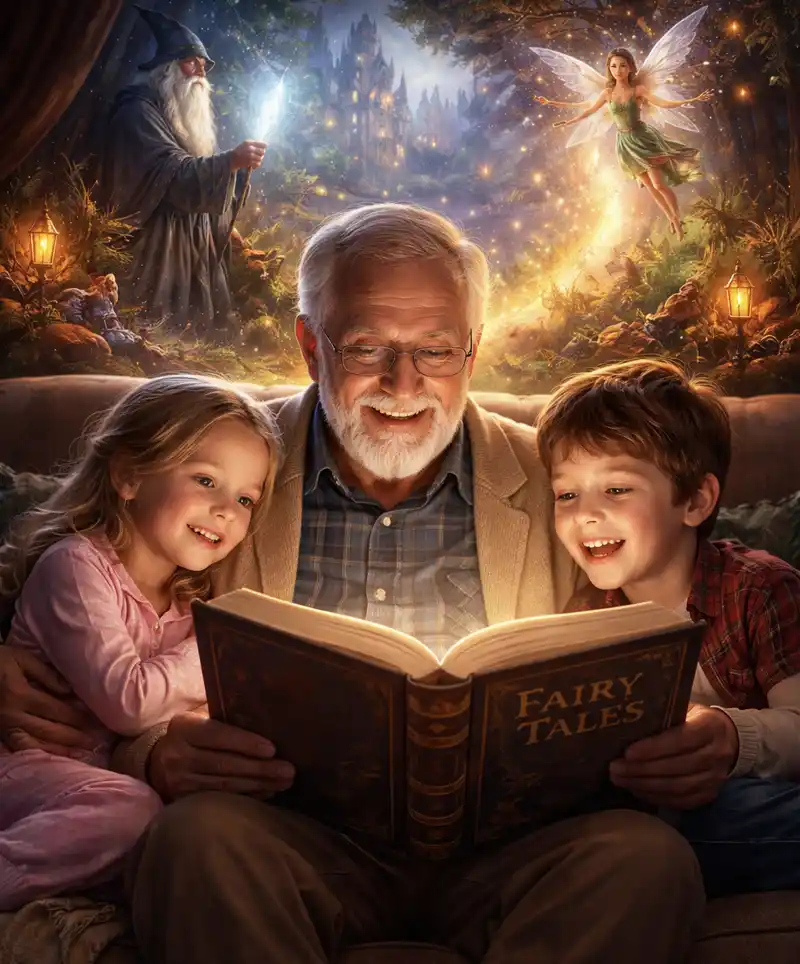
Dragons Before Bedtime
Once upon a time — which is how you know we’re about to stretch the truth responsibly — people gathered around fires, kitchen tables, and probably a few questionable taverns to tell stories that explained the world. Why is the sky blue? Why shouldn’t you wander into the forest alone? Why does Grandma insist on wearing that red cloak?
National Tell A Fairy Tale Day invites us to dust off those old stories and remember a time when lessons came wrapped in dragons, talking animals, and stepmothers who really needed better hobbies.
Fairy tales aren’t just bedtime filler. They’re cultural hand-me-downs. They’ve traveled across continents, shifted with language, survived censorship, and endured the inevitable “modern retelling” where someone decides the wolf just needed therapy.
Let’s take a stroll through the enchanted woods, shall we?
What Exactly Is a Fairy Tale?
Despite the name, fairies are optional.
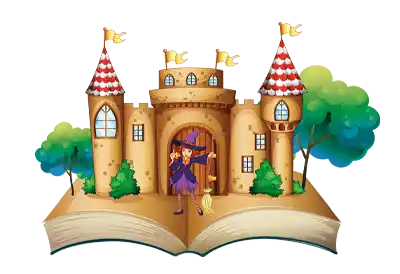
A fairy tale is a short story rooted in folklore, usually involving magic, imaginary beings, or impossible events. Think witches, giants, curses, enchanted forests, and suspiciously well-dressed frogs. The goal? Entertainment — with a side order of moral instruction.
Before books were common, these stories were told orally. That means they changed depending on who was telling them. Your grandmother’s version of a tale might be charming. The village blacksmith’s version? Slightly more terrifying and missing a few key characters.
Many of the tales we know today were collected and published by folks like:
- Jacob Grimm
- Wilhelm Grimm
- Hans Christian Andersen
- Charles Perrault
These collectors didn’t invent most of the stories — they wrote down tales that had been circulating for generations. And in many cases, the original versions were far darker than the ones we tell children today. Let’s just say early bedtime stories were not for the faint of heart.
Why Do We Love Fairy Tales?
Because they tell the truth without being literal.
Fairy tales sneak past our defenses. They don’t lecture. They don’t cite studies. They don’t hand you a checklist titled “How to Be a Decent Human.” Instead, they hand you a talking wolf, a cursed kingdom, or a farm boy with nothing but grit and a suspiciously convenient prophecy — and somehow you walk away wiser.
At their core, fairy tales simplify a complicated world. Life is messy. Motives are murky. Justice can be slow. But in a fairy tale? The lines are clear. The villain is obvious. The quest has a purpose. The ending, more often than not, restores order. That clarity is comforting. It gives us hope that chaos can be tamed and that goodness, even if it takes the scenic route, will prevail.
We also love them because they respect struggle. Heroes don’t start powerful — they start overlooked, underestimated, or stuck scrubbing floors. They face real danger. They fail once or twice. They learn. They grow. It’s the blueprint for resilience wrapped in magic dust. And let’s not overlook the fact that fairy tales allow us to imagine transformation. A frog becomes a prince. A pumpkin becomes a carriage. A nobody becomes royalty. Beneath the glitter, the message is simple: change is possible. Growth is possible. Redemption is possible. That idea never gets old.
Finally, fairy tales connect us to the past. These stories were told by ancestors who didn’t have screens, streaming services, or push notifications — just imagination and a fire to sit around. When we tell them today, we’re participating in a tradition that stretches back centuries. That’s not nostalgia. That’s continuity.
So yes, we love fairy tales because they’re magical. But we keep loving them because they’re honest about fear, ambition, courage, envy, hope, and the stubborn belief that good can outlast evil.
And if a dragon has to be involved to make the point stick? So be it.
Fairy tales deal with universal themes:
- Good vs. evil
- Courage in the face of fear
- Outsmarting danger
- The hope that kindness pays off
- The comforting belief that villains eventually get what’s coming to them
They also give kids (and adults) a safe way to process big emotions — jealousy, fear, bravery, loss, ambition. It’s easier to face a dragon in a story than one in real life.
And let’s be honest: we enjoy a world where problems are solved in three neat attempts, magic is real, and a good pair of boots can get you through anything.
The Evolution of the Fairy Tale
Once upon a time, fairy tales were raw and rough-edged. Over the centuries, they’ve been softened, adapted, and occasionally turned into musicals.
Today, fairy tales show up everywhere:
- Animated films
- Fantasy novels
- Television series
Modern retellings with “strong female leads” (which is wonderful, but let’s remember Cinderella survived a toxic household without social media — that’s strength)
Even superhero stories follow fairy tale structures. A young hero, mysterious origin, magical abilities, a dark adversary, a quest. Swap a dragon for a villain in a cape and you’ve got the same bones.
The structure endures because it works.
How to Celebrate National Tell A Fairy Tale Day
You don’t need a castle, a crown, or a suspicious old wizard handing you a quest. Celebrating National Tell A Fairy Tale Day is wonderfully simple: it starts with a story and a willing listener. This is your excuse to slow down, gather your people — kids, grandkids, friends, or that one neighbor who secretly loves a good yarn — and let imagination take the lead. Whether you’re reading a classic tale, retelling one from memory (with dramatic flair, of course), or inventing your own hero on the spot, the goal is the same: keep the tradition alive. No special effects required — just a voice, a little enthusiasm, and perhaps a dragon who really needs to be defeated before bedtime.
Here are a few ways to join the fun:
- Tell one aloud.
Gather the kids, the grandkids, or any willing adult with a decent attention span and tell a classic tale from memory. Embellish responsibly. - Read the original versions.
Some of them will surprise you. (And possibly make you double-check what you read at bedtime.) - Create your own fairy tale.
Invent a hero. Add a problem. Throw in magic. Resolve it with bravery and cleverness. Boom — you’re a bard. - Compare versions.
Look at how a tale has changed over time. The cultural shifts are fascinating. It’s like watching history argue with itself. - Share a short tale online.
A quick post, a clever retelling, or even a family memory of a story you were told as a child. Oral tradition in the digital age — imagine that.
A Gentle Reminder About “Happily Ever After”
Fairy tales don’t promise that life is easy. They promise that hardship can be overcome.
They remind us:
- Courage matters.
- Cleverness counts.
- Kindness often wins.
- Evil doesn’t get the last word forever.
That’s not childish. That’s timeless.
A Few Quick Fairy Tale Facts
Before we close the book and send everyone off into the sunset, it’s worth pausing for a handful of fascinating details about these enduring stories. Fairy tales may feel light and whimsical, but they carry centuries of history on their shoulders. They’ve crossed borders, survived translation, endured edits for “delicate audiences,” and still managed to keep their bones intact. The quick facts below offer a glimpse into just how old, widespread, and surprisingly complex these so-called simple stories really are.
- The earliest known fairy tales date back thousands of years.
- Many classic stories originated in oral tradition long before being written down.
- The Grimm brothers’ first editions were much darker than later versions.
- Walt Disney helped popularize softened, family-friendly adaptations in the 20th century.
- Fairy tales exist in virtually every culture around the world.
National Tell A Fairy Tale Day is more than an excuse to say “once upon a time” in a dramatic voice — though that alone is reason enough. It’s a reminder that stories matter. They shape how we see courage, kindness, danger, and hope. They connect generations. They outlive trends. Long before streaming services and short attention spans, people leaned in to listen — and they still do. So today, tell a story. Make one up. Revisit an old favorite. Keep the tradition going. After all, the world may change, but a good tale — especially one with a well-timed dragon — never really goes out of style.