Fighting Junk Emails, Suspicious Messages, and Nigerian Princes with Financial Difficulties
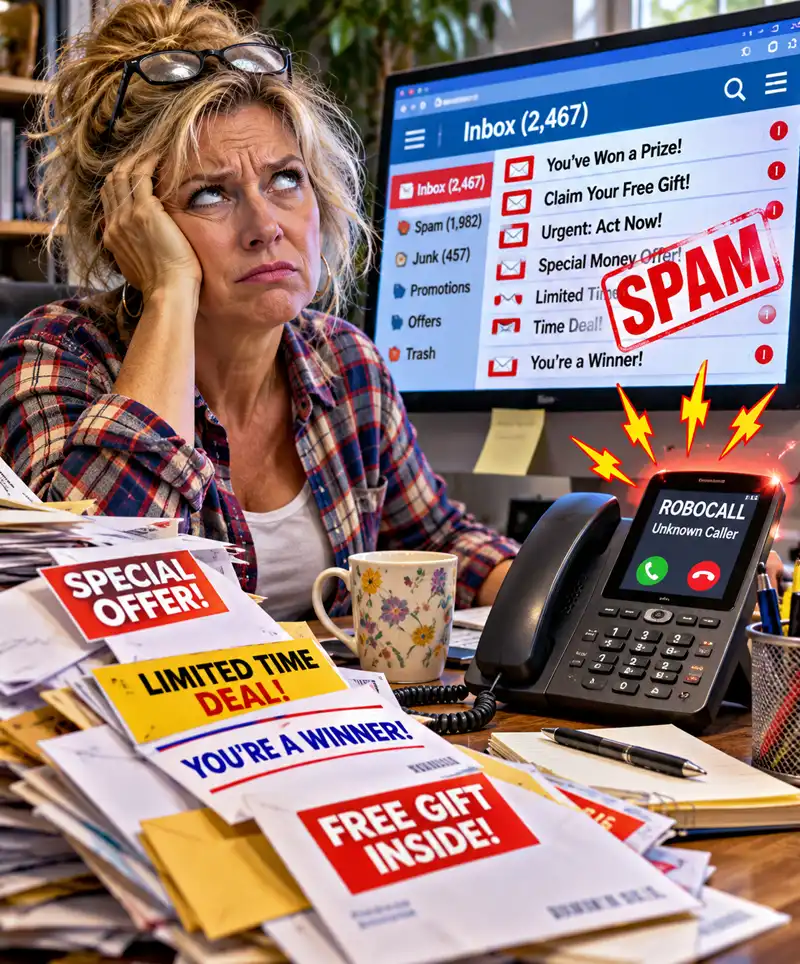
There was a time when receiving mail was exciting. You might find a birthday card, a letter from an old friend, or a bill you could pretend hadn't arrived. Then came the internet, and suddenly everyone from mysterious foreign royalty to companies selling miracle weight-loss products wanted to become your closest personal friend. National Stop Spam Day is an opportunity to fight back against unwanted emails, suspicious text messages, fraudulent telephone calls, and the digital nonsense that clutters our lives. So, check your spam folder, strengthen your defenses, and remember: if a complete stranger promises you $47 million in exchange for your bank details, there's a reasonable chance he isn't being entirely truthful.
What Is National Stop Spam Day?
National Stop Spam Day is an awareness observance encouraging internet users to recognize, prevent, and report unsolicited electronic communications. The occasion highlights the problems caused by unwanted commercial emails, phishing attempts, fraudulent text messages, automated telephone calls, and other forms of digital harassment. While spam might seem like a minor inconvenience, it can also expose individuals and businesses to identity theft, financial fraud, malicious software, and privacy violations. The observance encourages people to develop safer online habits and take advantage of the tools available to reduce unwanted communications.
The word spam has become synonymous with unsolicited electronic messages, particularly emails sent in enormous quantities to recipients who never requested them. These messages may advertise questionable products, promote fraudulent investments, distribute malicious links, or attempt to obtain sensitive personal information. Some are simply irritating advertisements, while others are carefully designed criminal operations. Either way, they arrive with remarkable persistence, often displaying a level of dedication that would be admirable if it were directed toward something useful, such as repairing potholes or locating missing television remote controls.
Although National Stop Spam Day focuses on a modern technological problem, unwanted advertising is hardly a new invention. Long before email, people received unsolicited promotional letters, telephone sales calls, and advertisements promising extraordinary benefits from products of highly questionable value. The internet simply made the process faster, cheaper, and considerably more irritating. Instead of paying postage to send ten thousand advertisements, a spammer can distribute enormous numbers of messages electronically, often using automated systems that operate around the clock. Unfortunately, technology has also made it possible for criminals to impersonate legitimate organizations with increasingly convincing results.
The History and Origins of National Stop Spam Day
The campaign against unwanted electronic messages gained its own annual observance in 2020 when Bob Matthews of Holiday Insights established International Stop Spam Day. Celebrated on January 2, the occasion was created to draw attention to the growing worldwide problem of unsolicited emails, fraudulent text messages, and other unwanted digital communications. Matthews chose the beginning of the year as an opportunity for people to review their online security habits and strengthen their defenses against spam. His reasoning was straightforward: spam wastes enormous amounts of time, creates opportunities for criminals, and shows absolutely no inclination to disappear voluntarily. By 2025, Matthews acknowledged that the problem had not improved, although he remained hopeful that increasingly sophisticated filtering technology would eventually provide better protection. Until then, the world's spammers continue working tirelessly to ensure that nobody suffers the terrible inconvenience of an empty inbox.
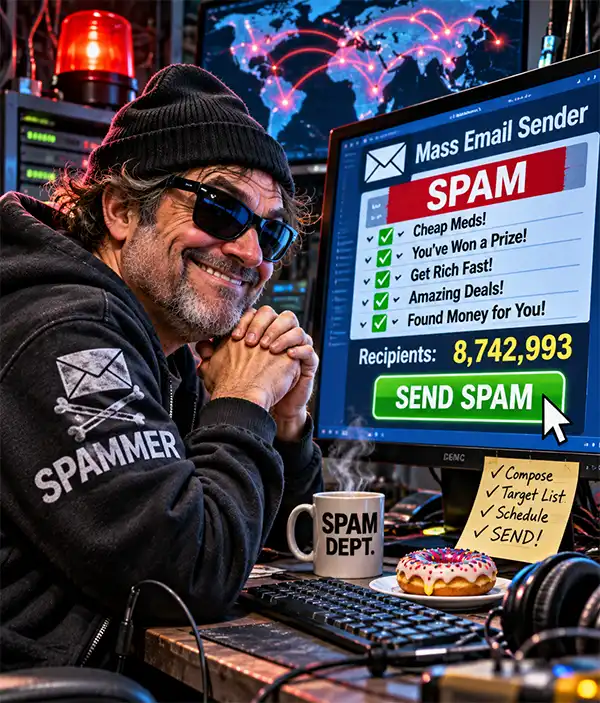
The origins of the term spam are surprisingly entertaining. The word originally referred to SPAM, the canned meat product introduced by Hormel Foods in 1937. Its connection to unwanted electronic messages emerged through a famous sketch performed by the British comedy group Monty Python, in which the word is repeated so frequently that ordinary conversation becomes almost impossible. Early internet users adopted the expression to describe repetitive, unwanted messages that overwhelmed online discussions. It was an appropriate comparison, although the canned meat had the considerable advantage of being edible.
One of the earliest widely recognized examples of electronic spam occurred in May 1978, when marketing representative Gary Thuerk sent an unsolicited promotional message advertising Digital Equipment Corporation computers to hundreds of users connected to ARPANET, an important predecessor of today's internet. The message generated complaints and criticism, demonstrating that unsolicited electronic advertising was already capable of annoying people long before email became an everyday household necessity. Thuerk's message was a pioneering example of commercial electronic mass messaging, although the recipients were unlikely to have appreciated their unexpected participation in communications history.
As internet access expanded during the 1990s, unsolicited advertising became increasingly common. Email addresses were collected from websites, discussion groups, online directories, and other publicly accessible sources. Spammers developed automated systems capable of distributing enormous quantities of messages at minimal cost, creating a commercial environment in which even a tiny response rate could generate profits. This economic model encouraged increasingly aggressive techniques, including misleading subject lines, forged sender information, and deceptive advertisements. By the early 2000s, spam had become a major problem for internet service providers, businesses, and ordinary users.
Governments and technology companies responded by developing legal restrictions, filtering systems, and improved security measures. In the United States, the CAN-SPAM Act of 2003 established requirements for commercial email, including rules concerning deceptive headers, misleading subject lines, identification of advertising, and mechanisms allowing recipients to opt out of future messages. The law did not prohibit all unsolicited commercial email, but it created standards intended to discourage abusive practices. Unfortunately, criminals operating fraudulent schemes have never been particularly famous for carefully studying consumer protection legislation before beginning their working day.
Why Spam Is More Than Just an Annoyance
For many people, spam represents little more than an overflowing email folder filled with unwanted advertisements. However, the consequences can be considerably more serious. Fraudulent messages may attempt to steal passwords, obtain financial information, install malicious software, or convince recipients to transfer money to criminals. Businesses can also suffer financial losses, operational disruption, and damage to customer trust when employees or customers respond to deceptive communications. Spam is therefore both a productivity problem and an important cybersecurity concern.
One of the most dangerous forms of unwanted communication is phishing, a technique in which criminals impersonate trusted organizations or individuals to persuade victims to reveal sensitive information. A phishing email might appear to come from a bank, delivery company, government agency, or popular online service. It may claim that an account has been suspended, a payment has failed, or an urgent security problem requires immediate attention. The message usually contains a link directing the recipient to a fraudulent website designed to collect login credentials or payment information. The criminals rely on urgency, fear, and familiar branding to encourage people to act before examining the message carefully.
Phishing attacks can be remarkably convincing, particularly when criminals use authentic-looking logos, professional formatting, and language resembling legitimate business communications. Some messages include personal information obtained through previous data breaches, making the deception appear more credible. Others exploit current events, seasonal shopping periods, or widely publicized emergencies. A fraudulent delivery notification might arrive during the holiday season, for example, when recipients are expecting packages and may be less inclined to question an unexpected message. The underlying principle remains the same: create a believable situation, encourage an immediate response, and hope the recipient overlooks warning signs.
Spam also creates substantial economic costs. Businesses must invest in email filtering, cybersecurity systems, employee training, and technical support to protect their operations. Employees lose time sorting through unwanted messages, while legitimate communications can occasionally become trapped in aggressive spam filters. Internet service providers devote considerable resources to identifying and blocking malicious traffic, and individuals may spend time recovering compromised accounts or resolving fraudulent transactions. The cumulative impact extends far beyond the inconvenience of deleting an advertisement for a product nobody remembers expressing interest in.
The Different Types of Spam You Should Recognize
Spam comes in more varieties than most people realize, and unfortunately, none of them arrive with a polite invitation to be ignored. From overflowing email inboxes and suspicious text messages to relentless robocalls and fraudulent social media offers, unwanted communications have become an unavoidable nuisance of modern life. However, not all spam is simply annoying advertising. Some messages are carefully designed scams intended to steal personal information, empty bank accounts, install malicious software, or trick unsuspecting victims into revealing confidential details. Cybercriminals continually develop new techniques to make their messages appear legitimate, often impersonating trusted businesses, government agencies, or even friends and family members. Understanding the different types of spam, recognizing their warning signs, and knowing how to respond can help protect your privacy, finances, and digital security. After all, when a complete stranger announces that you've inherited millions from a distant relative you've never heard of, it's probably better to investigate the family tree before handing over your banking information.
Email Spam: The Original Digital Pest
Email spam remains one of the most familiar forms of unwanted communication. These messages may promote products, advertise services, distribute fraudulent offers, or attempt to persuade recipients to visit suspicious websites. Some resemble ordinary commercial advertisements, while others employ outrageous promises or alarming warnings. A typical inbox might contain offers for investment opportunities, mysterious medical treatments, unexpected inheritances, and discounts on products that apparently require immediate purchase before civilization collapses.
Modern email services use sophisticated filtering systems to identify suspicious messages, but no system is perfect. Spammers continually modify their techniques to avoid detection, experimenting with altered wording, misleading addresses, and unusual formatting. Some messages contain images instead of ordinary text, while others use attachments or shortened links to conceal their destinations. Effective protection therefore requires a combination of automated filtering and individual caution.
Phishing Spam: When Criminals Pretend to Be Someone You Trust
Phishing messages attempt to create the appearance of legitimacy by impersonating familiar organizations. A recipient might receive an email claiming to be from a financial institution, online retailer, or technology company, warning that immediate action is necessary to prevent an account from being closed. The message may include a convincing logo and a link that resembles the organization's official website. However, the destination is controlled by criminals who hope to capture passwords, financial details, or other sensitive information.
The safest response is to avoid using links or contact information contained in suspicious messages. Instead, visit the organization's official website independently or contact the company using a telephone number obtained from a trusted source. Legitimate businesses may occasionally send security notifications, but a message demanding immediate payment through gift cards or threatening arrest over an unpaid delivery charge deserves considerable skepticism. Government agencies and reputable financial institutions do not ordinarily conduct serious business by demanding that customers rush to the nearest supermarket and purchase prepaid cards.
Text Message Spam: The Scam That Fits in Your Pocket
Text message spam, often called smishing when it involves phishing techniques, has become increasingly common as mobile phones have developed into essential communication devices. Fraudulent texts may claim that a package cannot be delivered, a toll payment is overdue, a bank account has been compromised, or a prize is waiting to be collected. These messages frequently include links to fraudulent websites and attempt to create a sense of urgency.
Text message scams are particularly effective because people often read notifications immediately and may respond without carefully examining the sender. Criminals also exploit the limited screen space available on mobile devices, where suspicious website addresses and other warning signs may be difficult to recognize. A useful precaution is to avoid opening unexpected links and independently verify claims through official websites or applications. If a message announces that you have won a competition you never entered, it is probably wise to postpone purchasing the celebratory champagne.
Robocalls and Telephone Spam: The Machines Have Learned to Interrupt Dinner
Unwanted telephone calls represent another major category of spam, particularly when automated dialing systems distribute prerecorded advertisements or fraudulent messages. Robocalls may promote legitimate services, but many are associated with scams involving supposed government agencies, financial institutions, technical support providers, or medical benefits. Criminals may also manipulate caller identification information through a technique known as spoofing, making a call appear to originate from a trusted organization or local telephone number.
Telephone scammers frequently rely on pressure tactics, attempting to frighten recipients into making immediate decisions. They may claim that a relative has been arrested, a bank account is at risk, or a government agency requires urgent payment. The appropriate response is to end suspicious calls and verify any claims independently. Caller identification should never be treated as absolute proof of a caller's identity, and legitimate authorities do not generally resolve legal emergencies by demanding payment through cryptocurrency kiosks or gift cards.
Social Media Spam: Even Your Friends Aren't Safe
Social media platforms have introduced additional opportunities for spammers to distribute unwanted messages, fraudulent advertisements, and malicious links. Suspicious communications may arrive through direct messages, comments, fake profiles, or posts promising extraordinary prizes. Criminals sometimes impersonate celebrities, businesses, or acquaintances, attempting to exploit personal relationships and established trust.
Social media spam can also involve compromised accounts. A message apparently sent by a friend may actually originate from someone who has gained unauthorized access to that person's profile. Users should therefore remain cautious when receiving unexpected requests for money, login details, or visits to unfamiliar websites, even when the message appears to come from someone they know. If your normally sensible cousin suddenly announces an exclusive investment opportunity guaranteed to triple your savings by lunchtime, a telephone call to verify the situation might be an excellent idea.
How to Stop Spam and Protect Your Personal Information
Stopping spam completely is about as realistic as convincing every mosquito in Florida to become a vegetarian. Nevertheless, several practical measures can dramatically reduce unwanted messages and improve online security. The most important principle is to treat unexpected communications with reasonable skepticism, particularly when they request money, passwords, or personal information. Criminals frequently depend on people reacting quickly, so taking a moment to verify a message can prevent serious problems. Remember that genuine emergencies rarely become less manageable simply because you spent thirty seconds checking whether the person contacting you is legitimate.
Modern email providers include spam filtering systems that automatically identify many suspicious messages. Users can improve these systems by marking unwanted communications as spam rather than simply deleting them. Reporting suspicious messages helps providers recognize patterns and identify similar attempts in the future. It is also important to check spam folders occasionally, because legitimate communications sometimes become trapped by automated filters. An email confirming an important appointment can occasionally find itself sharing accommodation with advertisements for miracle hair restoration products, and the filter may be unable to appreciate the difference.
Protecting your email address can also reduce unwanted communications. Avoid publishing personal addresses unnecessarily on public websites, discussion boards, and social media profiles, where automated programs may collect them. Consider using a separate email address for newsletters, shopping accounts, competitions, and promotional subscriptions. This arrangement helps keep important personal communications separate from commercial messages and makes it easier to identify unexpected activity. For businesses, published contact addresses may be unavoidable, but properly configured spam filtering and secure contact forms can help manage unwanted submissions.
Strong passwords and multifactor authentication provide additional protection against account compromise. A password manager can help create and store unique passwords, reducing the temptation to reuse the same credentials across multiple websites. Multifactor authentication adds another verification step, making unauthorized access more difficult even when a password has been stolen. These precautions are particularly important for email accounts, which often provide access to password resets and sensitive information associated with other online services.
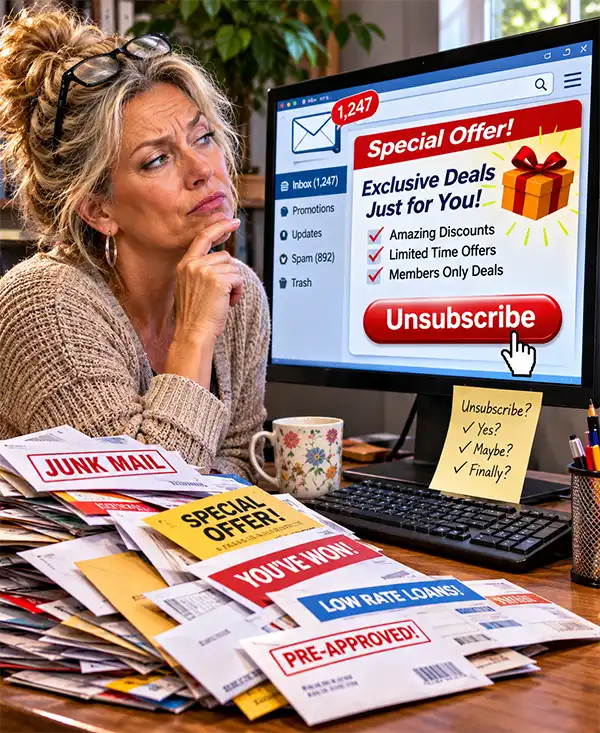
Should You Click the Unsubscribe Button?
The unsubscribe button is a useful feature when dealing with legitimate marketing emails from recognizable companies. Under the United States CAN-SPAM Act, covered commercial email messages must provide recipients with a functioning method of opting out of future marketing communications. Reputable organizations generally honor these requests, although the law allows up to ten business days for processing. Unsubscribing from newsletters and promotional messages you no longer want can therefore help reduce inbox clutter without requiring elaborate technical solutions.
However, clicking an unsubscribe link in an obviously fraudulent email can be risky. Criminals may use deceptive links to direct recipients toward malicious websites or confirm that an email address is actively monitored. If a message appears suspicious, it is generally safer to report it as spam or phishing through your email provider rather than interact with its contents. The distinction is straightforward: unsubscribe from legitimate companies you recognize, but avoid engaging with mysterious strangers who claim to represent the International Department of Unexpected Fortunes.
How to Report Spam, Phishing, and Fraudulent Messages
Reporting suspicious communications can help authorities, service providers, and security organizations identify fraudulent activity. In the United States, consumers can report scams and deceptive business practices through the Federal Trade Commission's ReportFraud.gov website. Suspicious phishing emails can also be forwarded to the Anti-Phishing Working Group at
Unwanted text messages can often be forwarded to 7726, which spells SPAM on a telephone keypad. This reporting service is supported by major United States mobile carriers and helps providers investigate suspicious messages. Users can also take advantage of built-in blocking and reporting features available on many smartphones. For unwanted telephone calls, the National Do Not Call Registry provides a way to reduce lawful telemarketing calls, although it cannot prevent criminals from ignoring the rules. Unfortunately, fraudsters are not especially concerned about appearing on a government list of people who have been asked to behave themselves.
Anyone who has already responded to a suspicious message should act promptly to limit potential damage. If login credentials were disclosed, change the affected passwords using the legitimate website or application and enable multifactor authentication. If financial information was shared, contact the relevant bank or payment provider immediately. If a suspicious attachment was opened, update security software and scan the device for malicious programs. Prompt action can make a substantial difference, particularly when criminals are attempting to access accounts or transfer money.
Artificial Intelligence and the Changing World of Spam
Artificial intelligence has introduced new challenges to identifying fraudulent communications. Modern generative AI tools can produce convincing text, imitate writing styles, and help criminals create messages that contain fewer spelling mistakes and grammatical errors than traditional spam. Fraudulent communications may now appear polished and professional, reducing the effectiveness of older warning signs. The days when every suspicious email began with an enthusiastic greeting from a distant prince whose fortune had become trapped in an overseas bank are not entirely gone, but the competition has become considerably more sophisticated.
AI-generated voice recordings and manipulated audio can also make telephone scams more convincing. Criminals may attempt to impersonate relatives, employers, or other trusted individuals, creating urgent situations intended to pressure victims into transferring money or revealing sensitive information. Families can reduce these risks by independently contacting the person supposedly requesting help, using a familiar telephone number rather than the one supplied by the caller. Establishing a private family verification phrase can provide an additional precaution, particularly when unexpected requests involve financial emergencies.
Fortunately, artificial intelligence is also being used to improve spam detection and cybersecurity. Email providers, telecommunications companies, and security researchers employ machine learning systems to identify suspicious communication patterns, detect fraudulent websites, and block malicious activity. The resulting competition between criminals and security professionals continues to evolve, making ongoing awareness essential. Technology can provide powerful defenses, but human judgment remains an important part of protecting personal information.
How Businesses Can Help Stop Spam
Businesses have a responsibility to protect their customers and employees from unwanted communications and fraudulent impersonation. Organizations should maintain secure email systems, implement appropriate spam filtering, and educate employees about phishing attempts and suspicious attachments. Email authentication technologies such as SPF, DKIM, and DMARC can help receiving systems verify whether messages are authorized to use a particular domain. These measures reduce opportunities for criminals to impersonate legitimate business addresses, although they do not eliminate every form of email fraud.
Companies should also respect customer communication preferences and avoid sending unnecessary promotional messages. Permission-based email marketing, clearly identified senders, accurate subject lines, and accessible unsubscribe mechanisms help establish trust while reducing complaints. A business that sends useful information to people who actually requested it is considerably more likely to maintain positive customer relationships than one that distributes fifteen promotional emails before breakfast. Effective marketing should encourage customers to return voluntarily, not inspire them to investigate whether changing their identity is the only way to escape the mailing list.
Employee education is equally important. Staff members who regularly process invoices, manage customer information, or authorize financial transactions may be targeted by criminals impersonating executives or suppliers. Establishing procedures for independently verifying unusual payment requests can help prevent business email compromise and related fraud. A message claiming that the company president urgently needs a substantial transfer to an unfamiliar account should receive careful scrutiny, particularly if the president is supposedly stranded overseas without access to a telephone but somehow has plenty of time to send increasingly impatient emails.
How to Celebrate National Stop Spam Day
Celebrating National Stop Spam Day does not require decorations, elaborate meals, or inviting the entire neighborhood over for an evening of cybersecurity demonstrations. Instead, the occasion offers an opportunity to improve digital security and reduce the unnecessary communications that consume valuable time. Begin by reviewing your email accounts, marking suspicious messages appropriately, and unsubscribing from legitimate newsletters that no longer interest you. Check your account security settings, replace weak or reused passwords, and enable multifactor authentication wherever practical.
The day is also an excellent opportunity to discuss online scams with friends and family members. Explain how phishing messages work, why unexpected links deserve caution, and how criminals exploit urgency and emotional pressure. Older adults, teenagers, and inexperienced internet users may particularly benefit from practical conversations about recognizing fraudulent communications, although people of every age and technical ability can become targets. Cybercriminals do not discriminate according to age, occupation, or intelligence. They are perfectly happy to steal money from anyone willing to provide it.
Families can make the occasion more entertaining by examining examples of suspicious messages together and identifying the warning signs. Look for unusual sender addresses, unexpected payment demands, suspicious website links, and claims that sound too extraordinary to be believable. A supposed international lottery prize awarded to someone who has never purchased a ticket is an excellent starting point. Likewise, an email announcing that an unknown relative has left you a fortune should probably inspire curiosity about the family tree rather than an immediate visit to the bank.
Business owners can use National Stop Spam Day to review employee training, test email security measures, and verify that their websites and contact forms are properly protected. Individuals can update their devices, review privacy settings, and block persistent nuisance callers. Even a few minutes spent improving online security can reduce future inconvenience and lower the risk of financial loss.
National Stop Spam Day: A Cleaner Inbox and a Safer Internet
National Stop Spam Day reminds us that unwanted digital communications are more than an irritating side effect of modern technology. Spam can waste time, threaten privacy, expose sensitive information, and cause serious financial harm. Understanding the different forms of spam, recognizing fraudulent messages, and adopting sensible security practices can make everyday online activities considerably safer.
The observance also highlights the shared responsibility involved in maintaining a trustworthy digital environment. Governments establish consumer protection laws, technology companies develop security tools, businesses adopt responsible communication practices, and individuals learn to recognize suspicious messages. None of these measures can eliminate spam entirely, but together they make life more difficult for criminals and considerably more pleasant for legitimate internet users.
So, on National Stop Spam Day, take a little time to clean up your inbox, strengthen your passwords, and report suspicious communications. Encourage friends and family members to do the same, and remember that a healthy dose of skepticism is one of the most useful tools available online. If a stranger offers you an enormous fortune, a guaranteed investment return, or a revolutionary product that solves every problem known to humanity, resist the temptation to respond.
After all, the only thing you should be receiving from a mysterious millionaire you've never met is absolutely nothing.
References & Sources