
The Joy of Finding What Everyone Else Missed
Some people spend their day trying not to lose their car keys. Others intentionally hide dozens of objects and invite friends to go searching for them. That's the wonderfully confusing world of National Scavenger Hunt Day, celebrated every year on May 24.
This entertaining celebration encourages people of all ages to enjoy scavenger hunts, solve clues, work together, and have a little friendly competition. Whether you're searching through your backyard, a city park, a museum, or even your own living room, a scavenger hunt transforms ordinary places into exciting adventures. Best of all, it proves that sometimes the journey really is just as enjoyable as finding the prize.
What Is National Scavenger Hunt Day?
National Scavenger Hunt Day is celebrated each year on May 24 and shines a spotlight on one of the most enjoyable group activities ever invented. It encourages people to gather friends, family members, classmates, or coworkers and take part in scavenger hunts that combine observation, problem-solving, teamwork, and a healthy dose of friendly competition.
At its heart, a scavenger hunt is a game where participants search for a list of specific items, solve clues that lead to hidden locations, or complete creative challenges within a set time. Some hunts are simple enough for young children, while others involve elaborate puzzles, riddles, GPS coordinates, or even actors playing characters as part of the adventure.
One of the reasons scavenger hunts have remained popular for generations is their incredible flexibility. They can be held almost anywhere, including:
- Homes and backyards
- Schools and college campuses
- Public parks and nature trails
- Museums and art galleries
- Shopping centers
- Zoos and botanical gardens
- Historic districts
- Entire cities
Modern technology has expanded the possibilities even further. Smartphone apps, QR codes, digital maps, and GPS-based clues allow organizers to create interactive experiences that blend real-world exploration with digital challenges. Some events even feature live scoreboards so teams can see how they compare as the hunt unfolds.
Scavenger hunts are also easily adapted to fit almost any occasion. Birthday parties, family reunions, school field days, holiday celebrations, youth group activities, corporate team-building events, and community festivals all use scavenger hunts to bring people together in a way that encourages laughter, cooperation, and a little competitive spirit.
Perhaps the greatest appeal of National Scavenger Hunt Day is that it reminds us adventure doesn't have to be expensive or far from home. With a little imagination and a well-planned list of clues, an ordinary afternoon can become an unforgettable quest filled with surprises, discoveries, and plenty of stories to tell afterward.
The History of Scavenger Hunts
The scavenger hunt as we know it today traces its roots to the early 1930s, when American columnist and party hostess Elsa Maxwell began organizing imaginative social events for wealthy clients and celebrities. Looking for something more entertaining than the formal dinner parties that were popular at the time, she introduced games in which guests raced to find unusual objects or complete amusing challenges. The idea was an instant success and quickly spread beyond high society.
The name comes from the word "scavenger," referring to a person or animal that searches for useful or discarded items. Fortunately, scavenger hunt participants rarely have to dig through rubbish. Instead, they search for hidden objects, solve clues, or locate landmarks that have been cleverly chosen by the organizer.
As the popularity of scavenger hunts grew throughout the 20th century, they evolved far beyond party entertainment. Schools adopted them as educational activities that encouraged observation, critical thinking, and teamwork. Youth organizations, including scout groups and summer camps, embraced scavenger hunts as a fun way to teach outdoor skills while keeping children active and engaged.
By the 1960s and 1970s, scavenger hunts had become common at universities, where students competed in increasingly creative—and sometimes outrageous—campus-wide events. Many colleges eventually introduced rules to keep the challenges safe and respectful as participation grew.
Businesses also discovered the value of scavenger hunts. Corporate team-building events began using them to strengthen communication, leadership, and problem-solving skills in a setting that felt more like play than work. Instead of another meeting around a conference table, employees found themselves solving puzzles, following clues, and working together toward a common goal.
The arrival of the internet and smartphones opened an entirely new chapter. Digital scavenger hunts now incorporate QR codes, GPS navigation, augmented reality, and mobile apps that guide participants from one clue to the next. Some international events attract thousands of competitors who race across entire cities, completing missions and solving puzzles in real time.
Despite all the technological advances, the basic idea remains remarkably unchanged. People still enjoy the excitement of following clues, discovering hidden items, and sharing the satisfaction of solving a challenge together. National Scavenger Hunt Day celebrates this enduring tradition, proving that a good mystery, a little curiosity, and a sense of adventure never go out of style.
Why Scavenger Hunts Never Go Out of Style
Some games fade with changing trends, but scavenger hunts have remained popular for generations because they appeal to something people naturally enjoy—exploring, solving problems, and discovering the unexpected. Whether you're five years old or eighty-five, there's a certain satisfaction in finding something that was hidden just well enough to make you work for it.
Unlike many forms of entertainment, scavenger hunts encourage participants to actively engage with their surroundings. Instead of sitting in front of a screen, players walk through parks, neighborhoods, museums, forests, or even their own homes, paying close attention to details they might normally overlook. A familiar location suddenly becomes a place filled with clues, surprises, and possibilities.
Scavenger hunts also bring people together. Families work as teams, friends laugh over missed clues, classmates share ideas, and coworkers discover talents they never knew their colleagues had. Success often depends less on speed than on communication, cooperation, and creative thinking. The quiet observer who notices a tiny detail can be just as valuable as the fastest runner.
Another reason for their lasting appeal is that no two scavenger hunts have to be the same. Organizers can tailor them to nearly any theme, age group, or occasion. A birthday party might feature colorful objects hidden around a backyard, while a history museum could challenge visitors to locate artifacts from different centuries. Holiday hunts, wedding receptions, school field days, family reunions, and community festivals all put their own unique spin on the classic format.
Modern technology has expanded the possibilities without replacing the original charm. Smartphone apps, QR codes, GPS navigation, and augmented reality can add exciting new layers to a hunt, but the real reward still comes from solving clues and making discoveries with other people. Technology enhances the experience rather than becoming the experience.
Scavenger hunts also offer benefits that extend well beyond entertainment. They encourage observation, strengthen problem-solving skills, improve memory, promote physical activity, and help develop communication and teamwork. Teachers use them to make lessons more engaging, while businesses use them to build stronger teams in a relaxed setting.
Perhaps most importantly, scavenger hunts create lasting memories. Long after participants forget who crossed the finish line first, they tend to remember the funny clue that sent everyone in the wrong direction, the surprising object hidden in plain sight, or the moment someone finally solved the puzzle that had everyone stumped.
Of course, every scavenger hunt seems to include that one clue everyone confidently interprets the wrong way. Somehow, "Look under the old oak tree" becomes a detailed investigation of every shrub in the neighborhood. Fortunately, getting a little lost is often part of the fun.
Different Types of Scavenger Hunts
One of the greatest strengths of a scavenger hunt is its versatility. While the basic idea remains the same—following clues, finding objects, or completing challenges—the way a hunt is designed can vary dramatically depending on the location, the participants, and the occasion. Some are fast-paced races against the clock, while others encourage careful observation and leisurely exploration. Some reward teamwork and strategy, while others focus on creativity, photography, or learning something new along the way.
Over the years, scavenger hunts have evolved to suit almost every setting imaginable. Families organize them in their backyards, teachers use them to make lessons more engaging, businesses turn them into team-building exercises, and entire cities have hosted large-scale competitions involving hundreds of participants. Advances in technology have added digital clues, GPS navigation, and smartphone apps, creating entirely new ways to play without losing the excitement of the traditional hunt.
No matter the format, every scavenger hunt shares the same goal: turning an ordinary place into an adventure where curiosity, observation, and a little persistence are rewarded. Here are some of the most popular types of scavenger hunts enjoyed around the world.
- Nature Scavenger Hunt
Participants search for leaves, flowers, feathers, pinecones, birds, insects, or interesting rocks without disturbing wildlife. - Photo Hunt
Instead of collecting objects, players photograph specific items or complete funny poses. - Neighborhood Hunt
Families explore local streets searching for landmarks, garden decorations, unusual mailboxes, or historic buildings. - Indoor Hunt
Perfect for rainy days, participants search the house for hidden clues or everyday objects. - Holiday Hunts
Many celebrations include themed scavenger hunts, especially during birthdays, Halloween, Christmas, and Easter.
Scavenger Hunts Around the World
Although National Scavenger Hunt Day is primarily observed in the United States, the idea behind scavenger hunts has become a global favorite. People around the world have embraced the concept of searching for hidden objects, solving clues, and completing challenges, adapting the activity to fit their own cultures, landscapes, and traditions. Whether the goal is education, recreation, tourism, or team building, scavenger hunts have proven to be a fun way to bring people together.
In schools across many countries, teachers use scavenger hunts to make learning more interactive. Students might search for historical facts, identify plants and animals, solve mathematical puzzles, or locate scientific equipment around the classroom. By turning lessons into games, educators encourage curiosity while helping students remember what they have learned.
Museums, art galleries, zoos, and botanical gardens frequently organize scavenger hunts to help visitors explore their collections. Instead of simply walking from one exhibit to the next, guests are challenged to find specific paintings, sculptures, artifacts, or animal species. Children often become so focused on solving the clues that they forget they're learning along the way.

Nature organizations and national parks have also adopted scavenger hunts as educational tools. Visitors may receive checklists of birds, wildflowers, trees, insects, or geological features to identify during their visit. These activities encourage people to observe their surroundings carefully while promoting respect for wildlife and the environment. Most nature hunts focus on observing and photographing rather than collecting items, helping preserve the habitats being explored.
Cities around the world have discovered that scavenger hunts are excellent tourism attractions. Historic districts often feature clue-based walking tours that lead visitors to famous landmarks, public art, monuments, and hidden architectural details. Participants learn about local history while enjoying a memorable adventure that feels far more engaging than simply reading a guidebook.
Businesses and nonprofit organizations have embraced scavenger hunts as well. Corporate team-building events challenge employees to solve problems together, while charitable organizations organize city-wide hunts that raise funds for worthy causes. These events combine friendly competition with community involvement, often attracting teams of every age and experience level.
Technology has given scavenger hunts an international reach. Smartphone apps now guide participants through cities using GPS coordinates, digital maps, QR codes, and augmented reality experiences. Some global competitions even allow teams in different countries to complete similar challenges simultaneously, sharing scores and photos online as they compete.
Despite these modern innovations, the appeal of scavenger hunts remains remarkably consistent around the world. They encourage exploration, reward curiosity, strengthen teamwork, and remind participants that adventure can often be found just around the next corner. No matter the country or language, the excitement of spotting a well-hidden clue or solving a difficult puzzle brings out the same smile on people's faces.
Of course, one tradition appears to be universal: there's always someone who insists they know exactly where the next clue is—right up until the rest of the team quietly heads in the opposite direction.
Fun Ways to Celebrate National Scavenger Hunt Day
Scavenger hunts are wonderfully adaptable, making them easy to enjoy almost anywhere and with almost anyone. Whether you're planning a family afternoon, organizing a classroom activity, bringing coworkers together, or simply looking for a creative way to spend time with friends, there are countless ways to join the celebration. National Scavenger Hunt Day is less about following strict rules and more about embracing curiosity, teamwork, and the thrill of discovery. If you're ready to start searching, these ideas will help turn an ordinary day into an unforgettable adventure.
Here are a few ideas:
- Create a backyard scavenger hunt.
- Hide clues throughout your home.
- Visit a local park and make a nature checklist.
- Organize a neighborhood adventure.
- Host a photo scavenger hunt with friends.
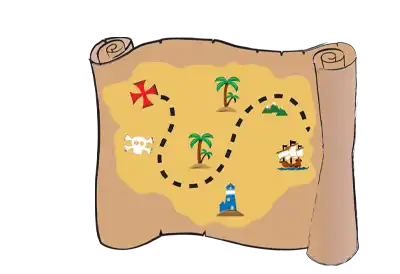
- Build a pirate-themed treasure hunt for children.
- Challenge coworkers to a lunchtime hunt.
- Create clues based on family memories.
Even a simple list of ten household objects can become surprisingly competitive.
Surprising Benefits of Scavenger Hunts
At first glance, a scavenger hunt might seem like nothing more than a fun way to pass the time. After all, participants are simply following clues, searching for hidden objects, and celebrating every successful discovery. Beneath the laughter and friendly competition, however, scavenger hunts offer a surprising number of physical, mental, educational, and social benefits that make them valuable for people of nearly every age.
One of the greatest advantages is the way scavenger hunts sharpen observation skills. Players quickly learn that paying attention to small details can make the difference between finding the next clue and wandering in circles. Whether searching for a tiny painted rock in a park or a particular piece of artwork in a museum, participants naturally become more aware of their surroundings.
Scavenger hunts also strengthen problem-solving abilities. Many hunts include riddles, puzzles, or coded messages that require logical thinking rather than simple luck. Participants learn to analyze clues, think creatively, and consider multiple possibilities before arriving at the correct answer. These mental exercises keep the brain engaged while making learning feel like play.
Teamwork is another major benefit. Most scavenger hunts encourage participants to divide responsibilities, share ideas, and communicate effectively. One person may notice a hidden clue while another solves a puzzle or remembers an important detail from an earlier challenge. Success often comes from combining different strengths rather than relying on a single individual.
Many scavenger hunts involve walking through neighborhoods, parks, campuses, or museums, providing gentle physical activity without feeling like exercise. Participants remain active while focusing on the adventure, often covering far more ground than they realize. It's one of the few activities where people happily walk an extra mile because someone insists the next clue is "just around the corner."
For children, scavenger hunts encourage curiosity, confidence, and independent thinking. Completing challenges and solving clues gives young participants a sense of accomplishment while helping them develop memory, reading comprehension, and decision-making skills. Teachers frequently use scavenger hunts to reinforce classroom lessons in subjects ranging from science and history to mathematics and literature.
Adults benefit as well. Corporate team-building events use scavenger hunts to improve communication, leadership, and collaboration among employees. Families use them to create shared experiences, while community organizations rely on them to bring neighbors together in a fun and welcoming environment.
Perhaps the greatest benefit is something that cannot be measured with statistics. Scavenger hunts create memorable experiences. People may forget exactly how many clues they solved, but they rarely forget the laughter, unexpected discoveries, and shared victories along the way. In an age when so much entertainment happens on screens, scavenger hunts encourage people to step outside, interact with others, and experience the satisfaction of finding something hidden in plain sight.
That's a pretty impressive return from a game that often begins with nothing more than a handwritten list and someone saying, "Ready... set... go!"
Fun Facts About National Scavenger Hunt Day
- The first modern scavenger hunts became popular during the 1930s.
- Many museums create permanent scavenger hunt guides for visitors.
- Digital scavenger hunts now use GPS technology and QR codes.
- Photo scavenger hunts have become popular at weddings and family reunions.
- Some city-wide scavenger hunts involve hundreds of teams competing simultaneously.
- Escape rooms borrow many ideas from traditional scavenger hunts.
- Summer camps have made scavenger hunts a favorite activity for generations.
- Almost every scavenger hunt includes one clue that seems perfectly obvious—after someone else solves it.
Why National Scavenger Hunt Day Matters
National Scavenger Hunt Day is about far more than checking items off a list or racing to the finish line. It celebrates curiosity, exploration, and the simple pleasure of discovering something that was hidden in plain sight. In an increasingly digital world, scavenger hunts remind us that some of life's best adventures begin by stepping away from a screen and paying closer attention to the world around us.
Scavenger hunts encourage people to work together, communicate, solve problems, and appreciate places they might otherwise overlook. A neighborhood becomes an unexplored frontier, a museum transforms into a puzzle waiting to be solved, and even an ordinary backyard can become the setting for an epic quest. The destination matters, but the shared experience is what people remember long after the prizes have been handed out.
The day also highlights the importance of play. Children naturally understand that games are part of learning, but adults sometimes need a reminder that having fun isn't just enjoyable—it's good for the mind. A scavenger hunt exercises observation, creativity, memory, and teamwork while disguising all that self-improvement as an afternoon of laughter.
Perhaps that's why scavenger hunts have remained popular for nearly a century. They don't require expensive equipment, complicated rules, or the latest technology. All they really need are a few clever clues, a little imagination, and at least one person who confidently announces, "I know exactly where it is!"
Of course, that same person is usually standing in the wrong place while everyone else is already celebrating at the finish line.
National Scavenger Hunt Day reminds us that the greatest discoveries aren't always hidden treasures. Sometimes they're the memories we make while searching together—and occasionally, if fortune smiles upon us, we even find where someone left the car keys.
National Scavenger Hunt Day FAQ
Whether you're planning your first scavenger hunt or you're a seasoned clue-solver who knows to check under the obvious-looking rock, you may still have a few questions. These frequently asked questions cover the basics of National Scavenger Hunt Day, explain how scavenger hunts work, and offer helpful information for anyone ready to join the adventure.
When is National Scavenger Hunt Day?
National Scavenger Hunt Day is celebrated annually on May 24.
Who can participate?
Anyone can enjoy a scavenger hunt. They can be adapted for young children, teenagers, adults, families, schools, and workplaces.
What is the difference between a scavenger hunt and a treasure hunt?
A scavenger hunt usually involves finding multiple items or completing tasks, while a treasure hunt typically follows clues leading to one final prize.
Do scavenger hunts require special equipment?
No. Most require only a list of clues or objects. Some digital versions may use smartphones or GPS apps.
Are scavenger hunts educational?
Yes. They can teach history, science, nature, geography, teamwork, and critical thinking while keeping participants actively engaged.
Can scavenger hunts be played indoors?
Absolutely. Indoor scavenger hunts are popular for parties, classrooms, rainy days, and family gatherings.
One More Look
National Scavenger Hunt Day reminds us that adventure doesn't have to involve passports, mountain climbing, or deciphering ancient maps. Sometimes all it takes is a list of clues, a little imagination, and a group of people determined to prove they're better at finding things than everyone else.
Scavenger hunts have entertained generations because they combine curiosity, creativity, teamwork, and just enough mystery to keep everyone guessing. Along the way, they encourage us to notice the small details, solve problems together, and create memories that often outlast whatever prize was waiting at the finish.
So gather your family, recruit a few friends, or challenge your coworkers to a hunt of your own. Explore a park, search your neighborhood, wander through a museum, or turn your living room into the scene of a great treasure-seeking expedition. You might be surprised how much fun can be found in places you've walked past a hundred times.
Just remember one important rule: if you hide the grand prize, make absolutely certain you remember where you put it. Otherwise, next year's National Scavenger Hunt Day may begin with everyone searching for last year's winner.