An April reminder that you don’t have to finish the bottle just because it’s open.
Raising a Glass to Better Choices
Every April, National Alcohol Awareness Month arrives to remind Americans that there's more to drinking than happy hours, questionable karaoke performances, and discovering that Uncle Fred becomes a philosopher after his third beer. It's a nationwide opportunity to discuss alcohol consumption, recognize the warning signs of alcohol use disorder, understand the health risks of excessive drinking, and support people working toward recovery. Nobody is required to surrender their favorite wineglass, but taking an honest look at what's going into it might be a very good idea.
A Sobering Start: The History of National Alcohol Awareness Month
National Alcohol Awareness Month was established in 1987 by the National Council on Alcoholism and Drug Dependence (NCADD), an organization dedicated to improving public understanding of alcoholism, prevention, and recovery. The observance was created to encourage education about alcohol-related problems, reduce the stigma surrounding addiction, and help individuals and families recognize when drinking has become more than an occasional social activity.
The timing was no accident. By the 1980s, alcohol-related traffic deaths, underage drinking, and the effects of alcohol dependence on families had become major public health concerns. Public awareness campaigns were increasingly challenging the notion that excessive drinking was simply an unfortunate personality trait or something best discussed behind closed doors. National Alcohol Awareness Month helped bring those conversations into schools, workplaces, community organizations, and American homes, where the subject was sometimes about as welcome as a tax auditor at a birthday party.
Today, Alcohol Awareness Month is supported through public health education and prevention initiatives, including those promoted by the Substance Abuse and Mental Health Services Administration (SAMHSA). Although the observance takes place every April, its message extends throughout the year: alcohol-related problems deserve attention, people experiencing addiction deserve support, and informed decisions can prevent serious harm.

Understanding Alcohol Consumption: When Does Drinking Become a Problem?
Alcohol has occupied a place in human society for thousands of years. From ancient fermented beverages to modern craft breweries, wine tastings, and cocktail parties, drinking has long accompanied celebrations, meals, religious traditions, and social gatherings. For many adults, alcohol is an occasional choice rather than a central part of everyday life. Nevertheless, familiarity should not be confused with harmlessness. Something can be socially acceptable and still carry significant health risks. Just ask anyone who has attempted to assemble furniture after declaring that instructions are unnecessary.
The Centers for Disease Control and Prevention (CDC) distinguishes several patterns of excessive alcohol consumption, including binge drinking and heavy drinking. Binge drinking generally means consuming four or more alcoholic drinks for women or five or more for men on a single occasion. Heavy drinking is defined by the CDC as eight or more drinks per week for women or fifteen or more for men. These definitions are public health screening measures, not automatic diagnoses of alcohol addiction, and individual risks can vary considerably.
One complication is that people frequently underestimate what constitutes a single alcoholic drink. In the United States, a standard drink contains approximately 14 grams of pure alcohol. That is roughly equivalent to 12 ounces of regular beer containing 5% alcohol, 5 ounces of wine containing 12% alcohol, or 1.5 ounces of distilled spirits containing 40% alcohol. A generously poured glass of wine or a particularly enthusiastic cocktail may contain considerably more than one standard drink. The bartender may call it a bargain, but your liver is unlikely to be impressed.
National Alcohol Awareness Month encourages people to consider not only how much they drink but also why, when, and under what circumstances. Drinking to celebrate an occasion differs from feeling unable to relax, sleep, socialize, or manage emotional difficulties without alcohol. The latter patterns may warrant closer attention, particularly when alcohol begins interfering with relationships, responsibilities, or personal well-being.
Alcohol and Your Health: What Science Tells Us
Alcohol affects considerably more than balance, judgment, and the ability to remember where the car was parked. Excessive drinking can increase the risk of liver disease, high blood pressure, heart disease, stroke, digestive problems, injuries, and mental health difficulties. Alcohol can also interfere with sleep quality, even when it initially makes someone feel drowsy. Falling asleep quickly after drinking is not necessarily the same as enjoying restorative sleep, a distinction that becomes particularly noticeable when morning arrives with the enthusiasm of a marching band.
Alcohol consumption is also an established cause of several cancers. The International Agency for Research on Cancer, part of the World Health Organization, identifies alcohol as a cause of cancers affecting the mouth, throat, voice box, esophagus, liver, colon and rectum, and female breast. Cancer risk generally increases with greater consumption, but even relatively low levels of drinking can contribute to risk. For cancer prevention, no completely risk-free level of alcohol consumption has been established.
These findings have changed how health professionals discuss drinking. Rather than assuming that moderate alcohol consumption is inherently beneficial, public health organizations increasingly emphasize that drinking less reduces exposure to alcohol-related harm. People who do not drink have no medical reason to begin drinking for supposed health benefits. Those who choose to drink can benefit from understanding the risks, while individuals with certain medical conditions, medication interactions, or other circumstances may need to avoid alcohol altogether.
Pregnancy presents another important consideration. Alcohol exposure during pregnancy can cause fetal alcohol spectrum disorders, a group of conditions associated with developmental, behavioral, and physical difficulties. Because no safe amount or safe time for alcohol consumption during pregnancy has been established, public health guidance recommends avoiding alcohol during pregnancy.
Alcohol Use Disorder: When Drinking Takes Control
Alcohol use disorder, commonly abbreviated AUD, is a medical condition characterized by difficulty controlling alcohol consumption despite harmful consequences. It can range from mild to severe and may develop gradually, sometimes so slowly that the individual and those around them fail to recognize what is happening. What begins as an occasional drink to unwind can become an increasingly important part of daily life, eventually affecting health, employment, finances, and personal relationships.
Warning signs may include drinking more than intended, unsuccessful attempts to cut down, strong cravings, neglecting responsibilities, continuing to drink despite relationship problems, or spending substantial amounts of time drinking and recovering from its effects. Some individuals develop tolerance, meaning they need increasing quantities of alcohol to experience similar effects. Others experience withdrawal symptoms when alcohol consumption decreases or stops. These symptoms can include trembling, sweating, anxiety, nausea, and sleep disturbances, with severe withdrawal sometimes causing seizures or life-threatening complications.
An important message of National Alcohol Awareness Month is that alcohol use disorder is not simply a failure of willpower or character. Biological, psychological, social, and environmental factors can contribute to its development. Nor does the condition always resemble the familiar stereotype of someone who has lost a job, a home, and every friendship. People experiencing alcohol use disorder may continue working, raising families, and maintaining outwardly successful lives while struggling privately with their drinking.
Fortunately, alcohol use disorder is treatable. Medical care, behavioral therapies, peer support, counseling, and certain prescription medications can help people reduce or stop drinking and maintain recovery. Treatment should be tailored to the individual, and recovery does not necessarily follow a perfectly straight road. For someone who has developed physical dependence, abruptly stopping alcohol without medical guidance can be dangerous. Seeking professional advice is a safer first step than attempting an unsupervised withdrawal.

The Ripple Effect: Families, Friendships, and Communities
The consequences of harmful alcohol consumption rarely remain confined to the person drinking. Families may experience financial strain, unpredictable behavior, emotional distress, and difficulties maintaining trust. Children living in households affected by alcohol misuse may encounter instability or responsibilities beyond their years. Partners and relatives sometimes find themselves managing crises, making excuses, or quietly wondering what the next evening will bring.
Communities experience consequences as well. Alcohol impairment contributes to traffic crashes, workplace injuries, falls, violence, and other preventable incidents. Emergency services, hospitals, employers, and public health systems all deal with the effects. The CDC estimated that excessive alcohol use contributed to approximately 178,000 deaths annually in the United States during 2020–2021, illustrating that alcohol-related harm is far more than a matter of individual preference.
However, conversations about alcohol should avoid turning every person who drinks into a suspected criminal or every person with an addiction into a public spectacle. Shame and stigma can discourage people from seeking help, while understanding and practical support can make recovery more accessible. National Alcohol Awareness Month encourages communities to replace accusations with education, recognize problems earlier, and provide assistance before difficulties become emergencies.
Teenagers, Peer Pressure, and Underage Drinking Prevention
Young people deserve particular attention during National Alcohol Awareness Month because alcohol can affect developing brains, judgment, and decision-making. Underage drinking is associated with increased risks of injuries, academic difficulties, unsafe behavior, and later alcohol-related problems. In the United States, the minimum legal drinking age is generally 21, although specific legal exceptions vary by state.
Parents, teachers, and other trusted adults can help prevent underage drinking through clear expectations, accurate information, and conversations that begin well before a teenager encounters alcohol at a party. Simply announcing that drinking is forbidden and then retreating behind a newspaper may not provide enough guidance. Young people benefit from understanding why alcohol can be harmful, how peer pressure operates, and what to do when someone offers them a drink.
Equally important is creating an environment in which teenagers feel comfortable asking questions or requesting help. A young person who has made an unsafe decision should know that contacting a responsible adult is preferable to riding with an impaired driver or attempting to conceal a dangerous situation. Prevention is most effective when education, trust, supervision, and realistic safety planning work together.
Mocktails Over Cocktails: Celebrating Without Alcohol
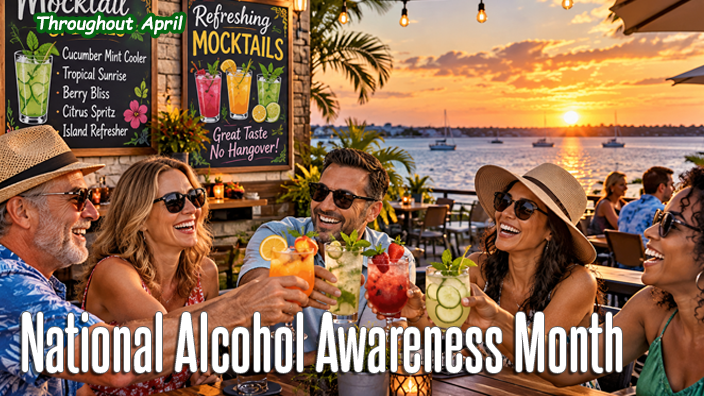
One of the more enjoyable developments in modern social drinking is the growing variety of alcohol-free beverages. Mocktails, alcohol-free beers, and nonalcoholic alternatives allow people to participate in social occasions without necessarily consuming alcohol. A carefully prepared cucumber-mint cooler or pineapple-ginger spritzer can be every bit as attractive as a traditional cocktail, with the additional advantage that nobody needs to explain why the living-room lampshade ended up on their head.
Alcohol-free entertaining also makes gatherings more inclusive. Some guests avoid alcohol for health reasons, religious beliefs, pregnancy, medication interactions, recovery, or simple personal preference. Others may be driving, working early the following morning, or just uninterested in drinking. None should have to defend their choice as though they were appearing before a parliamentary inquiry.
For people in recovery, however, alcohol-free beverages that closely imitate alcoholic drinks may not always be comfortable or appropriate. Preferences vary, and some products labeled nonalcoholic can contain small amounts of alcohol. Hosts can make everyone feel welcome by providing clearly labeled choices, including ordinary juices, sparkling water, tea, and other drinks that require no explanation.
The broader lesson is refreshingly simple: good company does not depend on the alcohol content of the refreshments. People managed to enjoy conversations, music, games, and celebrations long before somebody decided every gathering required an open bar.
How to Observe National Alcohol Awareness Month in April
Participating in National Alcohol Awareness Month does not require organizing a parade, delivering a lecture, or confiscating the neighborhood's bottle openers. The observance offers opportunities for individuals, families, schools, healthcare providers, and community organizations to promote responsible decisions and better understanding.
One practical approach is to examine personal drinking habits. Keeping track of alcoholic beverages for several weeks can reveal patterns that might otherwise go unnoticed. Some people discover that they drink primarily in social settings, while others recognize that alcohol has become part of their response to stress, boredom, loneliness, or poor sleep. Understanding those patterns can help identify opportunities to make healthier choices.
Community groups and workplaces can organize educational events, invite healthcare professionals to discuss alcohol-related risks, share reliable treatment resources, or provide alcohol-free social activities. Schools can incorporate age-appropriate prevention education, while families can establish conversations about safety, peer pressure, and healthy coping strategies.
Supporting recovery is another meaningful way to participate. This may involve listening without judgment, learning about treatment options, encouraging someone to seek professional assistance, or respecting an individual's decision not to drink. Nobody needs to become an amateur therapist over Sunday dinner. Sometimes the most helpful contribution is a willingness to listen, provide practical assistance, and avoid turning a difficult conversation into an interrogation.
Alcohol Awareness Facts Worth Remembering
A few useful facts can make conversations about alcohol more informative:
- April is Alcohol Awareness Month in the United States. The observance began in 1987 through the National Council on Alcoholism and Drug Dependence.
- One drink is not necessarily one standard drink. A large glass of wine or a strong mixed drink may contain several standard servings of alcohol.
- Binge drinking does not require daily drinking. Consuming a large amount on one occasion can create serious risks even for someone who rarely drinks.
- Alcohol is a recognized carcinogen. Scientific evidence links drinking to at least seven types of cancer.
- Coffee cannot reverse alcohol impairment. Caffeine may increase alertness, but it does not make someone sober or restore safe driving ability.
- Alcohol use disorder is treatable. Evidence-based treatments include counseling, behavioral therapies, medications, and recovery support.
- Alcohol withdrawal can be dangerous. People with significant physical dependence should seek medical guidance before abruptly stopping.
- Choosing not to drink requires no justification. Sparkling water, lemonade, and an excellent sense of humor remain perfectly respectable party companions.
Recognizing the Need for Help and Finding Support
One of the most valuable outcomes of National Alcohol Awareness Month is helping people recognize that assistance is available. Someone concerned about their drinking can begin by speaking with a healthcare professional, who can assess alcohol use, discuss treatment options, and recommend appropriate support. Family members and friends can also seek guidance about how to respond constructively when a loved one's drinking causes concern.
In the United States, the Substance Abuse and Mental Health Services Administration provides treatment information and referral assistance through its National Helpline at 1-800-662-HELP (4357). Additional information is available through SAMHSA and the National Institute on Alcohol Abuse and Alcoholism. People experiencing severe withdrawal symptoms, seizures, confusion, or another medical emergency should seek emergency medical care.
Recovery can involve setbacks, changes in treatment, and considerable patience. What matters is that effective help exists and that individuals do not have to navigate alcohol-related difficulties alone. A supportive conversation today may prevent a much more serious problem tomorrow.

A Sobering FAQ: Questions Worth Asking Before the Next Round
National Alcohol Awareness Month is about more than counting drinks or exchanging the usual promises to behave at the next family gathering. It is an opportunity to understand how alcohol affects health, recognize when drinking becomes a problem, and learn where to turn when someone needs help. These frequently asked questions address some of the most important issues surrounding alcohol consumption, addiction, prevention, and recovery. There are no lectures from the bartender here, just straightforward answers to questions that deserve serious attention, with the occasional lighter moment to keep the conversation flowing.
When is National Alcohol Awareness Month observed?
National Alcohol Awareness Month is observed every April throughout the United States. Established in 1987 by the National Council on Alcoholism and Drug Dependence (NCADD), the month promotes education about alcohol consumption, excessive drinking, alcohol use disorder, and recovery. Schools, healthcare providers, workplaces, and community organizations use the observance to encourage responsible decisions, reduce stigma, and help people recognize when alcohol consumption is affecting their health or relationships.
What is the main purpose of National Alcohol Awareness Month?
The primary purpose of National Alcohol Awareness Month is to increase public understanding of alcohol-related health risks, prevent underage and excessive drinking, and encourage people experiencing alcohol problems to seek appropriate treatment. The observance also emphasizes the importance of supporting families affected by alcohol use disorder and making accurate information available to communities. It is not simply a campaign against social drinking; it encourages informed decisions, early intervention, and greater awareness of alcohol's potential consequences.
What are the warning signs of alcohol use disorder?
Warning signs of alcohol use disorder may include drinking more than intended, unsuccessful attempts to reduce consumption, strong cravings, neglecting responsibilities, continuing to drink despite negative consequences, and experiencing withdrawal symptoms when alcohol use stops. Some individuals develop tolerance and require increasing amounts to experience similar effects. Alcohol use disorder can range from mild to severe and does not always involve obvious intoxication or daily drinking. A qualified healthcare professional can assess symptoms and recommend appropriate treatment.
What is considered binge drinking?
Binge drinking is a pattern of alcohol consumption that raises blood alcohol concentration to approximately 0.08% or higher. According to the National Institute on Alcohol Abuse and Alcoholism, this typically occurs when an adult woman consumes four or more standard drinks, or an adult man consumes five or more, within approximately two hours. Binge drinking increases the risk of injuries, impaired judgment, alcohol poisoning, and other health consequences. Someone can engage in binge drinking without consuming alcohol every day.
Can moderate alcohol consumption still affect your health?
Yes. Even relatively low levels of alcohol consumption can carry health risks, including an increased risk of certain cancers. Alcohol is associated with cancers of the mouth, throat, esophagus, liver, breast, and colon and rectum. Individual risks depend on several factors, including drinking patterns, medical history, medications, and overall health. Drinking less generally reduces alcohol-related risks, and people who do not consume alcohol are not advised to begin drinking for supposed health benefits.
Can someone recover from alcohol use disorder?
Yes. Alcohol use disorder is a treatable medical condition, and many people achieve meaningful, lasting recovery. Treatment may include behavioral therapy, counseling, medications, medical supervision, and peer support programs. Some individuals benefit from outpatient care, while others require more intensive treatment. Recovery experiences vary, and setbacks do not necessarily mean treatment has failed. People who have developed physical alcohol dependence should seek medical advice before abruptly stopping because severe alcohol withdrawal can be life-threatening.
How can families help someone struggling with alcohol addiction?
Families can help by approaching the person with compassion, expressing specific concerns without accusations, encouraging professional assessment, and learning about available treatment options. Establishing healthy boundaries and avoiding behaviors that unintentionally support harmful drinking patterns can also be important. Family counseling and support groups may provide additional guidance. Although relatives cannot force another person to recover through arguments or repeated warnings, consistent encouragement and practical support can help someone take the first steps toward treatment.
How can people participate in National Alcohol Awareness Month?
Individuals can observe National Alcohol Awareness Month by learning about alcohol-related health risks, examining their drinking habits, sharing reliable educational resources, and supporting people in recovery. Schools and community organizations can arrange prevention programs, while workplaces can provide information about confidential assistance. Hosting alcohol-free gatherings, discussing underage drinking with teenagers, and encouraging safe transportation choices are other practical activities. Participation does not require a month of solemn speeches; even an enjoyable mocktail evening can encourage healthier social habits.
Where can someone find help for alcohol addiction or excessive drinking?
In the United States, anyone concerned about alcohol addiction, excessive drinking, or a loved one's alcohol use can contact the Substance Abuse and Mental Health Services Administration (SAMHSA) National Helpline at 1-800-662-HELP (4357). This free, confidential service operates 24 hours a day, seven days a week, providing treatment referrals and information in English and Spanish. People can also visit https://findtreatment.gov/ to locate treatment providers or https://alcoholtreatment.niaaa.nih.gov/ for guidance on finding evidence-based alcohol treatment. For an immediate mental health or substance use crisis, call or text 988. Severe alcohol withdrawal or suspected alcohol poisoning requires emergency medical attention; call 911.
Raising Awareness, Not Just Raising Glasses
National Alcohol Awareness Month ultimately asks Americans to reconsider a familiar part of everyday culture. Alcohol appears at weddings, sporting events, holiday dinners, neighborhood barbecues, and celebrations of practically everything from retirement to successfully assembling a garden shed. Yet its familiarity can make it easy to overlook the physical, emotional, and social consequences of excessive consumption.
The purpose of April's observance is not to eliminate laughter, condemn every glass of wine, or appoint somebody to patrol family gatherings with a clipboard. It is to encourage informed choices, honest conversations, responsible behavior, and compassion for people affected by alcohol use disorder. Understanding the risks allows individuals and communities to make decisions based on evidence rather than habit, advertising, or the enthusiastic advice of Uncle Fred.
So, during National Alcohol Awareness Month, raise awareness, support recovery, and make room for healthier choices. Whether the glass contains sparkling water, a carefully crafted mocktail, or another beverage, the important thing is recognizing that a successful celebration is measured by the people who enjoy it, not by how much alcohol disappears before the evening is over.
And if Uncle Fred insists on performing karaoke, perhaps someone should hide the microphone. Some risks are entirely preventable.