If fish paid property taxes, coral reefs would be some of the most desirable neighborhoods in the...
The Peace Corps: where adventurous souls with a passion for service, a tolerance for unpredictable...
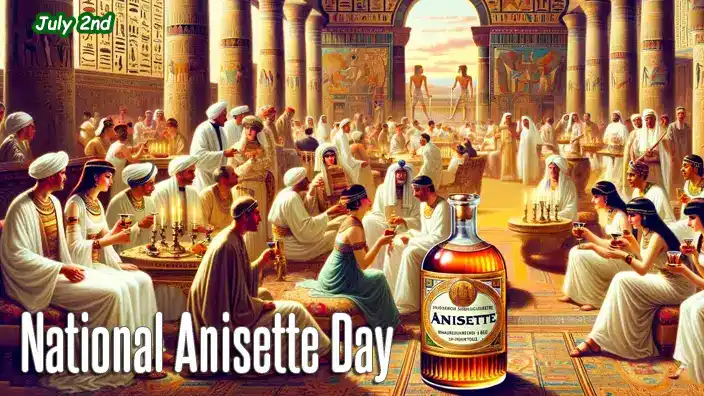
Imagine sipping on something that tastes like a licorice-flavored dare, with just enough sweetness to...
Some say the angels themselves must have whipped up the divine combination of peanut butter and...
Black Pudding is the misunderstood part of the breakfast world, bravely standing up to its sunnier...
Margaritas aren’t just a drink—they’re a personality test in a glass. The on-the-rocks purists sip...
On November 27, 1868, Lieutenant Colonel George Armstrong Custer and the U.S. 7th Cavalry attacked a Southern Cheyenne village near the Washita River in present-day Oklahoma. The settlement was led by Chief Black Kettle, a prominent advocate for peace between Native Americans and the United States government. Custer had recently returned to military service following a court-martial and suspension for misconduct. General Philip Sheridan reinstated him to participate in a winter military campaign intended to suppress Native American resistance across the Southern Plains.
Despite Black Kettle's previous efforts to negotiate peace, his village became a target of Sheridan's campaign. The assault resulted in the destruction of the settlement and the deaths of numerous Cheyenne, including Black Kettle, his wife, and many women and children. Soldiers also took prisoners and destroyed supplies and horses essential to the community's survival. The exact number of Native Americans killed remains disputed by historians.
Known as the Battle of the Washita, or the Washita Massacre, the attack helped restore Custer's military reputation and increased government pressure on Native American communities to relocate to reservations. However, the event remains a controversial chapter in American history, particularly because of Black Kettle's commitment to peace and the deaths of noncombatants. Custer's aggressive approach to warfare would ultimately contribute to his defeat and death at the Battle of the Little Bighorn in 1876.
On November 27, 1924, Macy's launched what would become one of America's most cherished holiday traditions. Originally known as the Macy's Christmas Parade, the Thanksgiving Day procession began at 9 a.m. in Upper Manhattan and followed a six-mile route toward the department store's flagship location in Herald Square. Spectators were entertained by elaborate floats, costumed performers, marching bands, animals from the Central Park Zoo, and an appearance by Santa Claus.
The celebration was conceived following the considerable expansion of Macy's Herald Square store, which had grown to encompass approximately one million square feet of retail space. Designed to attract customers and officially welcome the Christmas shopping season, the parade featured floats inspired by Mother Goose nursery rhymes, complementing the department store's festive window displays. An estimated 10,000 spectators attended the inaugural event, prompting Macy's to announce that the celebration would return the following Thanksgiving.
The parade evolved considerably over the following decades, with enormous inflatable character balloons making their debut in 1927 and eventually becoming its signature attraction. Television broadcasts introduced the festivities to a nationwide audience, while the production earned multiple Emmy Awards for its entertainment achievements. What began as an ambitious department store promotional event developed into an enduring American Thanksgiving tradition, enjoyed by millions of spectators and television viewers each year.
On November 27, 2005, New York City's prestigious Rainbow Room hosted one of the most extravagant bat mitzvah celebrations in history. Elizabeth Brooks, the daughter of wealthy Long Island defense contractor David H. Brooks, celebrated her coming of age with a reported $10 million party. The extraordinary entertainment lineup included Aerosmith's Steven Tyler and Joe Perry, rapper 50 Cent, saxophonist Kenny G, Don Henley, Stevie Nicks, and Tom Petty, transforming a traditional religious milestone into an exclusive, star-studded concert.
The extravagance extended well beyond the entertainment, with guests receiving gift bags containing expensive electronic devices reportedly worth more than $1,000 each. Despite attempts by security personnel to restrict photography during certain performances, images of the celebration soon circulated across the internet. The party attracted considerable media attention and public criticism, particularly concerning the enormous sums spent on a private family celebration.
David H. Brooks was the chief executive of DHB Industries, a company supplying protective body armor to the United States military. In 2007, federal authorities indicted Brooks on numerous charges, including insider trading and the misuse of corporate funds to finance his lavish lifestyle. Prosecutors alleged that company resources had helped fund the extravagant bat mitzvah. Brooks was subsequently convicted of multiple federal offenses and died in prison in 2016, bringing a dramatic end to a story of extraordinary wealth, corporate misconduct, and celebrity excess.
On November 27, 2015, Pope Francis ventured into the world of popular music with the release of Wake Up! Music Album with His Words and Prayers. Created with Vatican approval, the unusual 11-track recording combined excerpts from the pontiff's speeches, prayers, and sermons with musical arrangements incorporating progressive rock, traditional hymns, and Gregorian chants. Featuring recordings in Italian, English, Spanish, and Portuguese, the album explored themes central to Francis' papacy, including compassion, environmental responsibility, human dignity, peace, and social justice.
Among the album's most distinctive recordings was its title track, Wake Up! Go! Go! Forward!, which incorporated words spoken by Pope Francis during the 2014 Asian Youth Day celebrations in South Korea. Electric guitars, percussion, and choral arrangements accompanied his encouragement to young people to become active participants in shaping a better world. Producer and artistic director Don Giulio Neroni intended the project to reflect the pontiff's approachable personality and commitment to communication, inclusion, and hospitality.
The unconventional recording achieved considerable commercial success, reaching fourth place on Billboard's World Albums chart and fifth on its Top Christian Albums chart. Although its combination of contemporary rock music and religious teachings attracted widespread attention, Francis was not the first pontiff to enter the music charts, following earlier recordings featuring Popes John XXIII, John Paul II, and Benedict XVI. Pope Francis, who died on April 21, 2025, left behind this unusual musical contribution as an example of his willingness to embrace contemporary culture while communicating traditional Christian values.