April 22, 1937, in Neptune City, New Jersey
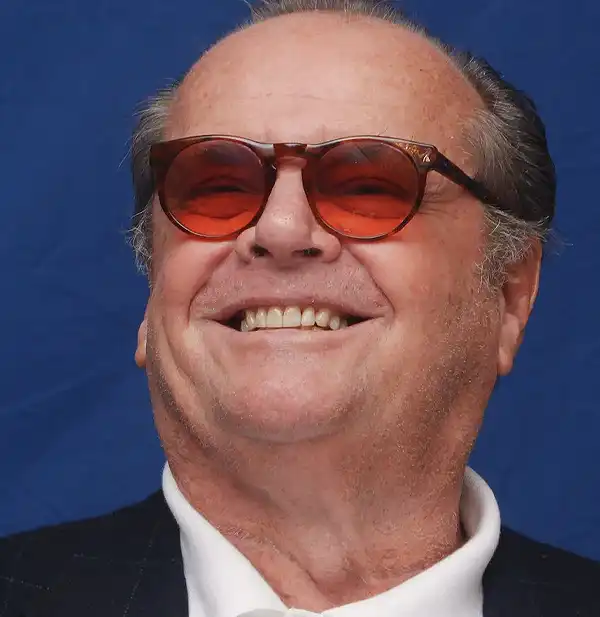
Jack Nicholson was born on April 22, 1937, in Neptune City, New Jersey, and raised in nearby Manasquan. His early life came with a twist worthy of a screenplay—he was raised believing his grandmother was his mother and his mother was his sister, a truth he didn’t discover until much later. If you’re wondering whether that kind of revelation might shape a person’s worldview… well, let’s just say Nicholson didn’t grow up to play predictable characters.
He moved to Hollywood in the mid-1950s, initially working behind the scenes before stepping in front of the camera. His early film roles in low-budget productions and Roger Corman pictures gave him experience, but not yet stardom. That changed in 1969 with Easy Rider. Nicholson’s performance as the hard-drinking lawyer George Hanson earned him an Academy Award nomination and announced, quite loudly, that a new kind of actor had arrived—one who could be charming, chaotic, and deeply human all at once.
From there, Nicholson didn’t just build a career—he stacked iconic performances like a man who knew exactly what he was doing. In Five Easy Pieces, he played a drifting oil rig worker with a classical music past, delivering a performance full of quiet frustration and explosive honesty. Then came Chinatown, where his portrayal of private detective Jake Gittes helped define one of the greatest films of the 1970s. If noir had a modern face, Nicholson wore it like it was tailored.
In 1975, he took on one of his most celebrated roles in One Flew Over the Cuckoo's Nest, playing Randle P. McMurphy. The performance earned him his first Academy Award for Best Actor and cemented his reputation as someone who could bring both rebellion and vulnerability to the screen. Nicholson didn’t just act the role—he challenged it, pushed against it, and made it unforgettable.
Then, of course, there’s The Shining. His portrayal of Jack Torrance is one of the most recognizable in film history. “Here’s Johnny!” didn’t just become a famous line—it became a cultural landmark. Nicholson’s performance balanced menace and madness so effectively that even decades later, it still feels unsettling in the best possible way.
He proved he could shift gears again in Terms of Endearment, winning an Academy Award for Best Supporting Actor, and later in As Good as It Gets, where he won his third Oscar for playing Melvin Udall, a deeply flawed but oddly compelling writer. Nicholson had a knack for making difficult characters not just watchable, but fascinating. You might not like them—but you couldn’t look away.
And then there’s his turn as the Joker in Batman, where he brought a theatrical, almost gleeful menace to the role. It was bold, colorful, and completely in line with his ability to command attention in any scene he entered. Nicholson didn’t disappear into roles—he expanded them.
Across his career, he earned 12 Academy Award nominations, making him one of the most nominated male actors in history. That’s not luck—that’s consistency at the highest level, over decades. He worked with some of the finest directors in the business and held his own every single time, often walking away as the most memorable part of the film.
Off-screen, Nicholson became just as recognizable. His courtside presence at Los Angeles Lakers games is practically a tradition at this point. Sunglasses on, sitting near the action, looking like he might comment on the game or rewrite the script if things get boring. It’s part of his legend—the idea that Nicholson is always just slightly larger than life, even when he’s not acting.
In later years, Nicholson stepped back from acting, with his final film role being in 2010’s How Do You Know. Some say he retired quietly; others say he simply decided he’d already done enough to secure his place in film history—which, frankly, is hard to argue with.
Born on April 22, 1937, Jack Nicholson didn’t just become a movie star—he became a standard. His performances set the bar for what acting could be: bold, risky, layered, and impossible to ignore. He didn’t chase likability, and he didn’t smooth out the rough edges. He leaned into them.
And that’s why, decades later, when that grin shows up on screen—even in a still image—you already know something interesting is about to happen.