Finding Forever Homes, One Wag at a Time
October is Adopt a Shelter Dog Month, a month-long reminder that somewhere nearby there is probably a dog sitting in an animal shelter wondering why the humans are taking so long to realize that the vacant position of Household Dog has already been filled. The candidate is available immediately, enthusiastic about the benefits package and prepared to accept payment largely in food, walks, comfortable furniture and unreasonable amounts of affection.
Adopt a Shelter Dog Month encourages people who are ready for a dog to consider adoption from a local animal shelter or rescue organization. It also draws attention to the many dogs waiting for homes and the shelters, rescue groups, foster families, veterinary professionals, volunteers and other people working to care for them. The ASPCA has long promoted October as Adopt a Shelter Dog Month, while American Humane observes its related Adopt-A-Dog Month campaign during October. American Humane Society
Adopting a shelter dog can be enormously rewarding, but this isn't a month for impulsively acquiring the first pair of enormous brown eyes that destroys your ability to think rationally. A dog is a living animal requiring years of food, exercise, veterinary care, training, companionship and attention. Adopt a Shelter Dog Month is therefore as much about responsible dog adoption as it is about adoption itself.
The Story Behind Adopt a Shelter Dog Month
October has been associated with shelter dog adoption campaigns for decades. American Humane says its national Adopt-A-Dog Month initiative was created to encourage people to adopt dogs from local shelters and rescue organizations, although its current materials give conflicting dates for the campaign's beginning: its dedicated campaign page says 1981, while its historical timeline lists 1978. Rather than allowing two dates to fight over the same dog biscuit, it is safest to say that the campaign emerged around the late 1970s and early 1980s as part of organized efforts to promote shelter adoption. American Humane Society
The ASPCA also recognizes October as Adopt a Shelter Dog Month and uses the occasion to encourage adoption, fostering, volunteering and other support for homeless dogs. The need remains significant. The ASPCA reported in 2026 that nearly six million dogs and cats entered shelters and rescues across the United States during 2025, with many organizations experiencing capacity pressures and dogs sometimes remaining in care longer before finding homes. ASPCA
The purpose of the month, however, isn't simply to empty shelters as quickly as possible. Successful adoption means creating lasting matches between dogs and people. A dog who fits comfortably into a household is far more likely to remain there, which makes thoughtful adoption considerably more useful than bringing home an animal because somebody looked adorable for eleven seconds through a kennel door.
Admittedly, eleven seconds can be surprisingly persuasive.
Shelter Dogs Come in Every Description
There is no single thing called a “shelter dog.” Walk through an animal shelter and you may encounter puppies, adolescents, adults and seniors; tiny dogs, enormous dogs and dogs apparently assembled from spare pieces of several unrelated dogs. Some may be purebred, while others possess family trees best described as enthusiastically complicated.
Their histories are equally varied. Dogs arrive at shelters because families move, owners die, housing circumstances change, animals become lost, financial problems arise or owners discover they cannot provide the care a particular dog requires. Some have experienced neglect or mistreatment, but it is a mistake to assume every shelter dog has suffered trauma or has behavioral problems. Many perfectly ordinary dogs need new homes because human circumstances changed around them.
That variety is one of the advantages of visiting a shelter or reputable rescue. Instead of deciding in advance that you require a particular appearance, you can talk to people who know the available dogs and explain what you actually need. Shelter staff and foster caregivers may know whether a dog is energetic, quiet, sociable, independent, comfortable around other animals or firmly convinced that squirrels represent an international conspiracy.
Personality matters considerably more when you are sharing a home than whether the dog's ears happen to match.
Finding the Right Dog Matters
Choosing a dog should begin with an honest assessment of your life rather than an assessment of which dog has produced the most emotionally devastating photograph. The CDC recommends considering a dog's temperament, size and activity level alongside your home and the amount of time you can devote to the animal. Prospective owners should also research appropriate care and consider food, exercise, housing and veterinary requirements before adopting. CDC
An active person who spends weekends hiking may enjoy an energetic dog that needs substantial exercise. Someone who prefers peaceful evenings at home might be happier with a calmer companion. Families need to consider children and existing pets, while renters should check lease restrictions before falling in love with a dog that the landlord will not permit. Work schedules matter too. Dogs need companionship, bathroom breaks, exercise and mental stimulation; they cannot simply be parked beside the sofa like an unusually hairy footstool.
Age deserves consideration as well. Puppies are adorable, but they are also tiny agents of disorder equipped with teeth and no understanding of property ownership. They need training, supervision and patience. Adult dogs may already have useful household skills, while senior shelter dogs can be wonderful companions for people seeking a quieter relationship. Older dogs are sometimes overlooked despite having plenty of affection left to give and, in many cases, considerably less interest in dismantling your shoes.
The best shelter dog isn't necessarily the youngest, prettiest or most energetic. It is the dog whose needs and personality fit your household.
What to Ask at the Animal Shelter
Shelter employees and rescue volunteers can be some of your best resources when considering adoption. Ask what they know about the dog's personality, medical history, activity level and behavior. Find out whether the dog has lived with children, cats or other dogs, if that information is available. Ask about house training, leash behavior and any special medical or behavioral needs.
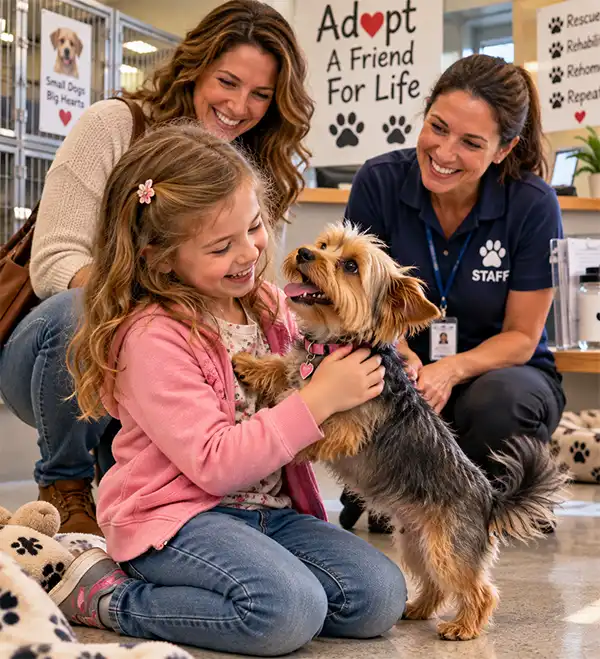
Be honest about your circumstances in return. If you have cats, say so. If you work long hours, mention it. If your idea of strenuous physical activity is walking from the recliner to the refrigerator during a commercial break, this is probably not the moment to claim that you're seeking an athletic companion for daily ten-mile runs.
Some shelters offer opportunities for household members and existing dogs to meet a potential adoptee before adoption. Policies vary between organizations, but when such introductions are available they can provide useful information. Foster-based rescue organizations may have particularly detailed knowledge because their dogs have been living in ordinary homes rather than kennels.
Don't be embarrassed if the dog you initially came to see isn't the right match. You aren't rejecting the dog; you are trying to find a home where both dog and humans can succeed. Sometimes the shelter worker who has been quietly listening to you will say, “Actually, there's another dog I'd like you to meet.”
That sentence has changed many families.
Bringing Your Shelter Dog Home
Adoption day is exciting for humans, but the dog has no idea that everyone has agreed this is a wonderful development. From the dog's perspective, another enormous change has occurred. New people have appeared, the familiar shelter has vanished, the smells are different and somebody has apparently decided where the water bowl lives without consulting management.
Give a newly adopted dog time to settle. Keep the first days relatively calm, establish predictable routines and allow the animal to explore the new environment safely. Training should rely on patience, consistency and positive reinforcement rather than expecting the dog to understand household rules immediately. Even a previously house-trained dog may need time to adjust to unfamiliar schedules and surroundings.
Arrange appropriate veterinary care as well. The CDC recommends taking a newly adopted dog or puppy to a veterinarian within a few days to a week after adoption. Shelters frequently provide vaccinations, spay or neuter services and other veterinary care before adoption, but practices vary, so adopters should review the dog's records and discuss future preventive care with their veterinarian. American Humane Society
Above all, remember that adjustment works both ways. The dog is learning your routine while you are learning the dog's signals, habits and personality. Before long you will discover important information such as which treats produce immediate obedience, which neighborhood dog is apparently an enemy of the state, and precisely how much of your bed you are still permitted to occupy.
Training Builds the Relationship
Training isn't something reserved for troublesome dogs. It is one of the ways dogs and humans learn to communicate with each other. Basic behaviors such as coming when called, walking safely on a leash, settling when asked and responding to simple cues can make everyday life safer and considerably more enjoyable.
Consistency matters. If one family member allows the dog onto the couch, another forbids it and a third secretly feeds cheese there every evening, the dog isn't poorly trained. The dog has conducted an experiment and correctly concluded that humans have no coherent policy.
Positive, reward-based training can help establish desired behaviors while strengthening the relationship between dog and owner. Some adopted dogs may benefit from professional training assistance, particularly when dealing with specific fears or behavioral concerns. Shelters and rescue groups may be able to recommend reputable trainers or behavior professionals in the community.
Patience is especially important during the adjustment period. A shelter dog may behave differently after becoming comfortable in the home, so getting to know the animal is an ongoing process rather than something completed on adoption day.
Adoption Is a Long-Term Commitment
A shelter dog is not an October decoration. The commitment continues through November, Christmas, next summer and many Octobers after that. Depending on age and health, adopting a dog may mean accepting responsibility for that animal for many years.
That includes routine expenses such as food, preventive veterinary care, licensing where required, grooming and supplies, along with unpredictable expenses when something goes wrong. Emergency veterinary treatment can be costly, and potential adopters should think realistically about how they would handle unexpected medical needs.
Time is another expense, although nobody sends an invoice for it. Dogs need exercise, attention, training and companionship. Some require extensive grooming, medication or specialized care. Vacations and travel require planning. A spontaneous weekend away becomes slightly less spontaneous once another household member requires feeding and strongly objects to using an airplane bathroom.
None of this is an argument against adoption. It is an argument for adopting when you're genuinely ready. The goal of Adopt a Shelter Dog Month isn't merely to get dogs through the shelter's exit door; it is to help them stay in loving homes for the rest of their lives.
Can't Adopt? You Can Still Help
One of the most important messages of Adopt a Shelter Dog Month is that you don't have to adopt a dog to help shelter dogs. In fact, recognizing that you aren't currently able to provide a permanent home can be an extremely responsible decision.
Fostering can be enormously valuable. Foster caregivers temporarily provide a home for shelter or rescue dogs, giving the organization additional capacity while allowing the dog to experience life in a household. Foster families can also learn things about a dog's personality and behavior that may help find an appropriate permanent adopter. The ASPCA specifically encourages fostering as one way people can support shelter animals when permanent adoption isn't possible.
Volunteering is another option. Shelters may need people to walk dogs, socialize animals, assist at adoption events, clean facilities, transport animals or perform administrative tasks. Donations of money or requested supplies can help as well, although it is sensible to ask the shelter what it actually needs before arriving triumphantly with 400 tennis balls and nowhere to put them.
You can also share adoption profiles through social media, support local rescue events and simply tell friends who are considering a dog that shelters are worth visiting. One shared photograph may reach the person who turns out to be exactly the home a particular dog needs.
The Special Case for Senior Dogs
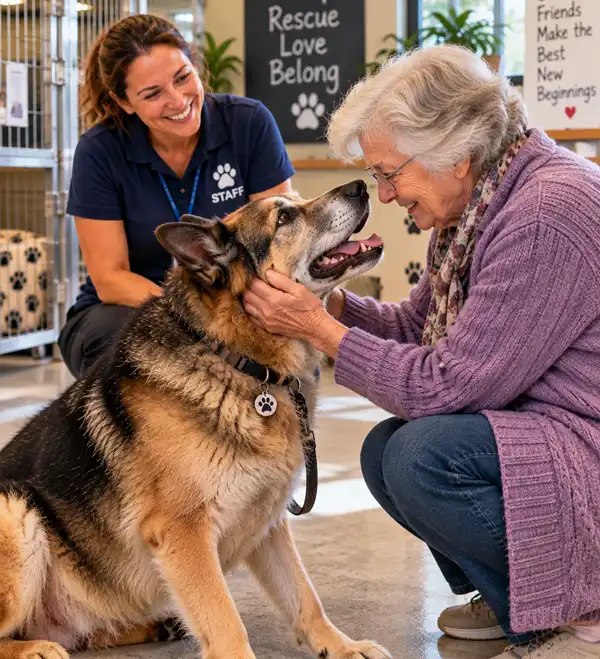
Puppies possess an almost unfair marketing advantage. They are tiny, ridiculous and capable of making otherwise rational adults speak in voices they would strongly deny using in public. Senior dogs have to compete with that, and consequently older animals can sometimes receive less attention from prospective adopters.
Yet a senior shelter dog may be exactly what some households need. Older dogs often have established personalities, making it easier to understand their activity level and temperament. Some already know household routines and basic behaviors, and many are quite content with a comfortable bed, regular walks and the reassuring knowledge that dinner will arrive on schedule.
Senior dogs may require additional veterinary care, and anyone considering adoption should understand known medical conditions and likely costs. But age shouldn't automatically disqualify a dog from consideration. For the right person, providing a comfortable home during an older dog's later years can create an extraordinarily rewarding relationship.
Besides, senior dogs have accumulated wisdom.
Most of that wisdom concerns locating food, but wisdom is wisdom.
Why Shelter Adoption Matters
When someone adopts a dog from a shelter or rescue organization, the effect can extend beyond that single animal. The adopted dog gains a home, while the shelter gains space and resources that can be used to help another animal. The ASPCA describes this broader impact as a reason adoption and fostering can help organizations caring for large numbers of animals.
Adoption also gives people an opportunity to consider animals they might otherwise overlook. Large dogs, senior dogs and animals with particular medical or behavioral needs can sometimes wait longer for suitable homes. That doesn't mean everyone should deliberately choose the most challenging dog available. Successful adoption still depends on matching the animal with a household capable of meeting its needs.
The important word is match. Adoption shouldn't be driven by guilt. It should be driven by the realistic possibility of creating a good life together.
How to Celebrate Adopt a Shelter Dog Month
If you are genuinely ready to add a dog to your household, October is an excellent month to visit a local animal shelter or reputable rescue organization and begin looking. Don't rush. Talk with staff, meet several dogs, ask questions and allow yourself to discover that the dog you eventually adopt may bear absolutely no resemblance to the one you imagined before walking through the door.
People who already share their lives with adopted dogs can celebrate by telling their adoption stories, supporting the organization that brought them together or donating in their dog's honor. A photograph showing what a former shelter dog looks like after settling into a home can be a powerful advertisement for adoption, particularly if the photograph shows the dog occupying an expensive sofa while the human who purchased it sits somewhere else.
Schools, businesses and community groups can organize supply drives or fundraisers for local shelters. Families can volunteer together where age requirements permit. Even something as simple as sharing accurate information about responsible adoption can help.
And, naturally, existing shelter-dog owners can celebrate by giving their dog an extra treat. Your dog will have absolutely no idea why October is significant, but is unlikely to object to the arrangement.
Adoption FAQ
Adopting a shelter dog is exciting, but it should also come with plenty of questions. After all, you are not choosing a new lamp or deciding which toaster looks best on the kitchen counter. You are bringing home a living companion who may be part of your family for many years. Here are some common questions prospective adopters may want answered before somebody starts wagging a tail and completely ruins their ability to make an impartial decision.
When is Adopt a Shelter Dog Month?
Adopt a Shelter Dog Month is observed throughout October. The month encourages people who are ready to welcome a dog into their lives to consider adopting from an animal shelter or rescue organization. It also promotes fostering, volunteering and other ways of supporting homeless dogs.
Why should I adopt a dog from an animal shelter?
Adopting from a shelter gives a dog the opportunity to join a permanent home while also creating space and resources that may allow the organization to help another animal. Shelters and rescue groups also offer dogs of many different ages, sizes, personalities and backgrounds, giving prospective owners an opportunity to find a companion suited to their household.
How do I know which shelter dog is right for me?
Consider your lifestyle, available space, activity level, work schedule, family members and existing pets. Talk honestly with shelter employees or foster caregivers about what you can provide and ask what they know about each dog's personality and needs. The dog you find most attractive isn't necessarily the dog who will be happiest living with you.
Are shelter dogs more likely to have behavioral problems?
Not necessarily. Dogs enter shelters for many reasons, including changes in housing, family circumstances, financial difficulties, an owner's illness or death, or simply becoming lost. Some dogs may need additional training or behavioral support, while others adjust readily to their new homes. Ask the shelter what is known about an individual dog's history and behavior rather than making assumptions simply because the animal is in a shelter.
Should I adopt a puppy or an adult dog?
That depends on your household and the amount of time you can devote to your new companion. Puppies require considerable supervision, socialization and training, while adult dogs have more established personalities and may already possess useful household skills. Senior dogs can also make wonderful companions, particularly for people looking for a calmer animal.
How much does it cost to adopt a shelter dog?
Adoption fees vary between shelters and rescue organizations. The adoption fee is only part of the financial commitment, however. Dog owners should also budget for food, veterinary care, preventive medications, grooming where necessary, training, toys and other supplies, as well as unexpected medical expenses.
What should I ask before adopting a shelter dog?
Ask about the dog's known medical history, vaccinations, temperament, activity level, training and behavior around people and other animals. You may also want to know whether the dog is house-trained, comfortable on a leash or has any special dietary, medical or behavioral needs. The more information you have before adoption, the easier it is to decide whether you and the dog are likely to make a good team.
How long does it take an adopted dog to settle into a new home?
There is no universal timetable. Some dogs appear comfortable remarkably quickly, while others need considerably longer to relax and understand their new surroundings. A predictable routine, patience, gentle handling and consistent expectations can help. Don't expect a newly adopted dog to understand the household rulebook immediately, particularly since nobody remembered to give the dog a copy.
Should I take my newly adopted dog to a veterinarian?
Yes. Even when a shelter has already provided veterinary care, adopters should review the dog's medical records and establish a relationship with their own veterinarian. A veterinary visit soon after adoption provides an opportunity to discuss vaccinations, parasite prevention, diet, dental care, existing medical conditions and the dog's future healthcare needs.
Can I help during Adopt a Shelter Dog Month if I can't adopt?
Absolutely. You can foster a dog, volunteer at a local shelter, donate money or requested supplies, support adoption events or share profiles of dogs looking for homes. Simply recognizing that you are not currently able to make the long-term commitment required for adoption is also responsible pet ownership — even if you haven't actually acquired the pet.
Is adopting a shelter dog a lifetime commitment?
It should be approached that way. Dogs depend upon their owners for food, healthcare, exercise, safety and companionship throughout their lives. Circumstances can sometimes change unexpectedly, but anyone considering adoption should begin with the intention and realistic ability to provide a permanent home.
And if everything goes according to plan, the shelter dog you generously agreed to give a home will eventually own the sofa, supervise your meals and establish exactly when you are expected to get out of bed each morning. Adoption is a partnership, although nobody said the management structure would be equal.
A Home Is More Than an Address
The heart of Adopt a Shelter Dog Month isn't really about acquiring a pet. It is about making a commitment to another living creature and providing the stability, care and companionship that allow a dog to become part of a family.
For some dogs, the journey from shelter kennel to household sofa happens quickly. Others wait much longer for someone whose circumstances fit their needs. Each has an individual personality and story, and each deserves to be considered as more than a photograph, breed label or number on a kennel door.
If this October is the right time for you to adopt, visit a shelter, ask questions and keep an open mind. You may walk through the door believing you know exactly what sort of dog you're looking for and walk back out attached to something entirely different.
That's one of the hazards of shelter adoption.
Sometimes the dog adopts you first.