When a Vegetable Walks Into a Bar!
There are some combinations in life that make perfect sense. Strawberries and cream. Fish and chips. Coffee and mornings. Then there's rhubarb and vodka, a partnership that sounds suspiciously like the result of someone cleaning out the vegetable drawer after a particularly enthusiastic evening. Yet this unlikely pairing has earned its very own celebration: National Rhubarb Vodka Day, observed annually on the first Saturday in December.
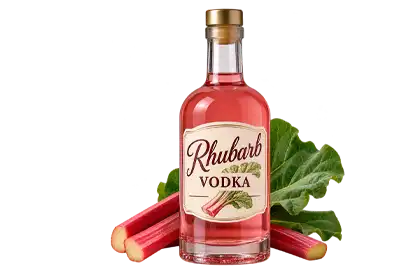
This unusual food and drink holiday celebrates the distinctive flavor of rhubarb vodka, a spirit that combines the tart, tangy character of rhubarb with the clean, neutral qualities of vodka. The result can be refreshingly sharp, pleasantly sweet, and surprisingly versatile. Whether enjoyed in a cocktail, served over ice, or used to create a festive drink, rhubarb vodka proves that vegetables occasionally have ambitions far beyond the dinner plate.
Of course, rhubarb has always been something of an odd character. It looks like celery, tastes like a lemon that's having a difficult day, and frequently turns up in desserts pretending to be fruit. Now it's found its way into the drinks cabinet. Frankly, the carrots must be furious.
What Is National Rhubarb Vodka Day?
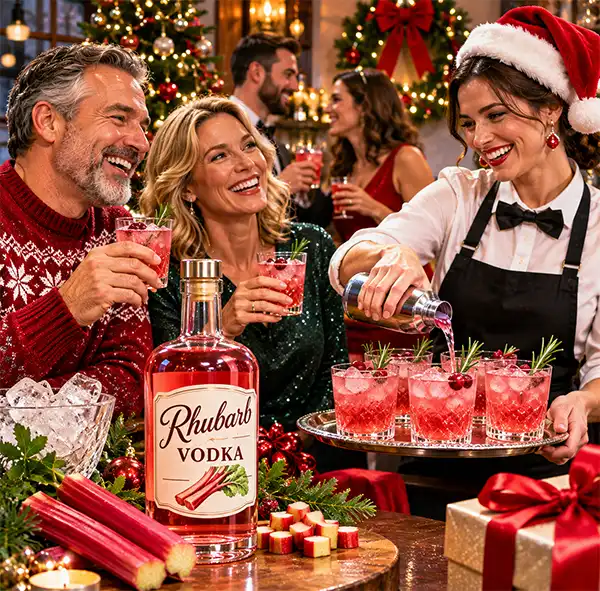
National Rhubarb Vodka Day is an unofficial American observance dedicated to celebrating rhubarb-flavored vodka and the creative possibilities of combining this distinctive plant with one of the world's most versatile distilled spirits. Unlike holidays associated with historic battles, famous birthdays, or important national events, this occasion is primarily about appreciating an unusual flavor combination and perhaps discovering a new favorite cocktail.
The observance was established in 2013 through National Day Calendar and takes place on the first Saturday in December. Its timing makes it particularly suitable for festive gatherings, winter entertaining, and experimenting with seasonal drinks. Although rhubarb is generally harvested in spring and early summer, rhubarb-flavored spirits and prepared infusions can be enjoyed throughout the year.
The celebration also provides an opportunity to explore rhubarb's fascinating history, learn about flavored vodka, and appreciate how traditional ingredients can find unexpected new uses. After all, the person who first decided to combine rhubarb with alcohol was clearly thinking outside the vegetable patch.
The History of National Rhubarb Vodka Day
National Rhubarb Vodka Day was proclaimed in December 2013 by National Day Calendar, which established the annual celebration for the first Saturday in December. While it isn't a federal holiday and nobody is likely to receive a paid day off to contemplate a bottle of rhubarb vodka, the occasion has become part of the growing collection of American food and beverage observances.
The holiday reflects a wider interest in flavored spirits, craft cocktails, and creative ingredients. Over recent decades, bartenders and drinks producers have increasingly experimented with botanical flavors, herbs, spices, fruits, and vegetables. Rhubarb fits naturally into this movement because its pronounced acidity offers something different from the sweetness of more conventional fruit flavors.
The precise history of the first rhubarb vodka infusion is difficult to establish. People have been flavoring alcoholic drinks with plants and fruits for centuries, and rhubarb's popularity in European kitchens made it a natural candidate for experimentation. However, there is no reliable evidence identifying one individual as the inventor of rhubarb vodka. Whoever first attempted it deserves credit for considerable imagination—and possibly for having an exceptionally productive rhubarb plant.
What Exactly Is Rhubarb?
Rhubarb is a hardy perennial plant belonging to the buckwheat family, Polygonaceae. Its botanical name is commonly given as Rheum rhabarbarum, and it is cultivated primarily for its thick, fleshy leaf stalks, known as petioles. These stalks range in color from green to pink and deep red, depending on the variety and growing conditions.
Although rhubarb is often treated as a fruit in the kitchen, particularly in pies, crumbles, jams, and desserts, botanically it is a vegetable. Its naturally sour flavor comes from organic acids, including malic and oxalic acids. Because of this tartness, rhubarb is frequently combined with sugar or sweeter fruits such as strawberries, apples, and raspberries.
Rhubarb has an especially strong association with British cooking, where rhubarb crumble and rhubarb pie have long been familiar favorites. It is also widely cultivated in cooler regions of Europe and North America. Its popularity in traditional desserts helps explain why its distinctive flavor has found an enthusiastic audience in modern drinks.
One important warning: only the rhubarb stalks should be used in food or drink preparation. Rhubarb leaves are poisonous and must never be consumed or used in infusions. The leaves contain high concentrations of oxalic acid and other potentially harmful compounds. It's a rather dramatic defense mechanism for a plant best known for appearing beneath custard.
From Ancient Medicine to Modern Cocktails: The History of Rhubarb
Rhubarb has a history stretching back thousands of years. Certain rhubarb species were used in traditional Chinese medicine, particularly for preparations made from their roots. These medicinal varieties were valued long before the familiar garden rhubarb became a regular feature of European kitchens.
Rhubarb gradually became established in Europe, where its edible stalks gained popularity as a culinary ingredient. By the eighteenth and nineteenth centuries, it was increasingly associated with pies, preserves, and sweetened desserts. The development of affordable sugar helped make rhubarb's naturally sharp flavor more appealing to a wider audience.
In Britain, rhubarb became especially popular in Yorkshire, where the famous Rhubarb Triangle developed a distinctive method of growing forced rhubarb in dark, heated sheds. This technique produces tender stalks that are harvested under low-light conditions. Some growers traditionally used candlelight, giving rhubarb the rather romantic distinction of being a vegetable that occasionally requires mood lighting.
Today, rhubarb appears in everything from cakes and chutneys to sauces, sparkling drinks, gin, and vodka. It has traveled an impressive distance from ancient medicinal preparations to modern cocktail menus, although it still hasn't entirely escaped the custard.
Why Rhubarb and Vodka Make Such an Interesting Combination
Vodka is traditionally prized for its relatively neutral flavor, making it an excellent base for infusions. Unlike spirits with pronounced barrel-aged or botanical characteristics, vodka generally allows added ingredients to take center stage. When rhubarb is introduced, its bright acidity and distinctive tartness become the defining features of the drink.
Rhubarb-flavored vodka can have a pleasantly sharp character that balances well with sweetness. Depending on the ingredients and preparation method, it may develop delicate fruity notes, a subtle vegetal quality, and an attractive pink or reddish appearance. The finished color varies considerably because rhubarb stalks themselves range from green to deep red, and not every infusion turns the same shade.
This balance between acidity and sweetness makes rhubarb vodka particularly useful in cocktails. It pairs naturally with lemon, lime, ginger, strawberries, raspberries, and sparkling mixers. A little sweetness can soften the sharpness, while citrus or ginger can emphasize its refreshing qualities.
The trick is balance. Too much sugar and the drink begins to resemble liquid rhubarb pie. Too little, and it may taste as though someone has persuaded a vegetable to hold a grudge.
How Is Rhubarb Vodka Made?
Rhubarb vodka is commonly produced by infusing edible rhubarb stalks in vodka, allowing the alcohol to extract some of the plant's flavor and color. Commercial producers may use carefully controlled infusion methods, flavoring ingredients, or other production techniques to create a consistent finished product.
Traditional homemade infusions generally begin with washed, trimmed rhubarb stalks cut into small pieces. The stalks are combined with vodka in a clean, food-safe container, sometimes with sugar to balance the tartness. Over time, the liquid takes on rhubarb's distinctive flavor, after which the solids are removed.
The length of an infusion depends on the preparation, the size of the rhubarb pieces, and the desired intensity. It is important to follow a reliable recipe, use properly cleaned equipment, and remember that adding fresh produce or other ingredients changes the characteristics of the finished mixture. Homemade flavored spirits should not automatically be assumed to have an indefinite shelf life.
And once again, the leaves have absolutely no place in the process. They are not a garnish, a flavor enhancer, or an opportunity for culinary adventure. They belong in the discard pile.
Popular Ways to Enjoy Rhubarb Vodka
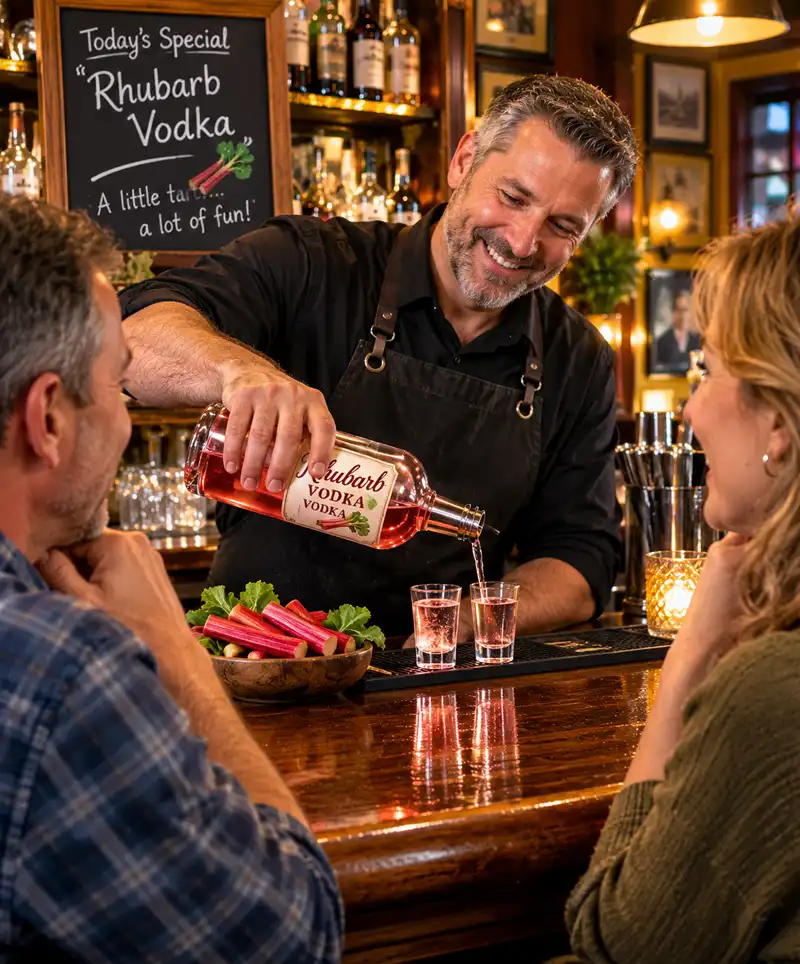
Rhubarb vodka is a versatile ingredient that can be used in several styles of cocktails. Its bright flavor works particularly well in drinks that balance acidity, sweetness, and refreshing mixers. Bartenders may pair it with tonic water, soda water, ginger beer, citrus juice, or fruit-based ingredients, depending on the character of the vodka.
A rhubarb vodka and tonic offers a straightforward variation on a familiar mixed drink. The bitterness of tonic water can complement rhubarb's tartness, while a slice of lime adds a fresh citrus aroma. A rhubarb vodka spritz, made with a sparkling mixer, offers a lighter-tasting option for gatherings and celebrations.
For something more adventurous, rhubarb vodka can be incorporated into a sour-style cocktail using lemon juice and a suitable sweetener. It also pairs well with strawberry flavors, creating a combination inspired by the classic strawberry-rhubarb desserts enjoyed in kitchens across Britain and North America.
Those who prefer not to drink alcohol can still join the celebration of rhubarb's flavor by preparing a rhubarb cordial or syrup and combining it with sparkling water, ginger ale, or lemonade. The result provides the tart, refreshing character without the vodka. And nobody has to explain to the vegetable why it wasn't invited into the liquor cabinet.
How to Celebrate National Rhubarb Vodka Day
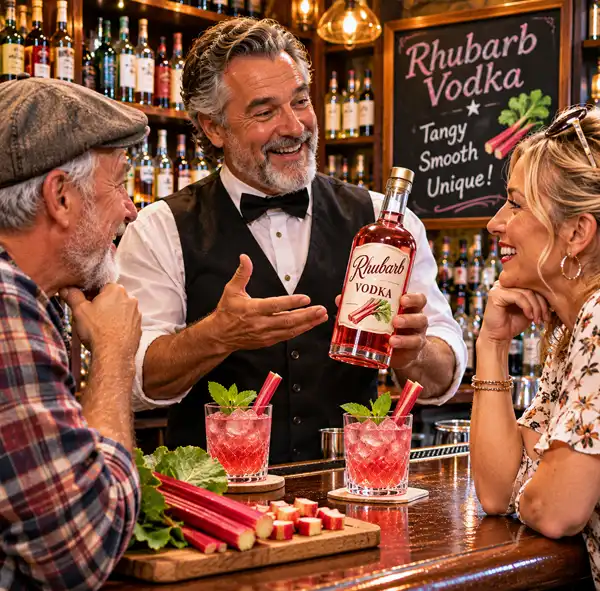
National Rhubarb Vodka Day is an opportunity to appreciate an unusual ingredient, learn something new, and enjoy the occasion responsibly. Whether you're interested in mixology, gardening, food history, or simply the wonderfully strange world of unofficial holidays, there are several ways to participate.
- Discover rhubarb vodka: Adults who choose to drink can explore its flavor and how it differs from more familiar fruit-flavored spirits.
- Experiment with cocktail flavors: Learn how rhubarb complements ginger, citrus, berries, and sparkling mixers.
- Try a nonalcoholic rhubarb spritz: Combine rhubarb cordial with sparkling water and a little lemon for a refreshing alternative.
- Learn about rhubarb's history: Explore its journey from traditional medicinal uses to British desserts and modern beverages.
- Make a rhubarb dessert: Celebrate the plant itself with rhubarb crumble, pie, or a strawberry-rhubarb recipe.
- Share some rhubarb trivia: Surprise friends with the news that rhubarb is a vegetable and that its leaves are poisonous.
- Support a local restaurant or bar: See whether a local establishment features rhubarb-inspired drinks or desserts.
If alcohol is part of your celebration, keep portions moderate, respect legal drinking-age requirements, and never drive after drinking. The purpose of the holiday is to enjoy an interesting flavor, not to discover whether your car can navigate home using its own initiative.
Interesting Facts About Rhubarb and Vodka
Rhubarb and vodka both have fascinating histories, and their combination provides plenty of material for conversation. Here are a few facts worth sharing on National Rhubarb Vodka Day.
- Rhubarb is a vegetable: Despite its popularity in fruit pies, rhubarb is botanically classified as a vegetable.
- Rhubarb belongs to the buckwheat family: It is related to plants such as sorrel rather than celery, despite the resemblance.
- Rhubarb stalks come in several colors: They may be green, pink, or red, and greener stalks are not necessarily unripe.
- Rhubarb leaves are poisonous: Only the edible stalks should be used in food and beverages.
- Rhubarb is a perennial: Established plants can return and produce stalks year after year.
- Yorkshire is famous for forced rhubarb: Growers traditionally produce tender stalks in dark sheds, sometimes harvesting by candlelight.
- Vodka provides a versatile infusion base: Its relatively neutral character allows flavors such as rhubarb to become prominent.
- National Rhubarb Vodka Day moves each year: The holiday is celebrated on the first Saturday in December rather than on a fixed calendar date.
Why National Rhubarb Vodka Day Deserves a Place on the Calendar
At first glance, National Rhubarb Vodka Day might seem like one of those observances created because the calendar had a spare Saturday and somebody had access to a drinks cabinet. But behind the amusing name is a surprisingly interesting story about agriculture, culinary traditions, botanical history, and the continuing creativity of modern food and beverage culture.
Rhubarb is an excellent example of how familiar ingredients can find entirely new roles. For generations, it was best known for appearing in pies, crumbles, and preserves. Today, its distinctive acidity and flavor are being explored in cocktails, cordials, sauces, and a wide range of contemporary recipes.
The holiday also reminds us that food traditions are constantly evolving. An ingredient doesn't have to abandon its history to become part of something new. Rhubarb can remain a beloved ingredient in a traditional British crumble while simultaneously appearing in a modern cocktail glass.
And perhaps that's the real charm of National Rhubarb Vodka Day. It celebrates a vegetable that refuses to stay in its assigned department.
Raise a Glass to National Rhubarb Vodka Day!
Every first Saturday in December, National Rhubarb Vodka Day offers an entertaining excuse to celebrate one of the culinary world's more surprising partnerships. From rhubarb's ancient history and traditional British desserts to modern flavored spirits and creative cocktails, this unusual holiday has considerably more substance than its name might suggest.
Whether you enjoy a carefully prepared rhubarb vodka cocktail, experiment with a nonalcoholic rhubarb drink, or settle down with a generous helping of rhubarb crumble, there's no shortage of ways to appreciate this wonderfully tart plant.
So here's to rhubarb: the vegetable that conquered the dessert menu, invaded the drinks cabinet, and somehow persuaded the calendar to give it a day of its own.
Just remember to leave the leaves out of it.
National Rhubarb Vodka Day – Checkiday – Observance date, history, and National Day Calendar proclamation. Rhubarb – University of Connecticut Extension – Botanical characteristics, cultivation, and safety. Growing Rhubarb – University of Minnesota Extension – Rhubarb varieties, stalk colors, and harvesting. Grow Your Own Rhubarb – Oregon State University Extension – Rhubarb history and cultivation. Rhubarb Leaves Poisoning – MedlinePlus – Information about the dangers of rhubarb leaves. Preparing Rhubarb – University of Illinois Extension – Rhubarb preparation and culinary uses.References & Sources