A Not-So-Pie Pie
National Boston Cream Pie Day, celebrated every October 23, honors a delicious American dessert that has been living under an assumed identity for generations. Despite its name, Boston Cream Pie is actually a cake, featuring tender layers of sponge cake, luscious vanilla pastry cream, and a magnificent coating of chocolate glaze. Born in Boston, Massachusetts, and famous for confusing dessert lovers everywhere, this culinary masterpiece proves that a little identity crisis is perfectly acceptable when chocolate and custard are involved. After all, nobody has ever taken a bite of Boston Cream Pie and demanded to see its birth certificate!
The Dessert That Can’t Decide What It Is
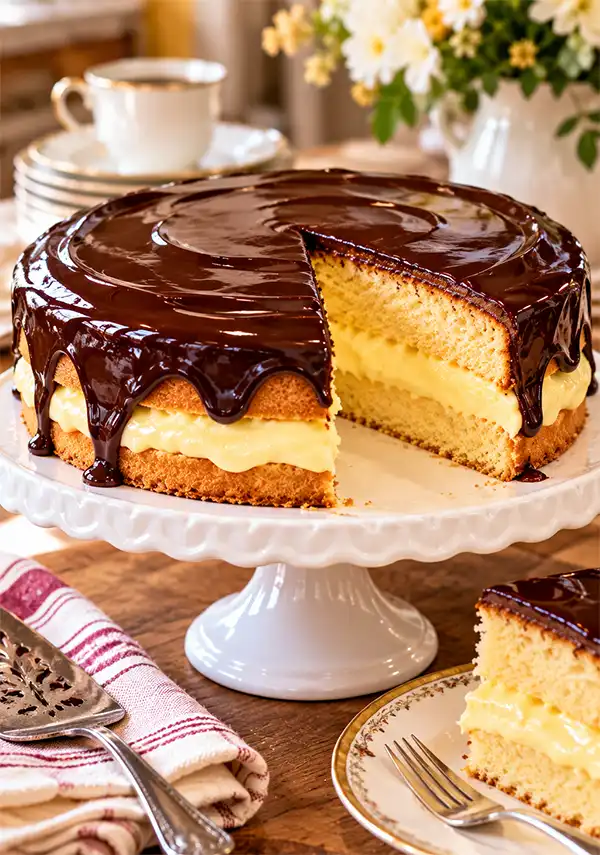
Boston Cream Pie is one of America's most beloved traditional desserts, combining the delicate texture of sponge cake with rich vanilla custard and a smooth, glossy chocolate topping. The classic dessert consists of two layers of light cake surrounding a generous filling of vanilla pastry cream, finished with chocolate glaze that spreads across the top and sometimes drips invitingly down the sides. The combination creates a delightful contrast of flavors and textures: airy cake, velvety custard, and the satisfying richness of chocolate. It is the sort of dessert that makes an ordinary afternoon feel like a special occasion, even if the occasion is simply discovering that somebody has left a cake unattended in the refrigerator.
The most obvious question surrounding Boston Cream Pie is also the one that has puzzled generations of dessert enthusiasts: why is it called a pie when it is clearly a cake? The explanation lies partly in nineteenth-century American baking traditions, when the distinction between cakes and pies was not always as rigid as it is today. Early bakers sometimes used pie tins to prepare cakes, and certain filled or layered cakes were described as pies. The terminology reflected the baking equipment and culinary conventions of the period rather than the modern expectation that a pie must have a pastry crust. Consequently, Boston Cream Pie inherited a name that made reasonable sense to earlier generations but now leaves modern diners wondering whether the dessert has been deliberately misleading them.
Unlike traditional fruit pies, cream pies, or custard pies, Boston Cream Pie does not require a flaky pastry shell. Its foundation is a soft sponge-style cake that must be sturdy enough to support the filling while remaining tender and moist. Between the layers sits pastry cream, a cooked custard traditionally prepared with milk, eggs or egg yolks, sugar, vanilla, and a thickening ingredient such as cornstarch or flour. The crowning glory is a chocolate glaze or ganache, which supplies the unmistakable appearance associated with the dessert. Each component has a specific purpose, and when properly combined, they produce something far greater than the sum of their ingredients. This is especially impressive considering that the ingredients themselves are essentially having a meeting to decide whether they belong in a cake, a pie, or a particularly ambitious pudding.
A Sweet Beginning in Boston
The history of Boston Cream Pie is closely associated with the historic Parker House Hotel in downtown Boston, Massachusetts. The hotel opened in 1855 under the ownership of Harvey D. Parker and became one of the city's best-known establishments, attracting travelers, prominent public figures, and diners seeking refined accommodations and excellent food. The Parker House developed a distinguished culinary reputation, eventually becoming associated with two celebrated American specialties: Parker House rolls and Boston Cream Pie. Today, the establishment operates as the Omni Parker House, preserving an important connection to Boston's hospitality and culinary history. For anyone interested in American food traditions, the hotel represents a remarkable example of how a nineteenth-century kitchen could create recipes that continue attracting attention generations later.
The dessert's creation is traditionally credited to a French chef known as Sanzian, who worked at the Parker House during its early years. Hotel tradition places the invention around 1856, shortly after the establishment opened. However, the precise circumstances surrounding the original recipe are not fully documented, and food historians have noted that similar filled cakes existed before the Parker House version became famous. The chef's contribution is generally understood to have involved developing or popularizing a distinctive combination of sponge cake, cream filling, and chocolate topping that became associated with Boston. Rather than inventing cake, custard, and chocolate from scratch—which would have been a remarkably busy afternoon—he helped bring familiar elements together in a form that developed its own enduring identity.
Early versions of the Parker House dessert were reportedly known as Parker House Chocolate Cream Pie, and historical descriptions suggest that the original preparation differed somewhat from the familiar modern cake. Some accounts describe the use of chocolate icing alongside decorative touches such as powdered sugar and other embellishments. Over time, recipes evolved as home bakers, commercial bakeries, and restaurants developed their own interpretations. The essential combination of cake, custard, and chocolate remained, eventually becoming the recognizable Boston Cream Pie enjoyed throughout the United States. As with many famous historical recipes, there is no single surviving account that settles every question about its earliest preparation. Fortunately, this uncertainty has never prevented anyone from ordering another slice.
Chocolate itself played an important role in making Boston Cream Pie distinctive. During the nineteenth century, chocolate was becoming increasingly accessible as improvements in manufacturing made it easier to use in cooking and confectionery. Chocolate coatings were an appealing addition to cakes and pastries, and their combination with vanilla custard created a flavor pairing that remains popular today. The contrast between slightly bittersweet chocolate and sweet, creamy vanilla helped distinguish Boston Cream Pie from other filled cakes. Although modern chocolate ganache often uses chocolate and heavy cream, older recipes employed different types of chocolate icing and glaze. The details may have changed, but the basic principle has remained wonderfully consistent: when in doubt, put chocolate on top.
From Hotel Specialty to Massachusetts Legend
The Parker House quickly became part of Boston's cultural and culinary identity, and its famous dessert gradually gained recognition far beyond the hotel's dining rooms. Boston Cream Pie appeared in cookbooks, restaurant menus, and home kitchens, where bakers adapted the recipe to suit their ingredients and equipment. As commercial baking developed and prepared cake mixes became increasingly common, variations of the dessert became accessible to people who had never visited Massachusetts. The familiar combination of sponge cake, vanilla custard, and chocolate topping proved especially adaptable, allowing Boston Cream Pie to remain recognizable even as recipes changed. It was an impressive achievement for a dessert that began with a questionable name and went on to develop an exceptionally respectable reputation.
Boston Cream Pie became so closely associated with Massachusetts that the state officially adopted it as its state dessert in 1996. The designation followed legislative consideration of several possible contenders, including other foods associated with the Commonwealth. The decision gave Boston Cream Pie an official place in Massachusetts culinary heritage, recognizing both its historical association with Boston and its enduring popularity. The designation also created a wonderfully entertaining distinction: Massachusetts has an official state dessert that is called a pie but is actually a cake. One can only imagine the legislative discussions required to resolve such a matter. Presumably, the most productive committee meetings involved extensive sampling.
The dessert's recognition reflects the broader importance of regional specialties in American food culture. Just as Key lime pie is associated with Florida and certain cheesecakes are closely identified with New York, Boston Cream Pie has become a symbol of the city where it achieved fame. Its name immediately evokes Boston, even among people who know little about the Parker House or the dessert's nineteenth-century origins. Regional foods often preserve stories about immigration, local ingredients, changing tastes, and the development of American hospitality. Boston Cream Pie is especially interesting because its traditional association with a French chef illustrates how European culinary techniques helped influence distinctly American dishes. In this case, international culinary cooperation produced a dessert that Americans have been happily misidentifying ever since.
What Makes the Perfect Boston Cream Pie?
A truly excellent Boston Cream Pie depends upon the quality and balance of its three essential components. The cake should be light, tender, and flavorful without becoming so delicate that it collapses beneath the filling. Traditional recipes frequently use sponge cake or a similar butter-based cake, depending upon the baker's preferred method. Eggs contribute structure, while careful mixing and baking help produce the soft texture that distinguishes the dessert. A cake that is too dry can overwhelm the delicate custard, while one that is excessively dense may turn the finished dessert into a rather demanding exercise for the dessert fork. The goal is a cake that supports its companions without insisting on being the center of attention.
The vanilla pastry cream is equally important because it supplies much of Boston Cream Pie's characteristic richness. Unlike ordinary whipped cream, pastry cream is a cooked custard that thickens as the ingredients are heated together. Milk, sugar, eggs or egg yolks, and starch create a smooth filling that can hold its shape between cake layers when properly prepared and chilled. Vanilla provides the traditional flavor, although some bakers use vanilla beans or high-quality vanilla extract for additional depth. The finished custard should be creamy and substantial without becoming rubbery or excessively stiff. Getting the consistency right requires patience and attention, especially when heating the mixture. Leave it unattended for too long, and you may discover that the custard has decided to become scrambled eggs with ambitions.
The chocolate topping completes the dessert, providing both flavor and visual appeal. Modern recipes commonly use chocolate ganache made by combining chocolate with warm heavy cream until the mixture becomes smooth and glossy. Other recipes use cooked chocolate glaze or icing, reflecting the variety of methods developed over the dessert's long history. The chocolate should complement the sweetness of the cake and custard rather than overpower them. Dark or semisweet chocolate is especially popular because its slightly bitter notes create a pleasant contrast with the vanilla filling. When poured over the cake, the glaze should settle into an attractive coating, sometimes forming gentle drips along the edges. This is the moment when an ordinary layered cake transforms into a Boston Cream Pie and begins behaving as though it deserves its own official state holiday.
Temperature also plays an important role in preparing and serving Boston Cream Pie. Because the filling contains dairy and eggs, the assembled dessert should be refrigerated rather than left at room temperature for extended periods. Chilling allows the pastry cream to firm up, making the cake easier to slice and helping the layers remain neatly assembled. Many bakers prefer to prepare the components in advance, giving the custard sufficient time to cool before spreading it between the cakes. The chocolate glaze can then be added once the cake is assembled. Serving the dessert slightly chilled produces a satisfying contrast between the tender sponge, cool custard, and rich chocolate. It also reduces the possibility of the filling making a dramatic escape across the dessert plate.
A Dessert With Many Delicious Disguises
Boston Cream Pie has inspired an impressive collection of variations, demonstrating that a successful combination of vanilla custard and chocolate can survive almost any culinary transformation. Boston cream doughnuts are among the most familiar examples, featuring soft yeast-raised doughnuts filled with vanilla custard and topped with chocolate icing. These treats capture the essential flavors of Boston Cream Pie in a convenient individual portion, making them especially popular at bakeries and doughnut shops. The connection is obvious, although the doughnut has at least avoided pretending to be a pie. Apparently, one misleading dessert name was sufficient for the entire family.
Boston cream cupcakes offer another popular interpretation, replacing the traditional layered cake with individual sponge cakes filled with pastry cream and finished with chocolate topping. Bakers have also created Boston cream trifles, sheet cakes, poke cakes, and miniature dessert cups. Some versions incorporate additional flavors, such as coffee or caramel, while others experiment with different cake textures or decorative finishes. Although these variations may depart from the traditional Parker House style, they demonstrate the flexibility of the original combination. As long as vanilla custard and chocolate remain prominent, the familiar Boston cream character is easy to recognize. The only real danger is that someone will eventually invent Boston Cream Pie ice cream, put it inside a doughnut, and create a dessert requiring its own structural engineer.
Commercial bakeries and grocery stores have also contributed to the dessert's popularity by offering ready-made versions in different sizes and styles. Some are presented as traditional round layer cakes, while others appear as rectangular cakes or individual pastries. The quality and composition can vary considerably, particularly when commercially prepared fillings replace traditional pastry cream. Nevertheless, the widespread availability of Boston cream desserts demonstrates their continuing appeal. For many Americans, the flavor combination is familiar even if they have never tasted a traditional Boston Cream Pie. A person might recognize Boston cream from a doughnut long before discovering that the original dessert was invented in a hotel kitchen more than a century ago.
How to Celebrate National Boston Cream Pie Day
National Boston Cream Pie Day is celebrated annually on October 23, providing a wonderfully convenient excuse to enjoy one of America's classic desserts. The most traditional way to observe the occasion is to prepare a homemade Boston Cream Pie, complete with tender cake layers, rich vanilla pastry cream, and glossy chocolate glaze. Although the recipe involves several separate steps, home bakers can simplify the process by preparing the custard ahead of time and assembling the dessert once everything has cooled. Experienced bakers may enjoy making every component from scratch, while beginners can use convenient shortcuts to create their own interpretation. The important thing is to enjoy the process and remember that perfection is not essential. If the cake leans slightly to one side, simply explain that it is a historically accurate representation of Boston's occasionally uneven streets.

For those who prefer eating to baking, visiting a local bakery or pastry shop is an equally respectable celebration. Many bakeries prepare traditional Boston Cream Pie, while others offer Boston cream doughnuts, cupcakes, or miniature cakes. Purchasing a professionally made dessert provides an opportunity to appreciate the skills involved in pastry preparation without covering the kitchen in flour, chocolate, and increasingly desperate attempts to locate the whisk. You could even organize a small tasting session, comparing different versions to determine which offers the best balance of cake, custard, and chocolate. This activity should ideally involve several volunteers, particularly if you want the results to appear scientifically credible. Naturally, somebody must accept the difficult responsibility of sampling the leftovers.
A visit to Boston offers another memorable way to celebrate the occasion. The historic Omni Parker House remains closely associated with the dessert's origins and continues to feature Boston Cream Pie as part of its culinary heritage. Sampling the famous specialty in the city where it became established offers a delicious connection to American food history. Visitors can also explore Boston's historic neighborhoods, cultural landmarks, and celebrated dining traditions while learning about the city's influence on American cuisine. Of course, traveling all the way to Massachusetts for a slice of cake may seem excessive to some people. Those people have clearly never encountered a sufficiently persuasive chocolate glaze.
Hosting a Boston Cream Pie party is another entertaining possibility, especially for friends and family who enjoy unusual food traditions. Invite guests to bring their favorite version of the dessert, whether it is a traditional layered cake, a batch of Boston cream cupcakes, or a selection of custard-filled doughnuts. A friendly competition can recognize the best flavor, most attractive presentation, or most creative interpretation. You might also include a lighthearted quiz about foods with misleading names, such as sweetbreads, Welsh rabbit, or buffalo wings. Boston Cream Pie will undoubtedly make a strong showing in any discussion about culinary confusion, although the final decision should probably be made after dessert rather than before. Hungry judges are notoriously unreliable.
Families with children can turn National Boston Cream Pie Day into an enjoyable educational activity by exploring the history and science of baking. Younger participants can help measure ingredients, mix cake batter, or decorate the finished dessert under adult supervision. Older children may enjoy learning how heat thickens custard, how eggs contribute structure to sponge cake, and why melted chocolate becomes smooth and glossy when combined with cream. The activity introduces basic cooking techniques while encouraging curiosity about food history and regional traditions. It also provides an opportunity to explain that recipes, like languages, evolve over time and sometimes preserve names that no longer seem entirely logical. Children may find this fascinating, although they will probably be more interested in determining when they are allowed to lick the spoon.
Sharing Boston Cream Pie with neighbors, friends, or coworkers is another thoughtful way to celebrate. A homemade cake can brighten a gathering, while individual cupcakes or doughnuts are convenient for distributing among a larger group. Consider including a short note explaining that October 23 is National Boston Cream Pie Day and that the dessert is officially recognized by Massachusetts. Such small details can turn an ordinary sweet treat into an interesting conversation starter. You may even encounter someone who insists that Boston Cream Pie is a pie because the name clearly says so. Resist the temptation to argue. Offer them another slice instead. Chocolate has resolved many disagreements more successfully than logic.
A Sweet Slice of American History
Boston Cream Pie has remained popular because it combines familiar ingredients in a particularly satisfying way. Its delicate cake, smooth vanilla filling, and rich chocolate topping appeal to generations of dessert lovers, while its unusual name provides a memorable connection to nineteenth-century baking traditions. From its association with the Parker House Hotel to its designation as Massachusetts' official state dessert, the confection has become part of America's culinary heritage. It also demonstrates how a successful recipe can evolve without losing the characteristics that made it special in the first place. The equipment, techniques, and presentation may change, but the combination of cake, custard, and chocolate continues to inspire enthusiastic appreciation.
Ultimately, National Boston Cream Pie Day is about more than enjoying a delicious dessert. It celebrates culinary creativity, regional history, and the simple pleasure of sharing something sweet with others. Whether you bake a traditional version, purchase a slice from your favorite bakery, or enjoy a Boston cream doughnut with your morning coffee, October 23 offers an excellent opportunity to appreciate this enduring American classic. And if someone questions why a cake insists on calling itself a pie, remind them that Massachusetts has already settled the matter officially. When a dessert has been fooling people for generations and still manages to earn a government endorsement, perhaps it deserves to keep its little secret.
So raise your dessert fork, admire that magnificent chocolate glaze, and celebrate National Boston Cream Pie Day in the most appropriate way possible: with a generous slice of cake masquerading as pie. Just don't tell the apple pies. They've been suspicious for years.