
A Sandwich Meat With a Surprisingly Distinguished Family Tree
Every October 24, National Bologna Day honors one of America's most recognizable deli meats, a versatile cooked sausage that has occupied lunchboxes, refrigerator drawers, picnic baskets, and diner menus for generations. Although bologna is often associated with inexpensive sandwiches and childhood meals, its history reaches far beyond the modern supermarket. The familiar smooth, pink slices are descendants of European sausage-making traditions, particularly mortadella from the Italian city of Bologna. That gives the modest American lunch meat a rather distinguished ancestry, even if its most common social engagement involves processed cheese, yellow mustard, and two slices of bread that have seen better days.
National Bologna Day is an unofficial American food observance celebrated annually on October 24. Its original creator and the precise year of its establishment have not been reliably documented, and there is no established federal proclamation creating the holiday. Nevertheless, it appears regularly on food celebration calendars and has attracted recognition from organizations associated with the American meat and sausage industry. The National Hot Dog and Sausage Council, for example, has promoted the occasion through recipes and educational campaigns explaining the history and varieties of bologna. That is particularly appropriate because bologna is technically a sausage, a fact that may surprise anyone who has spent a lifetime regarding it as something manufactured specifically to fit between two slices of sandwich bread.
The name bologna comes from Bologna, a historic city in northern Italy celebrated for its extraordinary culinary traditions. Located in the Emilia-Romagna region, Bologna is associated with pasta, rich meat sauces, traditional cheeses, and the famous sausage known as mortadella. Italian mortadella is generally made from finely ground pork blended with distinctive cubes of pork fat and carefully selected seasonings. Some varieties contain pistachios or other ingredients, creating a product that differs noticeably from the uniformly smooth American version. Mortadella Bologna has protected geographical indication status in the European Union, recognizing its association with established production traditions. In other words, the American bologna sandwich has an Italian relative with a prestigious culinary pedigree, which is rather like discovering that the family member who spends every afternoon watching television is distantly related to European nobility.

From Ancient Sausages to Modern Bologna
The history of mortadella reaches back centuries, with traditions associated with the ancient Roman world and the development of meat preservation techniques in northern Italy. Historical evidence includes a Roman-era stone relief preserved in Bologna's archaeological museum, depicting pigs and a mortar and pestle. The imagery has been connected with early methods of grinding meat and preparing seasoned sausage mixtures. The precise origin of the word mortadella remains debated, with proposed explanations involving the Latin word mortarium, referring to a mortar used for grinding, and historical references to seasoning with myrtle berries. Although the details are uncertain, the broader historical picture is clear: people have been grinding, seasoning, and preserving meat for an extraordinarily long time. The Romans may have built roads, aqueducts, and an empire, but somebody still had to decide what to put in the sandwiches.
By the Renaissance, mortadella had become an established specialty associated with Bologna. Traditional production required considerable skill, particularly in preparing the meat, blending seasonings, and cooking the sausage to achieve its characteristic texture. The product developed a reputation as a regional delicacy, reflecting the importance of pork production and meat preservation within the local economy. As European culinary traditions spread through migration and trade, sausage-making techniques traveled with them. Different communities adapted recipes to available ingredients, local preferences, and changing methods of food preparation. The result was an extraordinary variety of sausages, ranging from heavily smoked and fermented specialties to the mild, finely textured products familiar in modern American delicatessens.
American bologna developed through the interaction of several European sausage-making traditions, including those brought by German and Central European immigrants. German-style sausages were especially influential in Pennsylvania, the Midwest, and other regions where immigrant communities established butcher shops and food businesses. The American product gradually developed a more uniform texture and milder seasoning than many of its European relatives. Advances in commercial meat processing, refrigeration, packaging, and transportation made bologna increasingly affordable and widely available. What had once required the skills of a traditional butcher could now be manufactured consistently, sliced efficiently, and delivered to grocery stores across the country. This was excellent news for busy families and considerably less exciting news for children hoping their lunchboxes might occasionally contain something exotic.
What Exactly Is Bologna Made Of?
Despite its reputation as a mysterious substance whose ingredients are best left unexplored, bologna is a recognizable category of cooked sausage governed by food labeling and production regulations. In the United States, conventional bologna may be made from beef, pork, chicken, turkey, or combinations of permitted meats, depending on the product. The ingredients are finely chopped or ground, blended with seasonings and other permitted ingredients, placed into casings or molds, and cooked. Some varieties are also smoked to develop additional flavor. The finished product has a smooth, uniform texture because the meat and fat are processed into a fine mixture before cooking. The result is the familiar slice that looks remarkably consistent from one end of the package to the other, a quality that is either reassuring or slightly suspicious depending on your relationship with processed meat.
The United States Department of Agriculture classifies bologna among cooked or smoked sausages, alongside products such as frankfurters and certain types of knockwurst. Federal standards regulate the composition and labeling of products sold under these names. The familiar claim that all bologna is made from mysterious scraps or unidentified animal parts is misleading. Ingredients vary by manufacturer, and consumers can check the package label to identify the meats, seasonings, and other ingredients used. Certain specialty sausages may contain organ meats, but such ingredients are not a defining requirement of ordinary bologna. There is no need to summon a forensic investigation every time somebody opens a package, although reading the ingredients is always a sensible idea.
The production process helps explain bologna's distinctive appearance. Finely ground meat is mixed with fat, water, seasonings, and permitted curing ingredients until it forms a consistent mixture. This process, often described as emulsification, distributes fat throughout the product and contributes to its smooth texture. The mixture is then stuffed into casings or formed into larger shapes before being cooked under controlled conditions. Once cooled, it can be sliced into the familiar circular pieces sold at deli counters and supermarkets. The entire process is designed to produce a consistent product with a predictable flavor, appearance, and texture. This makes bologna particularly convenient for sandwiches, although it also raises the philosophical question of why so many people insist on putting perfectly round meat between square pieces of bread.
How Bologna Became an American Lunchbox Legend
Bologna's popularity in the United States grew substantially during the twentieth century as affordable, convenient foods became increasingly important to American households. The expansion of industrial meat processing and refrigeration made packaged lunch meats widely available, while the development of commercially sliced bread helped simplify sandwich preparation. Families could assemble inexpensive meals quickly, and bologna offered a practical source of protein that required little preparation. Its mild flavor appealed to many children, while its relatively low cost made it attractive to households managing limited food budgets. The combination of convenience, affordability, and familiarity helped establish the bologna sandwich as a recognizable feature of American food culture.
During the Great Depression, inexpensive foods played an important role in helping families stretch their grocery budgets. Bologna became associated with economical meals because it could be purchased in manageable quantities and served in several different ways. A simple sandwich required little more than bread, a few slices of meat, and perhaps mustard or mayonnaise. For families with limited resources, such meals provided convenience and a degree of reliability during difficult times. Bologna continued to hold a place in American kitchens through the Second World War and the postwar years, particularly as changing work schedules and school routines increased demand for easily prepared lunches. The sandwich became a practical solution to a recurring household problem: how to feed somebody quickly without turning the kitchen into a full-scale catering operation.
By the middle of the twentieth century, bologna sandwiches had become closely associated with school lunches, family picnics, road trips, and casual meals. Their appeal was partly practical and partly nostalgic. A bologna sandwich could be prepared in minutes, packed into a lunchbox, and eaten without requiring a knife, fork, or instruction manual. Parents appreciated the convenience, while children often enjoyed the familiar taste and uncomplicated presentation. Of course, the contents of a school lunchbox could also influence playground negotiations. A child equipped with bologna, potato chips, and a chocolate cookie possessed valuable trading assets, although the exact exchange rate depended heavily on whether somebody else had brought homemade brownies.
Commercial advertising helped strengthen bologna's place in American popular culture. Oscar Mayer became particularly associated with the product through memorable television commercials and musical jingles. The company's famous advertising campaign featuring a child singing about the spelling of bologna turned an otherwise ordinary lunch meat into a recognizable part of American childhood. For generations of television viewers, the commercial provided an unexpectedly effective spelling lesson, demonstrating that advertising could occasionally accomplish something educational. Many adults who struggle to remember where they left their car keys can still spell bologna because of a song they heard decades ago. Teachers may have spent years explaining spelling rules, but apparently a catchy tune and a sandwich could accomplish the job in thirty seconds.

The Great Bologna Sandwich: A Culinary Institution
The classic American bologna sandwich is a masterpiece of simplicity. Its essential components are sliced bologna and bread, with optional additions including mustard, mayonnaise, cheese, lettuce, tomatoes, onions, and pickles. White sandwich bread remains a traditional choice, although rye, wheat, sourdough, and other varieties can provide different flavors and textures. Some enthusiasts prefer a single thick slice of bologna, while others insist upon a generous stack of thin slices. The choice of condiment can inspire surprisingly passionate debate, particularly between mustard loyalists and mayonnaise enthusiasts. Fortunately, the sandwich is sufficiently adaptable to accommodate almost any reasonable preference, although the introduction of gourmet ingredients may provoke accusations that somebody has forgotten its humble origins.
The traditional bologna-and-cheese sandwich is especially popular because the mild flavor of bologna complements a wide variety of cheeses. American cheese provides the familiar school-lunch combination, while cheddar, Swiss, provolone, and pepper jack offer opportunities for more adventurous variations. Crisp lettuce and sliced tomatoes can add freshness, while pickles introduce acidity that balances the richness of the meat and cheese. Mustard provides a sharper flavor, particularly when using Dijon or whole-grain varieties. A toasted sandwich can transform the experience by adding warmth and texture, proving that even inexpensive ingredients can become considerably more interesting when somebody makes a little effort. Naturally, there is also something comforting about the simplest version, particularly when accompanied by potato chips and the pleasant realization that lunch required almost no work.
For many Americans, however, the ultimate bologna experience involves a frying pan. Fried bologna sandwiches are particularly associated with Southern and Appalachian food traditions, where thick slices of bologna are heated until their edges brown and their surfaces develop a savory crust. Frying intensifies the flavor and creates a different texture from cold deli meat, making the sandwich particularly satisfying when served on toasted bread or a soft bun. Mustard, onions, cheese, and pickles are common additions, while some cooks prefer to serve fried bologna with eggs for breakfast. The result is a hearty, inexpensive meal that has remained popular in diners, roadside restaurants, and home kitchens. It may not appear on the menu of a fashionable restaurant charging forty dollars for lunch, but that is probably because nobody has figured out how to describe it in French.
Why Does Fried Bologna Curl Up in the Pan?
One of the most entertaining features of frying bologna is its tendency to curl, buckle, or form a dome as it heats. The effect occurs because the meat contracts unevenly during cooking, while changes in moisture and fat distribution contribute to differences in shape. The result can resemble a small edible bowl, particularly when frying a thick slice. Although this is amusing to watch, it can also prevent the meat from browning evenly because part of the slice lifts away from the pan. Experienced cooks often make several short cuts around the edge before frying, allowing the bologna to remain flatter as it cooks. This simple technique improves contact with the pan and produces more consistent browning. It also provides the cook with an opportunity to demonstrate a surprising amount of technical expertise while preparing what is essentially a sandwich.
Fried bologna can be served in numerous ways. A thick slice topped with melted cheese and yellow mustard makes a classic diner-style sandwich, while caramelized onions, pickles, and a toasted bun can create a more substantial meal. Adding a fried egg produces a satisfying breakfast sandwich, particularly when accompanied by crispy potatoes. Some cooks incorporate chopped bologna into scrambled eggs, breakfast skillets, or other simple dishes. The versatility of the ingredient reflects its mild flavor and convenient preparation, allowing it to complement a wide range of foods. Nevertheless, anyone planning to fry bologna should remember that it is already a cooked product in its usual ready-to-eat form. The purpose of frying is primarily to improve flavor and texture, not to transform raw meat into something safe to eat.
Not All Bologna Is Created Equal
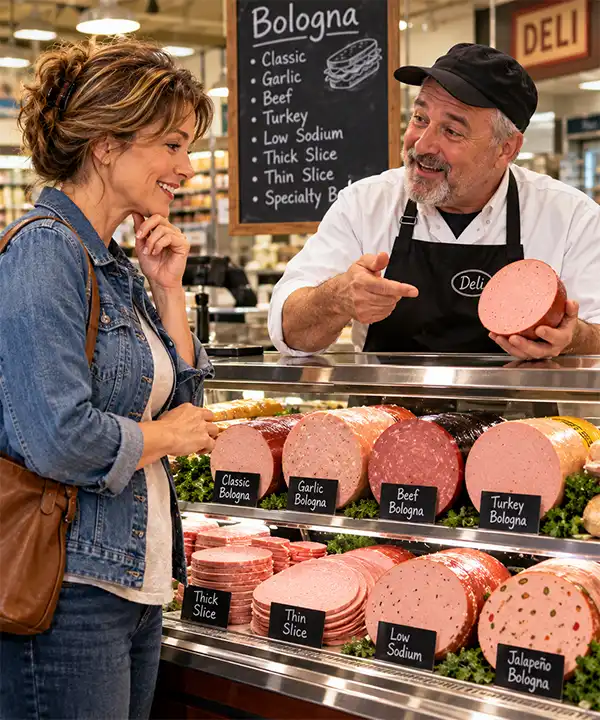
Although the familiar smooth sandwich slices dominate many American supermarket displays, bologna exists in several regional and specialty forms. Ring bologna, particularly popular in parts of the Midwest and Pennsylvania, is traditionally formed into a curved or circular sausage rather than a large cylindrical loaf intended for thin slicing. It may be smoked and seasoned with garlic or other spices, creating a stronger flavor than conventional sandwich bologna. Ring bologna can be served cold, sliced into chunks, heated, or incorporated into cooked dishes. Its popularity reflects the influence of German and Central European sausage-making traditions in American regional cuisine. The shape also provides an entertaining reminder that sausages are under no obligation to fit neatly between slices of bread.
Lebanon bologna is another distinctive American specialty, originating in the Pennsylvania Dutch region around Lebanon County, Pennsylvania. Unlike conventional cooked bologna, Lebanon bologna is a fermented, semi-dry beef sausage with a tangy flavor and characteristic smoky aroma. Traditional production involves seasoning the meat, allowing controlled fermentation, and applying smoke during processing. The finished product resembles certain types of salami more closely than ordinary sandwich bologna, although it retains its familiar regional name. Lebanon bologna is frequently served thinly sliced on sandwiches or with cheese and crackers. Its distinctive flavor makes it popular among enthusiasts who appreciate traditional cured meats, although somebody expecting the mild pink slices of a childhood lunchbox may be in for a considerable surprise.
Other variations include beef bologna, turkey bologna, chicken bologna, garlic bologna, and products made with different combinations of meats and seasonings. Beef bologna generally offers a flavor profile distinct from pork-based varieties, while poultry versions provide alternatives for consumers who prefer chicken or turkey. Garlic bologna emphasizes the aromatic qualities of its seasoning, creating a more assertive flavor. Different regional butchers and commercial manufacturers may also offer smoked or specialty products that reflect local culinary traditions. This diversity demonstrates that bologna is not a single standardized taste experience but a broad family of related sausages. The common denominator is convenience and familiarity, although some varieties are considerably more sophisticated than the lunch meat that once emerged from a plastic package with an audible sigh.
Bologna Around the World
Bologna's relatives can be found in numerous countries, reflecting the widespread influence of European sausage-making traditions. In Italy, mortadella remains a celebrated regional specialty, frequently served in sandwiches, antipasto platters, and traditional dishes. Its distinctive texture and seasoning distinguish it from the milder American product, while its long history connects it to the culinary traditions of Emilia-Romagna. In Germany and neighboring countries, finely ground cooked sausages such as Fleischwurst and Lyoner share certain characteristics with American bologna, although their seasonings, preparation methods, and regional identities vary. These products demonstrate how similar meat-processing techniques can produce different foods according to local preferences and cultural traditions.
In South Africa, a processed sausage known as polony occupies a place in popular food culture, although its formulation and culinary uses differ from those of American bologna. In Canada, bologna is widely available and has developed particularly strong associations with certain regional food traditions. Newfoundland and Labrador, for example, have a longstanding affection for fried bologna, sometimes humorously referred to as Newfoundland steak. The nickname reflects the food's popularity as an affordable and familiar meal rather than any genuine resemblance to a premium cut of beef. The expression also demonstrates the extraordinary ability of regional food traditions to transform inexpensive ingredients into beloved cultural symbols. Somewhere, an expensive steakhouse is probably trying to determine whether it can charge extra for the name.
The Difference Between Bologna and Baloney
The spelling of bologna has caused confusion for generations because the American pronunciation bears little resemblance to the word's Italian origins. In English, the name of the sausage is commonly pronounced buh-LOH-nee, while the Italian city is pronounced more closely to boh-LOH-nyah. The alternative spelling baloney developed as a phonetic representation of the English pronunciation and eventually acquired a separate meaning in American slang. Today, baloney is frequently used to describe nonsense, foolish talk, or statements that appear exaggerated or untrue. This development created the unusual situation in which the name of a perfectly respectable sausage became a convenient expression for dismissing somebody's questionable explanation.
The slang meaning of baloney became established in American English during the early twentieth century, particularly in informal speech. Although the precise linguistic development is not entirely certain, the association between the sausage's name and the expression for nonsense became widely recognized. The word has appeared in popular entertainment, political commentary, and everyday conversation, frequently serving as a relatively mild substitute for more colorful expressions of disbelief. It remains particularly useful when somebody makes an outrageous claim in polite company. Unfortunately for the sausage itself, this means that millions of people who have never purchased bologna still use its name regularly, often in circumstances where the product has done absolutely nothing to deserve the criticism.
Is Bologna Healthy? The Nutritional Question
Bologna provides protein and may contain nutrients such as iron and vitamin B12, depending on the meat and formulation. However, conventional bologna is also a processed meat that can contain substantial amounts of sodium and saturated fat. Its nutritional composition varies considerably among products, making the Nutrition Facts label an important resource for consumers comparing different brands and varieties. Lower-sodium options and products made from poultry may offer different nutritional profiles, although the specific ingredients and fat content should always be checked rather than assumed. Bologna can be enjoyed occasionally as part of a varied diet, but it is not generally considered a substitute for minimally processed protein sources such as fish, beans, lentils, or fresh poultry.
Health organizations recommend limiting processed meat consumption because regular intake has been associated with increased risks of certain diseases, particularly colorectal cancer. The World Health Organization's International Agency for Research on Cancer classifies processed meat as carcinogenic to humans based on evidence concerning colorectal cancer risk. This classification identifies the strength of the evidence that processed meat can cause cancer; it does not mean that eating a bologna sandwich carries the same level of risk as smoking. Frequency, quantity, and overall dietary patterns matter when considering individual food choices. National Bologna Day therefore provides an opportunity to enjoy a familiar favorite without pretending that an entire pound of processed lunch meat qualifies as a balanced nutritional strategy. Adding lettuce and tomato may improve a sandwich, but it does not magically transform the bologna into a vegetable.
Food safety also deserves attention because bologna is usually sold as a refrigerated, ready-to-eat meat product. Packages should be stored according to their labeling instructions, and consumers should follow recommended refrigeration and storage times. The USDA advises that opened packages of luncheon meat generally be refrigerated for three to five days, while unopened factory-sealed packages can typically be refrigerated for approximately two weeks unless the package specifies a different date or storage requirement. People who are pregnant, older, or have weakened immune systems should take additional precautions with deli meats because of the risk of Listeria monocytogenes. Heating deli meat until steaming hot, or to 165°F, is a recommended precaution for higher-risk consumers. These measures help ensure that a pleasant lunch does not develop into a considerably less pleasant conversation with a healthcare professional.
Celebrating National Bologna Day Without Making a Lot of Baloney
The most straightforward way to celebrate National Bologna Day is to prepare a bologna sandwich and enjoy a familiar American food tradition. A classic cold sandwich with mustard and cheese offers a nostalgic experience, while a fried bologna sandwich provides an opportunity to explore one of the ingredient's most popular regional preparations. For a more adventurous celebration, try comparing several varieties, such as conventional bologna, beef bologna, garlic bologna, and Italian mortadella. The differences in seasoning, texture, and preparation can be surprisingly interesting, particularly for anyone who has spent years assuming that all bologna tastes exactly the same. A small tasting platter with crackers, pickles, and different cheeses can turn the occasion into an informal culinary experiment.
Families can also celebrate by preparing homemade sandwiches together, allowing everyone to choose their preferred bread, cheese, vegetables, and condiments. Children may enjoy creating their own combinations, although responsible adults should probably supervise any experiments involving peanut butter, marshmallows, or chocolate syrup. A family sandwich competition can encourage creativity while introducing younger cooks to basic food preparation and kitchen hygiene. Participants might compete for the most traditional sandwich, the most inventive combination, or the best presentation. Naturally, the person responsible for washing the dishes should retain the right to veto any creation that requires seventeen mixing bowls and a blowtorch.
Another enjoyable approach is to explore the history of regional American foods. Visit a local delicatessen or butcher shop, ask about different sausage varieties, and discover how immigrant traditions influenced familiar American products. Trying Lebanon bologna or ring bologna can provide an introduction to foods that may be unfamiliar outside their traditional regions. A comparison with authentic Italian mortadella offers an opportunity to appreciate the connection between the American sandwich staple and its European relatives. This approach turns a simple food observance into an entertaining lesson in culinary history, demonstrating that even an inexpensive slice of lunch meat can tell a story involving migration, technology, regional identity, and changing consumer preferences.
Restaurants and diners sometimes feature fried bologna sandwiches, particularly in regions where the dish has a longstanding following. National Bologna Day provides a convenient excuse to revisit a favorite establishment or try a preparation that differs from the version made at home. Social media enthusiasts can share photographs, recipes, and childhood memories using the hashtag #NationalBolognaDay, helping introduce the celebration to people who may never have realized that their favorite sandwich ingredient possessed its own unofficial holiday. Of course, the internet being what it is, any discussion about the correct way to prepare a bologna sandwich will eventually produce an argument. Someone will insist upon mustard, somebody else will demand mayonnaise, and a third person will announce that only a particular brand deserves consideration. At that point, the wisest response is usually to make another sandwich and allow everyone else to continue the debate.
A Final Slice of Appreciation
National Bologna Day may celebrate one of America's most unpretentious foods, but the history behind that familiar pink slice is surprisingly rich. From the sausage-making traditions of Bologna, Italy, to the immigrant butcher shops of the United States, the rise of commercial food processing, and the countless school lunches prepared over generations, bologna has earned a recognizable place in American culinary culture. Its appeal rests upon affordability, convenience, versatility, and the comforting memories associated with simple meals. Although contemporary food trends frequently emphasize elaborate ingredients and sophisticated presentations, bologna reminds us that familiar foods can remain meaningful long after the latest culinary fashion has disappeared.
So, on October 24, give the humble bologna sandwich a little recognition. Enjoy it cold with mustard, fry it until the edges curl, sample a regional variety, or introduce somebody to the difference between American bologna and Italian mortadella. Appreciate its history, enjoy it in moderation, and remember that not every satisfying meal needs a complicated recipe or an impressive price tag. Sometimes happiness really is two slices of bread, a little cheese, and a piece of lunch meat that has been quietly doing its job for generations. And if anybody tells you that National Bologna Day is a ridiculous excuse for a celebration, you already know the perfect response: That's a load of baloney!