The Search for Something That Refuses to Go Bald
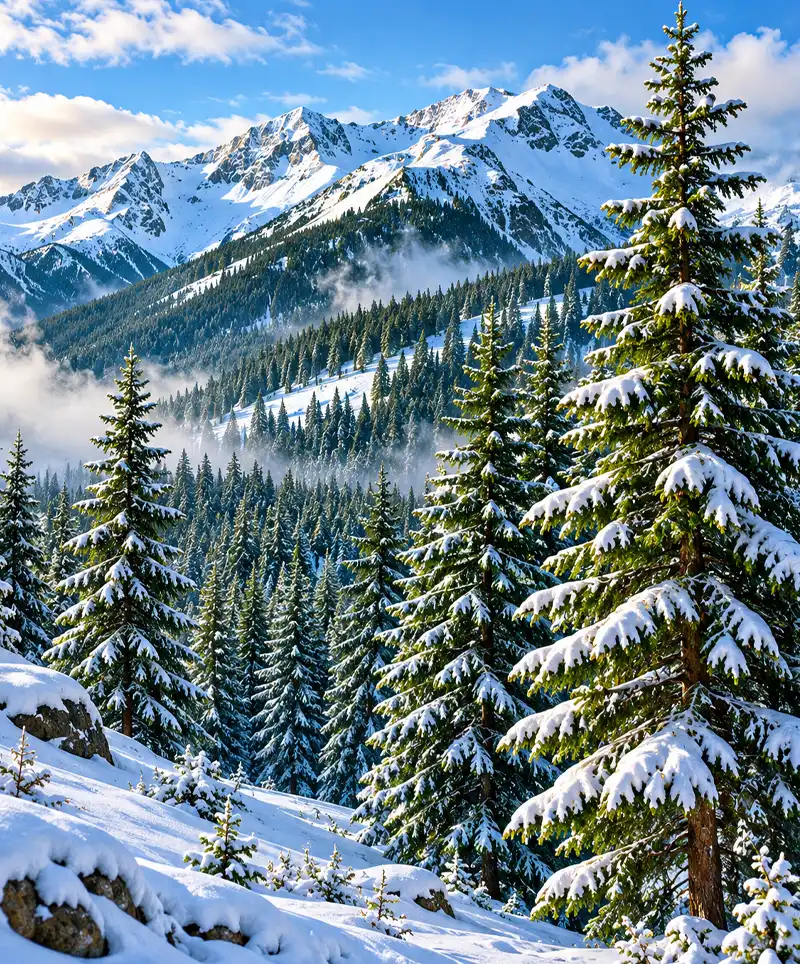
Celebrated annually on December 19, Look for an Evergreen Day encourages us to venture outdoors and appreciate the beauty, resilience, and remarkable characteristics of evergreen trees. While many deciduous trees have surrendered their leaves to winter, evergreens continue displaying their foliage with an air of botanical superiority. From towering pine trees and magnificent firs to fragrant spruces and decorative hollies, evergreen plants provide color, shelter, and natural beauty throughout the year. The observance also arrives conveniently close to Christmas, when many families are searching for the perfect Christmas tree. Whether you're exploring a woodland trail, visiting a Christmas tree farm, or simply admiring the greenery in your backyard, Look for an Evergreen Day offers an excellent excuse to reconnect with nature. Just remember that looking for an evergreen and bringing one home are two entirely different activities, particularly if it happens to belong to your neighbor.
What Is Look for an Evergreen Day?
Look for an Evergreen Day is an annual observance dedicated to discovering and appreciating evergreen trees, shrubs, and other plants that retain their foliage throughout the seasons. Although the precise origins of the observance and the identity of its creator remain unclear, its timing in December makes it particularly appropriate for celebrating evergreen plants and their association with winter festivities. During a season when many landscapes become dominated by bare branches, fallen leaves, and occasionally enormous quantities of snow, evergreen trees provide a welcome reminder that nature has not entirely abandoned its decorating responsibilities.
The observance encourages people to learn about different evergreen species, explore their natural surroundings, and recognize the environmental importance of plants that remain green throughout the year. It can also serve as a reminder to select a Christmas tree, particularly for those who have been enthusiastically postponing the task since Thanksgiving. By December 19, however, the search for the perfect Christmas tree may have become a search for any Christmas tree that doesn't resemble the unfortunate specimen selected by Charlie Brown.
What Makes a Tree Evergreen?
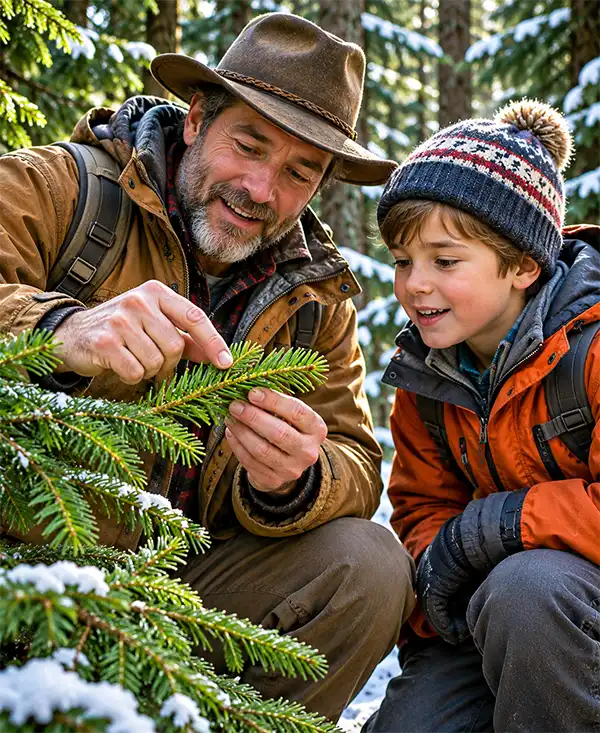
An evergreen is a plant that retains living foliage throughout the year rather than shedding all its leaves during a particular season. Unlike deciduous trees, such as many oaks, maples, and birches, evergreen trees maintain a functioning canopy even during winter or periods of seasonal dryness. However, the term evergreen can be slightly misleading because these plants do eventually shed their leaves or needles. Rather than losing their entire wardrobe at once, they replace their foliage gradually, maintaining their green appearance while quietly disposing of older leaves and needles. Essentially, evergreens have perfected the art of changing clothes without anyone noticing.
Many evergreen trees belong to a group of plants known as conifers, which typically produce seeds in cones and possess needle-like or scale-like foliage. Their needles often feature a protective waxy coating that reduces moisture loss, while their relatively small surface area helps them withstand challenging environmental conditions. These adaptations are particularly valuable in colder regions, where frozen soil can make water difficult to obtain. Evergreen foliage allows many species to resume photosynthesis whenever conditions become favorable without first having to produce an entirely new collection of leaves. It is an efficient survival strategy that has served these remarkable plants for millions of years.
Not all evergreens are conifers, however, and not all conifers are evergreen. Holly, southern magnolia, many eucalyptus species, and numerous tropical plants retain broad leaves throughout the year, while conifers such as larches and bald cypresses shed their needles seasonally. This botanical distinction makes identifying evergreen trees considerably more interesting than simply wandering through a forest looking for something green and pointy. Nature, as usual, has included enough exceptions to keep botanists employed and amateur tree enthusiasts thoroughly confused.
Common Types of Evergreen Trees
Evergreen trees can be found throughout much of the world, growing in environments ranging from freezing northern forests and mountainous regions to tropical landscapes and warm coastal communities. Their appearance, size, foliage, and environmental requirements vary considerably, making Look for an Evergreen Day an excellent opportunity to discover some of the most recognizable species. While pine, fir, and spruce trees frequently receive the greatest attention during the Christmas season, the evergreen family extends far beyond the traditional occupants of Christmas tree stands.
- Pine Trees: Recognizable by their needles, which typically grow in bundles, pine trees are widespread throughout the Northern Hemisphere and are valued for timber, wildlife habitats, and ornamental landscaping.
- Fir Trees: Known for their generally flat needles and upright cones, fir trees include popular Christmas tree varieties such as the Fraser fir, balsam fir, and noble fir.
- Spruce Trees: Spruce trees typically possess stiff, pointed needles attached individually to their branches. Their attractive shape makes them popular ornamental and Christmas trees, although hugging one is not particularly advisable.
- Cedar Trees: True cedars belong to the genus Cedrus and are admired for their distinctive foliage, aromatic wood, and impressive appearance.
- Juniper Trees: Junipers include trees and shrubs with needle-like or scale-like foliage. Their berry-like seed cones are famously associated with the flavoring of gin.
- Holly Trees: Many holly species retain glossy green leaves throughout the year, with female plants of certain species producing the colorful berries associated with Christmas decorations.
- Southern Magnolia: Recognizable by its large, glossy leaves and spectacular flowers, the southern magnolia is a broadleaf evergreen particularly associated with the southeastern United States.
- Redwood Trees: Coast redwoods and giant sequoias are extraordinary evergreen conifers renowned for their enormous size and exceptional longevity.
The History and Symbolism of Evergreen Trees
Evergreen plants have held cultural and symbolic significance for thousands of years, long before the introduction of electric Christmas lights, artificial snow, and inflatable reindeer. Their ability to retain green foliage during the darkest and coldest months of the year made them natural symbols of endurance, renewal, hope, and continuing life. In various ancient cultures, evergreen branches were incorporated into seasonal celebrations, religious customs, and household decorations. During winter, when agricultural activity diminished and daylight became scarce, evergreen foliage provided a reassuring reminder that spring would eventually return.
The ancient Romans used greenery during winter festivities, including celebrations associated with Saturnalia, while various European communities incorporated evergreen plants into seasonal customs. Over time, evergreen branches, wreaths, and decorated trees became associated with Christmas celebrations. Although the precise relationship between ancient winter traditions and modern Christmas customs is complex, the enduring appeal of evergreen decorations is easy to understand. Bringing greenery indoors during winter adds color, fragrance, and a sense of warmth to a season otherwise characterized by cold weather and increasingly alarming heating bills.
Evergreens continue to symbolize strength, longevity, and perseverance in many cultures. Their foliage remains visible through snowstorms, freezing temperatures, and seasonal changes, providing an enduring connection to the natural world. Considering how enthusiastically many humans complain when the temperature drops a few degrees, there is something particularly admirable about a tree that spends the entire winter outdoors without requesting a blanket, a hot beverage, or an appointment with a travel agent.
Evergreen Trees and the Christmas Tree Tradition
The association between evergreen trees and Christmas is one of the most recognizable seasonal traditions in the world. The decorated Christmas tree developed in German-speaking regions of Europe, with documented examples dating back several centuries. During the 19th century, the custom gained wider popularity in Britain and North America. An illustration published in 1848 depicting Queen Victoria, Prince Albert, and their children gathered around a decorated Christmas tree helped popularize the tradition among British households. Christmas trees eventually became a familiar feature of festive celebrations, inspiring generations of families to bring a perfectly respectable outdoor plant indoors and cover it with electrical equipment.
Today, popular natural Christmas tree varieties include Fraser firs, balsam firs, Douglas firs, noble firs, Scotch pines, and various spruce species. Each offers different characteristics, including fragrance, needle retention, branch strength, and overall appearance. Selecting a Christmas tree can become a surprisingly complicated family undertaking, involving extensive discussions about height, width, symmetry, and whether the tree will actually fit through the front door. Inevitably, someone declares that a particular tree is perfect, only to discover upon arriving home that it is approximately two feet taller than the ceiling.
Look for an Evergreen Day provides an ideal opportunity to visit a Christmas tree farm and learn about the cultivation of natural Christmas trees. These trees are agricultural crops that generally require several years of growth, maintenance, and shaping before they are ready for sale. Purchasing from a reputable Christmas tree farm supports growers and provides families with an opportunity to enjoy a traditional seasonal experience. Alternatively, a living potted evergreen may be suitable for those wishing to plant their tree outdoors after Christmas, provided the species is appropriate for the local climate and receives proper care.
Why Evergreen Trees Are Important to the Environment
Evergreen forests play an essential role in maintaining healthy ecosystems throughout the world. Their foliage provides year-round shelter for birds, mammals, insects, and other wildlife, particularly during winter when deciduous trees offer considerably less protection. Dense evergreen branches can provide refuge from strong winds, precipitation, and predators, while seeds, cones, berries, and foliage supply food for numerous species. For many woodland creatures, an evergreen tree is considerably more than an attractive feature of the landscape. It is a combined apartment complex, restaurant, emergency shelter, and occasionally a rather crowded maternity ward.
Evergreen trees also absorb carbon dioxide through photosynthesis, store carbon in their trunks, branches, roots, and surrounding ecosystems, and contribute to the production of oxygen. Their root systems help stabilize soil, reduce erosion, and influence water movement through the landscape. Large evergreen forests, including the vast boreal forests of North America, Europe, and Asia, are particularly important components of the global carbon cycle. Protecting these ecosystems helps preserve biodiversity, maintain environmental stability, and support the countless organisms that depend upon forest habitats.
In residential landscapes, appropriately selected evergreen trees and shrubs can provide privacy, reduce wind exposure, offer shade, and enhance the appearance of gardens throughout the year. They are particularly useful in locations where homeowners wish to maintain greenery during winter without relying entirely on seasonal flowers. However, choosing a suitable species is essential, as a small evergreen purchased from a garden center may eventually develop into a towering tree capable of blocking sunlight, interfering with overhead utilities, and providing the neighbors with a permanent topic of conversation.
Extraordinary Evergreens – Some of Nature's Oldest and Tallest Residents
Among the most remarkable evergreen trees are the Great Basin bristlecone pines of the western United States. Some individual trees have survived for more than 4,000 years, enduring extreme temperatures, powerful winds, poor soil, and exceptionally dry conditions. Their slow growth, dense wood, and ability to survive with limited living tissue contribute to their extraordinary longevity. One particularly famous bristlecone pine, known as Methuselah, is more than 4,800 years old. Its precise location is protected to reduce the risk of vandalism and environmental damage. Imagine surviving nearly five millennia only to have someone arrive with a pocketknife and an overwhelming desire to announce that Kevin loves Susan.
Coast redwoods, native primarily to the coastal regions of California and southern Oregon, are the tallest living tree species on Earth. Some specimens exceed 350 feet in height, creating spectacular forest environments that support diverse plant and animal communities. Giant sequoias, meanwhile, are renowned for their enormous trunk volume and can survive for thousands of years. Their impressive dimensions make ordinary garden trees appear positively modest. Standing beneath one of these magnificent evergreens provides a powerful reminder of nature's scale and longevity, particularly when you consider that some were already growing when the Roman Empire was still conducting business.
Another remarkable evergreen is the Wollemi pine, an Australian conifer discovered growing in the wild in 1994. Although related plants were known from the fossil record, the discovery of living specimens attracted international scientific attention. Its natural population remains extremely limited, and conservation programs have helped protect the species through cultivation and careful management. The discovery demonstrated that even in the modern age, nature can still produce extraordinary surprises. Somewhere in Australia, an ancient group of trees had apparently spent millions of years avoiding publicity until somebody finally wandered into the neighborhood.
Why Some Evergreens Smell So Wonderful
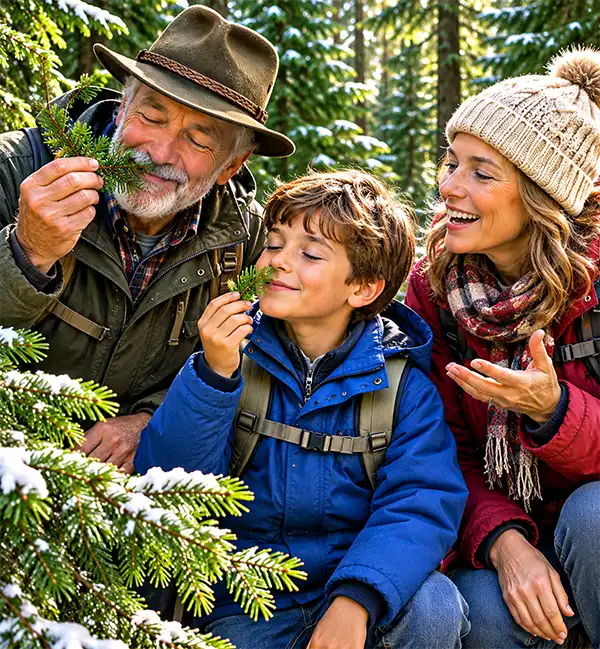
One of the most enjoyable characteristics of many evergreen trees is their distinctive fragrance. Pine, fir, spruce, and cedar foliage and wood contain various aromatic compounds, including naturally occurring chemicals known as terpenes. These compounds contribute to the familiar scents associated with forests, Christmas trees, and numerous household products. They can also play roles in plant defense, helping protect trees against certain insects, pathogens, and environmental stresses. What humans regard as a delightful woodland fragrance may, from the tree's perspective, be part of a sophisticated chemical defense system.
The popularity of evergreen fragrances has inspired an enormous range of products, including candles, air fresheners, soaps, essential oils, and cleaning solutions. During December, it becomes possible to make virtually every room in a house smell like a Christmas tree without having a single actual tree on the premises. However, there is something particularly satisfying about the natural fragrance of a woodland trail or freshly cut evergreen branches. Unlike artificial air fresheners, a forest rarely leaves you wondering why the manufacturer believes a pine tree should smell like a combination of disinfectant and a public restroom.
How to Celebrate Look for an Evergreen Day
One of the simplest and most enjoyable ways to celebrate Look for an Evergreen Day is to take a walk through a local park, forest, botanical garden, or nature reserve. Observe the different evergreen species, examine their foliage, compare their shapes, and notice how they contribute to the surrounding landscape. A tree identification guide or smartphone application can help distinguish between pines, firs, spruces, and other species. Children may particularly enjoy turning the activity into an evergreen scavenger hunt, searching for pinecones, different needle arrangements, and interesting examples of bark. The experience offers an educational opportunity while temporarily persuading everyone to look at something other than a screen.
Another way to celebrate is to plant an evergreen tree or shrub suitable for your local environment. Native evergreen species are often excellent choices because they are adapted to regional conditions and can support local wildlife. Before planting, consider the mature size of the tree, its sunlight requirements, soil preferences, and proximity to buildings or utility lines. December may not be an appropriate planting season in every region, but it provides an excellent opportunity to research suitable species and prepare for future planting. Remember that trees are long-term investments, and the adorable little specimen currently occupying a five-gallon container may eventually require its own postal code.
Creative activities can also form part of the celebration. Fallen pinecones can be used for seasonal crafts, evergreen foliage obtained responsibly can be incorporated into wreaths and decorations, and photographs of evergreen trees can help document the beauty of winter landscapes. Families might visit a Christmas tree farm, learn about sustainable forestry, or simply spend time appreciating the greenery already growing around their homes. Always obtain permission before collecting branches, cones, or other natural materials from private property, and follow the regulations governing public parks and protected areas. Look for an Evergreen Day is not intended to become Help Yourself to Somebody Else's Landscaping Day.
Fascinating Facts About Evergreen Trees
Evergreen trees have developed an impressive range of characteristics that allow them to survive in some of the world's most challenging environments. Their extraordinary diversity, longevity, and ecological importance make them fascinating subjects for anyone interested in nature.
- The term evergreen describes a plant's foliage-retention habits rather than a specific botanical family.
- Some evergreen conifers retain individual needles for several years before replacing them.
- The downward-sloping branches of many northern conifers help shed accumulated snow.
- Pinecones can open and close in response to changes in humidity.
- Some pine species produce cones that release their seeds following exposure to intense heat from wildfires.
- The world's tallest known living tree is a coast redwood named Hyperion.
- Juniper berries are technically modified seed cones rather than true botanical berries.
- Many evergreen trees provide valuable winter shelter for birds when deciduous trees have lost their foliage.
Appreciating Nature Throughout the Year
Look for an Evergreen Day reminds us that the natural world remains active, beautiful, and worthy of appreciation even during the colder months. Evergreen trees provide a visible connection between the seasons, maintaining their foliage while much of the surrounding landscape undergoes dramatic changes. Their resilience, ecological importance, and cultural significance make them far more than convenient sources of Christmas decorations. They are living organisms that support wildlife, influence the environment, and contribute to the character of forests, gardens, and communities around the world.
December is often a particularly hectic month, filled with shopping, decorating, family gatherings, travel arrangements, and the increasingly desperate search for the end of the adhesive tape. Taking time to explore the outdoors and appreciate evergreen trees offers a welcome opportunity to escape the seasonal commotion. Whether you discover a magnificent pine in a nearby forest, admire a beautifully decorated Christmas tree, or simply notice the evergreen shrubs growing outside your window, the observance encourages a greater appreciation of the natural beauty that surrounds us throughout the year.
So, on December 19, put on your walking shoes, venture outdoors, and see how many different evergreens you can discover. Appreciate their remarkable adaptations, enjoy their natural fragrance, and remember that some of these extraordinary trees have been quietly surviving for thousands of years.
And if you happen to be looking for a Christmas tree, take a tape measure. The tree will not become shorter simply because you have already paid for it.
Happy Look for an Evergreen Day!
Arbor Day Foundation – Tree identification, planting, conservation, and environmental benefits. USDA Forest Service – Evergreen forests, conifer species, forest ecosystems, and conservation. National Park Service – Great Basin National Park – Great Basin bristlecone pines and their extraordinary longevity. National Park Service – Redwood National and State Parks – Coast redwoods, forest ecology, and conservation. National Christmas Tree Association – Natural Christmas tree varieties, cultivation, selection, and care. Royal Botanic Gardens, Kew – Plant science, botanical diversity, and evergreen species. Royal Collection Trust – Royal Christmas traditions and historical information about Queen Victoria and Prince Albert.References & Sources