Professional house cleaning is like superhero work—minus the cape, but with a mop in hand. They swoop in,...
Dipping your toes into the world of CBD is like deciding to finally clean your closet; it's a bit...
There’s nothing quite like the dignity-shattering magic of flapping your arms like wings, puffing out...
You’re trying to relax after a long day, but your dog has decided that now is the perfect time to...
The U.S. Air Force Academy is the only place where you can earn a degree in aerospace engineering,...
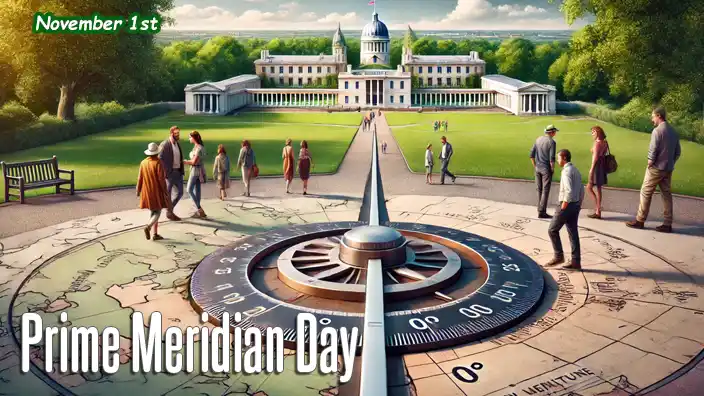
The Prime Meridian is the world’s most famous invisible line—just sitting there at 0° longitude, keeping...
On November 10, 1775, during the American Revolutionary War, the Continental Congress approved the creation of two battalions of Marines to serve alongside the newly established Continental Navy. The resolution, supported by future President John Adams, marked the beginning of what would become the United States Marine Corps. These early Marines were trained to fight both aboard ships and on land, giving the fledgling American military a versatile fighting force. Their first major amphibious operation took place in March 1776, when Marines commanded by Captain Samuel Nicholas landed on New Providence Island in the Bahamas and captured British military supplies. Nicholas is remembered as the first commandant of the Marine Corps. Following American independence in 1783, the Continental Marines were disbanded along with the Continental Navy.
The Marines weren't destined to remain out of action for long. Growing tensions with France and threats to American merchant shipping prompted Congress to strengthen the nation's naval defenses. On July 11, 1798, President John Adams signed legislation formally establishing the United States Marine Corps as a permanent military organization. Marines subsequently served during the Quasi-War with France and fought the Barbary pirates of North Africa, helping establish the Corps' reputation for determination and expeditionary warfare. Over the following centuries, Marines participated in conflicts around the world, conducting amphibious assaults, protecting American interests, and responding to international emergencies. Their famous motto, Semper Fidelis, meaning "Always Faithful," reflects the loyalty and dedication that remain central to Marine Corps traditions.
Today, the United States Marine Corps operates as a major branch of the American armed forces, with active-duty personnel and reservists serving at installations across the United States and overseas. Important facilities include Camp Pendleton in California, Camp Lejeune in North Carolina, Marine Corps Base Quantico in Virginia, and Marine Corps Air Station Iwakuni in Japan. Every November 10, Marines past and present celebrate the Corps' birthday, honoring its history, traditions, and generations of service members. From the shores of the Bahamas in 1776 to modern military operations, the Marines have built a reputation for answering the call when duty demands. And while the Navy might occasionally remind them who provides the transportation, there's no denying that the Marines have earned their place in American military history!
On November 10, 1903, Mary Anderson, an inventor and businesswoman from Birmingham, Alabama, received U.S. Patent No. 743,801 for a practical device designed to clear rain, snow, and sleet from vehicle windshields. The inspiration reportedly came during a winter visit to New York City, where Anderson watched a streetcar operator struggle to see through an ice-covered windshield. Drivers often had to open sections of the front window to improve visibility, exposing themselves and their passengers to freezing weather. Anderson realized there had to be a better solution than choosing between seeing the road and freezing half to death. Her invention featured a rubber-edged blade mounted on a spring-loaded arm, operated by a lever inside the vehicle. With a simple movement, the driver could sweep away moisture and debris without leaving the driver's seat or opening the window.
Despite the obvious advantages of Anderson's early windshield wiper, the invention initially received little enthusiasm. Critics argued that a moving blade might distract drivers, while a Canadian manufacturing company reportedly rejected her proposal because it saw no commercial value in the device. Unfortunately for Anderson, the automobile industry eventually discovered exactly how useful her idea was. By the 1910s, windshield wipers were becoming increasingly common on motor vehicles, but her patent expired in 1920 without bringing her significant financial rewards. Anderson had helped solve a problem that would affect millions of motorists, yet she received little recognition or compensation during her lifetime. It was a rather unfortunate case of being ahead of her time, especially when the people behind her couldn't see where they were going.
The development of windshield-cleaning technology continued in 1917, when another American inventor, Charlotte Bridgewood, patented an electrically powered windshield-cleaning system that used rollers rather than conventional blades. Although her design represented another important step toward automated windshield wipers, Bridgewood also failed to achieve commercial success. Together, these pioneering women contributed to the development of a safety feature that eventually became standard equipment on automobiles worldwide. Mary Anderson's contribution was formally recognized in 2011 when she was inducted into the National Inventors Hall of Fame. Today, every time a driver switches on the windshield wipers during a downpour, they're benefiting from an idea that began with one observant woman, a miserable winter journey, and the entirely reasonable belief that driving shouldn't require looking through a sheet of ice.
On November 10, 1969, American children's television changed forever when Sesame Street made its broadcast debut, introducing young viewers to a colorful neighborhood where learning the alphabet, counting numbers, and making friends became entertaining adventures. Created through the vision of television producer Joan Ganz Cooney and educational researcher Lloyd Morrisett, the groundbreaking program combined education with humor, music, animation, and unforgettable puppet characters. Its original mission was particularly ambitious: to help preschool children, especially those from disadvantaged backgrounds, develop the skills needed to succeed in school. Set in a fictional, culturally diverse New York City neighborhood, Sesame Street demonstrated that television could do considerably more than entertain children. It could teach them important lessons about numbers, letters, kindness, cooperation, and understanding others. And it accomplished all this with a giant yellow bird, a remarkably grumpy resident of a trash can, and a blue monster whose enthusiasm for cookies was considerably greater than his concern for table manners.
The program's innovative format featured short, engaging segments inspired partly by the fast-paced comedy and variety shows popular during the 1960s. Educational lessons were presented through live-action performances, animation, songs, and the extraordinary puppetry of Jim Henson and his Muppets. Characters such as Big Bird, Bert and Ernie, Cookie Monster, Oscar the Grouch, and Grover quickly became household favorites, helping children understand everything from basic arithmetic to complicated emotions. As the decades passed, Sesame Street continued adapting its educational messages to address changing social concerns. In 2002, the South African adaptation Takalani Sesame introduced Kami, an HIV-positive Muppet designed to promote understanding and challenge prejudice. Abby Cadabby joined the American program in 2006, bringing a little fairy magic to the neighborhood, while the 2019 introduction of Karli, a young Muppet affected by her mother's substance-use problems, helped families discuss addiction in an age-appropriate way.
Over the years, Sesame Street became one of the most influential educational television programs in broadcasting history, reaching audiences across more than 120 countries through international broadcasts and locally adapted productions. Its combination of research-based teaching, memorable characters, and accessible storytelling helped generations of children develop early literacy, numeracy, and social skills. The program also demonstrated the importance of representation, featuring characters and families from different cultural backgrounds and encouraging children to appreciate their similarities and differences. Although television technology and children's viewing habits have changed dramatically since 1969, Sesame Street remains an enduring symbol of educational entertainment. After all, few television programs can claim to have taught millions of children their ABCs while simultaneously demonstrating that living in a trash can is apparently a perfectly acceptable lifestyle choice.

On November 10, 1975, the American freighter SS Edmund Fitzgerald sank during a violent storm on Lake Superior, taking all 29 crew members to their deaths in one of the most devastating maritime disasters in Great Lakes history. Launched in 1958, the enormous iron ore carrier measured approximately 729 feet long and was the largest vessel operating on the Great Lakes when it entered service. On November 9, the Edmund Fitzgerald departed Superior, Wisconsin, carrying roughly 26,000 tons of iron ore pellets destined for the Detroit area. Under the command of Captain Ernest McSorley, an experienced Great Lakes mariner, the ship encountered a powerful November storm that produced hurricane-force winds and towering waves. As conditions deteriorated, the vessel developed a list, suffered damage to equipment, and lost the use of its radar. Another freighter, the Arthur M. Anderson, remained in radio contact and attempted to assist with navigation through the worsening weather. Shortly after 7 p.m. on November 10, McSorley reported that his ship was holding its own. Minutes later, the Edmund Fitzgerald vanished from radar without issuing a distress call.
The sudden disappearance triggered an extensive search, but rescuers found no survivors. The wreck was subsequently located approximately 530 feet beneath Lake Superior, near Whitefish Point, Michigan, with its hull broken into two major sections. Investigators examined several possible explanations for the sinking, including flooding through improperly secured or damaged cargo hatches, structural damage, and the possibility that exceptionally large waves overwhelmed the vessel. The United States Coast Guard's investigation emphasized the possibility of water entering the cargo holds through ineffective hatch closures, while other examinations raised questions about grounding damage and the extraordinary forces generated by the storm. The precise cause of the sinking remains disputed, particularly because the ship disappeared so quickly and none of its crew survived to describe the final moments. The tragedy led to renewed attention to Great Lakes shipping safety, including weather forecasting, navigation practices, and emergency procedures. For the families of the 29 sailors, however, the loss was far more personal than any investigation could adequately express.
The sinking of the SS Edmund Fitzgerald became one of the most widely remembered maritime tragedies in North American history, particularly after Canadian singer-songwriter Gordon Lightfoot released "The Wreck of the Edmund Fitzgerald" in 1976. His haunting ballad brought international attention to the disaster and helped preserve the memory of the lost crew. The ship's bell was recovered in 1995 and is now displayed at the Great Lakes Shipwreck Museum at Whitefish Point, where it serves as a memorial to those who perished. Every November 10, commemorations honor the sailors and the dangers faced by generations of Great Lakes mariners. Although Lake Superior is often admired for its immense beauty, the loss of the Edmund Fitzgerald remains a solemn reminder that inland waters can be every bit as unforgiving as the open ocean. The ship and its crew have become an enduring part of Great Lakes history, remembered not simply for the mystery surrounding their final voyage, but for the 29 lives lost on a stormy November night.