Childhood obesity is a growing public health crisis that affects millions of children worldwide....
As the blazing sun reached its peak, Ted crouched over the sidewalk with the intensity of a...
Cleaning up your image is like trying to tidy up a room that’s been neglected for far too long—you start...
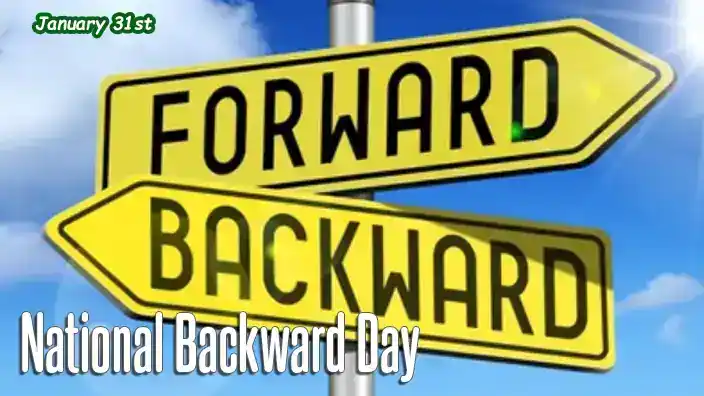
Imagine a world where doing everything backward is the norm. You start your day by tucking...
Sitting down at the dinner table, there's always that moment when you spot the mashed potatoes,...
Google is the digital genie that knows everything—whether you asked for it or not. It’s the place you go for life’s...
On October 24, 1861, American communications entered a remarkable new era when the Western Union Telegraph Company completed the first transcontinental telegraph line at Salt Lake City, Utah. By connecting the nation's eastern and western telegraph networks, the achievement made it possible to exchange messages between Washington, D.C., and San Francisco in minutes rather than the days or weeks previously required. Among the earliest messages was one sent to President Abraham Lincoln by Stephen J. Field, California's chief justice, expressing confidence that the new connection would strengthen the western states' loyalty to the Union during the Civil War. Suddenly, the country could communicate across an entire continent without waiting for a horse, stagecoach, or exceptionally determined messenger.
The ambitious project had gained momentum in 1860 when Congress authorized an annual subsidy of $40,000 to encourage construction of a telegraph connection between the eastern and western networks. Western Union accepted the challenge, but building a communications system across vast stretches of wilderness presented enormous logistical difficulties. Construction crews faced rugged mountains, isolated plains, unpredictable weather, and the constant challenge of transporting supplies. Telegraph wire and glass insulators were shipped to San Francisco and hauled eastward across the Sierra Nevada by wagon, while thousands of wooden poles had to be transported into regions where suitable trees were scarce. Despite these obstacles, crews advanced at an impressive pace, creating a technological connection across territory that remained difficult to traverse even under favorable conditions.
Construction also brought encounters and tensions with Native American communities whose lands the telegraph crossed. One frequently repeated historical account describes Sioux warriors removing a section of wire to fashion bracelets, followed by a belief that subsequent illnesses were connected to the mysterious talking wire. Although the story appears in traditional accounts of the telegraph's construction, its details are difficult to verify independently. Whatever the circumstances, the line was completed considerably sooner than many observers anticipated, transforming long-distance communication and helping strengthen connections between the nation's distant regions. Its completion came nearly eight years before the first transcontinental railroad joined the country in 1869, proving that messages could cross America long before passengers could make the journey by rail.
On October 24, 1901, Annie Edson Taylor made history by becoming the first person known to survive a trip over Niagara Falls inside a barrel. The former schoolteacher, born in New York in 1838, had spent years moving around the United States before settling in Bay City, Michigan. Facing financial difficulties and hoping to achieve fame and fortune, Taylor devised an extraordinary publicity stunt after reading about Niagara Falls and the nearby Pan-American Exposition in Buffalo. She decided that plunging over the mighty Horseshoe Falls inside a specially constructed barrel might be her ticket to financial security. As retirement plans go, it was considerably more adventurous than opening a savings account.
Taylor selected October 24, her birthday, for the dangerous undertaking. Although she publicly claimed to be much younger, she was actually celebrating her 63rd birthday. Her custom-built wooden barrel measured approximately five feet tall and three feet across, with protective padding and a leather harness designed to reduce the impact of the violent descent. Assisted by two men, she entered the barrel and was released into the powerful currents of the Niagara River. After being tossed through the rapids and carried over the approximately 170-foot Horseshoe Falls, Taylor emerged alive roughly 20 minutes later, shaken and bruised but having accomplished her astonishing objective. Although earlier daredevils, including Sam Patch in 1829, had survived dangerous jumps at Niagara, Taylor became the first person to successfully descend the falls in a barrel.
Unfortunately, Taylor's remarkable survival did not produce the financial rewards she had anticipated. Initial newspaper attention, photographs, and public appearances briefly made her a celebrity, but interest eventually faded, leaving her struggling financially. Her achievement nevertheless inspired other thrill-seekers to attempt similarly dangerous descents, sometimes with fatal consequences. Among those who lost their lives were Jesse Sharp, who attempted the falls in a kayak in 1990, and Robert Overacker, whose 1995 jet ski stunt ended tragically. Unauthorized attempts to go over Niagara Falls are illegal and can result in substantial penalties. Taylor's adventure remains one of the most extraordinary episodes in the waterfall's history, proving that she possessed tremendous courage, although her choice of birthday entertainment was certainly not for the fainthearted.
On October 24, 1921, an American soldier made a solemn selection in Châlons-sur-Marne, France, choosing the remains that would become America's first Unknown Soldier of World War I. The ceremony honored the thousands of American servicemen who had died on the Western Front, including those whose identities could never be established. Four unidentified American soldiers had been exhumed from military cemeteries associated with the Aisne-Marne, Somme, Meuse-Argonne, and Saint-Mihiel battlefields. Army Graves Registration Service personnel carefully examined the available burial records to ensure that none of the four could be identified by name, rank, military unit, or date of death. Their anonymity was essential: the chosen soldier would represent every American who had made the ultimate sacrifice without receiving an identified grave.
The four flag-draped caskets were brought to the town hall on October 23, and the following morning, American and French officials gathered for the selection ceremony. Sergeant Edward F. Younger, a decorated World War I veteran, was entrusted with the responsibility of choosing one of the unidentified soldiers. Carrying a spray of white roses, Younger entered the chamber, walked around the four caskets three times, and placed the flowers upon the third casket from the left. He then stood at attention and saluted the fallen serviceman. The simple gesture determined which soldier would receive one of the nation's highest military honors, transforming an unidentified casualty of the Great War into a permanent symbol of remembrance for an entire country.
The selected casket, bearing the inscription “An Unknown American Who Gave His Life in the World War,” was transported to Paris and then to the French port of Le Havre, where it was placed aboard the American cruiser USS Olympia for the journey home. After arriving in the United States, the Unknown Soldier lay in state in the Capitol Rotunda before being buried with full military honors at Arlington National Cemetery in Virginia on November 11, 1921, the third anniversary of the armistice that ended the fighting in World War I. The burial established a lasting national tradition of honoring unidentified American service members. Today, the Tomb of the Unknown Soldier remains one of America's most sacred military memorials, representing not only those whose names were lost to history, but also the enduring gratitude of a nation determined that their sacrifice would never be forgotten.
On October 24, 1945, the United Nations officially came into existence when its founding Charter entered into force, establishing a new international organization dedicated to maintaining peace, promoting cooperation, and preventing future global conflicts. The Charter had been signed by representatives of 50 nations in San Francisco on June 26, 1945, following months of negotiations about the structure and responsibilities of the proposed organization. Its establishment reflected the devastating lessons of two world wars and the failure of the earlier League of Nations to prevent international aggression. The foundations of the United Nations had been laid during World War II, particularly with the Declaration by United Nations signed by 26 Allied governments on January 1, 1942. That wartime agreement united participating nations in their opposition to the Axis powers and helped establish the framework for a permanent international institution.
The United Nations Conference on International Organization opened in San Francisco on April 25, 1945, bringing together delegates determined to create a more effective system of international diplomacy and collective security. The resulting Charter committed member nations to maintaining international peace, protecting fundamental human rights, respecting international law, and encouraging economic and social progress. It also recognized the principles of sovereign equality and self-determination while promoting international cooperation on humanitarian, cultural, and economic challenges. Central to the organization's structure was the Security Council, entrusted with primary responsibility for maintaining international peace and security. Its five permanent members—the United States, United Kingdom, Soviet Union, China, and France—were granted veto powers over substantive Council decisions, reflecting their positions among the major Allied powers. The arrangement was intended to ensure that the world's most powerful nations remained involved in maintaining peace, although giving five countries the ability to block major decisions would eventually prove rather more complicated than the original architects might have hoped.
With World War II finally over, the United Nations faced the enormous challenge of rebuilding international relationships while addressing the political tensions emerging between the Western powers and the Soviet Union. Disagreements over Eastern Europe, political influence, and the future of Germany soon exposed the difficulties of cooperation among former wartime allies. Winston Churchill would later advocate European unity in response to Soviet expansion, reflecting the growing divisions that developed into the Cold War. Despite these obstacles, the United Nations became a central institution for international diplomacy, humanitarian assistance, peacekeeping, and the development of international law. October 24 is now observed annually as United Nations Day, commemorating the moment the organization formally began its work and reaffirming the enduring ambition behind its creation: resolving international disagreements through cooperation and diplomacy rather than another catastrophic world war.
On October 24, 2003, the legendary Concorde completed its final commercial passenger flight, bringing an extraordinary chapter in aviation history to a close. British Airways Flight BA002 departed New York's John F. Kennedy International Airport and crossed the Atlantic to London's Heathrow Airport at speeds approaching twice the speed of sound. Among the 100 passengers were actress Joan Collins and supermodel Christie Brinkley, along with an Ohio couple who reportedly paid $60,000 through an online auction for the privilege of experiencing the historic journey. Thousands of spectators gathered at Heathrow to witness the arrival, which was coordinated with two other Concorde flights, one from Edinburgh and another returning from a flight over the Bay of Biscay. Developed through a partnership between Britain and France, Concorde had entered commercial service in January 1976 and quickly became a symbol of technological achievement, luxury, and extraordinary speed. Capable of cruising at approximately 1,350 miles per hour, the distinctive delta-winged aircraft could complete a transatlantic journey in roughly three and a half hours, allowing passengers to arrive in New York at an earlier local clock time than their departure from London. For travelers accustomed to conventional airline schedules, it was about as close to time travel as commercial aviation could offer.
Despite its remarkable engineering, Concorde faced significant financial, environmental, and operational challenges throughout its career. Its powerful engines produced enormous noise, particularly during takeoff, while sonic boom restrictions limited supersonic operations over populated areas. High fuel consumption, expensive maintenance, and limited passenger capacity made the aircraft costly to operate, restricting its appeal largely to wealthy travelers and business executives. The program suffered a devastating setback on July 25, 2000, when Air France Flight 4590 crashed shortly after departing Paris, killing all 109 people aboard and four people on the ground. Concorde services were suspended while investigators examined the disaster and modifications were introduced to improve safety. Although flights eventually resumed, the aviation industry had changed considerably, particularly following the September 11, 2001, terrorist attacks and the subsequent decline in premium transatlantic travel. Air France retired its Concorde fleet in May 2003, followed by British Airways that October, ending 27 years of supersonic commercial passenger service. The aircraft's popularity among enthusiasts remained extraordinary, however, with retirement auctions attracting remarkable bids for everything from cabin furnishings to distinctive aircraft components. Apparently, even a used Concorde blanket could command a price that would make an ordinary airline's baggage fees look reasonable.
Concorde's retirement did not extinguish the ambition to restore supersonic passenger travel. In 2020, Virgin Galactic announced plans to explore the development of a high-speed passenger aircraft, although the proposal did not lead to an operational commercial airliner. In June 2021, United Airlines announced an agreement to purchase up to 50 Overture supersonic aircraft from American manufacturer Boom Supersonic, subject to the aircraft meeting safety, operating, and sustainability requirements. Designed to carry approximately 64 to 80 passengers at speeds approaching Mach 1.7, Overture represents an effort to revive faster-than-sound commercial travel using modern aviation technology. However, the aircraft remains a development project rather than an established passenger service, and the technical, regulatory, and economic obstacles that challenged Concorde have not disappeared. More than two decades after its final commercial flight, Concorde remains an aviation icon, remembered for its elegant design, distinctive drooping nose, and ability to cross the Atlantic in less time than many travelers now spend waiting at an airport.