Violins may be the epitome of elegance, but they have a playful side too. Ever tried tuning one?...
Waking up at 6 a.m. on a Sunday to the sound of something suspiciously slimy hitting the kitchen floor...
Hamburgers are proof that sometimes the best things in life come sandwiched between two buns and...
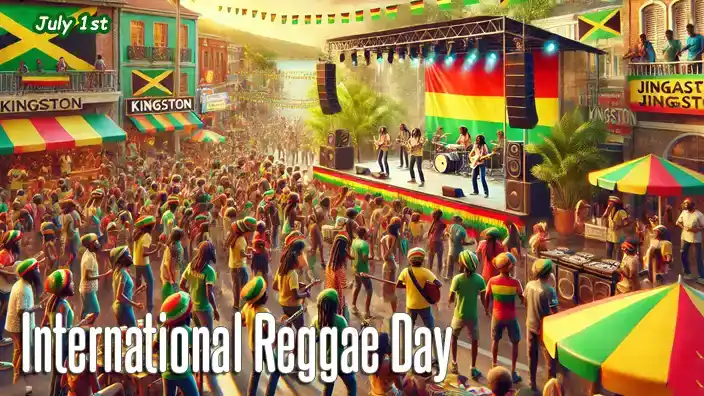
Reggae music is like a tropical vacation for your ears. Imagine lounging on a sunny beach, sipping a...
In a world where most people are content with the simple joy of pressing play, there exists a rare...
Imagine a world where everything is designed by engineers without a single creative touch—your...
On October 28, 1886, President Grover Cleveland officially dedicated the Statue of Liberty in New York Harbor, celebrating a remarkable gift from France to the United States. Originally named Liberty Enlightening the World, the monument was inspired by French political thinker and abolitionist Édouard de Laboulaye, who envisioned a tribute to American independence, liberty, and the friendship between the two nations. French sculptor Frédéric Auguste Bartholdi designed the towering copper figure, while engineer Gustave Eiffel developed its internal iron framework, building upon earlier structural work by Eugène Viollet-le-Duc. Standing 151 feet tall from her feet to the tip of her torch, Lady Liberty became an unmistakable symbol of freedom, welcoming visitors with a raised torch and a rather impressive view of the harbor.
Constructing and transporting the enormous statue required an extraordinary international effort. Congress authorized its location on Bedloe's Island in 1877, and the completed statue was presented in Paris in 1884 before being dismantled and shipped across the Atlantic in 1885. Packed into more than 200 crates, its components arrived in New York aboard the French vessel Isère, where workers painstakingly reassembled the copper exterior around its supporting framework. American fundraising efforts financed the pedestal, while French contributions supported the statue itself. By October 1886, everything was ready for the dedication ceremony, attended by French and American dignitaries and celebrated with a massive parade. The statue quickly became one of the nation's most recognizable landmarks, proving that some international gifts require considerably more assembly than the average birthday present.
As millions of immigrants arrived through New York Harbor, particularly after nearby Ellis Island opened its immigration station in 1892, the Statue of Liberty acquired an even deeper meaning as a symbol of hope and opportunity. In 1903, Emma Lazarus's sonnet The New Colossus was commemorated with a bronze plaque inside the pedestal, its famous invitation to the world's tired and poor reinforcing the monument's association with immigration and refuge. President Calvin Coolidge designated the statue a national monument in 1924, and Bedloe's Island was officially renamed Liberty Island in 1956. Following an extensive restoration during the 1980s, Lady Liberty celebrated her centennial in 1986, continuing to represent freedom, democracy, and the enduring friendship between France and the United States.
On October 28, 1919, the United States Congress overrode President Woodrow Wilson's veto of the Volstead Act, officially known as the National Prohibition Act. The legislation established the rules for enforcing the 18th Amendment, which prohibited the manufacture, sale, and transportation of alcoholic beverages throughout the country. Named after Representative Andrew Volstead of Minnesota, who sponsored the legislation, the act defined intoxicating liquor as beverages containing more than 0.5 percent alcohol and established penalties for violations. Although Wilson objected to aspects of the legislation, particularly its restrictions during the transition from wartime prohibition, Congress had sufficient support to override his veto. America was about to embark on a nationwide experiment in sobriety, although convincing everyone to participate would prove considerably more difficult than passing the legislation.
The campaign against alcohol had developed over more than a century, beginning with temperance organizations that emerged during the early 1800s. Supporters argued that excessive drinking contributed to poverty, domestic violence, workplace accidents, and other social problems. Organizations such as the Woman's Christian Temperance Union and the Anti-Saloon League eventually became powerful political forces, successfully campaigning for restrictions on alcohol sales in numerous states. In December 1917, Congress approved the proposed 18th Amendment and submitted it to the states for ratification. The required three-fourths majority was achieved on January 16, 1919, and nationwide Prohibition officially took effect on January 17, 1920. The Volstead Act provided the enforcement machinery, assigning responsibilities to federal authorities and establishing the legal framework for a country where producing or selling ordinary alcoholic beverages had suddenly become a federal offense.
Unfortunately for supporters of Prohibition, outlawing alcohol did not eliminate Americans' enthusiasm for drinking it. Illegal drinking establishments known as speakeasies flourished, bootleggers supplied alcohol through elaborate smuggling networks, and organized crime figures such as Al Capone accumulated enormous profits from the illegal liquor trade. Federal authorities struggled with widespread violations, corruption, limited enforcement resources, and growing public dissatisfaction. Although Prohibition reduced alcohol consumption during parts of its existence, its unintended consequences contributed to increasing demands for repeal. On December 5, 1933, the ratification of the 21st Amendment officially ended national Prohibition, restoring the legal sale of alcohol under federal and state regulations. After nearly fourteen years of attempting to keep America dry, the government finally acknowledged that the nation's thirst had proved remarkably resistant to legislation.
On October 28, 1965, construction crews completed the magnificent Gateway Arch in St. Louis, Missouri, joining the final section of what would become one of America's most recognizable architectural landmarks. Rising 630 feet above the Mississippi River waterfront, the gleaming stainless-steel monument was designed by Finnish-American architect Eero Saarinen to celebrate the nation's westward expansion and St. Louis's historic reputation as the Gateway to the West. Its distinctive curved shape, technically known as a weighted catenary arch, commemorates President Thomas Jefferson's Louisiana Purchase of 1803 and the explorers, traders, and settlers who subsequently traveled westward. St. Louis played a particularly important role in that history, serving as a major trading center and departure point for expeditions, including the famous journey of Meriwether Lewis and William Clark. For a city with such an impressive historical résumé, a modest commemorative plaque apparently wasn't going to be enough.
Saarinen's striking design emerged victorious from a national architectural competition held in 1947–1948, but the architect never witnessed his masterpiece taking shape. He died in 1961, two years before construction began in February 1963. Building the enormous structure required extraordinary engineering precision, with crews assembling massive triangular sections of stainless steel from opposite sides until they met at the summit. The final connecting piece was carefully positioned on October 28, 1965, completing the arch at a construction cost of approximately $13 million. Its two legs stand 630 feet apart, matching its height, while foundations extending roughly 60 feet underground help support the structure against powerful winds and other environmental forces. An ingenious internal tram system, which opened to visitors after construction was completed, carries passengers to an observation area near the summit, offering sweeping views of St. Louis, the Mississippi River, and the surrounding countryside. Anyone expecting an ordinary elevator ride quickly discovers that Saarinen had something considerably more adventurous in mind.
Originally the centerpiece of the Jefferson National Expansion Memorial, the Gateway Arch became part of Gateway Arch National Park when the site was redesignated in 2018. The park also preserves the historic Old Courthouse, where the landmark Dred Scott freedom lawsuits were heard, and features a modern underground museum exploring westward expansion, Native American history, and the complex consequences of America's territorial growth. The monument itself remains a remarkable achievement of twentieth-century architecture and engineering, attracting visitors eager to experience its unusual tram ride and spectacular observation deck. More than six decades after its completion, the Gateway Arch continues to dominate the St. Louis skyline, reminding visitors of the city's place in American history while demonstrating that, when Americans decide to build a gateway, they occasionally forget to include a door.
On October 28, 2023, Matthew Perry, the actor whose portrayal of Chandler Bing on the enormously popular television sitcom Friends made him a household name, was found dead in the hot tub at his Los Angeles home. He was 54. The Los Angeles County medical examiner determined that Perry died from the acute effects of ketamine, with drowning, coronary artery disease, and the effects of buprenorphine identified as contributing factors. His death shocked millions of fans who had followed his career and admired his extraordinary comedic talent. Born in Williamstown, Massachusetts, in 1969, Perry grew up largely in Ottawa, Canada, before moving to Los Angeles as a teenager. Initially a promising competitive tennis player, he eventually pursued acting and landed the role that would define his career when Friends premiered in September 1994. His quick wit, impeccable comic timing, and memorable delivery of Chandler Bing's sarcastic observations helped make the series an international sensation. By its final seasons, Perry and his five fellow cast members were earning an astonishing $1 million per episode. Unfortunately, while Chandler was making the world laugh, the actor behind him was struggling with problems that fame and fortune could not solve.
Perry's difficulties with alcohol and prescription medications began long before his television success and intensified during his years on Friends. Following a jet ski accident in 1997, he developed a dependence on prescription painkillers, leading to repeated rehabilitation treatments and serious health complications. In 2018, a gastrointestinal perforation left him fighting for his life and required extensive medical treatment and multiple surgeries. Perry discussed these experiences candidly in his 2022 memoir, Friends, Lovers and the Big Terrible Thing, describing the destructive nature of addiction and his continuing efforts to achieve lasting recovery. In the months preceding his death, Perry had received medically supervised ketamine treatments for depression, but investigators subsequently discovered that he had also obtained the drug through illegal suppliers. His personal assistant, Kenneth Iwamasa, who lacked medical training, administered multiple ketamine injections, including those given on the day Perry died. Federal prosecutors established that several individuals, including medical professionals and drug dealers, had participated in supplying the medication outside legitimate medical channels. The investigation resulted in criminal convictions and prison sentences, exposing a disturbing network that had profited from Perry's vulnerability.
Although the circumstances surrounding his death attracted considerable attention, Matthew Perry left behind a legacy extending far beyond the tragedy of his final days. Alongside his unforgettable work on Friends, he appeared in successful films including Fools Rush In, The Whole Nine Yards, and 17 Again, while earning praise for television performances in Studio 60 on the Sunset Strip and The Good Wife. During his later years, he became an outspoken advocate for addiction recovery, using his personal experiences to encourage others facing similar difficulties. He supported rehabilitation efforts and hoped that his willingness to discuss addiction openly might help people seek treatment without shame. Following his death, the Matthew Perry Foundation was established to continue supporting individuals struggling with substance use disorders. For millions of television viewers, Perry will always be remembered as the man who transformed Chandler Bing's awkwardness, sarcasm, and insecurities into comedy gold. Yet his efforts to help others confront addiction may ultimately prove just as meaningful as the laughter he brought into living rooms around the world.