Celebrating Nature's Night Shift Workers
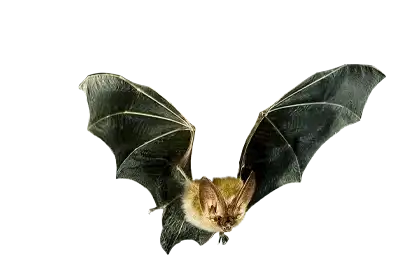
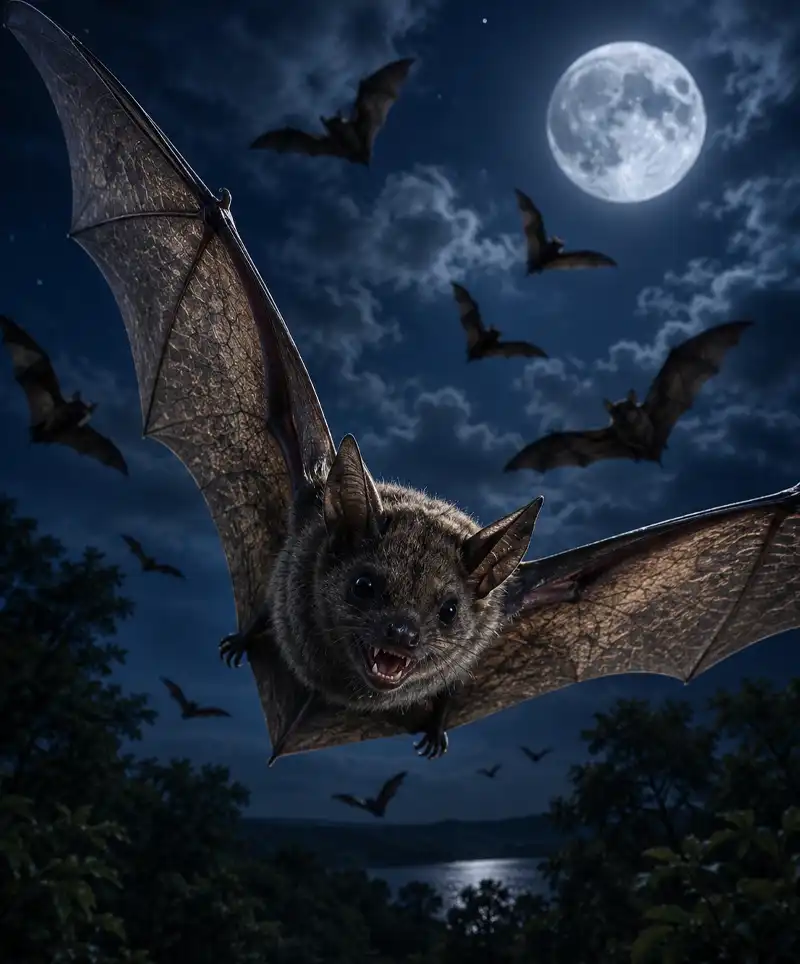
When most of us are settling in for the evening, bats are just beginning their workday. As darkness falls, these remarkable flying mammals emerge from caves, trees, bridges, and bat houses to patrol the night skies in search of insects, fruit, nectar, and other food. While they often appear in spooky stories and Halloween decorations, the truth is that bats are among the most valuable and misunderstood animals on Earth.
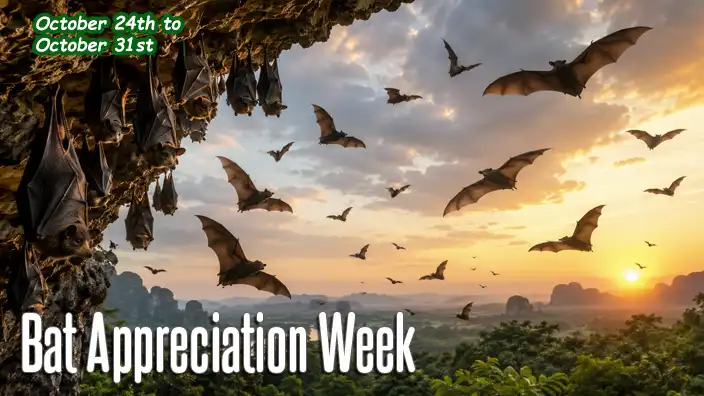
Bat Appreciation Week is observed annually from October 24 through October 31, encouraging people to learn about bats, support conservation efforts, and discover the truth behind one of nature's most misunderstood animals. The week is dedicated to recognizing the important role bats play in maintaining healthy ecosystems around the world. From controlling insect populations to pollinating plants and dispersing seeds, bats provide services that benefit both wildlife and people. Farmers, gardeners, and nature lovers all benefit from the work these nocturnal creatures perform every night, often without anyone noticing.
This special week also encourages people to look beyond the myths and misconceptions that have followed bats for centuries. Instead of seeing them as mysterious creatures of the dark, Bat Appreciation Week invites us to discover the fascinating biology, incredible diversity, and ecological importance of these winged mammals. After all, if bats worked a regular daytime schedule, they would probably be receiving employee-of-the-month awards on a very regular basis.
What Is Bat Appreciation Week?
Bat Appreciation Week is an annual observance dedicated to increasing public awareness of bats and the important role they play in ecosystems around the world. The week encourages people to learn more about these often misunderstood animals, explore the science behind their behavior, and support efforts to protect bat populations and their habitats. While bats may spend their days hidden from view, their nighttime activities have a major impact on the natural world.
The observance provides an opportunity for wildlife organizations, conservation groups, educators, and nature enthusiasts to share information about bat biology, migration, feeding habits, and conservation challenges. Through educational programs, community events, and online campaigns, Bat Appreciation Week helps replace old myths with facts and encourages a greater appreciation for one of nature's most successful groups of mammals.
More than 1,400 bat species are found across the globe, making bats one of the most diverse groups of mammals on Earth. They inhabit deserts, forests, grasslands, mountains, and even urban environments. Bat Appreciation Week highlights this incredible diversity while reminding us that these animals contribute far more to our lives than many people realize. From helping farmers control insect populations to pollinating plants and spreading seeds, bats quietly perform valuable work every night of the year.
Why Bats Matter More Than Most People Realize
Bats rarely receive the credit they deserve for the work they perform every night. While many people think of them only as mysterious creatures that fly after dark, bats are actually among nature's most important pest controllers, pollinators, and seed dispersers. Healthy bat populations help maintain balanced ecosystems, support agriculture, and contribute to the survival of countless plant species around the world.
One of the most valuable services bats provide is insect control. Many bat species feed almost exclusively on insects, consuming enormous quantities each night. A single small bat can eat hundreds of insects in an hour, while large colonies may consume tons of insects in a single evening. Many of these insects are agricultural pests that damage crops or mosquitoes that annoy people and spread disease. By keeping insect populations in check, bats help farmers reduce crop losses and lessen the need for chemical pesticides.
Bats also play a critical role in pollination. While bees often receive most of the attention, several plant species rely heavily on bats to transfer pollen between flowers. In tropical and desert regions, bats help pollinate plants such as agave, bananas, mangoes, guavas, and dragon fruit. Without bats, many of these plants would struggle to reproduce naturally. In some ecosystems, the loss of bat pollinators could affect entire food chains.
Fruit-eating bats contribute in another important way by dispersing seeds across large distances. As they travel through forests searching for food, they spread seeds through their droppings, helping new plants grow in cleared or damaged areas. This natural reforestation process is especially important in tropical regions where bats help restore forests after storms, fires, and human activity.
The economic value of bats is significant as well. Scientists estimate that bats save farmers billions of dollars annually by reducing crop damage caused by insects. Their pest-control services benefit producers of corn, cotton, wheat, rice, and many other crops. Without bats, agricultural costs would increase, and consumers would likely feel the impact through higher food prices.
Perhaps the easiest way to understand the importance of bats is to imagine a world without them. Insect populations would grow rapidly, farmers would face greater challenges protecting crops, certain plants would lose key pollinators, and forest regeneration would slow in many areas. Although bats often work unseen under the cover of darkness, their contributions touch ecosystems and human lives every single day. They may not ask for applause, but they have certainly earned it.
The Truth About Common Bat Myths
Few animals have suffered from a public relations problem quite like bats. For centuries, folklore, superstition, books, and movies have painted them as frightening creatures lurking in the darkness. While these stories may be entertaining, they have also created many misconceptions about what bats are really like. Bat Appreciation Week is the perfect opportunity to separate fact from fiction and discover the truth behind some of the most common bat myths.
One of the oldest myths is that bats are blind. In reality, bats can see quite well. While many species rely heavily on echolocation to navigate and hunt in the dark, their eyesight is often excellent and perfectly suited to their environment. Echolocation simply gives them an additional tool for finding food and avoiding obstacles when visibility is limited.
Another common belief is that bats constantly become tangled in people's hair. Fortunately, this is more fiction than fact. Bats are highly skilled flyers capable of making rapid turns and avoiding obstacles with remarkable precision. If a bat swoops close to a person, it is usually chasing insects attracted by body heat or nearby lights rather than aiming for anyone's hairstyle. To a bat, your hair is far less interesting than a mosquito.
Many people also assume that all bats drink blood. In truth, only three of the more than 1,400 known bat species survive on blood, and all three are found in Latin America. The overwhelming majority of bats eat insects, fruit, nectar, pollen, fish, or small animals. Most bats are far more interested in a juicy moth or a ripe piece of fruit than anything involving vampires.
Another misconception is that all bats live in caves. While some species do roost in caves, others make their homes in trees, rock crevices, abandoned buildings, bridges, and specially designed bat houses. Different species have adapted to a wide range of habitats across nearly every continent on Earth.
Perhaps the biggest myth of all is that bats are aggressive toward humans. In reality, bats generally prefer to avoid people whenever possible. Like most wild animals, they would rather be left alone than start an encounter. While it is important never to handle a wild bat, healthy bats are not flying around looking for trouble. Most are simply trying to find food, raise their young, and get through another busy night on the job.
The more we learn about bats, the easier it becomes to see them for what they really are: fascinating, highly specialized mammals that play an essential role in the natural world. Once the myths are set aside, bats become much less scary—and much more impressive.
Amazing Bat Species From Around the World
With more than 1,400 known species, bats are among the most diverse mammals on Earth. They can be found on every continent except Antarctica and have adapted to an incredible variety of environments. Some are tiny enough to fit comfortably in the palm of your hand, while others have wingspans that rival large birds. Bat Appreciation Week is a great time to discover just how varied and remarkable these nighttime flyers really are.
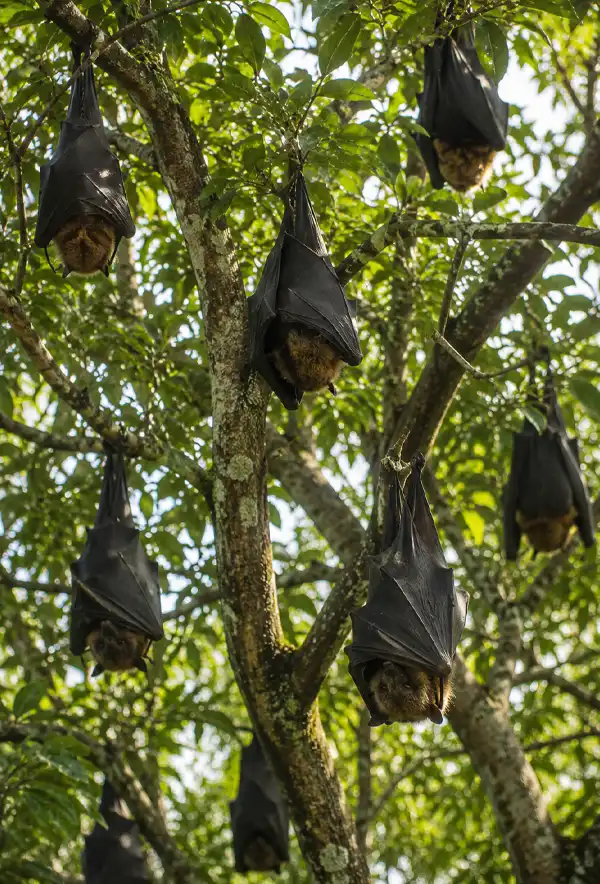
One of the most impressive species is the flying fox, a group of large fruit bats found throughout Asia, Australia, and the Pacific Islands. Some flying foxes have wingspans reaching nearly six feet, making them among the largest bats in the world. Despite their intimidating size, they feed primarily on fruit, nectar, and flowers. Their fox-like faces have earned them their unusual name, and they play a vital role in pollinating plants and spreading seeds across vast distances.
At the opposite end of the size scale is the tiny bumblebee bat, sometimes called Kitti's hog-nosed bat. Native to parts of Thailand and Myanmar, it is considered one of the world's smallest mammals. Weighing less than a penny and measuring only a little over an inch long, this tiny bat demonstrates just how much diversity exists within the bat family.
North America is home to the famous Mexican free-tailed bat, known for forming some of the largest mammal colonies on Earth. Millions of these bats emerge from caves and bridges at dusk in swirling formations that can be seen on weather radar. Their nightly insect hunts help farmers by consuming enormous quantities of agricultural pests.
The Egyptian fruit bat is another fascinating species. Found across parts of Africa and the Middle East, these social bats rely heavily on excellent vision and a form of echolocation that differs from many insect-eating bats. They are important pollinators and seed dispersers in the regions where they live.
Of course, no discussion of unusual bats would be complete without mentioning vampire bats. Native to Central and South America, these bats have inspired countless stories and legends. In reality, they are far less dramatic than popular culture suggests. The three species of vampire bats feed primarily on the blood of livestock and wild animals, using specialized adaptations that allow them to make small, painless cuts and consume only a tiny amount of blood.
These species represent only a small fraction of the bat world's incredible variety. From desert pollinators and rainforest fruit eaters to insect hunters and long-distance migrants, bats have evolved to fill countless ecological roles. Their diversity is one of the many reasons Bat Appreciation Week exists—to remind us that the word "bat" describes not one animal, but an entire group of fascinating species that help keep nature in balance.
How to Celebrate Bat Appreciation Week
Bat Appreciation Week is the perfect excuse to spend a little time learning about one of nature's most misunderstood animals. You do not need a cave in your backyard or a degree in wildlife biology to participate. In fact, some of the best ways to celebrate are simple, educational, and surprisingly fun.
One of the easiest ways to participate is to observe bats in their natural environment. On warm evenings, many bat species emerge shortly after sunset to begin hunting for insects. Watching bats dart and swoop through the twilight sky can be both entertaining and educational. Parks, nature preserves, and areas near water often provide excellent opportunities to observe local bat populations at work.
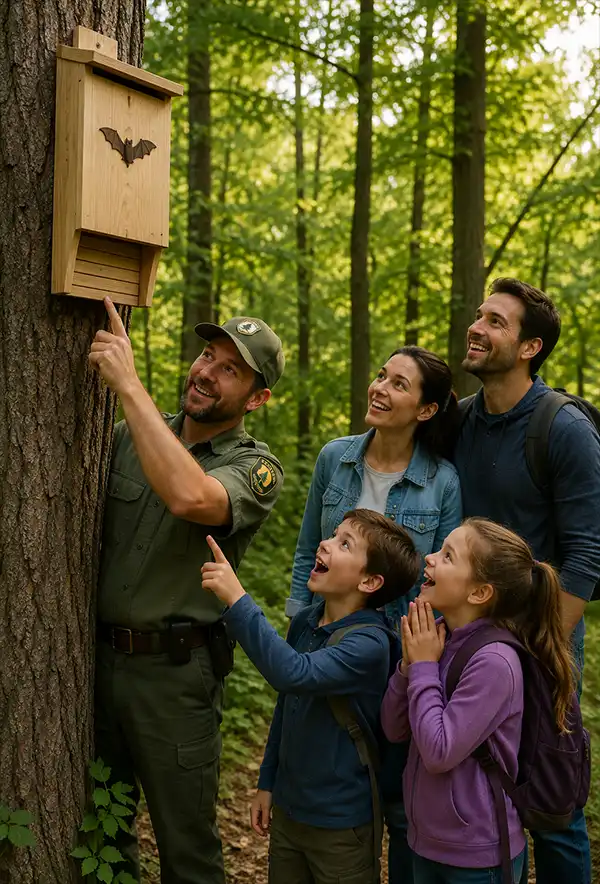
Another popular activity is installing a bat house. Bat houses provide safe roosting locations for bats while helping homeowners encourage natural insect control around their property. A single bat colony can consume thousands of insects during the summer months, making them some of the most effective pest-control specialists in the neighborhood. Unlike hiring an exterminator, bats never send an invoice.
Bat Appreciation Week is also a great time to learn more about bat conservation. Many wildlife organizations offer educational programs, webinars, guided walks, and community events focused on bats and their habitats. Supporting these groups through donations, memberships, or volunteer work helps protect bat populations facing challenges such as habitat loss and disease.
Families can celebrate by reading books, watching documentaries, or exploring online resources about bats. Children are often fascinated to learn that bats are mammals, that some species pollinate flowers, and that the world's smallest bat weighs less than a penny. Replacing spooky myths with fascinating facts can turn fear into curiosity.
Photography enthusiasts may enjoy trying to capture images of bats in flight, while gardeners can support bat-friendly environments by planting native species that attract insects and nighttime pollinators. Even small changes can help create habitats that benefit local wildlife.
Perhaps the most important way to celebrate Bat Appreciation Week is simply to share what you learn. Many misconceptions about bats persist because people rarely encounter accurate information about them. By talking with friends, family, and neighbors, you can help spread awareness about the valuable role bats play in ecosystems around the world.
After all, bats spend every night helping farmers, gardeners, forests, and countless other species. Dedicating one week to appreciating their efforts seems like a pretty fair trade.
Fascinating Bat Facts
Bats are full of surprises. The more scientists study them, the more remarkable these flying mammals become. Here are some fascinating bat facts that might change the way you think about these nighttime navigators:
- Bats are the only mammals capable of true powered flight. Flying squirrels can glide, but bats are the only mammals that can actively fly for extended periods.
- More than 1,400 bat species have been identified worldwide. That means roughly one out of every five mammal species on Earth is a bat.
- A single bat can eat hundreds of insects in an hour. Some species consume thousands of mosquitoes and other flying insects during a single night.
- The world's largest bats have wingspans approaching six feet. Flying foxes can be larger than many birds of prey.
- The world's smallest bat weighs less than a penny. The bumblebee bat is among the smallest mammals on Earth.
- Many bats use echolocation to navigate. By emitting high-frequency sounds and listening for echoes, bats can locate insects, obstacles, and even objects as thin as a human hair.
- Some bat colonies contain millions of individuals. Large colonies of Mexican free-tailed bats can create spectacular evening flights visible from miles away.
- Bats help pollinate important crops. Bananas, mangoes, guavas, agave plants, and many other species benefit from bat pollination.
- Fruit bats play an important role in forest regeneration. They spread seeds across large areas, helping forests recover and expand.
- Bats have been flying over Earth for more than 50 million years. Their ancestors were already navigating the skies long before humans appeared.
- Not all bats are nocturnal. While most species are active at night, some bats are known to fly during daylight hours.
- Vampire bats make up only three species out of more than 1,400. Despite their fame, blood-feeding bats represent a tiny fraction of the bat family.
- Some bats can live surprisingly long lives. Certain species have been recorded living more than 30 years in the wild, an impressive lifespan for such small mammals.
- Bat guano has been used as fertilizer for centuries. Rich in nutrients, bat droppings have historically been valuable for agriculture.
- Many bats are highly social animals. Some species communicate using dozens of different vocalizations and form complex social groups.
- A bat's heart rate can drop dramatically during hibernation. Some species slow their metabolism so much that they can survive winter on stored body fat.
- Bats are found almost everywhere on Earth. They live on every continent except Antarctica and occupy habitats ranging from deserts and rainforests to mountains and cities.
- Despite their spooky reputation, most bats want nothing to do with humans. Given the choice, a bat would much rather spend its evening chasing insects than starring in a horror movie.
Why Bat Conservation Matters
Although bats have survived on Earth for more than 50 million years, many species now face serious challenges. Habitat loss, climate change, human disturbance, and disease have placed increasing pressure on bat populations around the world. As forests are cleared, caves are disrupted, and natural landscapes are developed, many bats lose the safe roosting and feeding areas they need to survive.
One of the most significant threats facing bats in North America is White-nose Syndrome, a fungal disease first discovered in 2006. The disease affects hibernating bats, disrupting their winter dormancy and causing them to burn through vital energy reserves. Since its discovery, White-nose Syndrome has killed millions of bats and has dramatically reduced populations of several species. Scientists continue to study the disease and search for effective ways to limit its impact.
Human misunderstanding can also create problems for bats. Because of their association with myths, horror stories, and old superstitions, bats are sometimes feared rather than appreciated. In some areas, bat colonies are intentionally disturbed or destroyed simply because people do not understand the benefits these animals provide. Education remains one of the most effective conservation tools available.
Protecting bats helps protect entire ecosystems. When bat populations remain healthy, insect numbers stay balanced, forests regenerate more effectively, and important plants continue to receive pollination services. The loss of bats would affect far more than the animals themselves—it would create ripple effects throughout the natural world.
Fortunately, there are practical ways everyone can help. Supporting conservation organizations, protecting natural habitats, installing bat houses, avoiding disturbance of roosting sites, and sharing accurate information about bats all contribute to their survival. Even small actions can make a meaningful difference when combined with broader conservation efforts.
Bat Appreciation Week is about more than simply admiring these remarkable animals. It is also a reminder that bats perform valuable work every night and deserve our respect and protection. By helping bats thrive, we help maintain healthier ecosystems for wildlife, agriculture, and future generations alike.
Bat Appreciation Week FAQ
Bats have fascinated—and sometimes confused—people for centuries. From myths about blindness and vampires to questions about conservation and ecology, there is a lot to learn about these remarkable flying mammals. Here are answers to some of the most frequently asked questions about Bat Appreciation Week, bat behavior, and the important role bats play in ecosystems around the world.
When is Bat Appreciation Week?
Bat Appreciation Week is observed annually from October 24 through October 31. The week-long observance promotes awareness of bats, highlights their importance to ecosystems, and encourages conservation efforts to protect bat populations around the world.
What is Bat Appreciation Week?
Bat Appreciation Week is a wildlife awareness observance dedicated to educating the public about bats, correcting common misconceptions, and promoting bat conservation around the world.
Why are bats important?
Bats play vital roles in nature by controlling insect populations, pollinating plants, dispersing seeds, and helping maintain healthy ecosystems. Many agricultural industries also benefit from the pest-control services bats provide.
Are bats dangerous to humans?
Most bats are not dangerous and generally avoid contact with people. Like any wild animal, they should not be handled, but healthy bats are typically focused on finding food and raising their young rather than interacting with humans.
What do bats eat?
Bat diets vary by species. Many eat insects, while others feed on fruit, nectar, pollen, fish, or small animals. Only three known bat species survive primarily on blood.
How many species of bats are there?
Scientists have identified more than 1,400 bat species worldwide, making bats one of the largest and most diverse groups of mammals on Earth.
Are bats really blind?
No. Most bats can see quite well. Many species also use echolocation, which helps them navigate and hunt in darkness by interpreting sound echoes.
What is the largest bat species?
The largest bats are flying foxes, some of which have wingspans approaching six feet. Despite their size, they primarily feed on fruit, nectar, and flowers.
What is the smallest bat species?
The bumblebee bat, also known as Kitti's hog-nosed bat, is among the smallest mammals in the world, measuring just over an inch long and weighing less than a penny.
How can I help local bat populations?
You can help bats by protecting natural habitats, installing bat houses, reducing pesticide use, supporting wildlife conservation organizations, and sharing accurate information about bats with others.
What is White-nose Syndrome?
White-nose Syndrome is a fungal disease that affects hibernating bats. It has caused significant population declines in North America and remains one of the most serious threats facing several bat species.
Do bats help farmers?
Yes. Many bats consume large numbers of crop-damaging insects each night. Their natural pest-control services save farmers billions of dollars annually and reduce the need for chemical pesticides.
One Last Flight Before Dawn
Bats may spend their lives in the shadows, but their importance to the natural world is impossible to ignore. Every night, these remarkable mammals help control insect populations, pollinate plants, disperse seeds, and support ecosystems that countless other species depend upon. While they rarely receive the attention given to more familiar wildlife, bats quietly perform some of nature's most valuable jobs.
Bat Appreciation Week offers an opportunity to look beyond the myths, legends, and spooky stereotypes that have followed bats for centuries. By learning about their diversity, understanding their ecological importance, and supporting conservation efforts, we can develop a greater respect for these fascinating animals and the role they play in our world.
The next time you see a bat darting across the evening sky, remember that you are watching one of nature's most accomplished flyers at work. Long after the sun has set and most of the world has gone to sleep, bats are hard at work helping forests grow, crops thrive, and insect populations stay in balance. That's a contribution worth celebrating—not just during Bat Appreciation Week, but every night of the year.