Badge, Brains, Guts, and No Nonsense
Every September 12, National Police Woman Day recognizes the women who pin on a badge, report for duty, and begin a working day in which absolutely nobody can guarantee what happens next. Police work can involve everything from directing traffic and finding a lost child to investigating a murder or walking into a situation everyone else is desperately trying to escape. It requires judgment, courage, patience, physical ability, and the useful talent of remaining calm while somebody nearby is doing precisely the opposite.
Women have been part of American law enforcement for well over a century, although they weren't always permitted to do the jobs we now associate with police officers. Their progression from narrowly defined positions involving women and children to patrol cars, detective bureaus, tactical units, specialized investigations, and the command offices of major departments is an important chapter in the history of American policing.
National Police Woman Day celebrates that journey—and the women continuing it today.
What Is National Police Woman Day?
National Police Woman Day is observed annually on September 12 to recognize the contributions and achievements of women working in law enforcement. It honors both the pioneers who challenged restrictions placed upon female officers and the thousands of women now serving communities throughout the United States.
Today's policewomen work throughout municipal police departments, sheriff's offices, state agencies, federal law enforcement, university departments, transit systems, tribal agencies, and numerous specialized organizations. They serve as patrol officers, detectives, investigators, K-9 handlers, instructors, crisis negotiators, forensic specialists, supervisors, commanders, and chiefs.
That sounds perfectly ordinary today, which is actually part of the achievement. For much of the history of organized American policing, it wasn't ordinary at all.
The History of Women in Law Enforcement
Women were involved in American law enforcement before they were routinely recognized as police officers. During the 19th century, women sometimes worked as prison matrons and in positions involving female prisoners, juveniles, and vulnerable women. These jobs reflected contemporary assumptions about what duties were considered suitable for women and generally provided nothing approaching the authority available to male officers.
Among the most important early pioneers was Alice Stebbins Wells, who joined the Los Angeles Police Department in 1910. Wells is widely recognized as one of America's first regularly appointed policewomen with arrest powers. Her appointment attracted national attention and helped demonstrate that women could occupy an official place within professional policing rather than merely serving as attendants or matrons.

Progress remained slow. Female officers were frequently assigned to juvenile cases, missing children, sexual offenses, or matters involving women. These were important responsibilities, but the assignments were often based upon the belief that women were unsuitable for ordinary patrol work. Female officers could find themselves wearing different uniforms, receiving different assignments, facing restricted promotion opportunities, and working within departments designed almost entirely around men.
The situation changed considerably during the second half of the 20th century. Broader changes in employment law, civil rights, and attitudes toward women in the workplace challenged discriminatory practices. Police departments increasingly opened patrol duties, examinations, academies, and promotion systems to women. The question gradually changed from whether a woman should perform regular police work to whether an individual officer was qualified to perform it.
That was a much more sensible question.
From Handbags to Holsters
The early history of policewomen contains details that seem almost unbelievable from a modern perspective. Alice Stebbins Wells, for example, reportedly encountered people who simply refused to believe that a woman could actually be a police officer, leading to the need for clearer official identification. Early policewomen sometimes carried badges and other equipment in handbags rather than wearing the familiar duty belts associated with their male colleagues. The handbag may have been perfectly respectable by the standards of the day, but it was hardly the most practical piece of equipment when pursuing a suspect.
Uniforms presented another problem. Early female police clothing often reflected contemporary ideas about how a respectable woman was expected to dress rather than the physical requirements of police work. Long skirts, dresses, hats, and comparatively formal clothing might identify a policewoman, but they weren't designed with running, climbing, restraining suspects, directing traffic in bad weather, or spending hours moving in and out of patrol vehicles in mind. As women's duties expanded, it became increasingly obvious that an operational police officer needed operational clothing.
The change from handbag to holster therefore represented considerably more than a fashion decision. As women moved into regular patrol assignments, they increasingly carried the same essential equipment as male officers: firearms where authorized, handcuffs, radios, batons, flashlights, protective equipment, notebooks, and eventually the growing collection of technology carried by the modern officer. Uniforms became more practical, and departments gradually began recognizing that equipment needed to fit the person using it rather than simply issuing gear originally designed around the average male body.
That lesson continues into modern policing. Body armor, duty belts, holsters, footwear, protective equipment, and even the layout of equipment inside a patrol vehicle can affect comfort, mobility, and safety during a long shift. Properly fitted equipment isn't a special concession; it is part of providing an officer with the tools necessary to do the job effectively.
In that sense, the evolution of the policewoman's uniform tells a much larger story. Women went from being visibly separated from ordinary police work to wearing equipment that reflected their position as fully operational officers. The handbag didn't disappear because there was anything inherently wrong with handbags.
It disappeared because police officers generally find holsters considerably more useful when somebody starts running.
Why National Police Woman Day Matters
Police work asks an unusual amount from the people who perform it. Officers routinely encounter people experiencing some of the worst moments of their lives. They may deal with domestic disputes, crashes, frightened children, mental health crises, violent offenders, grieving relatives, intoxicated people, and arguments that somehow began over something as insignificant as a parking space.
Physical ability matters, but policing has never been simply a contest of strength. An officer also needs observation, communication, judgment, emotional control, and the ability to recognize when a situation requires firmness and when lowering the temperature may produce a better outcome.
Research into women in policing has frequently examined areas such as communication, use of force, community interaction, and conflict resolution. Although no officer should be reduced to stereotypes based upon sex, a broader range of people and experiences within a department can provide more options for dealing with the enormous variety of situations police encounter.
National Police Woman Day therefore isn't about claiming women should replace men or that one sex possesses some magical policing ability unavailable to the other. It recognizes something much simpler: capable people should have the opportunity to serve, and modern law enforcement benefits when it can recruit talented officers from the entire population.
The Role of Women in Modern Policing
The sight of a woman driving a patrol car barely deserves a second glance today. That normality was generations in the making.
Women now conduct traffic stops, answer emergency calls, make arrests, investigate serious crimes, work undercover, supervise officers, handle police dogs, process crime scenes, negotiate during crises, investigate cybercrime, teach at academies, and command law enforcement organizations. Some work in highly specialized fields requiring years of additional training and experience.
Women have also risen into senior leadership throughout American law enforcement. Female chiefs, sheriffs, commissioners, commanders, and federal officials are no longer historical curiosities. Their numbers may remain smaller than those of men, but the existence of women at virtually every level of the profession demonstrates how dramatically policing has changed since the days when female officers were routinely restricted to cases involving women and children.
The profession itself has changed alongside them. Modern police departments place considerable emphasis on community relations, crisis intervention, technology, evidence handling, legal knowledge, accountability, and de-escalation in addition to traditional enforcement duties. The officer who can prevent a confrontation from becoming violent may have accomplished something every bit as important as the officer capable of winning one.
Women Behind the Badge—and at Home
There is another part of police work that receives considerably less attention: eventually, the shift ends. The patrol car is parked, the equipment comes off, and the officer goes home. Unfortunately, the human brain doesn't have a convenient switch marked END OF SHIFT. A particularly disturbing accident, an injured child, a violent confrontation, or a family receiving terrible news can follow an officer through the front door long after the paperwork has been completed.
Police officers return to spouses, children, parents, pets, lawns that still need mowing, dishes that somehow failed to wash themselves, and all the ordinary responsibilities waiting for everybody else. Someone who spent the afternoon dealing with an emergency may still need to stop for groceries on the way home, help with homework, make dinner, or discover that the washing machine has chosen this particular evening to surrender. The uniform may represent authority in public, but apparently it carries very little influence over household appliances.
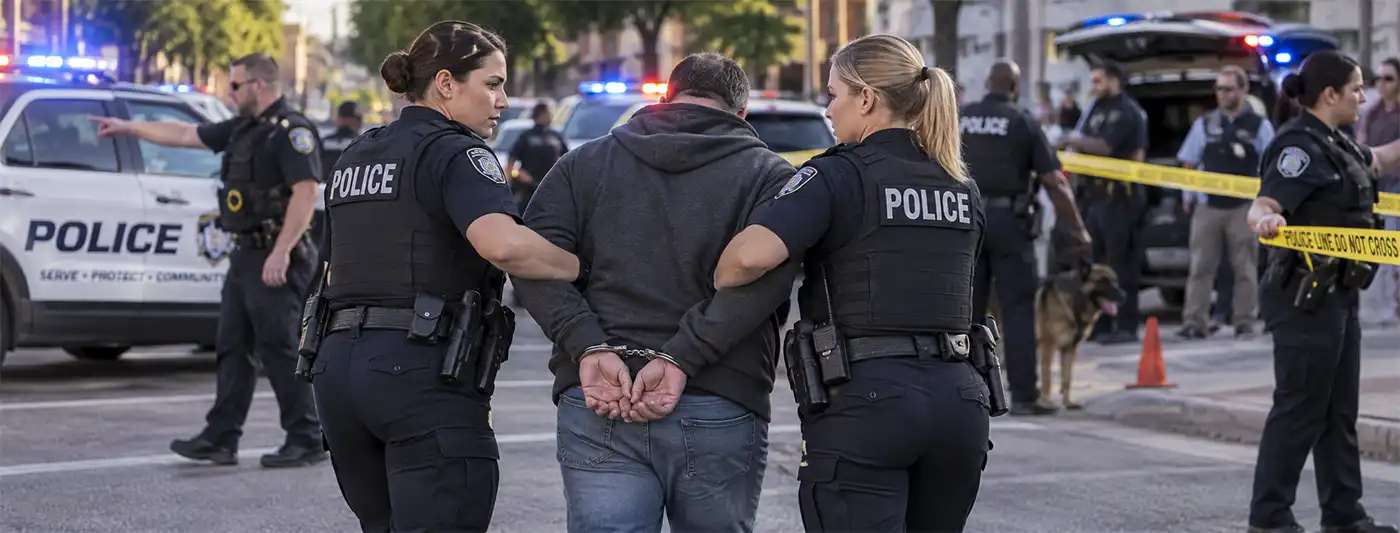
That balancing act can be particularly complicated in a profession that doesn't operate from nine to five. Crime, accidents, domestic disputes, and emergencies have an irritating habit of ignoring weekends, birthdays, Christmas morning, and carefully planned family dinners. Officers may work nights, rotating shifts, holidays, court appearances, mandatory overtime, special assignments, and unexpected callouts. A shift that was supposed to end at a particular hour can suddenly become much longer because an arrest has been made, a major incident has occurred, or paperwork refuses to acknowledge that somebody has plans.
Those demands affect male and female officers alike, but women entering what was traditionally a male profession have often faced additional expectations about their responsibilities at home. Over the decades, many policewomen have simultaneously built careers while raising children, managing households, caring for relatives, and navigating schedules that would make an airline dispatcher nervous. Departments, families, and society have gradually adapted as dual-career households and shared family responsibilities have become increasingly common, but combining police work with family life can still require considerable cooperation.
Family members carry part of that burden as well. A spouse watching an officer leave for a night shift knows that most nights will be routine, but also knows there are no guarantees. Children learn that Mom may occasionally miss an event because duty intervened. Holidays sometimes have to be celebrated around a shift schedule rather than according to the calendar. Behind many officers is a family that has become very good at rearranging plans.
There is also the challenge of leaving work at work. Good police officers develop professional ways of coping with difficult experiences, and departments increasingly recognize the importance of peer support, counseling, wellness programs, and mental health resources. Asking for help after witnessing something traumatic isn't a failure of toughness. Sometimes the strongest and most professional response is recognizing that carrying everything alone isn't particularly sensible.
National Police Woman Day can therefore recognize more than the dramatic image of an officer answering an emergency call or making an arrest. It can also recognize the quieter commitment involved in building an ordinary life around an extraordinary occupation—the missed dinners, changing schedules, interrupted holidays, supportive families, and the ability to come home after seeing humanity at its worst without forgetting that humanity also has a considerably better side.
And then, after all of that, the alarm clock rings. Time for another shift.
Recruiting the Next Generation
Despite more than a century of progress, women remain a minority within American law enforcement. That has encouraged agencies and professional organizations to examine why fewer women enter policing, why some leave the profession, and what unnecessary barriers may still exist.
Recruitment isn't simply about increasing a number on a spreadsheet. Police departments compete for qualified applicants, and excluding or discouraging a large portion of the potential workforce makes little practical sense. Agencies need people capable of exercising authority responsibly, communicating effectively, meeting legitimate physical and professional standards, and making sound decisions when circumstances become difficult.
Young women considering law enforcement today can see career paths that earlier generations could scarcely have imagined. Patrol can lead to investigations, specialized units, training, supervision, command, federal service, or numerous other careers. The door that pioneers such as Alice Stebbins Wells helped push open now leads to an entire profession.
How to Celebrate National Police Woman Day
You don't need to organize a parade, polish a patrol car, or practice saying, “Do you know why I pulled you over?” in the bathroom mirror.
One of the simplest ways to observe National Police Woman Day is to learn about women serving in your own community. Local departments frequently publish officer profiles, historical material, recruitment information, and stories about community programs. Many departments also have fascinating histories involving the first women to join their ranks.
The day is also an opportunity to recognize a female officer, dispatcher, investigator, or other law enforcement professional you know. A sincere thank-you costs nothing and doesn't require a ceremony.
Schools, museums, historical organizations, and law enforcement agencies can use the occasion to explore how women's roles in policing have changed. Sharing the stories of early pioneers is particularly valuable because the routine presence of women in today's police departments can make it easy to forget how recently many of those opportunities became available.
And, naturally, if you encounter a policewoman while she's conducting a traffic stop, National Police Woman Day probably isn't sufficient justification for requesting a commemorative photograph.
Maybe wait until she's finished writing the ticket.
Facts About Women in Policing
The history of women in policing is filled with pioneering appointments, changing responsibilities, and barriers that gradually gave way to opportunities once considered unthinkable. What began with women working in narrowly defined roles has developed into careers spanning virtually every corner of modern law enforcement. Here are a few quick facts that show just how much has changed since the earliest policewomen first pinned on a badge.
- Alice Stebbins Wells joined the Los Angeles Police Department in 1910.
- Early policewomen were often assigned primarily to women and juvenile cases.
- Female officers once commonly worked in clothing very different from male police uniforms.
- Women now serve in patrol, investigations, tactical assignments, K-9 units, forensics, and command.
- Women have led major American police departments and law enforcement agencies.
- Modern recruitment efforts increasingly seek to bring more women into policing.
- Policewomen serve at local, county, state, tribal, and federal levels.
- More than a century separates today's female patrol officers from the earliest American policewomen.
Police Women FAQ
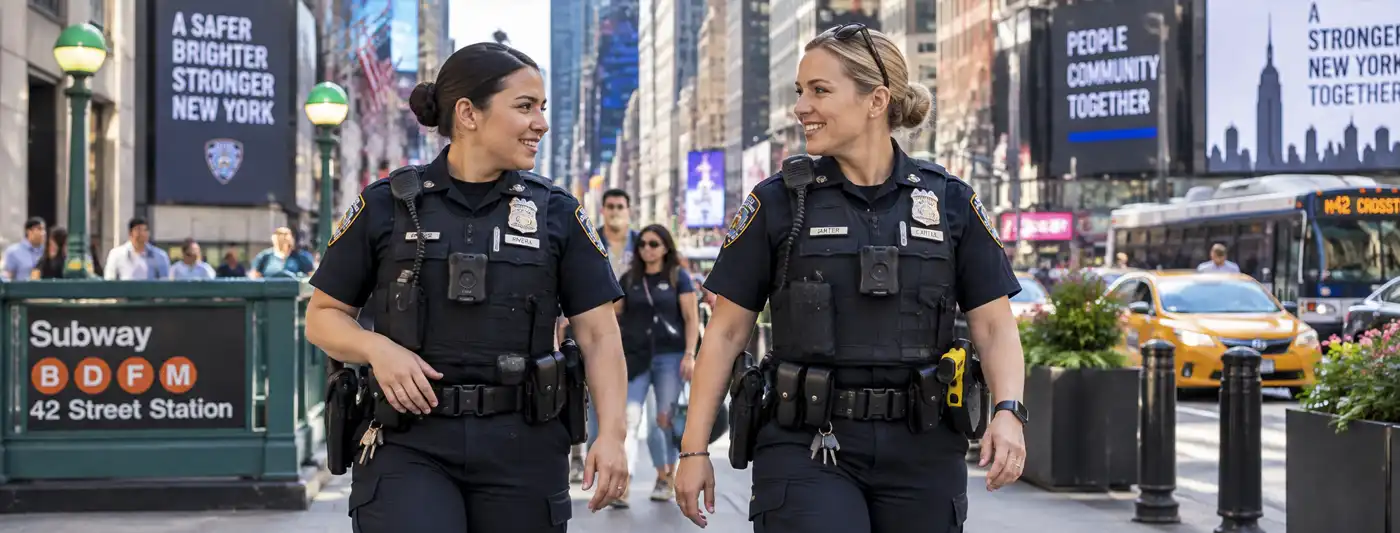
Women have been part of American law enforcement for generations, but their history, changing responsibilities, and place in modern policing still produce plenty of questions. From the pioneers who first gained official police authority to the officers commanding departments today, here are answers to some frequently asked questions about policewomen and National Police Woman Day.
When is National Police Woman Day?
National Police Woman Day is observed every year on September 12. It recognizes the service, accomplishments, and history of women working in law enforcement and provides an opportunity to remember the pioneers who helped open police careers to later generations of women.
Who was the first policewoman in the United States?
The answer depends somewhat on how “policewoman” is defined because women served in various law enforcement-related positions before receiving the same powers and responsibilities associated with regular police officers. Alice Stebbins Wells, appointed to the Los Angeles Police Department in 1910, is widely recognized as one of the first regularly appointed American policewomen with arrest powers and became an important advocate for expanding women's role in policing.
What jobs did early policewomen perform?
Early policewomen were commonly assigned duties involving women, juveniles, missing children, female prisoners, and cases in which authorities believed a woman officer would be particularly useful. Although these responsibilities were important, women were frequently excluded from routine patrol and many investigative or supervisory positions available to male officers.
Do women police officers perform the same duties as men today?
Yes. Modern policewomen serve as patrol officers, detectives, investigators, supervisors, K-9 handlers, instructors, forensic specialists, crisis negotiators, tactical officers, commanders, chiefs, and in many other positions. Individual assignments depend upon an officer's department, qualifications, training, experience, and specialization rather than simply whether the officer is male or female.
When did women begin working regular police patrols?
Women gradually entered general patrol duties during the 20th century, with opportunities expanding significantly during the 1960s and 1970s as employment practices and attitudes toward women in law enforcement changed. The transition happened at different times in different departments, so there was no single day when American policewomen collectively moved into patrol cars.
Are women still a minority in law enforcement?
Yes. Although women now work throughout American law enforcement and occupy positions at every level, they continue to represent a minority of sworn officers. Increasing female recruitment and retention therefore remains a priority for a number of departments and professional organizations.
Can women serve in specialized police units?
Absolutely. Women can serve in specialized assignments including criminal investigations, K-9 units, mounted units, narcotics, intelligence, cybercrime, forensics, crisis negotiation, tactical operations, training, and many others, provided they meet the qualifications required for the position.
How can I celebrate National Police Woman Day?
Learn about the women serving in your local law enforcement agencies, explore the history of pioneering policewomen, share their stories, or simply thank a female officer for her service. Recognition doesn't have to be elaborate. And if she's currently writing you a speeding ticket, perhaps wait until the paperwork is finished before beginning the festivities.
More Than a Century of Progress
More than a century has passed since pioneers such as Alice Stebbins Wells challenged the idea that police work belonged exclusively to men. The transformation since then has been remarkable. Women who were once restricted to carefully defined duties involving children, female prisoners, and social welfare now patrol the same streets, investigate the same crimes, undergo demanding training, command specialized units, and lead entire law enforcement agencies. What once required a woman to prove that she even belonged in a police department has become an established part of American policing.
That doesn't mean every challenge has disappeared, nor does progress require pretending that men and women are identical. Good policing has room for different strengths, personalities, experiences, and approaches. What ultimately matters is whether the person wearing the badge possesses the judgment, integrity, courage, compassion, and training necessary to use the authority that comes with it responsibly. Those qualities have never belonged exclusively to either sex.
Perhaps the greatest achievement is how unremarkable the sight of a policewoman has become. A little girl seeing a woman step from a patrol car today doesn't have to wonder whether women are allowed to become police officers. She can wonder instead whether she might want to become one herself. The pioneers fought the argument about whether women belonged. Today's officers have the considerably more practical job of getting on with the work.
National Police Woman Day gives us September 12 to remember that journey, recognize the women currently serving, and appreciate the families who share some of the demands that come with the badge. Tomorrow those officers will return to being patrol officers, detectives, sergeants, investigators, captains, chiefs—and people trying to remember whether they stopped for milk on the way home.
Because when somebody calls for help, the person making that call usually isn't concerned about whether a man or woman answers. They just want to hear that reassuring message: An officer is on the way.