
When Literature Finally Gets a Flavor Profile
There are book lovers… and then there are people who look at a novel and think, “You know what this needs? Frosting.”
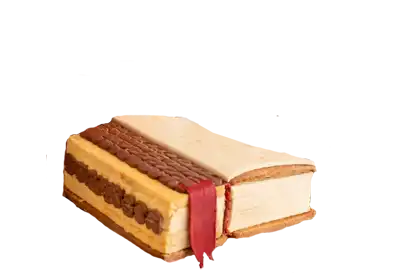
Welcome to Edible Book Day—an international celebration held every year around April 1st, where books aren’t just read… they’re baked, sculpted, decorated, admired—and then devoured without a shred of guilt.
It’s part literary tribute, part cooking competition, and part glorious excuse to play with your food like your mother specifically told you not to.
So What Exactly Is an “Edible Book”?
An edible book is exactly what it sounds like: a food creation inspired by literature. It might look like a book, reference a famous title, recreate a scene, or lean heavily into wordplay (and oh, the puns—brace yourself).
We’re talking about things like:
- Cakes shaped like classic novels
- Cookies spelling out book titles
- Lasagna versions of War and Peas (yes, that happens)
- Rice Krispies whales representing Moby Dick
If it’s edible and even vaguely “bookish,” it qualifies.
And the best part? After judging and admiring these creations… everyone eats them. Civilization has peaked.
A Brief (and Deliciously Odd) History
Edible Book Day may feel like the kind of idea someone came up with after too much coffee and not enough supervision—but it actually has roots in the thoughtful, slightly eccentric world of book arts.
The modern version of the celebration began around 2000, thanks to book artist Judith A. Hoffberg and artist Béatrice Coron. These weren’t folks casually doodling in the margins—they were deeply involved in exploring what a “book” could be beyond paper and ink. Sculptural books, altered books, conceptual books… and eventually, edible ones.
Their idea was simple but oddly profound: what if a book could engage not just the mind and the eyes, but also the senses of taste and smell? What if literature could be experienced in a way that was completely immersive—and yes, a little ridiculous?
From there, the concept spread through libraries, universities, and art communities like frosting on a warm cake. Early events were small, often tucked into corners of academic institutions where creative people tend to gather and say, “Hear me out…” But the idea had legs—and icing—and it didn’t take long before it caught on.
The choice of date is where things get particularly clever. Edible Book Day is traditionally held on or around April 1st, which lines up with the birthday of Jean Anthelme Brillat-Savarin. If you’ve never heard of him, imagine someone who took food as seriously as a philosopher takes existence. His famous work, The Physiology of Taste, explored gastronomy as both an art and a science—so honoring him with cakes shaped like novels feels oddly appropriate.
And yes, April 1st also happens to be April Fools' Day, which means the entire event carries a built-in wink. It’s scholarly… but not too scholarly. Artistic… but with a sense of humor. A little refined, a little ridiculous—just the way the best traditions tend to be.
As the years rolled on, what started as a niche artistic experiment grew into a global phenomenon. Libraries began hosting annual contests, schools adopted it as a creative literacy activity, and communities turned it into full-blown events complete with judging categories like “Best Literary Pun,” “Most Appetizing,” and “Looks Great… But I’m Not Eating That.”
Today, Edible Book Day lives in that perfect sweet spot between high culture and kitchen-table creativity. It honors literature, celebrates food, and proves that sometimes the best ideas are the ones that sound just a little bit absurd at first—right up until someone shows up with a chocolate version of Moby-Dick and suddenly it all makes sense.
A Worldwide Feast of Imagination
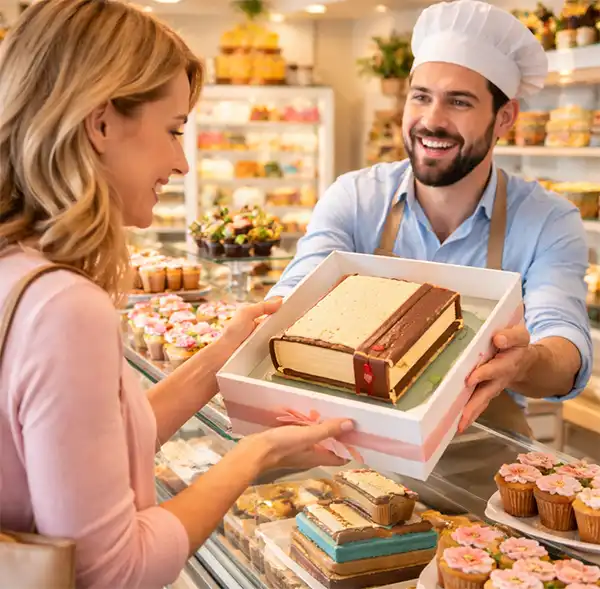
What started as a niche idea quickly spread across the globe. Today, Edible Book events are held in libraries, schools, and communities in countries ranging from the U.S. to Japan, Brazil, and beyond.
Libraries—normally the quietest places on Earth—transform into creative arenas where:
- People proudly display their edible masterpieces
- Judges award prizes like “Best Pun” or “Most Appetizing”
- And eventually… the crowd descends like a polite, well-read pack of wolves
It’s one of the few days where “Please don’t eat the exhibits” is officially suspended.
Why This Day Actually Matters (Yes, Really)
Now, on the surface, this sounds like pure silliness—and let’s be honest, it absolutely is. But there’s something quietly brilliant about it.
Edible Book Day brings together:
- Readers, who love stories
- Artists, who love creativity
- Food lovers, who… well, love food
It turns literature into something interactive, social, and (literally) digestible.
For kids, it makes books fun in a way no lecture ever could. For adults, it’s a reminder that creativity doesn’t have to sit quietly on a shelf—it can be messy, playful, and covered in icing.
And frankly, anything that gets people excited about books without involving a phone screen deserves a standing ovation.
How to Celebrate Edible Book Day
If there were ever a holiday that gave you permission to be equal parts creative genius and kitchen chaos gremlin, this is it. Edible Book Day isn’t about perfection—it’s about imagination, a decent sense of humor, and a willingness to look at your favorite book and think, “Yes… but what if it were made of cake?” Whether you’re a seasoned baker, a reluctant cook, or someone whose culinary specialty is opening a box of cookies without tearing the plastic (a true skill, by the way), there’s room for you here.
This is one of those rare occasions where effort counts, but enthusiasm counts more. You can go big with layered creations that would make a pastry chef pause in respect, or you can keep it simple and clever with a pun that gets a laugh before it gets eaten. The goal isn’t to impress a panel of judges—though that’s a nice bonus—the goal is to have fun, celebrate stories in a completely different way, and maybe surprise yourself with just how inventive you can be when books and food collide.
And let’s be honest: even if your creation looks like it lost a fight with the oven… it’s still dessert. That’s a win.
You can go simple:
- Bake a cake and decorate it like your favorite book
- Use cookies or brownies to recreate a famous title
Or go full mad scientist:
- Create a layered dessert representing a story plot
- Build an entire edible scene from a novel
- Lean into puns so hard your friends question your life choices
You don’t need professional baking skills—just enthusiasm and a willingness to laugh at your own creation.
And if all else fails? Show up, admire other people’s work, and eat like you’ve just discovered literature for the first time.
The Unspoken Rule: Puns Are King
If there’s one universal truth about Edible Book Day, it’s this: the worse the pun, the better the reception.
Expect entries like:
- “The Hunger Cakes”
- “Lord of the Fries”
- “Of Mice and Meringue”
Somewhere, an English teacher is either deeply proud or quietly weeping.
Final Thoughts: Eat Your Words (Literally)
Edible Book Day is one of those rare holidays that doesn’t take itself too seriously—and that’s exactly why it works. It reminds us that books aren’t just things we study. They’re things we experience, share, reinterpret… and occasionally turn into dessert.
So go ahead—pick a favorite title, grab some ingredients, and create something that would make both a chef and a librarian slightly nervous. Then slice it up, pass it around, and enjoy. Because for one glorious day a year, the phrase “I devoured that book” finally becomes 100% accurate.