There’s nothing light about Good Friday—after all, it commemorates the darkest day in Christian...
Imagine you’re calmly sitting on your porch, sipping iced tea, when you notice a towering wall of...
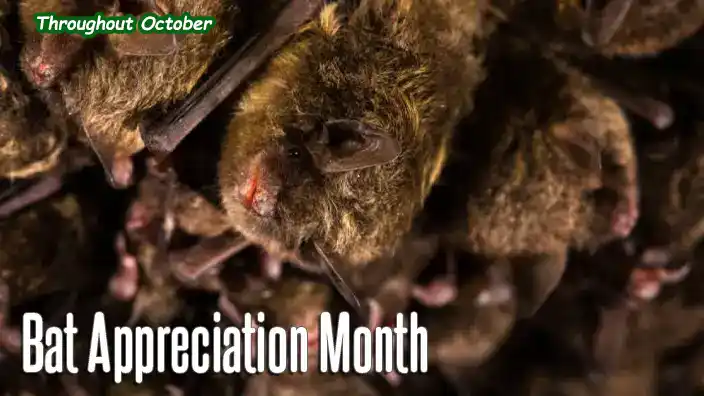
Bats are like nature’s misunderstood superheroes, spending their nights swooping through the sky,...
Ever thought a bracelet could be smarter than your smartphone? Meet the MedicAlert ID—it's the...
There’s nothing quite as nerve-wracking as asking a girl to prom—except maybe skydiving without a...
Imagine waking up on National All is Ours Day and realizing, for just one glorious moment, that...
On November 3, 1903, Panama declared its independence from Colombia, setting in motion events that would reshape international trade. The independence movement received support from the United States, whose government was determined to build a canal connecting the Atlantic and Pacific oceans. Earlier that year, the United States and Colombia had negotiated the Hay-Herrán Treaty, which would have allowed American construction of the canal in exchange for financial compensation. However, Colombia's Senate rejected the agreement over concerns about national sovereignty. President Theodore Roosevelt subsequently supported Panama's independence movement, while the arrival of the American warship USS Nashville and the disruption of railroad transportation helped prevent Colombian troops from suppressing the uprising.
The United States officially recognized the newly independent Republic of Panama on November 6, 1903. Just twelve days later, American Secretary of State John Hay and French engineer Philippe Bunau-Varilla, representing Panama, signed the Hay-Bunau-Varilla Treaty. The agreement granted the United States extensive, effectively permanent rights over the proposed Panama Canal Zone in exchange for an initial payment of $10 million and annual payments of $250,000 beginning nine years later. Although the treaty cleared the way for construction, many Panamanians objected to the sweeping American control over territory within their newly independent country. Panama had gained freedom from Colombia, only to discover that its most valuable strip of land was now largely under someone else's authority.
After years of enormous engineering challenges, disease-control efforts, and construction work, the Panama Canal officially opened on August 15, 1914, when the steamship SS Ancon completed its historic passage. The waterway revolutionized global shipping by allowing vessels to travel between the Atlantic and Pacific without making the lengthy and dangerous voyage around South America's Cape Horn. However, American control of the Canal Zone remained a source of political tension for decades. Following prolonged negotiations and the 1977 Torrijos-Carter Treaties, the United States gradually transferred authority to Panama, completing the handover on December 31, 1999. Nearly a century after declaring independence, Panama finally assumed full control of the canal that had played such a decisive role in its creation.
On November 3, 1957, the Soviet Union made space exploration history by launching Laika, the first animal to orbit Earth, aboard the Sputnik 2 spacecraft. The small mixed-breed dog, believed to have been part husky and terrier, had previously survived as a stray on the streets of Moscow before being selected for the Soviet space program. Scientists believed that stray dogs were particularly suited to the mission because they were accustomed to harsh conditions. Laika underwent extensive training to prepare her for the confined spacecraft, unusual noises, and stresses of launch. Unfortunately, although the mission represented an extraordinary scientific achievement, Sputnik 2 had no provisions for bringing its passenger safely home.
Laika's spacecraft carried a life-support system and monitoring equipment designed to measure her heartbeat, breathing, and physical responses to spaceflight. The information transmitted to Earth helped Soviet scientists understand how a living creature reacted to launch and weightlessness. Although Soviet authorities initially suggested that Laika had survived for several days, later disclosures revealed that she died within hours of launch from overheating and extreme stress caused by problems with the spacecraft's temperature-control system. Her death remains one of the most troubling chapters in early space exploration, raising important questions about the ethical treatment of animals used in scientific experiments. Laika became an international symbol of both humanity's determination to explore space and the sacrifices made along the way.
Despite the tragedy, the Soviet Union continued sending dogs into space to investigate the challenges of human spaceflight. Several animals died during these experiments, but others survived, including Belka and Strelka, who became the first dogs to orbit Earth and return alive in August 1960. Their successful mission provided valuable evidence that living creatures could survive orbital flight and reentry. On April 12, 1961, Soviet cosmonaut Yuri Gagarin became the first human to travel into space, completing one orbit of Earth aboard Vostok 1 before returning safely to Soviet territory. Laika never had the opportunity to come home, but her historic journey helped advance the research that eventually carried human beings beyond Earth's atmosphere.
On November 3, 2014, One World Trade Center officially opened in Lower Manhattan, marking a significant milestone in New York City's recovery from the September 11, 2001, terrorist attacks. Built near the site of the original Twin Towers, the skyscraper became the centerpiece of a redeveloped World Trade Center complex that also includes the National September 11 Memorial & Museum, public spaces, and additional commercial buildings. Planning the replacement was a lengthy and often contentious process involving government officials, architects, developers, and the families of those who died in the attacks. Architect Daniel Libeskind's original master plan emphasized remembrance and renewal, while David Childs of Skidmore, Owings & Merrill ultimately designed the completed tower. Originally promoted as the Freedom Tower, the building eventually adopted the official name One World Trade Center.
Construction began in 2006 following years of debate over the building's appearance, security, financing, and purpose. The finished skyscraper rises 1,776 feet, including its spire, a deliberate reference to the year of American independence. Its distinctive design features a square footprint that gradually transforms into an eight-sided form before returning to a square at the roof, creating a striking silhouette against the Manhattan skyline. Extensive security measures, reinforced structural components, and advanced safety systems were incorporated into the design. The tower reached its full architectural height when its spire was installed in May 2013, becoming the tallest building in the United States. Its completion represented an extraordinary engineering achievement and demonstrated New York's determination to rebuild a site that had become internationally associated with tragedy.
When One World Trade Center opened in November 2014, publishing company Condé Nast became one of its first major occupants, helping establish the building as a modern commercial destination rather than simply a symbolic replacement for the Twin Towers. The skyscraper subsequently attracted businesses from several industries, while the One World Observatory, which opened in May 2015, provided visitors with spectacular panoramic views of New York City, New York Harbor, and the surrounding region. Today, One World Trade Center is among the most recognizable landmarks in the United States, representing both remembrance of the nearly 3,000 people killed in the September 11 attacks and the resilience of a city determined to move forward. Its place on the skyline serves as a powerful reminder that rebuilding involves more than concrete and steel; it also requires patience, determination, and a willingness to imagine a future beyond tragedy.