Honoring Courage and Commitment
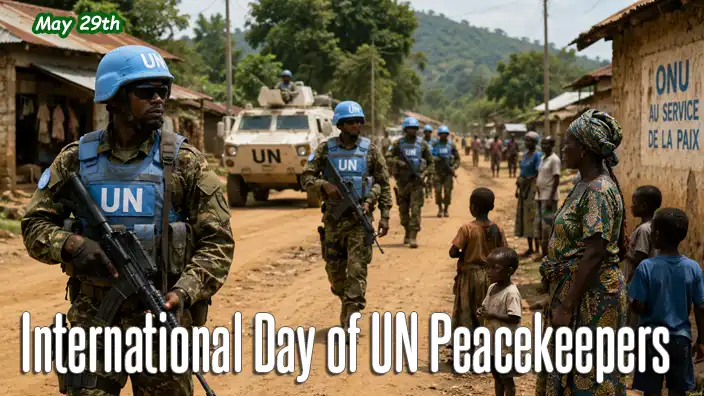
Each year on May 29th, the world pauses to recognize the dedication and bravery of United Nations peacekeepers through the observance of International Day of UN Peacekeepers. This day pays tribute to the men and women who have served and continue to serve in UN peacekeeping operations, acknowledging their significant contributions to global peace and security. It is also a time to honor the memory of those who have lost their lives in the line of duty.
The Origins of UN Peacekeeping
The concept of UN peacekeeping emerged in 1948 in response to the conflict in the Middle East. The United Nations Truce Supervision Organization (UNTSO) was established to monitor the ceasefire between Israel and its Arab neighbors, marking the beginning of a new form of international conflict resolution. Since then, peacekeeping has evolved into a complex and multifaceted operation involving military, police, and civilian personnel from around the world.
UN peacekeepers, often referred to as "Blue Helmets" because of their distinctive headgear, are deployed in some of the most volatile regions of the world. Their primary responsibilities include:
- Maintaining Peace and Security: Peacekeepers help to prevent the outbreak or continuation of armed conflict by acting as a buffer between conflicting parties.
- Facilitating Political Processes: They support the establishment of political frameworks that foster peace, such as organizing elections or aiding in constitutional reforms.
- Protecting Civilians: In areas plagued by violence, peacekeepers protect vulnerable populations from harm.
- Assisting Disarmament, Demobilization, and Reintegration (DDR): They help former combatants transition back to civilian life.
- Promoting Human Rights and the Rule of Law: Peacekeepers work to ensure that human rights are respected and legal systems are strengthened.
Significant Missions and Their Impact
Over the decades, UN peacekeepers have been involved in numerous missions worldwide. Some notable operations include:
- UNAMID in Darfur, Sudan: The United Nations-African Union Hybrid Operation in Darfur aimed to protect civilians and facilitate humanitarian aid amidst the region's conflict.
- MINUSMA in Mali: The United Nations Multidimensional Integrated Stabilization Mission in Mali was deployed to support the country's fragile peace process and protect civilians from insurgent groups.
- UNIFIL in Lebanon: The United Nations Interim Force in Lebanon has played a crucial role in maintaining peace along the Lebanese-Israeli border.
Challenges Faced by Peacekeepers
The role of a UN peacekeeper is one of the most demanding and dangerous assignments in international service. Peacekeepers are often deployed to regions where conflict has already torn apart governments, communities, and infrastructures—places where peace isn’t just fragile, it’s barely present. These missions require far more than military presence; they demand diplomacy, patience, and the ability to adapt to rapidly shifting political and security landscapes.

One of the most significant challenges is the complexity of modern conflict. Today’s wars are rarely fought between two clearly defined sides. Instead, peacekeepers must navigate environments where armed groups, militias, terrorist organizations, and criminal networks operate simultaneously, often with shifting alliances and unpredictable behavior. In such settings, neutrality can become a liability rather than a shield, and identifying threats—let alone mediating between them—can feel like threading a needle in a hurricane.
Asymmetrical warfare and terrorism have introduced new threats to peacekeeping forces. Missions like those in Mali (MINUSMA) regularly face improvised explosive devices (IEDs), suicide attacks, and ambushes. Peacekeepers often find themselves targeted precisely because they represent a stabilizing presence. These aren’t traditional battlefields; these are environments where danger hides in plain sight.
Resource constraints add another layer of difficulty. Many missions are deployed without adequate equipment, personnel, or logistical support. In some cases, peacekeepers lack armored vehicles, medical evacuation capabilities, or even basic communications equipment—yet they are expected to protect civilians and enforce mandates under hostile conditions. Wealthier member states may support missions politically, but often hesitate to provide the boots on the ground or the funding needed for success.
Political interference further complicates operations. Peacekeepers are bound by the mandates of the UN Security Council, which are shaped by international politics and diplomacy. At times, these mandates are either too vague to be actionable or too ambitious given the circumstances on the ground. The lack of unity among key global powers can lead to half-measures—missions launched with great intentions but crippled by limited authority and inadequate rules of engagement.
Cultural and language barriers also pose challenges. Peacekeepers come from diverse countries and backgrounds, often working in environments unfamiliar to them. While this diversity is a strength, it also requires extensive training to ensure cohesion, effective communication, and cultural sensitivity with local populations.
Finally, misconduct by a minority of peacekeepers has caused significant damage to the credibility of peacekeeping missions. Incidents of abuse, exploitation, or corruption, though not representative of the whole, undermine trust and put civilians at even greater risk. In response, the UN has taken steps to strengthen accountability, improve oversight, and ensure that perpetrators are held responsible—but the scars left behind by such incidents take time to heal.
Despite these daunting challenges, peacekeepers continue to serve with resilience and courage. Their role is not glamorous, and their success is often measured not in victories, but in lives saved, communities stabilized, and conflicts prevented from reigniting. Their work reminds us that peace is not a destination—it is a process, and one that demands constant vigilance, sacrifice, and the unwavering belief that humanity is worth fighting for.
Peacekeeping in Action
As of today, UN peacekeepers are deployed in a range of operations across Africa, the Middle East, Asia, and Europe. These include MINUSMA in Mali, MONUSCO in the Democratic Republic of Congo, UNMISS in South Sudan, and UNIFIL in Lebanon, among others. Each mission is tailored to a specific context, often balancing volatile political dynamics, fragile ceasefires, and humanitarian crises.
In South Sudan, peacekeepers protect displaced civilians living in UN-run camps, while also supporting fragile efforts toward a lasting peace deal. In Mali, they face a brutal insurgency and frequent attacks, often making theirs one of the deadliest UN operations in history. In Cyprus, the mission focuses on monitoring a buffer zone and facilitating diplomatic engagement between Greek and Turkish Cypriots. These examples reveal just how varied—and essential—UN peacekeeping operations are in their scope and purpose.
What We Owe Them
Peacekeepers are often asked to perform impossible tasks with limited resources and ambiguous mandates. Yet they serve. They serve despite knowing that their neutrality might be ignored, their presence may be resented, and their safety may never be guaranteed. They serve because peace—even when it feels unreachable - is worth striving for.
We owe it to them not just to remember, but to act. That means pushing for clearer mission mandates, better equipment, more training, and political backing. It means holding accountable those who harm peacekeepers and those who tarnish the integrity of the mission through misconduct. And it means giving peacekeepers the dignity and recognition they so often do not seek but so deeply deserve.
Honoring the Fallen
Since the inception of UN peacekeeping, over 4,000 peacekeepers have lost their lives while serving under the UN flag. International Day of UN Peacekeepers serves as a somber reminder of their sacrifice. Memorial ceremonies are held worldwide to honor these brave individuals and to underscore the cost of maintaining global peace and security.
As global dynamics continue to evolve, so too must the strategies and approaches of UN peacekeeping. Innovations in technology, increased focus on local community engagement, and better-prepared and equipped peacekeeping forces are some of the ways the UN is enhancing its peacekeeping efforts. Moreover, the participation of women in peacekeeping roles is being actively promoted, recognizing that their involvement can lead to more effective peacebuilding.
International Day of UN Peacekeepers is more than just a day of remembrance; it is a celebration of the enduring commitment of those who work tirelessly to bring peace to troubled regions. Their courage and dedication serve as a beacon of hope in a world often marred by conflict. As we honor their contributions, we also reaffirm our collective commitment to supporting and strengthening the invaluable institution of UN peacekeeping.