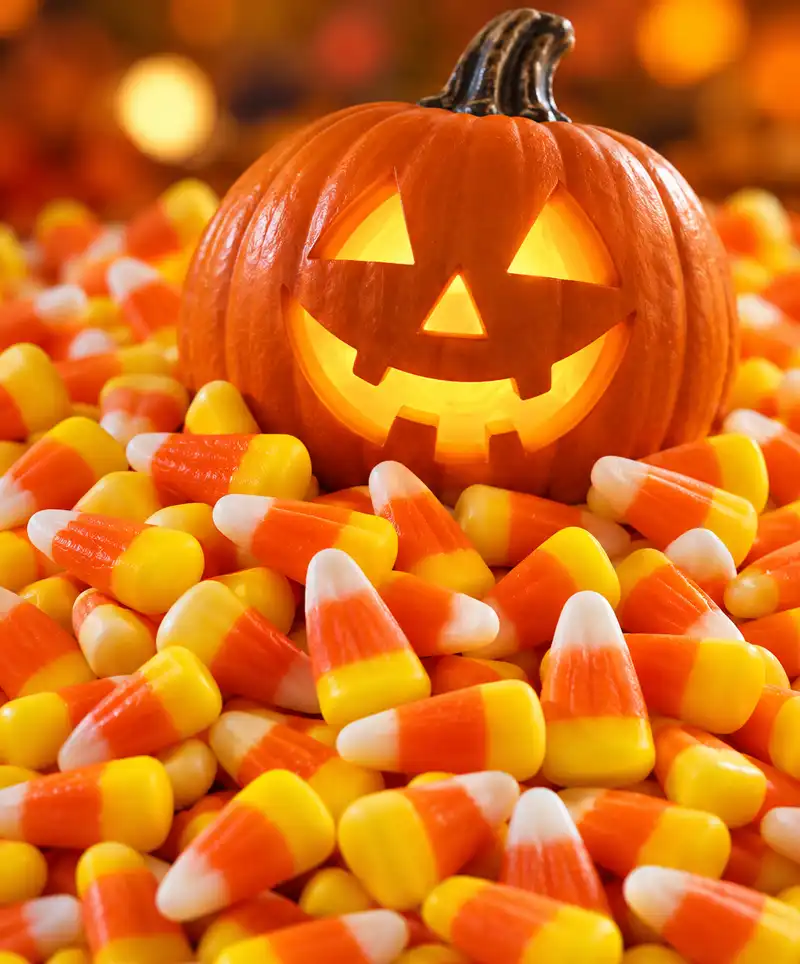
Celebrating Halloween's Most Controversial Little Candy
Every October 30, National Candy Corn Day celebrates one of America's most recognizable, beloved, and occasionally insulted Halloween candies. With its unmistakable yellow, orange, and white stripes, candy corn has been a fixture of autumn celebrations for well over a century. Some people eagerly await its annual appearance, while others regard it as a practical joke invented by someone with an unusually large supply of sugar. Whatever your opinion, this tiny triangular confection has become a genuine Halloween tradition. It decorates candy dishes, fills trick-or-treat bags, inspires seasonal recipes, and starts arguments that can last considerably longer than the candy itself.
The Sweet History of Candy Corn
The history of candy corn stretches back to the late nineteenth century, when American confectioners were experimenting with colorful molded candies inspired by familiar objects and agricultural products. George Renninger, a candy maker associated with Philadelphia's Wunderle Candy Company, is widely credited with developing candy corn during the 1880s. Although the precise circumstances of its invention are not fully documented, the candy's distinctive appearance reflected an era when rural imagery and harvest themes were popular in American confectionery. At a time when much of the population maintained close connections to farming, a sweet imitation of a corn kernel was a clever marketing idea. Apparently, someone looked at an ordinary ear of corn and decided that what it really needed was considerably more sugar.
By the turn of the twentieth century, the Goelitz Confectionery Company, the predecessor of today's Jelly Belly Candy Company, had begun producing candy corn. The company helped establish the confection as a popular commercial product, selling it under the memorable name Chicken Feed. Early packaging featured a rooster and the slogan "Something worth crowing for!" The agricultural branding made perfect sense for a candy shaped like livestock feed, although it probably caused some confusion among chickens hoping for a more nutritious snack. Candy corn was originally marketed as a general autumn harvest treat rather than exclusively as Halloween candy. Its strong association with Halloween developed over subsequent decades as seasonal candy marketing, trick-or-treating, and October celebrations became increasingly popular.
Unlike many fashionable sweets that disappear after a few seasons, candy corn survived changing tastes, economic upheavals, and generations of increasingly elaborate confectionery. Its simple design, inexpensive ingredients, and recognizable appearance helped secure its place in American candy history. Today, manufacturers produce millions of pounds of candy corn annually, with much of it sold during the autumn season. The little confection that began as a novelty inspired by agriculture has become a symbol of Halloween itself, demonstrating that a good idea sometimes needs only three colors, a little imagination, and an astonishing quantity of sugar.
How Candy Corn Is Made: From Sugar to Striped Perfection
Traditional candy corn belongs to a family of confections known as mellowcreme candies, which are characterized by their dense, smooth, slightly chewy texture. Typical ingredients include sugar, corn syrup, confectioner's glaze, flavorings, and other ingredients that vary according to the manufacturer. Some recipes use gelatin, while historical recipes often incorporated fondant and marshmallow-like mixtures. Despite its name, candy corn contains no actual kernels of corn, and corn syrup is a sweetener rather than a secret method of squeezing candy out of a vegetable. Anyone expecting a serving of vegetables from a handful of candy corn is going to be terribly disappointed.
In the early days, making candy corn required considerable manual labor. Workers prepared a warm confectionery mixture and poured it into small kernel-shaped impressions formed in trays of cornstarch. Each of the three colors had to be added separately, creating the familiar white tip, orange center, and yellow base. The process required careful timing, steady hands, and an impressive tolerance for repetitive work. The finished candies were allowed to set before being removed from their molds, cleaned, and packaged. It was an intricate process for something that many people today consume by the handful without giving its construction a second thought.
Modern candy factories use automated equipment to produce enormous quantities of candy corn with far greater speed and consistency. Machinery deposits the colored mixtures into molds, controls cooling and setting, and prepares the finished pieces for packaging. Although the manufacturing process has changed dramatically, the basic appearance has remained remarkably consistent. Candy corn is still a three-colored, kernel-shaped sweet, proving that some designs are so effective they hardly need updating. The automobile has evolved from the Model T to sophisticated electric vehicles, but candy corn continues to look much as it did when horses were still a common means of transportation.
Why Is Candy Corn Yellow, Orange, and White?
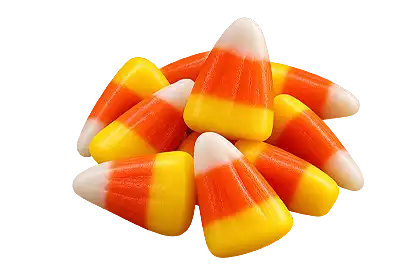
The distinctive color combination is one of candy corn's most recognizable characteristics. A traditional piece features a broad yellow base, an orange middle, and a small white tip, creating a miniature triangular kernel that suggests the colors of an autumn harvest. While actual corn kernels come in many colors, including yellow, white, red, blue, and purple, candy corn's particular arrangement became an enduring symbol of the fall season. The bright stripes also make it especially attractive in Halloween decorations, where it complements pumpkins, autumn leaves, and other seasonal displays.
One persistent candy corn mystery concerns whether the three colored sections have different flavors. Some enthusiasts insist that the white tip tastes sweeter, the orange center has a distinctive character, or the yellow base possesses a buttery richness. In standard candy corn, however, the different colors are generally made from the same flavored confectionery mixture, with coloring providing the visual distinction. Individual perceptions can vary, and manufacturers may use different recipes, but the traditional stripes are not intended to represent three separate flavors. Our brains are remarkably good at associating colors with tastes, even when the ingredients refuse to cooperate.
The classic color scheme has also inspired countless variations. Manufacturers produce candy corn in different colors and flavors for holidays and special occasions, including autumn-themed mixtures, chocolate-flavored varieties, and seasonal editions. Candy pumpkins, another popular mellowcreme confection, share much of candy corn's texture and sweetness while offering a considerably larger mouthful. These variations demonstrate that the original design has become a flexible confectionery tradition. Of course, changing candy corn's colors doesn't necessarily change anyone's opinion about eating it.
The Great Candy Corn Debate: Halloween's Most Divisive Sweet
Few Halloween candies inspire such passionate disagreement as candy corn. For devoted fans, it represents the taste of autumn, childhood memories, costume parties, and the excitement of finding seasonal sweets in stores. Its distinctive sweetness and soft, dense texture provide an experience unlike chocolate bars, gummy candies, or hard sweets. Some enthusiasts enjoy eating the individual colored sections one at a time, while others prefer grabbing a handful and abandoning all attempts at moderation. For these loyal supporters, Halloween simply wouldn't be complete without a bowl of candy corn somewhere in the house.
Critics, meanwhile, have developed an impressive vocabulary for describing their objections. Candy corn has been compared to sweetened candle wax, sugary packing material, and decorations that someone mistakenly classified as edible. Its intense sweetness and unusual texture are frequent targets of complaint, and its seasonal reappearance reliably inspires jokes across social media. Some people insist that candy corn is best used for decorating cupcakes, filling glass jars, or constructing miniature Halloween artwork rather than being eaten. They may have a point about its decorative qualities, although the candy corn industry would probably prefer that consumers eventually open their mouths.
Interestingly, the disagreement has become part of candy corn's cultural appeal. People who dislike it often enjoy discussing their dislike almost as much as enthusiasts enjoy eating it. Every October brings renewed debates, taste tests, rankings, and humorous declarations about whether candy corn deserves a place among Halloween's greatest treats. Its ability to generate conversation has helped keep it culturally relevant long after many other nineteenth-century candies faded into obscurity. Love it or hate it, candy corn has achieved something remarkable: it has become famous not only for what it tastes like, but also for how strongly people feel about it.
The Science of Candy Corn: Why Is It So Sweet?
Candy corn's intense sweetness comes primarily from its high concentration of sugar and corn syrup. These ingredients provide the candy's characteristic flavor while helping create its dense texture. Corn syrup also influences how sugar crystallizes during production, contributing to the finished confection's consistency. The combination produces a candy that delivers a concentrated burst of sweetness in a relatively small piece. That makes candy corn an interesting example of how food chemistry can transform ordinary ingredients into a product with a distinctive appearance, texture, and shelf life.
A typical serving of candy corn contains a substantial amount of added sugar, although exact nutritional values depend on the brand and serving size. Individual pieces generally contain only a few calories, but those numbers accumulate quickly when an innocent-looking handful turns into repeated visits to the candy dish. Candy corn offers little significant nutritional value beyond its carbohydrate content, making it a treat best enjoyed occasionally rather than as an alternative to breakfast. The fact that it resembles corn does not qualify it as a vegetable, regardless of how persuasive your argument might sound.
Candy corn also raises interesting questions about dietary ingredients. Many conventional varieties contain gelatin, which is derived from animal collagen, while some include confectioner's glaze made using shellac. Consequently, traditional candy corn is not automatically suitable for vegans or vegetarians. Ingredients differ between manufacturers, and people following specific dietary requirements should check the packaging rather than assuming that a candy made primarily from sugar contains no animal-derived ingredients. Those with food allergies should also consult the label for relevant ingredients and cross-contact warnings.
Candy Corn Beyond Halloween
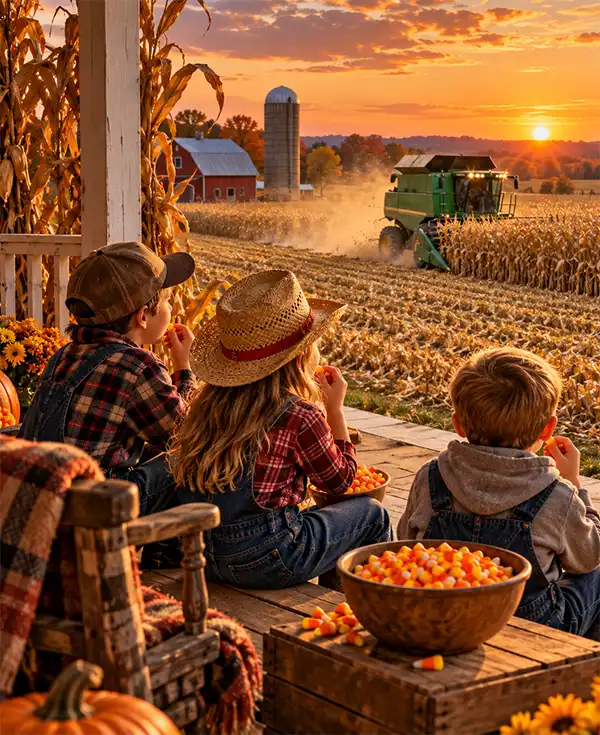
Although candy corn is most closely associated with Halloween, its original connection to the autumn harvest gives it a broader seasonal identity. The candy appears in Thanksgiving decorations, fall-themed centerpieces, harvest festivals, and seasonal baking projects. Its distinctive colors make it particularly useful for decorating cookies, cakes, cupcakes, and dessert displays. Candy corn can also be combined with pretzels, popcorn, nuts, and chocolate candies to create colorful snack mixes, although anyone attempting to create a low-sugar version may discover that the candy itself is unwilling to participate.
Creative cooks have developed numerous candy corn-inspired desserts, including cookies decorated with triangular patterns, layered gelatin treats, cupcakes with yellow-orange-white frosting, and candy corn-themed fudge. Some recipes incorporate actual candy corn, while others simply reproduce its familiar appearance. This distinction can be useful when entertaining guests whose opinions about candy corn are less than enthusiastic. A candy corn-colored cupcake might receive a warm welcome from someone who would otherwise treat the original confection as a personal insult.
Candy corn has also become a popular material for seasonal crafts and educational activities. Children can use its colored pieces for counting exercises, sorting games, simple patterns, and Halloween artwork. Adults can arrange it in decorative glass containers, create festive table settings, or use it in autumn-themed displays. Because candy corn is small and can present a choking hazard to very young children, age-appropriate supervision is important during edible crafts and activities. And if the family dog shows an interest in participating, it's better to provide a suitable pet treat instead of sharing Halloween candy.
Fun Facts About Candy Corn
There's more to candy corn than three colorful stripes and enough sugar to keep a dentist awake at night! Behind those tiny triangular treats lies a surprisingly fascinating history filled with clever marketing, old-fashioned candy-making techniques, and more than a century of Halloween traditions. From its unusual beginnings as "Chicken Feed" to its status as one of America's most recognizable seasonal sweets, candy corn has collected some interesting facts along the way. So, before you reach for another handful—or quietly dispose of the ones someone left in your candy dish—let's uncover a few sweet little secrets about Halloween's most controversial confection.
- A nineteenth-century invention: Candy corn is widely associated with confectioner George Renninger and the 1880s.
- Originally called Chicken Feed: Early Goelitz packaging featured a rooster and agricultural branding.
- A mellowcreme confection: Candy corn belongs to the same candy family as seasonal mellowcreme pumpkins.
- Three colors, generally one flavor: Traditional candy corn's colored sections are not normally intended to taste different.
- A harvest treat first: Candy corn was associated with autumn long before becoming a Halloween staple.
- Millions of pounds: American manufacturers produce enormous quantities of candy corn each year.
- Not necessarily vegan: Some brands contain gelatin or other animal-derived ingredients.
- A seasonal celebrity: Few candies generate as much annual debate over whether they are delicious or dreadful.
How to Celebrate National Candy Corn Day
Celebrating National Candy Corn Day on October 30 is wonderfully simple: gather some friends, embrace the Halloween spirit, and prepare for a sugar-fueled adventure involving America's most controversial little confection. Whether you're a devoted candy corn enthusiast or someone who considers it a decorative building material masquerading as food, there are plenty of entertaining ways to join the festivities. From taste tests and creative recipes to colorful crafts and spirited debates, this is your opportunity to celebrate a candy that has been dividing households for generations. Just remember, friendships may be tested, taste buds may be overwhelmed, and someone will inevitably suggest that candy corn tastes like sweetened candle wax!
- Host a Candy Corn Taste Test: Gather several brands or varieties of candy corn and organize a blind taste test with friends or family. Compare sweetness, texture, appearance, and overall enjoyment without revealing which manufacturer produced each sample. Some brands may be softer, firmer, or more intensely flavored than others. Participants can rate their favorites and attempt to identify the classic varieties among the seasonal alternatives. The results may surprise everyone, particularly those who insist they dislike all candy corn equally. For additional entertainment, invite the most outspoken critic to serve as a judge and watch the expressions carefully.
- Make Candy Corn-Inspired Halloween Treats: Celebrate the occasion by preparing cupcakes, cookies, popcorn mixes, or other desserts inspired by candy corn's familiar colors. A simple three-layer dessert featuring yellow, orange, and white ingredients can capture the spirit of the holiday without requiring actual candy corn. Alternatively, use a few pieces as decorative toppings for homemade sweets. Families can turn the activity into a friendly baking competition, awarding prizes for creativity, presentation, and taste. Extra points should probably go to anyone who manages to make a candy corn dessert that even the household's most determined critic enjoys.
- Create a Candy Corn Halloween Display: Fill clear jars with candy corn, arrange colorful pieces around miniature pumpkins, or use them to decorate a festive autumn centerpiece. Their bright colors make them ideal for seasonal displays, especially when combined with orange leaves, small gourds, and Halloween decorations. Children can create candy corn pictures or practice making repeating color patterns, while adults can experiment with more elaborate table arrangements. Just remember to distinguish between candy intended for eating and candy used in crafts, particularly when adhesives or other nonfood materials are involved.
- Settle the Great Candy Corn Argument: Invite friends and family to participate in a lighthearted debate about whether candy corn deserves its place among Halloween's most famous treats. Encourage supporters to explain its nostalgic appeal while critics present their objections to its texture, sweetness, and general existence. Conduct a vote, record the results, and announce the household's official position. If the debate becomes particularly heated, remind everyone that Halloween is supposed to be frightening because of ghosts and monsters, not because someone has expressed an unpopular opinion about confectionery.
A Sweet Little Piece of Halloween History
National Candy Corn Day is more than an excuse to enjoy a handful of colorful sugar. It celebrates an enduring American confection that has survived more than a century of changing food fashions, manufacturing innovations, and increasingly vocal criticism. From its nineteenth-century beginnings as a harvest-themed novelty to its modern status as a Halloween icon, candy corn has earned a distinctive place in American seasonal traditions. Its simple appearance conceals a surprisingly interesting history involving candy makers, agricultural marketing, food chemistry, and the development of modern Halloween celebrations.
Whether you're a devoted candy corn enthusiast or someone who believes the stuff should remain permanently sealed in a decorative jar, October 30 offers an opportunity to appreciate its unusual cultural legacy. Fill a candy dish, try a new recipe, organize a taste test, or simply enjoy watching another spirited argument unfold over those familiar yellow, orange, and white kernels. Candy corn may never win everyone's affection, but after more than a century, it has certainly demonstrated remarkable staying power. And if you discover a forgotten bag in the cupboard next Halloween, don't worry—there's a good chance someone in the family will still insist it was never edible in the first place!
Jelly Belly Candy Company: Corporate history and the origins of Goelitz candy corn. https://www.jellybelly.com/ National Confectioners Association: Information about candy corn, Halloween candy traditions, and confectionery history. https://candyusa.com/ Smithsonian Magazine: Historical reporting and features on candy corn and American confectionery traditions. https://www.smithsonianmag.com/ Encyclopaedia Britannica: Background information on Halloween and the development of its customs. https://www.britannica.com/topic/Halloween U.S. Food and Drug Administration: Food labeling, added sugars, and ingredient information. https://www.fda.gov/foodReferences & Sources