Celebrating the Beautiful Game
Every year, National Soccer Day rolls around like a perfectly passed ball—inviting us to celebrate the sport known worldwide as the beautiful game. Whether you call it soccer, football, or “that sport where people pretend to fall down,” this is the day to lace up your cleats, dust off your shin guards, and channel your inner Pelé (or maybe just avoid tripping over your own feet).
A Brief and Bouncy History of Soccer
Soccer’s history stretches so far back that historians still argue about who first looked at a round object and thought, “You know what this needs? Kicking.”
Ancient versions of the game appeared all over the world. In China, a military training game called Cuju involved kicking a leather ball through a small opening using only the feet. The Greeks and Romans had their own rough-and-tumble ball games, although theirs tended to involve fewer rules and a much higher likelihood of someone limping home afterward.
By the Middle Ages, various forms of football were exploding across Europe. Entire villages would participate in chaotic matches that sometimes stretched for miles through fields, streets, and rivers. Goals were loosely defined, rules were practically nonexistent, and local property owners probably developed stress-related illnesses every match day.
The modern version of soccer finally took shape in England during the 19th century. In 1863, the Football Association established standardized rules, helping separate soccer from rugby. This was a major improvement for players who preferred kicking the ball instead of being tackled into next Tuesday.
As the British Empire expanded across the globe, soccer traveled with sailors, merchants, workers, and students. Soon the sport had taken root in South America, Europe, Africa, and beyond. By the early 20th century, soccer had evolved into an international obsession capable of bringing entire nations together—or causing grown adults to yell at televisions loud enough to frighten nearby pets.
The Global Phenomenon That Is Soccer
Soccer isn’t just a sport—it’s the planet’s most popular addiction that doesn’t require a prescription. With roughly 4 billion fans, it unites people across continents, languages, and lunch breaks.
In Brazil, it’s not just a passion—it’s practically a birthright. Babies kick before they crawl. In England, entire towns go eerily quiet when their team’s playing—except for the sound of collective weeping when a penalty is missed. And in Germany, soccer is run with such precision, it’s like clockwork with cleats.
No matter where you go, a patch of grass and a round ball are all you need to start a match—and potentially a lifelong rivalry.
Rules of the Game (Also Known As: “Wait, What Just Happened?”)
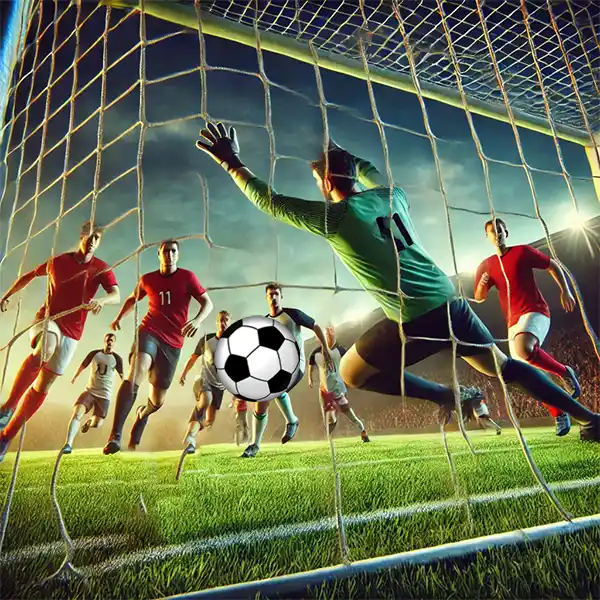
At its core, soccer is simple: eleven players per team try to kick the ball into the other team’s goal, using any body part except arms and hands. (Unless you’re the goalkeeper, in which case you can perform minor miracles within your penalty area.)
Two halves, 45 minutes each, and if you’re lucky, a bit of stoppage time to argue with the referee. But don’t be fooled by the simplicity—soccer comes with a side of complex rules:
- Offside Rule: Ask 10 fans and you’ll get 12 different explanations. Even seasoned viewers sometimes need a replay and a prayer.
- Yellow Card: “Hey, behave.”
- Red Card: “Get off my pitch!”
- Penalty Kick: Drama in its purest form. Expect nail-biting, goalkeeper heroics, and at least one grandma screaming at the TV.
Soccer in the U.S.: The Comeback Kid
For many years, soccer in the United States lived in the shadow of football, baseball, and basketball. Americans appreciated fast-paced sports with giant scoreboards, marching bands, and enough commercial breaks to grill a hamburger between plays. Soccer, with its clock that never stopped and games ending 1–0, confused some viewers who were waiting for explosions or at least a halftime monster truck rally.
But slowly, things changed.
Youth soccer exploded across the country during the 1980s and 1990s. Suburban parks filled with weekend matches, folding chairs, orange slices, and exhausted parents trying to remember which child belonged to which team. The term “soccer mom” became part of American culture almost overnight.
The 1994 FIFA World Cup, hosted in the United States, became a turning point. Massive crowds packed stadiums, proving there was a genuine appetite for the sport. Major League Soccer soon followed, growing steadily from modest beginnings into a thriving professional league attracting international stars and passionate fanbases.
Meanwhile, the U.S. Women’s National Team became one of the greatest dynasties in sports history. Their success inspired generations of players and helped elevate women’s soccer around the globe.
Today, soccer has become deeply woven into American sports culture. Fans gather before sunrise to watch European matches, children grow up idolizing international stars, and entire cities rally behind their local clubs. America may have arrived late to the soccer party, but it definitely brought snacks.
Fun (and Slightly Bizarre) Soccer Facts
Soccer may be the world's most beloved sport, but it also comes with a treasure trove of quirky trivia and eyebrow-raising records. From pig bladder balls to scorelines that look like typos, the game’s history is as entertaining as a last-minute goal in extra time. So, lace up your curiosity and dive into these fun (and downright bizarre) soccer facts that prove the beautiful game has a weird side—and we love it all the more for it.
- The First Soccer Ball: Made from pig bladders. And you thought your deflated ball was sad.
- Longest Match Ever: 108 hours. That’s not a match—that’s a lifestyle.
- Most Goals in a Match: 149-0. Not a typo. One team was protesting a bad call by own-goaling themselves into the record books.
- Most Watched Sport Event: The 2018 World Cup. Over 3.5 billion people tuned in—half the world! Your aunt’s quilting livestream has some catching up to do.
Soccer Traditions That Make the Game Even Better
Part of soccer’s charm comes from the traditions surrounding it. Every country seems to add its own flavor, rituals, chants, and superstitions to the game.
In England, fans pack historic stadiums and sing team anthems loud enough to shake the rafters. In Argentina, supporters bounce and chant nonstop for ninety straight minutes, creating an atmosphere somewhere between a sporting event and a thunderstorm with drums.
Italian fans wave enormous banners and ignite colorful flares. In Germany, clubs are famous for passionate supporters who create carefully choreographed displays in the stands. Meanwhile, in Brazil, soccer often spills into the streets, beaches, and neighborhoods where children grow up juggling balls barefoot before they ever step onto an organized field.
And then there are the superstitions.
Lucky scarves. Lucky seats. Lucky snacks. Entire fanbases convinced their team lost because someone washed a jersey too early. Soccer supporters can turn into full-time sports shamans during tournament season.
But that passion is exactly what makes the game special. Soccer isn’t just watched—it’s lived.

How to Celebrate National Soccer Day (Without Pulling a Hamstring)
Let’s face it—National Soccer Day isn’t about sitting on the sidelines. Whether you’re a die-hard fan with a jersey for every occasion or someone who thinks “offside” is a type of salad dressing, there’s a way for everyone to join the fun. You don’t need to run sprints or perfect your bicycle kick—just find a way to honor the spirit of the game. Below are some fun, low-impact, and highly enjoyable ways to celebrate—no ice packs required.
- Kick It Around – Whether it's a park, backyard, or your suspiciously narrow hallway, play a quick match or penalty shootout.
- Binge Some Soccer – Watch classic World Cup moments, relive that time your team almost made it to the finals, or tune in to live games.
- Learn the Game – Finally decode the offside rule or figure out what VAR actually stands for (Video Assistant Referee, not “Very Angry Ref”).
- Wear the Colors – Rock your team’s jersey, paint your face, or just wear cleats to the grocery store. Why not?
- Host a Watch Party – Serve up themed snacks like "Goalie Guac" or "Yellow Card Nachos" and debate who’s the G.O.A.T. (Hint: It’s still up for debate.)
- Teach the Kids – Pass the love of the game on. Just maybe skip the pig bladder part.
National Soccer Day reminds us why the beautiful game continues to capture hearts generation after generation. Soccer doesn’t require expensive equipment, fancy arenas, or even perfect weather. All it really needs is a ball, a little open space, and people willing to chase glory while pretending they’re not already out of breath.
The sport teaches teamwork, endurance, creativity, and occasionally how to dramatically collapse onto the grass while clutching your shin in hopes of drawing a foul. It creates lifelong friendships, unforgettable rivalries, and moments of joy shared by billions of people around the world.
Whether you’re playing in a packed stadium, a dusty backyard, or a neighborhood park with crooked goalposts and questionable refereeing from Uncle Gary, soccer has a way of bringing people together.
And honestly, any sport that can unite the world while simultaneously causing millions of people to scream at referees in seventeen different languages deserves a holiday.